 Seattle
 Exteriors Built for University District's Weather
University District sits inland from Puget Sound but still lives under the same marine weather pattern that shapes exterior work across the whole Seattle area — steady winter rain, humid air off the water, and long stretches where a wall or roof never fully dries out between storms. Add in the mature tree canopy found around many of the neighborhood's older streets and the shaded north sides of homes packed close together, and you get conditions that are genuinely tough on siding, roofing, windows, and decks: salt-tinged marine air, driving rain that comes in sideways more often than straight down, and a moss season that can stretch for months on shaded surfaces.
University District's housing stock reflects its age and location near the University of Washington — a mix of early-1900s bungalows and craftsman homes, older apartment buildings, and newer infill construction on smaller lots. That mix means we see everything from original wood siding that's been painted a dozen times to vinyl and engineered wood replacements installed in the last couple decades, each with its own set of problems once the Seattle weather has had a few years to work on it. Whatever your home's age, the exterior has to manage the same water load, and how well it does that depends heavily on materials and workmanship.
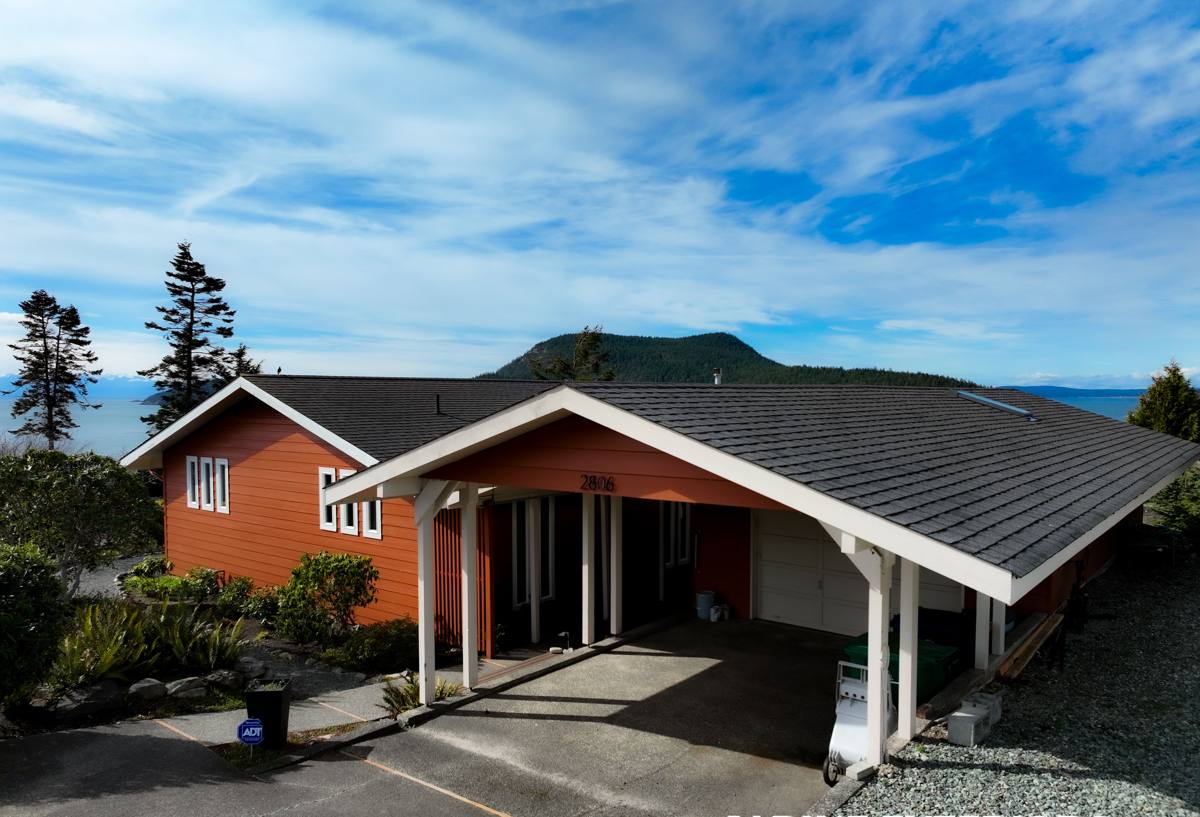
What This Climate Does to an Exterior Over Time
Moisture That Works Slowly and Quietly
The biggest risk in this climate usually isn't a single storm — it's cumulative moisture exposure that builds behind siding, under roofing, and around window openings over years. Wood-based siding products swell, delaminate, or rot at cut edges and joints when water gets behind them repeatedly. Roofing takes on moss and algae that hold moisture against shingles longer than they were designed for. Window seals and old flashing slowly fail, letting small amounts of water in that don't show up as an obvious leak until the damage underneath is already significant.
Moss, Algae, and Shaded Surfaces
North-facing walls, roof sections under tree cover, and low, shaded areas around decks all hold moisture longer than sun-exposed surfaces, which is exactly the environment moss and algae need to establish. Once moss takes hold on a roof, it lifts shingle edges and channels water sideways instead of down, which is a common source of leaks that have nothing to do with the shingles themselves being worn out. On siding and decking, moss and algae growth is mostly a maintenance and appearance issue, but it's also a sign that a surface isn't drying out the way it should.
Wind-Driven Rain and Flashing
Rain that hits a wall at an angle behaves very differently than rain falling straight down — it gets pushed up under laps, around trim, and into any gap that a fair-weather installation might have gotten away with. Flashing at windows, doors, and roof-to-wall transitions is one of the areas where a rushed or inexperienced installation shows its weaknesses fastest in a climate like this one.
Siding: Why We Only Install James Hardie Fiber Cement
Siding is the exterior's first line of defense, and in a wet climate the material and installation quality matter more than almost any other choice a homeowner makes. We install James Hardie fiber cement exclusively — we don't install vinyl, LP SmartSide, Cemplank, Allura, primed spruce, or cedar. That's a deliberate standard, not a matter of preference, and it's worth explaining honestly rather than just asserting it.
Vinyl siding is affordable and low-maintenance in the sense that it doesn't need painting, but it's a thin plastic product that can warp, fade, and crack over time, and it doesn't offer the same fire resistance or dimensional stability as fiber cement. Engineered wood products like LP SmartSide use a wood-fiber core that performs reasonably well when installed and maintained perfectly, but that core is more sensitive to moisture at cut edges and panel joints — exactly the failure points that driving rain and long wet seasons find first. Cedar and primed wood siding can look excellent, but they require an ongoing cycle of painting, caulking, and moisture maintenance that many homeowners underestimate when they choose the material, and skipping that maintenance in a climate like this one shortens the material's life considerably.
James Hardie fiber cement is non-combustible, dimensionally stable across temperature and moisture swings, and finished at the factory with ColorPlus technology rather than field-applied paint, which holds color and resists fading far longer. Hardie also engineers specific product lines, including its HZ5 formulation, for colder, wetter climate zones like the Pacific Northwest. Combined with a strong transferable warranty, it's the product we're comfortable standing behind on homes that have to handle Seattle's rain year after year — which is why we standardized on it rather than offering a menu of options.
Roofing in a Long Moss Season
Roofs in University District deal with the same shade-and-moisture combination that affects siding, often more severely, since roofs are the surface most exposed to standing water, falling debris, and sun-to-shade transitions across a single day. Moss growth, algae streaking, and slow granule loss on aging asphalt shingles are common findings on an inspection here, and they tend to show up first on north-facing slopes and sections near tree cover.
A roof inspection in this climate should look specifically at moss buildup and how it's affecting shingle lift, flashing condition at every penetration and roof-to-wall transition, gutter and downspout function (clogged gutters back water up under roofing edges), and ventilation, since a poorly ventilated attic traps moisture that condenses and damages the roof deck from underneath. Catching these issues during routine maintenance is almost always cheaper than waiting for an active leak to force the repair.
Windows: Sealing Out a Wet Climate
Many University District homes still have original or older-generation replacement windows, and in a climate defined by driving rain and long damp stretches, window performance comes down to two things: the seal around the frame and the condition of the glazing itself. Failed seals let in drafts and moisture that can damage surrounding wall material long before a homeowner notices a visible leak, and older single-pane or early double-pane windows lose a meaningful amount of heat compared to current options.
When we replace windows, proper flashing and sealing around the new unit matters as much as the window itself — a quality window installed with poor flashing will leak in this climate just as reliably as a cheap one, while a well-flashed, correctly sealed installation protects the wall assembly around it for decades.
Decks: Built to Shed Water, Not Hold It
Decks in this climate face constant exposure to rain, shade-driven moisture, and the same moss and algae growth that affects roofs and siding, especially on decks tucked under tree cover or on the shaded side of a home. Ledger board flashing where a deck attaches to the house is one of the most common failure points we see, since water that gets behind an improperly flashed ledger board can rot the house's framing, not just the deck itself. Proper drainage planning, correct fastener spacing for wood movement, and flashing detail at every point where the deck meets the house are what separate a deck that lasts decades from one that needs early repair.
Cost Factors to Expect in University District
| Factor | Why It Matters Here |
|---|---|
| Home age and siding history | Older homes may have layers of prior siding or hidden moisture damage that isn't visible until tear-off |
| Tree cover and shade exposure | Shaded walls, roofs, and decks need stronger moss and drainage planning, which affects both product choice and detailing |
| Access and lot size | Tighter urban lots common near the University can affect staging, scaffolding, and crew logistics |
| Scope of tear-off vs. overlay | Full tear-off costs more upfront but allows inspection and repair of hidden moisture damage behind old siding |
| Material choice | James Hardie fiber cement costs more upfront than vinyl or engineered wood but requires far less long-term maintenance in this climate |
Why a Local Crew Matters Here
Exterior work in Seattle isn't generic remodeling work dropped into a different zip code — it's shaped by King County permitting requirements, Seattle's building code particulars, and a climate that punishes shortcuts faster than drier regions do. A crew that works across the Seattle area regularly knows what inspectors here are looking for, understands how to handle the permitting process for siding, roofing, and deck projects, and has seen firsthand how moss, driving rain, and shaded lots affect a project's design before the first materials show up. That local familiarity shows up in the quality of the estimate as much as the quality of the finished work — a contractor who has priced and built projects in this exact climate isn't guessing at what your home needs.
It also matters for older homes with existing character, which is common in University District's mix of craftsman houses and early apartment buildings. Matching trim details, working around existing rooflines, and making sensible material recommendations for a home's specific age and exposure takes local experience, not a one-size-fits-all approach imported from a different climate.
Signs Your Exterior Needs a Look
- Visible moss or dark streaking on roof slopes, siding, or deck boards, especially on shaded or north-facing surfaces
- Peeling paint, soft spots, or visible warping on wood or engineered wood siding
- Drafts, fogging between panes, or difficulty opening and closing windows
- Water stains on ceilings or walls near roof penetrations, chimneys, or skylights
- Soft or spongy decking, especially near the ledger board where the deck meets the house
- Gutters that overflow or hold standing water during rain
- Visible gaps, cracking, or missing caulk around window and door trim
Getting Started
If you're noticing any of the signs above, or you're simply due for an honest look at how your home's siding, roof, windows, or deck are holding up against Seattle's weather, we're glad to walk the property with you and explain exactly what we see — no pressure, no upsell. Reach out below for a free estimate.