 Seattle
 Why Roofs Age Differently in Seattle
A roof in Spokane or Phoenix ages on a different clock than a roof in Seattle. Here, the enemy isn't hail or UV breakdown from relentless sun — it's water. King County gets a long, wet fall-through-spring stretch where roofs rarely get a chance to fully dry out, plus enough proximity to Puget Sound that salt-laden air speeds up corrosion on metal fasteners, flashing, and vents. Add a moss season that can run eight or nine months out of the year on shaded, north-facing slopes, and you have a climate that quietly shortens roof life even when nothing looks obviously wrong from the ground.
That's the tricky part. Roofs here rarely fail dramatically. They fail slowly — a little moisture intrusion at a time, a little granule loss at a time — until a homeowner is looking at rot in the decking instead of a simple shingle swap. Understanding how your roof actually ages in this climate is the first step to timing a replacement correctly instead of reacting to a leak in January.
Repair or Replace? Reading the Signs
Most roofs don't need a full replacement the first time a problem shows up. But there's a point where continued patching stops making financial sense and starts masking a bigger issue underneath.
Signs a repair is probably enough
- A single localized leak traced to one flashing point, vent boot, or damaged section
- Isolated missing or lifted shingles after a windstorm, with the rest of the roof in solid shape
- Moss buildup on an otherwise intact, structurally sound roof
Signs it's time to plan a replacement
- The roof is at or past the manufacturer's rated lifespan for your material
- Leaks are showing up in multiple, unrelated areas rather than one spot
- Shingles are curling, cracking, or losing granules across large sections, not just one slope
- You can see daylight through the roof deck from the attic, or find soft, spongy decking underfoot
- Previous repairs are stacking up faster than they used to, both in frequency and cost
If you're seeing two or more of the second list, it's worth getting a straightforward inspection rather than authorizing another round of patchwork. A good contractor will tell you honestly which category you're in — repair is often the right and cheaper answer, and any roofer pushing a full tear-off on a roof that just needs a repair isn't doing you any favors.
Moss, Moisture, and Salt Air: The Three Things Aging Your Roof
These three factors do most of the damage to Seattle-area roofs, and they work differently from each other.
Moss isn't just cosmetic. As it establishes itself in shaded, north-facing, or heavily tree-covered sections of a roof, its root structure lifts shingle edges and holds moisture directly against the roofing material and the decking underneath. A roof that looks "mossy but fine" from the driveway can have soft decking under that moss mat by the time it's removed.
Sustained moisture from our long wet season is the slow killer of underlayment, flashing seals, and fastener integrity. Unlike a climate with hard freeze-thaw cycles or intense UV, our climate's damage mechanism is duration — water sitting against roofing components for months at a time, working into any gap that opens up.
Salt air matters more the closer a home sits to Puget Sound or the Sound-facing slopes of King County. It accelerates corrosion on exposed metal — nail heads, flashing seams, vent stacks, and gutter hardware — which is often where a roof's real weak points develop even while the shingles themselves still look presentable.
Roofing Material Options for King County Homes
There's no single "best" roofing material — the right choice depends on your roof's pitch, sun/shade exposure, budget, and how long you plan to stay in the home. Here's an honest comparison of what's commonly installed in this region.
| Material | Typical Lifespan Here | Moss/Moisture Resistance | Relative Cost |
|---|---|---|---|
| 3-tab asphalt shingle | 15-20 years | Fair — needs regular moss treatment | Lowest |
| Architectural (dimensional) asphalt | 25-30 years | Good, especially algae-resistant lines | Moderate |
| Standing seam metal | 40-50+ years | Excellent — moss struggles to root on metal | Higher |
| Cedar shake | 20-30 years with upkeep | Poor without diligent maintenance | Higher |
Architectural asphalt is the most common replacement choice locally because it balances cost, appearance, and decent moss resistance when paired with copper or zinc strips at the ridge. Metal roofing has grown more popular for homeowners planning to stay long-term, since its steep upfront cost gets offset by decades of lower maintenance and near-immunity to moss. Cedar shake looks great and is traditional to the Northwest, but it demands the most consistent upkeep of any option in a climate this wet — it's a material that rewards homeowners who are genuinely willing to stay on top of it.
What Actually Drives the Cost of a Roof Replacement
Roof replacement quotes vary widely, and the sticker price alone doesn't tell you why one bid is higher than another. These are the real cost drivers.
| Factor | Why It Matters |
|---|---|
| Roof size and pitch | Steeper roofs take longer to work safely and require more fall-protection setup |
| Number of existing layers | Tearing off two or three layers of old shingles costs more in labor and disposal than one |
| Decking condition | Soft or rotted plywood found during tear-off has to be replaced before new material goes down |
| Material selection | Asphalt, metal, and cedar carry very different material and labor costs |
| Roof complexity | Valleys, dormers, skylights, and multiple chimneys all add flashing work and time |
| Ventilation upgrades | Adding or correcting attic ventilation during the job protects the new roof's lifespan |
Be cautious of any quote that's dramatically lower than the others without an explanation — it's usually a sign that tear-off, decking repair, or proper underlayment is being skipped, or that ventilation problems that will shorten the new roof's life aren't being addressed at all.
What the Replacement Process Looks Like
A full roof replacement is more involved than most homeowners expect, and knowing the sequence helps you evaluate a contractor's proposal.
- Inspection and scope: A thorough look at decking, flashing, ventilation, and any structural issues before pricing is finalized.
- Tear-off: Removal of existing roofing material down to the deck, with disposal handled by the crew.
- Decking repair: Any soft, delaminated, or rotted plywood is replaced before anything new goes on.
- Underlayment and flashing: A moisture barrier goes down first, followed by new flashing at every valley, chimney, vent, and wall intersection — this is where most leaks originate if done poorly.
- Material installation: Shingles, metal panels, or shakes go on to manufacturer spec, including proper nailing patterns and exposure.
- Ventilation and cleanup: Ridge and soffit venting is confirmed or corrected, and the site is cleared of debris and nails.
Most residential tear-off-and-replace jobs in this area run a few days to about a week depending on size, complexity, and weather windows — and weather windows are a real scheduling factor here, not a formality.
Permits and Local Considerations
Roof replacement in Seattle and unincorporated King County generally requires a building permit, and inspections typically confirm underlayment and flashing before the roof is closed up, plus a final inspection when the job is complete. Requirements can vary slightly by jurisdiction within the county, and a legitimate contractor should pull the permit as part of the job rather than leaving that step to you. Skipping the permit might save a little time up front, but it can create real problems at resale, since unpermitted roof work is a common flag in home inspections.
Choosing a Roofing Contractor
The roofing trade attracts more fly-by-night operators than most home improvement categories, partly because storm damage creates a steady stream of door-knockers. A little vetting up front avoids most of the bad outcomes.
- Confirm active Washington state contractor licensing and current liability insurance — ask to see it, don't just take their word
- Get a written scope that specifies tear-off layers, decking repair terms, underlayment type, and flashing materials — not just "roof replacement" as a line item
- Ask how ventilation will be handled, since poor attic ventilation shortens the life of even a well-installed roof
- Check that the manufacturer warranty being offered is the real, registered version, not just a verbal promise
- Be wary of contractors who show up uninvited after a storm and pressure same-day signing
A contractor who's willing to walk you through why they're recommending one material or approach over another — rather than just quoting a number — is usually the one worth hiring.
Thinking Beyond the Roof
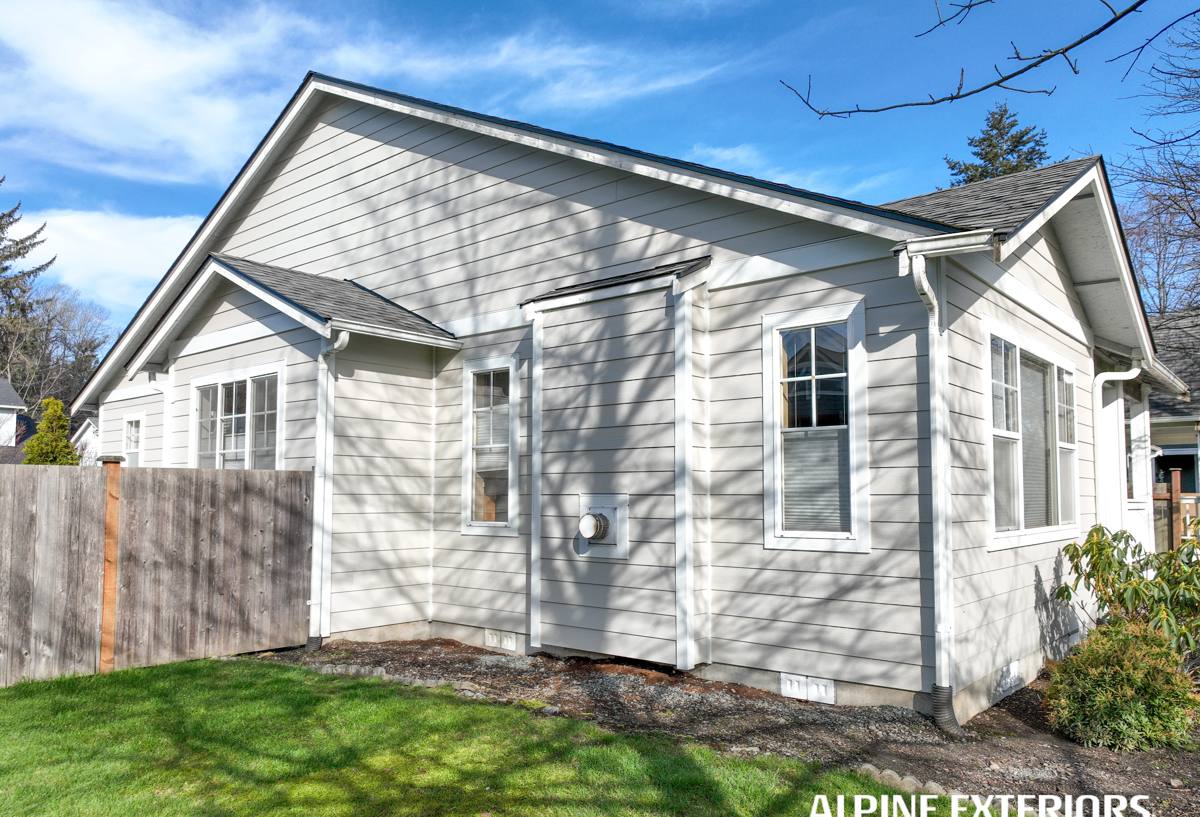
A roof doesn't work in isolation. It's part of a whole exterior envelope working together with siding, flashing, and drainage to keep water out of a house — which matters even more in a climate that stays wet for months at a stretch. If your roof is due for replacement, it's often a good time to have the rest of the exterior looked at too, since moisture issues at trim, siding, and flashing intersections tend to show up around the same age as roof problems.
If you're not sure whether your roof needs a repair or a full replacement, we're happy to take a look and give you a straight answer — no pressure, no obligation. Reach out for a free estimate using the form below.