 Seattle
 Shoreline Sits Right at the Edge of the Weather
Shoreline occupies a strip of King County wedged between Puget Sound and Lake Washington's watershed, just north of Seattle city limits. That position is part of what makes the neighborhood desirable — water views, mature tree canopy, easy access to the city — and it's also exactly why homes here take a different kind of beating than homes twenty miles inland. Salt-laden air off the Sound, rain that comes in sideways during winter storms, and a moss season that seems to stretch longer every year all work on a house's exterior in ways that are easy to underestimate until you're dealing with a rot repair or a roof replacement ten years earlier than you expected.
We work on homes throughout Shoreline and the rest of King County, and the exterior problems we see here have a consistent signature: moisture that finds its way in through small gaps, wood trim and siding that fail from the back side before anyone notices a problem from the street, and roofs that hold onto moss and shade far longer than they would in a drier climate. None of that is unusual or alarming — it's just what living near Puget Sound does to a building envelope. The point of this page is to walk through what that actually means for siding, roofing, windows, and decks, and how we approach each one differently because of where you live.
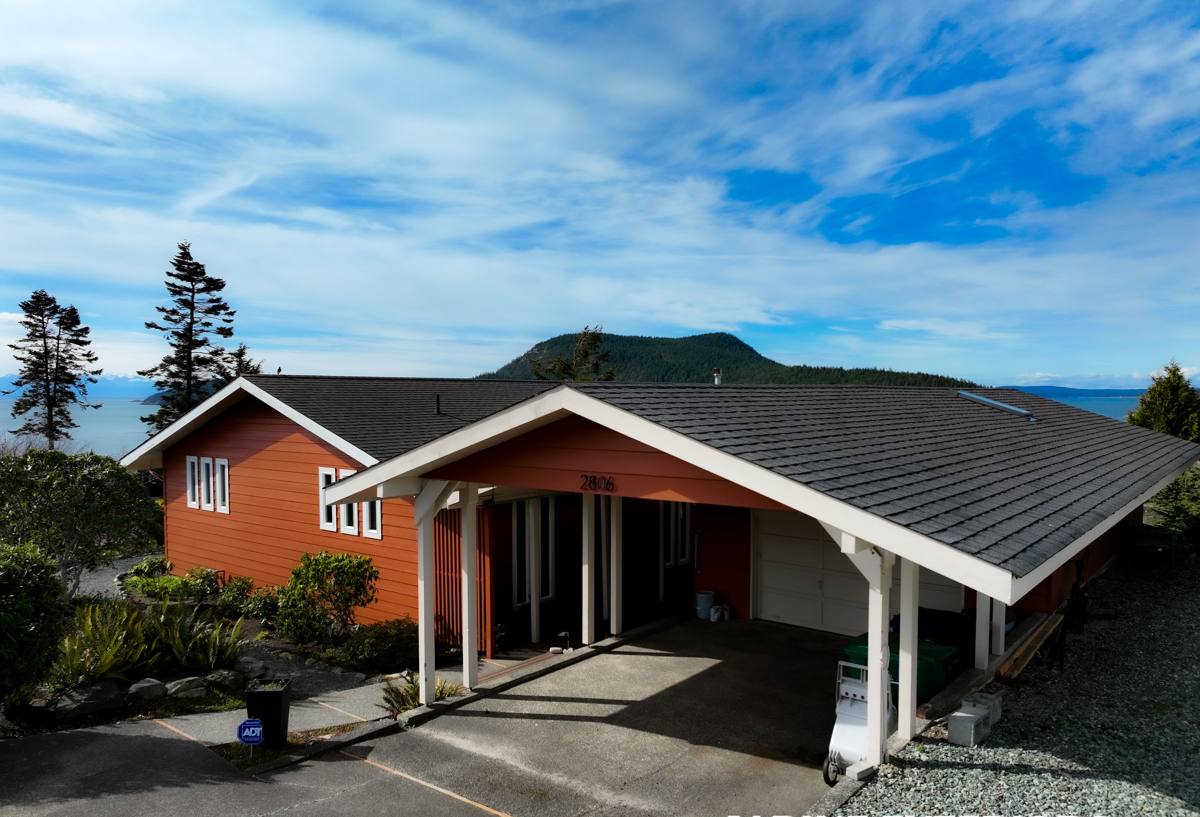
What Salt Air and Driving Rain Actually Do
Salt air doesn't just affect boats and metal railings. Airborne salt is hygroscopic — it pulls moisture out of the air and holds it against whatever surface it lands on, which means painted wood trim, fasteners, and even some siding materials stay damp longer than they would a few miles inland. Over years, that constant low-grade dampness accelerates corrosion in fasteners and hardware, and it keeps wood-based products at a moisture level where rot organisms can get established.
Driving rain adds a second, different problem: wind-driven water doesn't fall straight down, it gets pushed sideways and upward under laps, around window flanges, and into any seam that wasn't detailed correctly. A siding or trim system that works fine in a light, straight-down rain can still leak in a Puget Sound storm if the flashing and lap details weren't built for wind-driven water. This is a big part of why installation quality matters as much as the material itself — a good product installed with weak flashing details will still leak here.
Where This Shows Up First
- Bottom edges of siding near grade, where splashback and standing moisture concentrate
- Window and door trim, especially on the sides that face the Sound or prevailing weather
- Fascia and rake boards under gutters that overflow during heavy rain
- Deck ledger boards and post bases, where wood sits closest to constant moisture
- North- and shade-facing roof slopes that never fully dry out between storms
Moss Season: Longer Here Than Most Homeowners Expect
Shoreline's tree cover is one of the neighborhood's best features, and it's also the reason moss gets such a strong foothold on roofs here. Shade plus consistent moisture is exactly what moss needs, and a lot of King County's rain falls in the cooler months when roofs have the least chance to dry between storms. Moss on a roof isn't just cosmetic — it holds water against shingles, works into laps and edges, and can lift shingle tabs enough to let wind-driven rain underneath. Left unmanaged for years, moss growth shortens the useful life of an otherwise sound roof.
We don't sell moss treatment as a standalone service, but it's part of how we think about roof design and maintenance recommendations for homes in shaded, moisture-heavy areas like Shoreline. Proper ventilation, appropriately spec'd underlayment, and keeping gutters clear so water isn't backing up under the edge all reduce how aggressively moss takes hold in the first place.
Why We Install Only James Hardie Siding — No Exceptions
This is the single biggest decision we've made as a company, and it's worth explaining plainly rather than just stating it. We do not install vinyl siding, LP SmartSide, Cemplank, Allura, primed spruce, or cedar. We install James Hardie fiber cement, exclusively. That's not a marketing position — it's a standard we hold because of what we've seen happen to the alternatives in exactly this kind of climate.
Wood-based products — cedar, primed spruce, engineered wood siding like LP SmartSide — depend on their protective coating and correct detailing to keep moisture out. In a marine climate with salt air and driving rain, any gap in that protection (a caulk joint that fails, a cut edge left unsealed, a lap that traps water) becomes an entry point for rot. Vinyl siding handles moisture fine on its own, but it's dimensionally unstable in temperature swings, can crack in impact-prone areas, and doesn't offer the fire performance or resale profile that Hardie does. Cemplank and Allura are also fiber cement, and they're reasonable products — but we standardized on one manufacturer, one factory finish system, and one warranty structure so we can stand fully behind what we install rather than mixing products with different long-term track records.
James Hardie's fiber cement is non-combustible, doesn't rot, and holds its factory-applied ColorPlus finish far longer than field-applied paint on wood or vinyl's baked-in color. Hardie also engineers specific product lines (their HZ5 line, for instance) for regions with more moisture and temperature swing — which describes the Puget Sound climate well. The finished product carries a strong, transferable manufacturer warranty, which matters both for your peace of mind and for resale.
What This Means in Practice for a Shoreline Home
| Concern | Wood / engineered wood | Vinyl | James Hardie fiber cement |
|---|---|---|---|
| Rot risk from salt air & driving rain | High if any coating or seal fails | Not rot-prone, but seams can leak behind it | Does not rot; moisture-resistant core |
| Fire performance | Combustible | Combustible, can deform under heat | Non-combustible |
| Color/finish longevity | Repaint every 5-8 years typical | Color baked in but can fade/chalk | ColorPlus finish, long factory warranty |
| Dimensional stability | Moderate; wood moves with moisture | Expands/contracts noticeably with heat | Very stable across temperature swings |
| Typical warranty | Varies by manufacturer, often shorter | Prorated, product-only common | Long-term, transferable |
Roofing Built for a Marine, Moss-Prone Climate
Roof work in Shoreline isn't fundamentally different from roofing anywhere else in King County, but the details we pay closest attention to reflect the local conditions: proper attic and roof ventilation so moisture doesn't get trapped underneath the deck, ice-and-water shield at eaves and valleys where wind-driven rain and occasional freeze events are hardest on a roof, and underlayment and fastening choices that hold up to sustained damp conditions rather than just occasional rain. We also pay attention to gutter sizing and placement, since Shoreline's tree cover means gutters clog faster here than in more open neighborhoods — and a clogged gutter backs water up under shingles at the eave, which is one of the more common causes of roof leaks we find in this area.
Windows: Comfort, Condensation, and a Wetter Climate
Older homes throughout Shoreline — a lot of the neighborhood's housing stock dates to the postwar decades — often still have original or early-replacement windows that were never built to today's energy or moisture standards. In a climate where humidity stays elevated much of the year, poorly sealed or single-pane windows show it in two ways: condensation between the glass and frame that eventually leads to wood rot in the sill, and noticeably higher heating bills in a house that never quite feels warm. Replacement windows installed correctly — with proper flashing integrated into the wall assembly, not just caulked around the edges — solve both problems at once and are one of the more cost-effective upgrades for an older Shoreline home.
Decks: The Component That Takes the Most Direct Abuse
A deck in this climate spends most of the year wet. Ledger boards, post bases, and any horizontal surface that collects standing water are the first places we look when we inspect an older deck, because that's where rot typically starts — often invisibly, from the underside, well before it shows up on the surface. Proper flashing at the ledger connection, post bases that keep wood off concrete or grade, and decking materials chosen with this climate in mind all extend a deck's working life significantly. We build and repair decks with those details as the starting point, not an upsell.
Why a Local Crew Matters Here
Exterior work in Shoreline benefits from a crew that already knows the specific failure patterns this climate produces — where moss builds up fastest, which sides of a house take the worst wind-driven rain, how far tree roots and shade extend into a property and affect drainage. That's the kind of knowledge that comes from working in King County's Puget Sound communities repeatedly, not from a generic install checklist. It also means faster response for warranty work or follow-up questions, since we're not traveling in from out of the area.
What a Project Typically Involves
Every home is different, but most exterior projects in Shoreline follow a similar arc: an on-site assessment of the specific problem areas (often starting with whichever elevation faces the prevailing weather), a clear explanation of what's driving the issue — moisture, age, original installation quality — and a scope that addresses the cause, not just the visible symptom. For siding specifically, that means we're also checking the water-resistive barrier and flashing details underneath, since a beautiful new exterior over a bad moisture plane will just fail again later.
Questions Worth Asking Before You Hire Anyone for Exterior Work in This Climate
- Do they explain how their materials and details handle wind-driven rain specifically, not just general weather?
- Do they check and address the moisture barrier and flashing, or just replace the visible surface?
- Can they explain why they recommend one siding material over another for this specific climate?
- Do they carry manufacturer certifications relevant to the products they're installing?
- Will the warranty transfer if you sell the home?
- Do they have experience with the specific moss and drainage patterns common in shaded King County lots?
Cost Factors to Expect
Exact pricing depends on the size and condition of the home, but a few factors consistently move the number for Shoreline projects specifically: the amount of hidden rot repair needed once old siding or roofing comes off (common in homes with deferred maintenance near the Sound), the complexity of flashing details around windows and rooflines, and access — mature trees and tighter lots can add setup time compared to a wide-open suburban lot. We give straightforward, itemized estimates rather than a single flat number, so you can see exactly what's driving the cost.
If your Shoreline home is due for new siding, a roof, replacement windows, or deck work, we're happy to come take a look and give you a straightforward, no-pressure estimate — including an honest read on what your home's exterior is actually dealing with and what we'd recommend fixing first.