 Seattle
 Exterior Work in Columbia City, Seattle
Columbia City sits inland from Lake Washington in south Seattle, a neighborhood with a mix of early-1900s bungalows, mid-century infill, and newer construction packed close together on tree-lined streets. That mix means we see a wide range of exterior conditions on any given block — a century-old house with layers of old paint and patched siding next door to a home built in the last decade that's already showing its first signs of wear. What ties it all together is the climate. Seattle's marine weather doesn't care how old your house is, and King County's wet season puts every exterior surface to the test, year after year.
We're a local exterior contractor working siding, roofing, windows, and decks across the Seattle area, and Columbia City is regularly on our schedule. This page covers what we actually see on homes in this part of the city, how we approach the work, and why we've standardized on one siding product instead of offering the full menu.
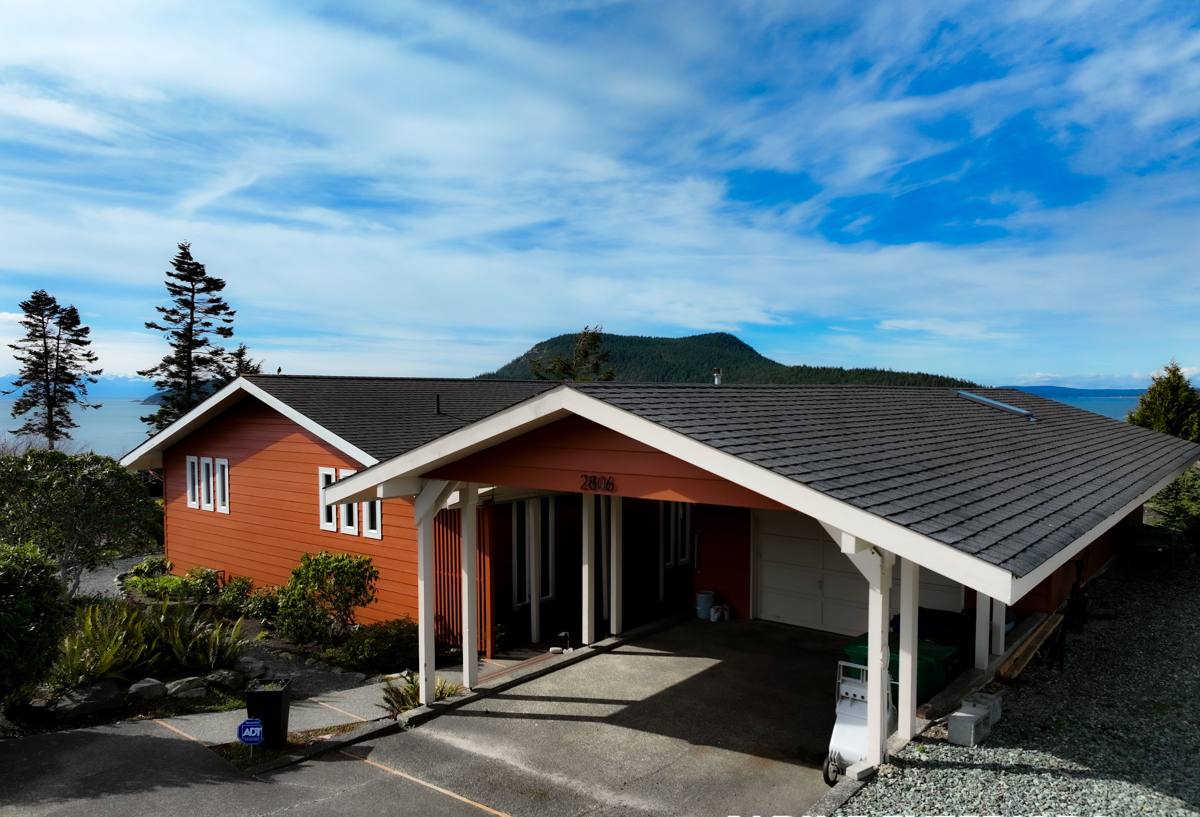
What the Climate Does to Columbia City Homes
Seattle's Pacific Northwest climate is mild in temperature but relentless in moisture. Columbia City doesn't get hurricane-force weather, but it gets something arguably harder on a house: months of low-intensity rain, gray humid stretches, and long shoulder seasons where wood, paint, and caulking never fully dry out between storms.
Driving Rain and Wind-Driven Moisture
Storms coming off the Sound and Puget lowlands often bring rain at an angle rather than straight down. That driving rain finds its way into anything less than well-sealed — lap siding with failed caulk joints, window flashing installed without the right laps, deck ledger connections, and roof penetrations around vents and chimneys. On older homes in Columbia City, we regularly find moisture intrusion at these exact points, sometimes well before it's visible from the street.
Moss, Algae, and the Long Wet Season
King County's extended damp season is ideal for moss and algae growth on north-facing walls, roof valleys, and anywhere shaded by mature trees — and Columbia City has plenty of tree canopy. Moss holds moisture against a surface far longer than open air would, which accelerates rot in wood siding and trim and shortens the life of roofing material. It's a slow, cumulative problem rather than a dramatic one, which is exactly why it gets ignored until it isn't.
Salt Air and Proximity to Water
Columbia City's elevation and distance from open salt water is greater than waterfront neighborhoods, but Seattle as a whole sits in a marine environment, and airborne salt combined with humidity still contributes to corrosion on fasteners, flashing, and metal trim over time. It's a slower factor here than in a beachfront town, but it adds to the overall moisture load a house has to manage.
Siding: Why We Only Install James Hardie
We get asked why we don't offer vinyl, LP SmartSide, cedar, primed spruce, or other fiber cement brands. It's a fair question, and the honest answer is that we made a standard based on what holds up in this climate with the least long-term maintenance burden.
The Trade-Offs We Weighed
- Wood siding (cedar, primed spruce): Looks great new, but it's organic material in a climate that stays wet for months. It needs regular repainting and caulk maintenance, and once moisture gets behind it, rot can spread before it's visible.
- Vinyl siding: Low maintenance and inexpensive, but it can warp or crack in temperature swings, and its seams and J-channels are common points where wind-driven rain gets behind the cladding — a real issue given how much driving rain this area sees.
- LP SmartSide: An engineered wood product with real improvements over old wood siding, but it's still wood-based, meaning it depends on cut-edge sealing and caulk maintenance staying ahead of moisture, which is a harder bar to clear in a climate this wet.
- Other fiber cement brands (Cemplank, Allura): Chemically similar to James Hardie in many respects, but we standardized on one manufacturer so our crews install one system to spec every time, and so our warranty coverage is consistent and backed by a manufacturer with a long track record.
James Hardie fiber cement is non-combustible, dimensionally stable in wet-dry cycling, and its ColorPlus factory-applied finish is baked on under controlled conditions rather than field-painted — which matters in a region where field-applied paint rarely gets ideal drying weather. Hardie also engineers climate-specific product lines (HZ5 for the Pacific Northwest's wet, moderate climate), so the material itself is matched to what Columbia City actually experiences.
James Hardie Product Lines We Use
| Product | Common Use | Why It Fits Here |
|---|---|---|
| HardiePlank lap siding | Primary wall cladding | Traditional lap look, engineered for wet climates, factory-finished |
| HardiePanel | Modern vertical/board-and-batten looks | Popular on newer Columbia City infill and remodels |
| HardieTrim | Window/door trim, fascia, corners | Resists the rot common in wood trim on older homes |
| HardieShingle | Accent siding, gable detailing | Matches the character of Craftsman-era bungalows common in the area |
Correct installation matters as much as the product itself — proper clearance from grade and decks, correct fastening, sealed cut edges, and flashing details that shed water rather than trap it against the wall. We install to Hardie's published specifications, which is also what keeps the manufacturer's warranty intact.
Roofing in Columbia City
Most homes here run standard composition shingle roofs, with some older homes carrying cedar shake or flat/low-slope sections over additions and porches. In this climate, roof failures are rarely dramatic — they're slow leaks that start at valleys, flashing, or moss-clogged areas and work their way into decking and framing over a season or two before anyone notices a stain on the ceiling.
We check flashing at chimneys, skylights, and roof-to-wall transitions closely, since these are the spots wind-driven rain exploits first. Moss removal and gutter maintenance go a long way toward extending roof life here, but once shingles are cupping, cracking, or losing granules, patching stops being cost-effective and full replacement becomes the better long-term investment.
Windows
Window replacement in an older Columbia City home is as much about the flashing and sealing detail as it is about the window unit itself. A high-efficiency window installed with poor flashing will still leak; a modest window installed correctly, with proper integration into the siding weather barrier, will perform far better over time. We pay close attention to that integration point, especially on homes where we're also doing siding work, since it's the easiest time to get the flashing right.
Decks
Decks in this part of Seattle take a beating from the same wet cycle that affects siding and roofing — ledger board connections, joist hangers, and any wood-to-wood contact points are where we find rot first. Composite decking has become a common upgrade for homeowners who are tired of annual staining and sealing, but the structural framing underneath still needs to be built and flashed correctly regardless of what decking material sits on top. We evaluate the substructure honestly rather than just covering it up.
What a Project Looks Like
Typical Process
- On-site assessment — we look at existing siding, trim, moisture points, and roof condition together, since these systems interact
- Honest scope discussion — repair vs. replace, and why
- Written estimate with material specifics, not vague allowances
- Scheduled work with weather-aware sequencing, since Seattle's wet season limits open-wall time
- Final walkthrough and warranty documentation
Questions Worth Asking Any Contractor Before You Hire
- Are you licensed and insured to work in Washington State, and can you provide proof?
- Who is actually on the crew doing the work — employees or subcontractors?
- What specific product lines and flashing details will be used, not just a brand name?
- What does the warranty cover, and is it backed by the manufacturer or just the contractor?
- How do you sequence work around our wet season to protect open walls or roof areas?
Why a Local Crew Matters Here
Columbia City's housing stock and its exposure to Seattle's rain, moss, and marine air aren't the same as a dry-climate suburb or a coastal town further from the Sound. A crew that works this specific area regularly knows which details fail first on which house styles, and installs accordingly — tighter flashing laps, correct clearances at grade, and material choices matched to a climate that stays wet for a large part of the year. That local pattern recognition is hard to replace with a general contractor working from a different region's playbook.
If you're weighing a siding, roofing, window, or deck project in Columbia City, we're happy to come take a look and give you a straightforward, no-pressure estimate — just fill out the form below.