 Seattle
 Window Replacement Built for Columbia City's Climate
Columbia City sits inside one of Seattle's older, more established residential pockets in King County, with a housing stock that spans early-1900s bungalows, mid-century additions, and newer infill construction. Whatever the vintage, the windows on these homes are fighting the same battle every year: months of driving rain, damp salt-tinged air moving in off Puget Sound, and a moss season that seems to start earlier and last longer with each passing winter. Windows are one of the first places that fight shows up — as fogged glass, swollen sashes, drafts you can feel with your hand, or trim that's gone soft at the corners.
Replacing windows here isn't just a cosmetic upgrade. Done right, it's a moisture-management project as much as an energy-efficiency one. Done wrong — or done by a crew unfamiliar with how Seattle weather behaves against a building — it can trap water instead of shedding it, which is a worse problem than the one you started with.
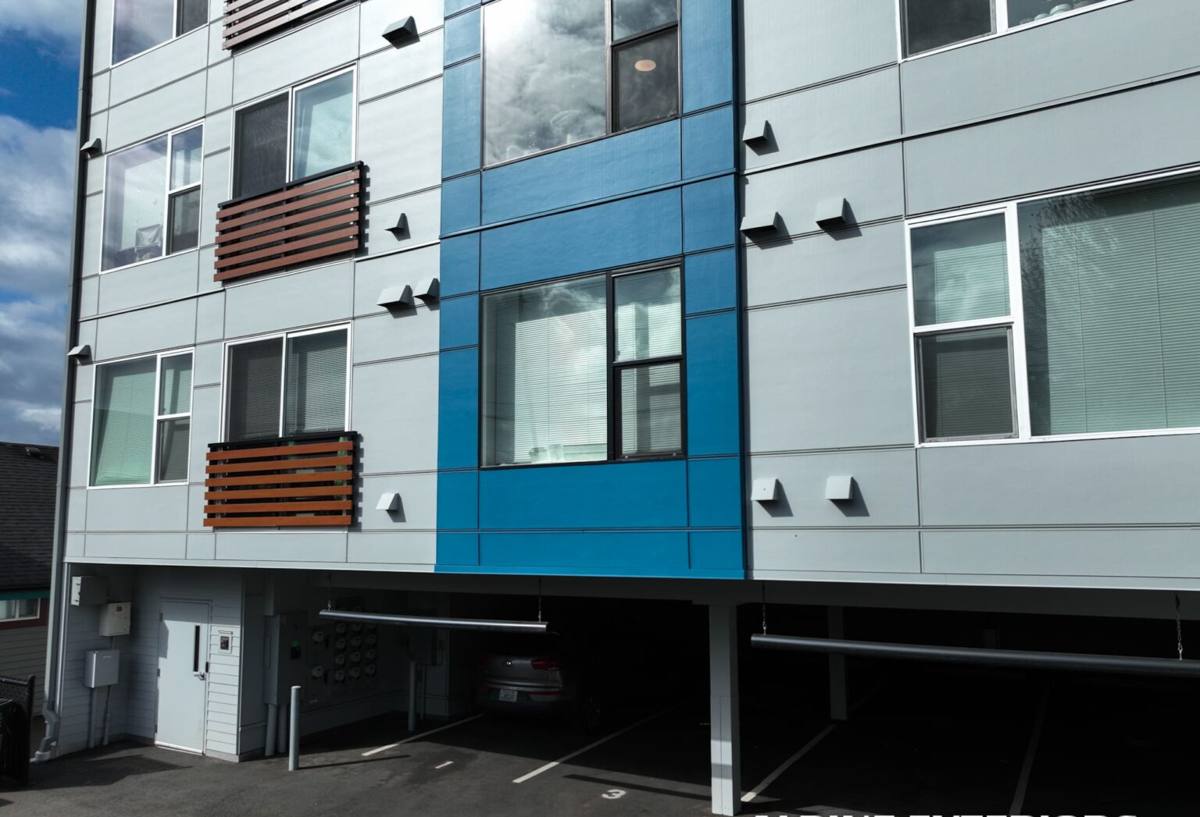
What Seattle's Climate Does to Older Windows
A few specific climate patterns drive most of the window problems we see in neighborhoods like Columbia City:
Driving Rain and Wind-Driven Moisture
Seattle rain rarely just falls straight down — wind pushes it sideways into wall assemblies and window openings, especially on exposed elevations. Old flashing details, dried-out caulk, and warped wood frames give that water a way in. Once moisture gets behind a window frame, it can sit there for months without ever fully drying, since our winters don't offer much sun or airflow to help.
Salt Air and Metal Fatigue
Being close to Puget Sound means a steady low-level exposure to salt-laden air. Over years, that air accelerates corrosion on aluminum frames, window hardware, and fasteners. It's a slow process, but it's cumulative — a 25- or 30-year-old window with visible pitting or a stiff, hard-to-operate lock is often further along than it looks from the curb.
Moss and Sustained Dampness
Moss doesn't just grow on roofs. On north-facing walls and shaded window sills that stay damp for long stretches, moss and algae take hold on sills, trim, and even glazing putty on older wood windows. That organic growth holds moisture against the wood, which speeds up rot at exactly the joints and corners that are hardest to repair without full replacement.
Condensation and Indoor Humidity
Single-pane and early dual-pane windows in this climate often show heavy interior condensation in winter, especially in bathrooms, kitchens, and bedrooms with less airflow. That condensation running down the glass and pooling on the sill is a slow but steady source of wood damage and, eventually, mold at the sill and lower sash.
Signs Columbia City Homeowners Should Watch For
- Visible fogging or a milky haze between the panes of a dual-pane window — a sign the seal has failed
- Soft, spongy, or discolored wood at the sill, lower sash, or corners of the frame
- Moss, algae, or dark staining on sills and exterior trim that keeps coming back after cleaning
- Windows that are difficult to open, close, or lock, especially aluminum-frame units
- A noticeable draft near the window even when it's fully closed and latched
- Rising energy bills without a clear explanation, particularly in older single-pane homes
- Paint that's bubbling or peeling on interior or exterior trim near the window opening
What a Correct Window Replacement Involves
Swapping in a new window is the easy part. The work that actually determines whether that window lasts happens around it.
Inspecting the Opening, Not Just the Glass
Before anything goes in, we check the condition of the framing, sill, and sheathing behind the old window. In a climate this wet, it's common to find soft or damaged wood that isn't visible until the old unit is out. Installing a new window over hidden rot just buries the problem behind a nicer-looking frame.
Flashing and Water Management
This is the step that separates a window that lasts decades from one that fails early in a place like Seattle. Proper flashing — at the head, jambs, and especially the sill — directs any water that gets past the exterior cladding back out, instead of letting it collect against the framing. Given how much wind-driven rain this area sees, we treat flashing as non-negotiable, not an upsell.
Sealing and Insulating the Gap
The gap between the new window frame and the rough opening needs to be insulated and air-sealed correctly — not overpacked with expanding foam that can bow the frame, and not left with gaps that let air and moisture through. This is a detail that's easy to rush and hard to inspect once trim is back on.
Exterior Trim and Finish Work
Trim, caulking, and paint or finish aren't cosmetic afterthoughts — they're the first line of defense against the driving rain this region gets. We match the finish work to what actually sheds water in this climate, not just what looks good on install day.
Choosing Windows for a Columbia City Home
There's no single "best" window — the right choice depends on the home's age, exposure, and your priorities. A few honest trade-offs worth knowing:
| Factor | What to Consider Locally |
|---|---|
| Frame Material | Vinyl and fiberglass resist salt-air corrosion better than bare aluminum; wood-clad options offer a traditional look but need more maintenance in a wet climate |
| Glazing | Dual-pane is the practical minimum here; low-E coatings help with both winter heat loss and summer glare without changing the window's look |
| Sill Design | A sill that sheds water cleanly, without flat spots where moss and standing water can collect, matters more here than in drier climates |
| Operable Style | Casement windows tend to seal tighter against wind-driven rain than sliders; double-hungs are a common, practical middle ground for older homes |
| Maintenance Load | Whatever you choose, plan on periodically checking caulk lines and sills for early moss or gaps — even good windows need occasional attention here |
We'll walk through these trade-offs against your specific home and exposure rather than pushing one product line — the right window is the one that matches how your house sits relative to weather and sun, not a one-size answer.
Why We Don't Cut Corners on Certain Products
We're selective about a few things, and it's worth being upfront about why. Bare aluminum-frame windows without a protective finish tend to corrode faster given the salt air near the Sound, so we steer homeowners toward frames with better corrosion resistance for this specific location. We're also cautious with low-end vinyl units that use thin, flexible frame profiles — in high-wind, high-rain conditions they can flex enough over time to stress the seals at the corners, leading to earlier seal failure. None of this is about bad-mouthing a brand; it's about matching materials to what this climate actually does to a building over 15-20 years, and being honest when a cheaper option carries a real maintenance trade-off.
Our Process for Columbia City Projects
- On-site assessment — we look at each window's condition, the surrounding trim and siding, and any signs of past water intrusion
- Honest recommendation — full replacement where warranted, repair where that's genuinely the better call, and a clear explanation either way
- Detailed estimate — itemized, so you can see what's covered: units, flashing, insulation, trim, and finish work
- Scheduled installation — timed with an eye on weather, since flashing and sealing work goes best in a dry window
- Final walkthrough — checking operation, seals, and finish work together with you before we consider the job done
Why Local Experience in This Neighborhood Matters
Columbia City's mix of older wood-frame homes and newer construction means there's no single standard detail that applies everywhere — a bungalow with original trim needs a different approach than a home built in the last decade. A crew that's already worked on homes in this part of Seattle has a feel for how these specific houses were built, where water tends to find its way in, and how to match new work to existing trim and siding without it looking bolted on. That local pattern recognition is hard to replace with a generic install checklist, and it's usually the difference between a window that performs for 20-plus years in this climate and one that starts showing problems in five.
Get a Free, No-Pressure Estimate
If your windows in Columbia City are fogging, drafty, sticking, or showing wood damage at the sill, it's worth getting a straight assessment before the next wet season sets in. Fill out the form below for a free estimate — no pressure, just an honest look at what your home actually needs.