 Seattle
 What Redmond's Climate Does to a House
Redmond sits on the Eastside of King County, tucked between Lake Washington and the Cascade foothills, with the Sammamish River and Lake Sammamish nearby. That geography matters more than most homeowners realize. The tree cover is heavy, the humidity lingers under the canopy, and the region gets a long stretch of gray, wet months where surfaces rarely get a full day to dry out. Redmond doesn't sit directly on Puget Sound the way some western King County communities do, so the salt-laden air that eats at hardware and finishes closer to the water is a smaller factor here. But the broader Puget Sound region's marine climate still shapes what a house needs to survive: sustained moisture, driving wind-blown rain during winter storms, and a moss and mildew season that can run from fall through spring.
Homes here deal less with dramatic weather events and more with slow, cumulative exposure — months of dampness working into seams, fastener points, and anywhere water can collect and sit. That's the real enemy in a place like Redmond: not a single storm, but the steady grind of a wet season repeated year after year.
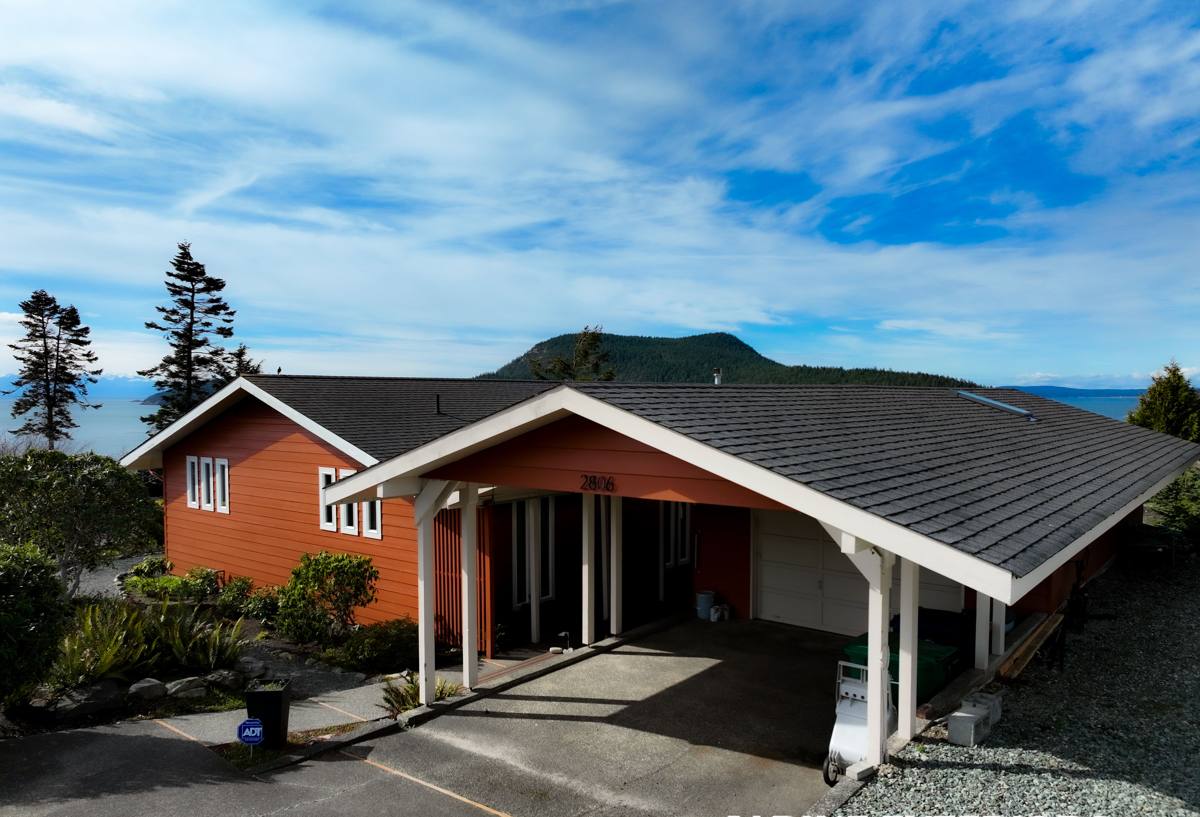
Siding: Why Moisture Behavior Is the Whole Ballgame
In a climate like Redmond's, the single biggest predictor of how well siding performs isn't the color or the brand name — it's how the material handles sustained moisture and how forgiving it is of the inevitable small install imperfections that show up on every real job site.
The Moss and Mildew Problem
Shaded lots, mature trees, and long damp stretches without direct sun create ideal conditions for moss, algae, and mildew to take hold on north-facing walls and anywhere siding stays wet longer than it should. Materials that absorb moisture or hold it against the substrate accelerate that growth and, over years, can lead to soft spots, delamination, or paint failure. Materials that resist water absorption and shed it cleanly hold up far better with the same amount of exposure.
Driving Rain and Wind-Driven Moisture
Wind-driven rain during winter storms doesn't just hit siding straight-on — it gets pushed sideways and upward into laps, corners, and trim intersections. Correct flashing, proper lap spacing, and a material that doesn't swell or cup when it takes on moisture at those joints are what actually keep water out over a 20-30 year timeline, not just how the product looks on day one.
Why We Only Install James Hardie Fiber Cement
This company made a deliberate decision to install one siding system — James Hardie fiber cement — and to stop installing everything else. That's not a marketing position, it's a standard we hold ourselves to because of what we've seen play out on homes in this climate over time.
Fiber cement is engineered from cement, sand, and cellulose fibers. It doesn't absorb water the way wood-based products can, it doesn't require the same paint-film maintenance cycle that primed wood siding does, and it's non-combustible, which matters increasingly to insurers and to homeowners thinking about wildfire smoke and ember exposure even on the wet side of the state. Hardie's ColorPlus factory-applied finish is baked on and backed by its own finish warranty, so homeowners aren't relying on a field-applied paint job to hold up against years of Eastside rain.
Why Not the Alternatives
We get asked why we don't install LP SmartSide, vinyl, Cemplank, Allura, primed spruce, or cedar. Each has a legitimate place in the market and none of them are "bad" products — but each comes with trade-offs we're no longer willing to install and then be responsible for over the following two decades:
- Vinyl is inexpensive and low-maintenance, but it expands and contracts with temperature swings, can crack in cold snaps, and doesn't offer the same fire performance or resale perception as fiber cement.
- LP SmartSide and other engineered wood products perform well when installation and maintenance are followed exactly to spec, but they're wood-based at the core, meaning moisture management and caulking upkeep are non-negotiable in a climate this wet.
- Primed spruce and cedar are traditional and attractive, but raw or primed wood siding demands an ongoing repaint and caulk maintenance schedule to keep water out — a demanding commitment in a region where the siding rarely gets a long dry stretch to fully cure between rains.
- Cemplank and Allura are also fiber cement products and share some of Hardie's core advantages, but we've standardized on one manufacturer, one HZ climate-engineered product line, and one factory finish system so every crew member installs to the same spec and every warranty claim goes through the same channel.
Standardizing on a single system also means our crews aren't relearning different manufacturers' installation quirks from house to house — which matters more than it sounds like when the whole point of good siding work is getting the moisture details right the first time.
Roofing: The Other Half of the Water Management Story
Siding and roofing aren't separate problems — they're one water-management system. A roof that's shedding water properly but dumping it against a wall without adequate flashing or kickout diverters will find a way to soak siding from above no matter how good the siding itself is. In Redmond's tree-heavy neighborhoods, roofs also deal with needle and leaf debris that holds moisture against shingles and valleys, accelerating moss growth and granule loss if gutters and valleys aren't kept clear.
When we're on a roof for a repair or full replacement, we're also looking at the transitions — step flashing at wall intersections, valley metal, and vent boots — because those are the spots where a small gap becomes a slow leak that shows up as a stain or soft spot on an interior wall months later.
Windows: Sealing the Building Envelope
Older windows in this area often show their age less through glass failure and more through failed seals around the frame — the caulking and flashing that ties the window into the wall system. When that seal fails, water finds its way behind siding and trim even if the siding itself is in good shape. Window replacement is also one of the more direct paths to lower heating bills in a region where the heating season runs long, and it's a natural project to pair with siding work since both jobs open up the same wall sections.
Decks: Built for a Climate That Rarely Lets Wood Dry Out
Decks in Redmond face a version of the same moisture problem as siding, just underfoot. Ledger board connections, joist tops, and anywhere two pieces of framing meet are where water collects and lingers under shaded, tree-covered lots. Proper flashing at the ledger, adequate joist spacing and drainage, and decking material chosen with this climate in mind all matter more here than they would in a drier part of the country. We build and repair decks with that moisture reality in mind rather than treating it as an afterthought to the framing.
What a Local Crew Actually Changes
A lot of exterior work gets sold by companies that are really just a phone number dispatching whichever crew is available that week. The difference with a local, Seattle-area crew is accountability and familiarity with how houses in this specific region actually fail. We've seen what a Redmond winter does to a poorly flashed corner, what a shaded north wall does to siding that can't shed moisture, and what happens when a deck ledger isn't detailed correctly for a wet climate. That local pattern-recognition is what keeps small mistakes from becoming callbacks two years later — and it's also what makes a warranty mean something, since we're not disappearing out of the area once the invoice is paid.
How We Approach a Redmond Job
- Walk the exterior and identify moisture-vulnerable areas — shaded walls, low-slope roof transitions, ledger connections, and existing trouble spots.
- Assess what's actually driving any current damage (moss growth, failed caulk, poor flashing, material fatigue) rather than just replacing what's visible.
- Recommend the scope that solves the underlying water-management problem, not just the cosmetic symptom.
- Detail every transition — window and door openings, roof-to-wall intersections, deck ledgers — to the level that actually keeps water out over decades, not just years.
- Stand behind the work with a manufacturer-backed warranty on materials and our own workmanship warranty on the install.
Comparing Siding Options for This Climate
| Material | Moisture Resistance | Maintenance Burden | Fire Rating | Typical Finish Life |
|---|---|---|---|---|
| James Hardie Fiber Cement | High — engineered for climate-specific moisture exposure | Low — factory ColorPlus finish, minimal recaulking | Non-combustible | Long-life factory finish, warrantied by manufacturer |
| Vinyl | Moderate — doesn't rot, but seams and expansion gaps can let water track behind panels | Low, but limited repair options if damaged | Combustible, can deform under heat | Color can fade; no refinishing option |
| Primed Wood / Cedar | Lower — absorbs moisture if finish fails | High — regular repainting and caulk maintenance | Combustible | Repaint cycle typically every 5-8 years |
| Engineered Wood (e.g. LP SmartSide) | Moderate — depends heavily on correct install and maintenance follow-through | Moderate — finish and edge sealing upkeep required | Combustible | Factory finish life varies by product line |
Signs Your Redmond Home's Exterior Needs a Look
- Dark green or black streaking on north-facing or shaded siding — early moss and algae growth
- Soft or spongy spots when you press on siding near the bottom courses or around window trim
- Visible gaps, cracking, or peeling paint at siding seams and corners
- Granule buildup in gutters or bald spots on asphalt shingles
- Interior staining on ceilings near roof-to-wall intersections or below window headers
- Deck boards that stay damp or feel soft near the house connection long after rain has stopped
- Drafts or fogging between window panes, signaling a failed seal
Hiring the Right Contractor for This Work
Because so much of what determines long-term performance happens at flashing details and moisture transitions that aren't visible once a project is finished, the contractor's process matters as much as the material. Ask any exterior contractor how they handle flashing at roof-to-wall intersections, how they space and fasten siding for this climate, and what warranty actually covers — on the material and on the labor. A contractor confident in their process will walk you through it without hesitation.
If your Redmond home's siding, roofing, windows, or deck are showing wear, or you're planning ahead of a sale or a long-term hold, we're glad to walk the exterior with you and give you a straightforward, no-pressure assessment. There's a free estimate request form below — reach out and we'll take a look.