 Seattle
 Board & Batten Siding, Built for Redmond's Climate
Board and batten has become one of the most requested looks in Redmond — clean vertical lines, strong shadow definition, and a modern-farmhouse or Craftsman feel that pairs well with the area's newer construction and remodeled ranch homes alike. But the look is only half the story. In King County, siding doesn't just have to look good on installation day — it has to survive years of Pacific Northwest rain, shoulder-season damp, and the moss and algae growth that comes with our shaded, moisture-heavy climate. Redmond sits inland from the direct salt exposure of Puget Sound's outer shoreline, but the region's marine-influenced weather still means long stretches of overcast, wet conditions and homes tucked under mature tree canopy that rarely get a full dry-out between storms. That combination is exactly where board and batten siding either performs for decades or becomes a maintenance headache, depending on the material and the installation.
We install board and batten in one material only: James Hardie fiber cement. This page covers what that means specifically for a Redmond project — the climate demands, what correct installation looks like, and how our process works from estimate to final walkthrough.
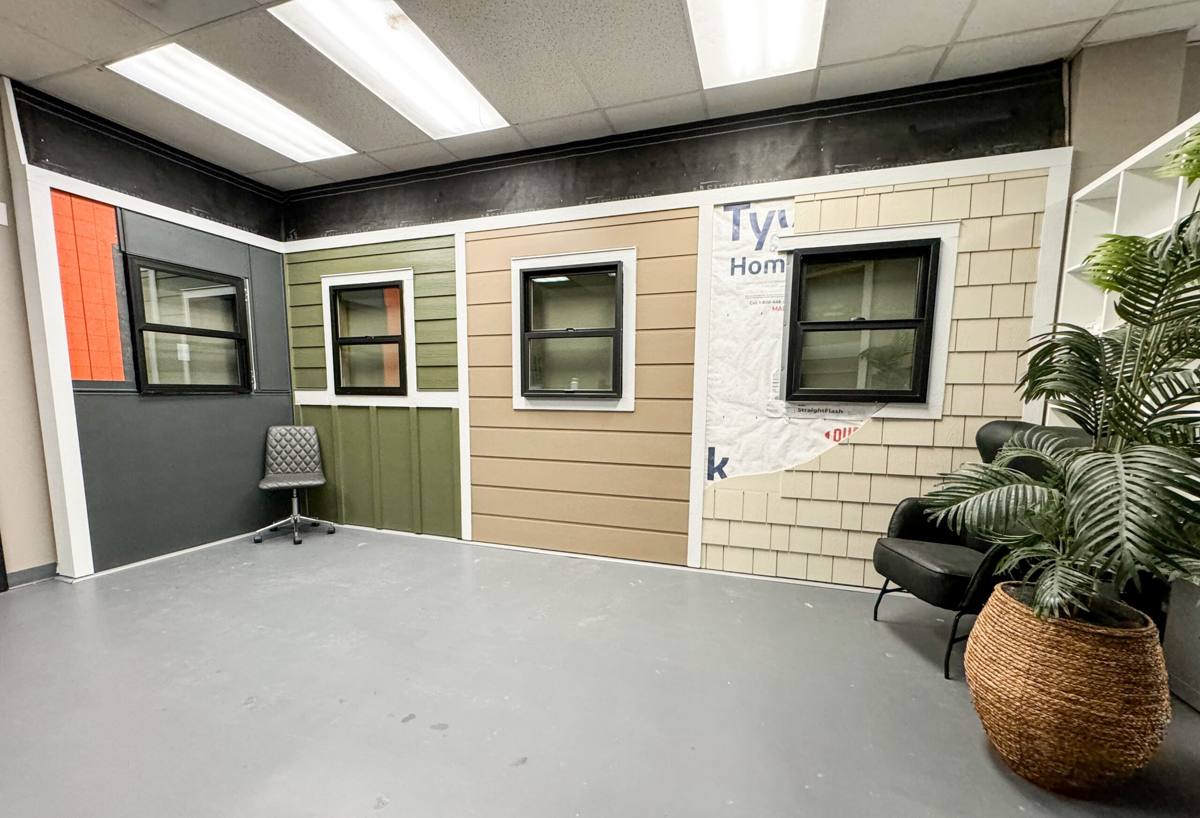
Why Redmond's Climate Is Tougher on Vertical Siding Than It Looks
Board and batten relies on vertical boards with raised battens covering the seams. That's a great design for shedding water when it's built correctly, but it also creates more seams, more fastener penetrations, and more edges than a standard lap siding job — every one of those details is a potential point of failure if the wrong material or a rushed install is used.
What our wet season does to siding over time
- Driving rain: Wind-driven rain in fall and winter pushes moisture sideways into seams and butt joints, not just straight down the wall.
- Extended damp periods: Redmond can go weeks in the winter without a full dry cycle, especially on north-facing walls and homes shaded by mature trees — a common feature in many established Redmond neighborhoods.
- Moss and algae growth: Persistent moisture plus shade is a moss factory. Untreated or absorbent siding materials give moss and algae something to root into over time.
- Freeze-thaw cycling: It's not extreme here, but Redmond does get enough winter cold snaps that any siding material holding moisture will expand and contract, stressing joints and finishes.
None of this is unique to board and batten specifically — but because the style has more seams and more exposed vertical edges than lap siding, the margin for error on material choice and installation detail is smaller.
Why We Only Install James Hardie Board & Batten
Board and batten is traditionally associated with wood — and that's part of its visual appeal. But solid wood and engineered wood products absorb moisture at cut edges and panel faces, and in a climate like ours, that moisture absorption is what eventually drives rot, delamination, and the soft, swollen edges you see on older wood-look siding around the region. Vinyl board and batten avoids rot but is a poor match for the style's crisp, dimensional shadow lines — vinyl is thin, flexes with temperature, and telegraphs waviness on long vertical runs in a way that undercuts the whole point of choosing the style.
James Hardie fiber cement solves both problems. It's cement-based, not wood-based, so it doesn't absorb and swell the way wood products do, and it holds a straight, dimensional line the way vinyl can't. Hardie's factory-applied ColorPlus finish is baked on under controlled conditions and backed by a real finish warranty — meaningfully different from field-applied paint, which is the first thing to fail on lower-grade siding exposed to our rain and UV cycle. Hardie is also non-combustible, which matters given how often the region has dealt with wildfire smoke and regional fire risk in recent summers, even without direct exposure in Redmond itself.
We don't install board and batten in wood, engineered wood, or vinyl. It's a deliberate standard, not a lack of options — we've made the call that in this climate, fiber cement is the only material we're willing to put our name behind for this style.
Board & Batten Material Comparison
| Material | Moisture Behavior in Our Climate | Finish Longevity | Do We Install It |
|---|---|---|---|
| James Hardie fiber cement | Doesn't absorb and swell; resists moss/algae better than porous surfaces | Factory ColorPlus finish, long warranty | Yes |
| Solid or engineered wood | Absorbs moisture at cuts and joints; prone to swelling and rot over time | Field-applied paint/stain, shorter recoat cycle | No |
| Vinyl board & batten | Won't rot, but flexes and can warp with temperature swings | Color molded in, but fades and can look wavy on long runs | No |
What a Correct Board & Batten Installation Involves
The style's biggest risk isn't the material — assuming Hardie is used — it's installation detail. Board and batten fails prematurely almost always because of shortcuts at the seams, not because the boards themselves gave out.
The details that separate a correct install from a problem waiting to happen
- Proper water-resistive barrier and drainage plane: A correctly installed WRB and rainscreen gap behind the siding lets any moisture that does get past the surface drain and dry out, rather than sitting against the sheathing.
- Correct fastener placement and spacing: Hardie specifies exact nailing patterns and edge distances for board and batten profiles — get this wrong and you create stress points that crack the material or work loose over time.
- Batten strip fastening independent of the field board: Battens need to be fastened in a way that allows for the material's normal expansion and contraction without binding.
- Flashing at every horizontal transition: Window heads, belly bands, and roof-to-wall intersections all need proper flashing detail — board and batten's vertical lines make poor flashing more visually obvious, not less.
- Caulking and sealant only where specified: Over-caulking traps moisture; under-caulking lets it in. Hardie's install guides are specific about where sealant belongs and where it doesn't.
We install to Hardie's published fastening and clearance specifications, not a generalized "siding install," because board and batten punishes shortcuts faster than lap siding does.
Our Process for a Redmond Board & Batten Project
1. On-site evaluation
We look at your home's current siding condition, sheathing, existing moisture issues (especially on shaded or north-facing walls, which are common in Redmond's tree-covered neighborhoods), and how the walls are exposed to prevailing wind-driven rain.
2. Scope and estimate
You get a written estimate covering material, tear-off (if needed), house wrap and drainage plane, trim, and finish color — no vague allowances buried in the fine print.
3. Tear-off and prep
Old siding comes off, sheathing is inspected and repaired as needed, and the water-resistive barrier and rainscreen system go on correctly before a single board is hung.
4. Installation to spec
Boards and battens go up following James Hardie's fastening schedule, with flashing detailed at every horizontal transition — windows, doors, roofline, and any belly bands.
5. Final walkthrough
We walk the finished job with you, check caulking and trim lines up close, and go over warranty paperwork before we consider the job done.
What to Ask Any Contractor Before Board & Batten Work Starts
- Are they installing to the manufacturer's published fastening and clearance specs, or a generic approach?
- Is a proper rainscreen/drainage gap included, or just house wrap directly under the siding?
- How is flashing detailed at window heads and roof-to-wall transitions?
- What's covered under the material warranty versus the labor warranty, and who backs each one?
- Have they worked in Redmond or similarly shaded, moisture-heavy King County neighborhoods before?
Why Local Experience with This Style Matters
A crew that mostly installs lap siding can hang board and batten — but the seam count, fastening pattern, and flashing details are different enough that experience matters. A contractor who's worked through a full Puget Sound wet season on this specific style has already seen where shortcuts show up two winters later: hairline gaps at battens, caulking that failed at a window head, moss taking hold where a drainage gap was skipped. Working repeatedly in this climate is what teaches you which details actually matter here versus which ones are just checkbox items from a warmer, drier region's install guide.
Redmond's mix of mature tree cover, shaded lots, and long damp winters isn't unusual for King County, but it does mean the standard install approach used in drier climates isn't good enough here. That's the case for using James Hardie material and for using a crew that installs it correctly, every time, in the conditions your home actually faces.
Get a No-Pressure Estimate
If you're weighing board and batten for a Redmond home, we're happy to take a look, walk you through what correct installation involves for your specific house, and put together a straightforward written estimate — no pressure, no hard sell. Use the form below to get started.