 Seattle
 Cemplank Is Real Fiber Cement — That's Not the Issue
Let's start with what's true: Cemplank is a genuine fiber cement product, not a vinyl or composite imitation. It's made from the same basic recipe as most fiber cement siding on the market — Portland cement, sand, and cellulose fiber, cured under pressure into a dense, non-combustible board. It resists fire, won't attract termites or carpenter ants, and holds paint or factory finish far better than wood. If a homeowner in Ballard or Renton tells us a contractor quoted Cemplank, we're not going to pretend it's a bad product on paper.
The reason we don't install it isn't that the core material is defective. It's that we made a deliberate business decision years ago to specialize in one fiber cement system — James Hardie — and build our entire installation process, training, and warranty support around it. Running two or three parallel fiber cement lines sounds flexible, but in practice it spreads a crew thin and makes it harder to guarantee the same result on every job. Here's the honest breakdown of why.
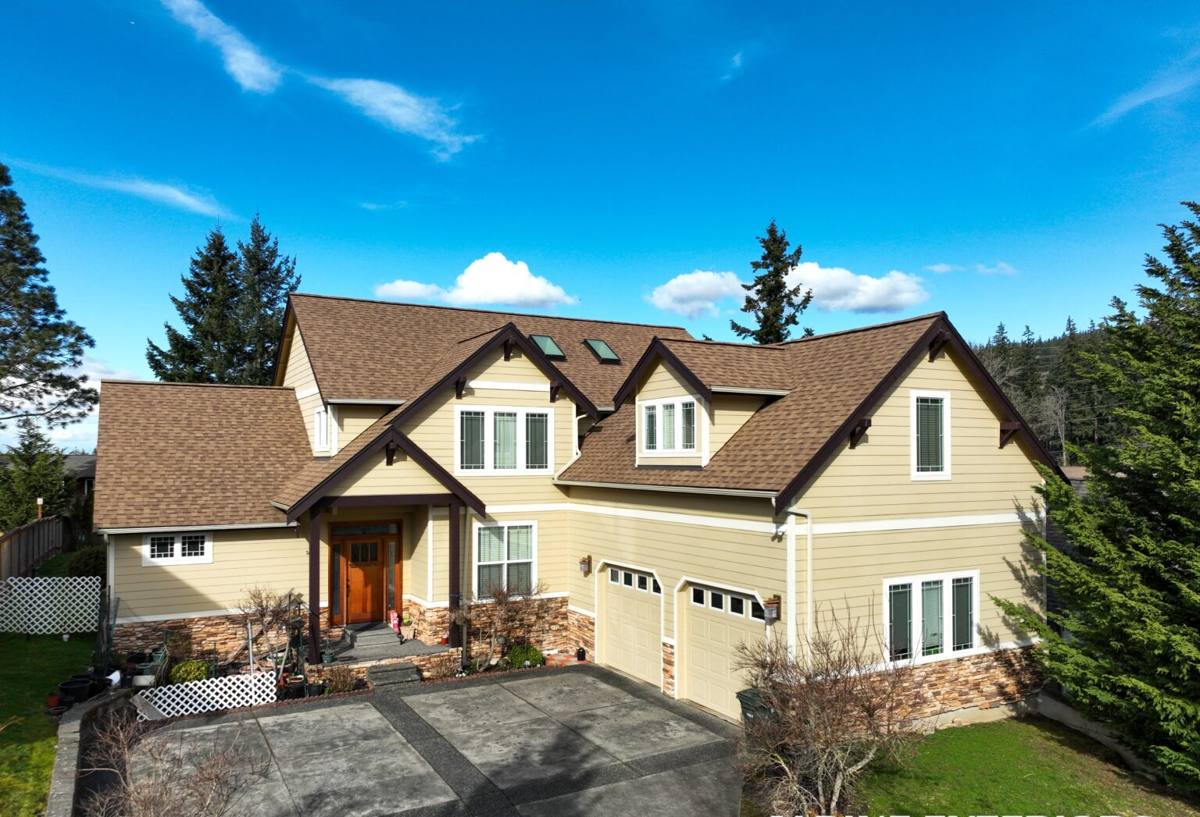
Regional Engineering: This Isn't a Minor Detail in Seattle
King County isn't a "normal" siding climate. We get long stretches of driving rain off the Sound, salt-laden air near the water, and a moss season that can run from October through May depending on the year. Siding here needs to shed water fast, resist moisture wicking at the seams, and not become a growing medium for moss and algae on north-facing walls.
James Hardie engineers its siding by climate zone — the HZ5 product line sold in our region is formulated specifically for the Pacific Northwest's wet, moderate-temperature conditions, with moisture management and freeze-thaw behavior tuned for exactly this weather. Cemplank doesn't market or engineer its product with that kind of region-specific system. That doesn't automatically mean it fails here, but it does mean we can't point to a documented, climate-zone-specific engineering standard the way we can with Hardie. When we're standing behind a 20-30 year install on a house that will sit through hundreds of Seattle winters, we want to be installing the product with the most explicit climate accountability, not just "fiber cement that should work fine."
What Moss Season Actually Does to Siding
Moss and algae growth on siding isn't just cosmetic. Sustained moisture retention at the surface accelerates coating breakdown, and once a factory finish starts to chalk or fade unevenly, the board underneath is exposed to more direct weathering. Any fiber cement product can develop this if the wrong paint or coating system is used, but the finish technology is where we've seen the real gap.
Factory Finish: Where the Real Differences Show Up
This is the part homeowners underestimate. The cement board itself is only half the story — the factory-applied color coat is what actually faces the weather every day, and it's where quality differences between brands become obvious over ten or fifteen years.
Hardie's ColorPlus finish is a baked-on, multi-coat process applied and cured in a controlled factory environment, and it's backed by its own dedicated finish warranty separate from the substrate warranty. Cemplank offers primed and some prefinished options, but the market has historically leaned more on field-applied paint after installation, which shifts the quality of the finish onto whoever paints the job and how well they prep the boards. Field-applied paint on fiber cement can absolutely look great — but it also means the homeowner is now responsible for repainting on a normal exterior paint cycle (typically 7-10 years) rather than getting 15+ years out of a factory finish before it needs attention.
| Factor | James Hardie (what we install) | Cemplank (typical market positioning) |
|---|---|---|
| Factory finish | ColorPlus baked-on finish, separate finish warranty | Primed or prefinished options; often expects field-applied paint |
| Climate engineering | Region-specific HZ product lines (HZ5 for Pacific NW) | General-purpose fiber cement, no published regional zone system |
| Substrate warranty | Long-term, non-prorated, transferable to a new owner within its terms | Manufacturer warranty exists but terms and transfer language vary by product line |
| Installer network locally | Widely used across King County; parts, trim, and touch-up material easy to source | Less common in this market; matching trim or replacement boards later can take longer |
| Repaint cycle if field-finished | Not typical — factory finish is designed to outlast a paint cycle | Often 7-10 years if not factory prefinished |
Warranty Structure Matters More Than the Sales Sheet
Every fiber cement manufacturer publishes a warranty, and on paper they can look similar. What actually matters is what happens when a homeowner sells the house eight years in, or when a section needs replacing after storm damage. We've found Hardie's warranty language and transfer process to be well-documented and something we can explain clearly to a homeowner before they sign anything — including what's covered on the substrate versus the finish, and what voids coverage (like improper fastening or paint incompatible with the factory finish).
With less common brands, we've run into more ambiguity: warranty terms that reference "installed per manufacturer specification" without the same depth of published installation detail, or finish coverage that's harder to pin down. That ambiguity is a real cost to a homeowner even if the siding itself performs fine — a warranty you can't clearly interpret isn't worth much when you need it.
Installation Sensitivity: Fiber Cement Punishes Shortcuts
All fiber cement siding, regardless of brand, is installation-sensitive in ways vinyl isn't. Fastener placement, clearances above rooflines and decks, gaps at butt joints, and flashing details all have to be done to spec or the siding will trap moisture and fail early — not because the board is bad, but because the installation was. This is true of Hardie, Cemplank, Allura, or any other fiber cement product.
The difference for us is depth of specialization. Our crews are trained specifically on Hardie's fastening patterns, clearance requirements, and joint treatment, and we install it often enough that it's second nature. If we split our crew's attention across multiple fiber cement systems with different spec sheets, the risk of someone defaulting to "what I know" on the wrong product goes up. We'd rather be excellent at one system than adequate at three.
A Quick Checklist If You're Evaluating Fiber Cement Bids
- Ask whether the finish is factory-applied or expects field paint after installation
- Ask for the specific warranty document, not just a verbal summary — read the transfer and exclusion language
- Confirm the installer is trained/certified on that specific manufacturer's fastening and clearance specs
- Ask how easy it is to source matching trim and replacement boards locally five or ten years from now
- Ask if the product has any climate-zone-specific engineering for wet, moss-prone regions like ours
- Get the manufacturer name in writing on the estimate — "fiber cement" alone isn't specific enough
Why We Standardized on James Hardie Instead
When we decided to stop quoting multiple fiber cement brands, the goal was consistency a homeowner could actually count on: one factory finish system with a real track record in wet climates, one set of climate-engineered product lines built for exactly this kind of weather, one warranty structure we can explain in plain language, and one installation standard our crews know cold. Hardie's local presence in the Seattle market also means color matching, trim profiles, and replacement material are easy to find years down the line — something that matters more than people expect when a fence gets replaced or a deck addition needs siding to match.
None of this is about Cemplank being an unsafe or low-quality material. It's about what we can responsibly stand behind, house after house, in a climate that doesn't forgive shortcuts. Salt air, driving rain, and a moss season that runs half the year reward the products and the installation habits that are built for exactly those conditions — not the ones that are merely capable of handling them.
What This Means for Your Project
If you've already gotten a bid that includes Cemplank or another fiber cement brand, that's not a red flag by itself — it just means you should ask the questions above before comparing price. If you'd rather see what a Hardie install looks like for your specific home, including which HZ5 product line and color system fits your exposure (waterfront, tree cover, sun-facing walls), we're glad to walk through it.
We offer free, no-pressure estimates for King County homeowners weighing their siding options. Reach out and we'll come take a look at your home, talk through what we'd actually recommend, and explain the reasoning — no hard sell, just a straight answer.