 Seattle
 Exterior Work Built for Renton's Climate
Renton sits where the Green River valley meets the south end of Lake Washington, and that geography shapes what happens to a house here over time. Homes get a steady diet of driving rain off the Sound, damp valley air that lingers into the afternoon, and long stretches of overcast, low-sun weather that keep north-facing walls and shaded rooflines wet for days after a storm passes. Add King County's mild-but-long moss season and you have a climate that is less about extreme weather events and more about relentless, slow moisture exposure. That's the condition every exterior product and every install detail on a Renton home has to be judged against, not a single hard freeze or a single big storm, but months of accumulated dampness working on siding seams, roof valleys, window flashing, and deck framing.
We work across the greater Seattle area, and Renton is a regular part of our schedule. A crew that already knows the moisture patterns typical of this part of King County — where moss builds up fastest, which wall orientations stay wet longest, how local drainage and tree cover affect a specific lot — makes better calls in the field than a crew seeing those conditions for the first time.
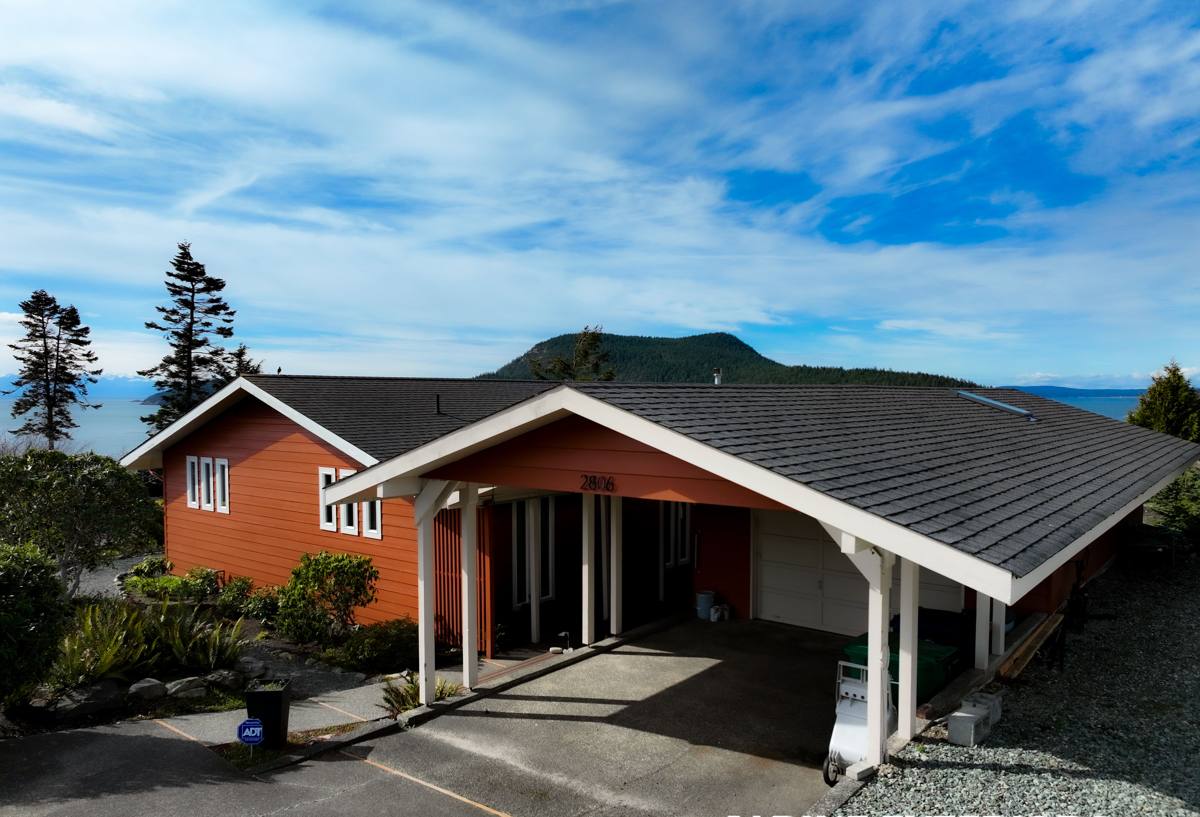
What Renton Homes Commonly Face
Moss and Organic Growth
Moss doesn't just sit on a roof looking unattractive — it holds moisture against shingles and siding, and where it colonizes gutters or valleys it can back water up under roofing material. On siding, moss and algae growth at ground level or under overhangs is often the first visible sign that a wall isn't drying out between rain events. A long moss season means this isn't a once-a-year cleanup issue; it's a constant low-grade pressure on every exterior surface.
Driving Rain and Wind-Driven Moisture
Rain in this region doesn't always fall straight down. Wind off the Sound and through the valley pushes rain sideways into wall assemblies, which puts real stress on siding laps, trim joints, window flashing, and any place where two materials meet. Products and installation details that work fine in a drier climate can fail here specifically because they weren't designed with sustained wind-driven moisture in mind.
Prolonged Dampness and Slow Drying
Because Renton doesn't get long dry, sunny stretches for much of the year, exterior surfaces that absorb moisture take longer to dry out between rain events than they would in a drier climate. That extended damp window is what drives rot in untreated wood trim, swelling in composite materials that aren't rated for it, and premature failure in paint and caulking.
Siding: Why We Only Install James Hardie
Siding is usually the biggest exterior investment a homeowner makes, and it's also the surface doing the most day-to-day work fighting moisture. We install James Hardie fiber cement exclusively — we don't install vinyl, LP SmartSide, Cemplank, Allura, primed spruce, or cedar. That's a deliberate standard, not a sales preference, and it's worth explaining honestly.
Vinyl siding is inexpensive and low-maintenance in the sense that it doesn't need painting, but it's a thin plastic product that can warp, crack in cold snaps, and fade unevenly under UV exposure over the years. It also relies on lap joints and trim pieces that aren't sealed the way fiber cement systems are, which matters in a climate with this much wind-driven rain.
Engineered wood products like LP SmartSide use a wood-strand substrate with a resin-saturated overlay. Done right, it performs reasonably well, but wood-based substrates are inherently more vulnerable to moisture intrusion at cut edges, fastener penetrations, and butt joints than a cement-based product — and once moisture gets in, swelling and delamination follow. In a climate where surfaces stay damp for extended periods, that vulnerability at every seam is a real long-term liability.
Primed spruce and cedar are traditional, attractive options, but both are solid wood products that require ongoing painting or staining, are susceptible to rot and insect damage, and demand real maintenance discipline to hold up in a wet marine climate. Cedar in particular looks excellent new, but maintaining that appearance here means repainting or restaining on a cycle most homeowners underestimate going in.
Other fiber cement brands, like Cemplank or Allura, are legitimate fiber cement products in the same general category as Hardie. Our reason for standardizing on Hardie specifically comes down to their HZ5 product engineering for our climate zone, the factory-applied ColorPlus finish (which resists the fading and chipping that comes with field-applied paint), and a warranty structure we've found to be strong and genuinely transferable to a new owner if the home sells.
Fiber Cement vs. Common Alternatives
| Factor | James Hardie Fiber Cement | Vinyl | Wood / Engineered Wood |
|---|---|---|---|
| Moisture resistance | Non-combustible, dimensionally stable, doesn't absorb water like wood substrates | Doesn't rot but seams can let water track behind panels | Vulnerable at cut edges, joints, fastener holes |
| Finish durability | Factory ColorPlus finish, resists fade/chip | Color molded in but fades and chalks over time | Field-applied paint/stain needs recoating on a cycle |
| Maintenance | Occasional wash, no repainting for years | Low, but panels can warp/crack over time | Regular repainting/staining and rot inspection |
| Fire performance | Non-combustible | Combustible plastic | Combustible |
| Warranty | Strong, transferable | Varies widely by manufacturer | Often shorter, less transferable |
Roofing That Handles a Long Wet Season
Roofing in this part of King County has to manage two things well: shedding a lot of rain efficiently and resisting the moss and algae growth that comes with shade and moisture. That means correct underlayment, properly lapped and sealed valleys, and attention to ventilation so the attic space isn't adding its own moisture problem on top of what's coming from outside. Roofs that skip proper valley detailing or flashing at penetrations are the ones that show leaks two or three winters later, not immediately, which is part of why installation quality matters as much as the material itself.
We also pay attention to how a roof integrates with siding and trim at the roofline, since that transition is a common weak point for water intrusion when it isn't detailed carefully.
Windows: Flashing Matters More Than the Glass
Homeowners often focus on window brand and glass package, but in a climate like Renton's, the flashing and sealing detail around the window opening is what actually determines whether water gets into the wall assembly. A well-built window installed with poor flashing will still leak; a modest window installed correctly, with proper integration into the surrounding siding, generally won't. When we replace windows, we treat the flashing and the tie-in to the siding system as inseparable from the window installation itself.
Decks: Built for Wet-Dry Cycling
Decks in this region go through repeated wet-dry cycling for most of the year, and ledger board connections, joist hardware, and fastener choice all need to account for sustained moisture exposure rather than occasional rain. Composite decking has become a popular choice here because it doesn't require the same repainting or sealing discipline as wood, but the framing underneath — ledger flashing, joist tape, proper drainage away from the house — is where deck failures actually originate, regardless of what decking material sits on top.
How Our Process Works
Assessment and Estimate
We start with an on-site look at the specific exposure your home faces — orientation, tree cover, drainage, existing damage — because a house on a shaded, low-drainage lot needs a different conversation than one on an open, well-drained lot even a few blocks away. The estimate reflects what we actually find, not a generic per-square-foot number.
Scope and Product Selection
For siding, that means walking through Hardie's product lines and colors against your home's exposure and style. For roofing, windows, and decks, it means specifying materials and details suited to sustained King County moisture rather than a one-size-fits-all spec.
Installation
Correct installation is what actually determines how any of these systems perform over time — proper fastening patterns, correctly lapped flashing, sealed penetrations, and adequate clearances at grade. We follow manufacturer installation specs closely because that's what keeps warranties valid and keeps water out.
Final Walkthrough
We walk the finished work with you before calling it done, so you know what was done and why, not just that it looks finished from the street.
Why a Local Crew Matters in Renton
Exterior work isn't just about the product spec sheet — it's about how that product is installed against the actual conditions on your street. A crew that regularly works this part of King County has already seen how moss builds up on north-facing roof sections here, how wind-driven rain behaves against a wall facing the wrong direction, and how quickly an unmaintained gutter system leads to trim rot in a valley lot. That local pattern recognition shows up in small decisions — where to add extra flashing, which corners need more attention, how much ventilation a particular roof design needs — that a generic install approach can miss.
Signs You May Need an Exterior Assessment
- Visible moss or algae streaking on the roof, especially on shaded or north-facing sections
- Soft spots, staining, or bubbling paint on siding, particularly near ground level or under windows
- Drafts, fogging, or visible gaps around window frames
- Deck boards that feel spongy, or visible rust/staining at ledger board connections
- Gutters that overflow during normal rain rather than only in heavy storms
- Discoloration or streaking on walls below roof valleys or downspout outlets
Planning an Exterior Project
Timing matters in a climate like this. Where scheduling allows, exterior replacement work goes more smoothly during drier stretches of the year, since open wall or roof sections need to stay protected from rain during construction. That said, moisture problems don't wait for good weather to worsen, so if you're seeing active signs of water intrusion, it's worth getting an assessment scheduled rather than waiting for a particular season.
Budget-wise, exterior projects vary widely based on square footage, existing damage, and scope, so broad ranges only go so far — an on-site assessment is what produces a number you can actually plan around.
If you're in Renton and dealing with any of the issues above, or you're simply due for a proactive look at your siding, roof, windows, or deck, we're happy to come out for a free, no-pressure estimate and walk you through exactly what we see and what it would take to fix it.