 Seattle
 Renton's Siding Problem Isn't Just Age — It's Water
Most siding failures we find in Renton aren't caused by a product simply wearing out. They're caused by water finding a way in and staying there. Renton sits in a part of King County that gets sustained fall and winter rain, driven sideways by wind off Lake Washington and the Sound on top of it, and enough overcast, damp stretches through the year to keep exterior surfaces wet for days at a time. That combination is hard on siding in a specific way: it's less about a single storm doing damage and more about slow, repeated moisture exposure finding every gap, crack, and failed caulk joint over years.
Add in moss and algae growth, which thrives in Western Washington's shaded, moist microclimates, and you get a second layer of the problem. Moss doesn't just look bad — it holds moisture against the siding surface far longer than open air would, which accelerates rot in wood-based products and can stain or degrade even more durable materials if left unaddressed. A siding repair in Renton isn't a cosmetic job. It's a moisture-management job first, and looking right second.
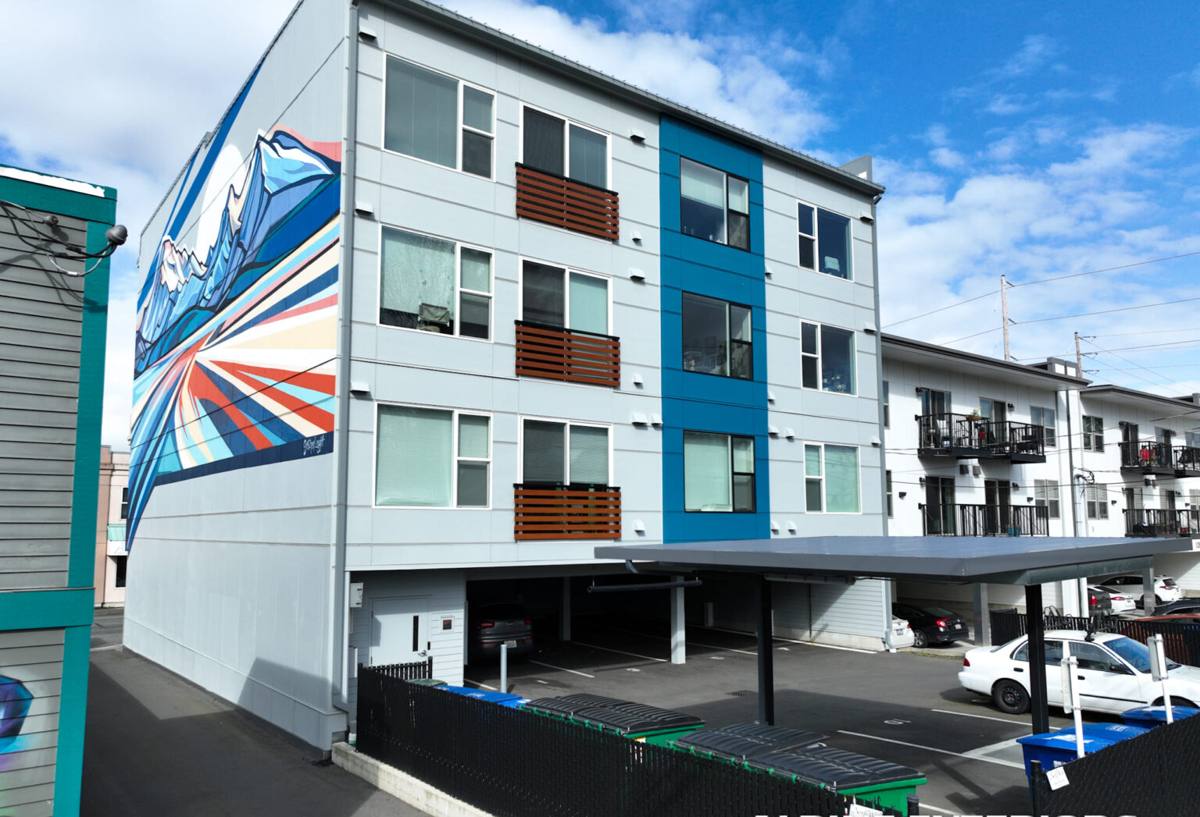
Signs Your Renton Home Needs Siding Repair
Homeowners usually call us after noticing one or two symptoms, but the underlying damage is often more extensive than what's visible from the ground. Here's what to look for during a walk around the exterior:
- Soft or spongy spots when you press on siding, especially near the bottom courses and around window trim
- Visible cracking, buckling, or warping in individual boards or panels
- Paint that's peeling, bubbling, or failing faster than the rest of the house — often a sign of moisture trapped behind the surface
- Dark streaking, green or black growth, or a persistently damp look in shaded sections (common on north-facing walls and areas under overhangs or trees)
- Gaps opening up at seams, corners, or where siding meets trim, window frames, or the foundation
- Small holes, insect activity, or soft wood near ground level
- Rising interior drywall stains, musty smells, or unexplained energy bill increases, which can trace back to siding-level water intrusion
Any one of these on its own might be a simple, contained repair. Several of them together — or damage that keeps recurring in the same spot — usually means water has been getting behind the siding for a while and the repair needs to address what's underneath, not just what's visible.
Repair vs. Replace: Making the Right Call
We get asked constantly whether a section can be patched or whether it needs to come out. The honest answer depends on what's happening behind the surface, not just the size of the visible damage. A single cracked or split board, isolated storm damage, or a small area of failed caulking is usually a straightforward repair. Widespread soft spots, siding that's delaminating or rotting across multiple sections, or damage that keeps returning after previous patch jobs point to a deeper moisture problem — often failed house wrap, poor original flashing, or years of accumulated water intrusion that a surface patch won't fix.
We won't recommend tearing off good siding just to sell a bigger job, and we also won't patch over rot and call it done. Part of a proper repair estimate is opening up the damaged area enough to see what's actually happening behind the cladding before we tell you what it needs.
What a Correct Repair Actually Involves
A repair that holds up through another Renton winter has to address the water path, not just the symptom. That means:
- Removing damaged material back to solid, sound substrate — not just covering the visible crack or hole
- Inspecting the house wrap or weather-resistive barrier underneath for tears, gaps, or failure, and repairing it before anything goes back on
- Checking and correcting flashing at windows, doors, and horizontal trim, since flashing failure is one of the most common root causes of localized rot
- Replacing damaged framing or sheathing if water has reached that far — this is common in longer-neglected sections
- Matching the replacement siding's material, profile, and reveal so the repair doesn't stand out or create a new water-collection point
- Properly sealing and caulking joints and penetrations with products rated for our climate, not a generic caulk that will crack out in a season or two
Skipping any of these steps is how a "repair" ends up being redone in two or three years. It's also why a cheap patch job is rarely a good value once you count the second visit.
Repairing Different Siding Types
Not every Renton home has the same siding, and repair approach changes with material. We work honestly across what's already on the house, even though we only install James Hardie fiber cement on new work and full replacements.
| Existing Siding | Common Failure Mode | Repair Approach |
|---|---|---|
| Wood lap or cedar | Rot, splitting, moisture absorption | Replace damaged boards, address moisture source, repaint/reseal |
| Vinyl | Cracking, warping from heat/cold, faded panels that no longer match | Panel replacement where matching stock is available; flag ongoing matching issues honestly |
| Fiber cement (Hardie or other) | Impact damage, caulk joint failure, edge moisture wicking if uncapped | Board replacement, re-caulk and seal cut edges, correct flashing |
| Engineered wood (LP-type) | Edge swelling, delamination at seams and butt joints | Section replacement; if swelling is widespread, we'll tell you plainly that spot repair is temporary |
When a homeowner has engineered wood or older wood siding with widespread edge swelling or repeated rot, we'll say so directly: patching individual boards buys time, but if the underlying material is failing at seams across the wall, a full section or elevation replacement with a moisture-stable material is the more honest long-term answer.
Our Renton Repair Process
We keep the process straightforward because most people just want the problem fixed correctly the first time:
- On-site assessment — we look at the visible damage, probe surrounding areas for hidden soft spots, and check flashing and trim details nearby
- Honest scope — you get a clear explanation of what's damaged, why, and whether it's a contained repair or something bigger, with photos of anything we open up
- Written estimate — no vague allowances; the scope reflects what we found, not a guess
- Repair work — removal, substrate and barrier inspection/repair, matched material installation, proper sealing
- Walkthrough — we show you the completed area and explain what to watch going forward
Because we're already working in Renton and the surrounding South King County area regularly, scheduling a look at a suspected repair doesn't mean waiting weeks, and we're not learning the local rain and moss patterns for the first time on your house.
When Repair Isn't Enough: Replacement Sections in James Hardie
Some repairs are a genuine opportunity to upgrade a problem area permanently instead of patching it again in a few years. When we replace a damaged section — or when a homeowner decides to move forward with a fuller re-side — we use James Hardie fiber cement exclusively. It's non-combustible, holds its factory ColorPlus finish far longer than field-painted materials, and is engineered specifically for wet Pacific Northwest conditions through Hardie's HZ5 product line. For a house that's already shown you where its moisture-prone spots are, replacing that section in a material built to resist the exact problem you just repaired is usually the better long-term move than restoring it in the same material that failed.
We're not going to push a full re-side on someone who needs a contained repair. But if your siding has failed in the same spot twice, or a contractor keeps patching the same wall, that pattern is worth an honest conversation about whether targeted Hardie replacement solves it for good.
What Drives Repair Cost
| Factor | Why It Matters |
|---|---|
| Extent of hidden damage | Rot found behind the surface (framing, sheathing) adds scope beyond the visible repair |
| Material match availability | Discontinued vinyl colors or older wood profiles can be harder to match than fiber cement |
| Access and height | Second-story or steep-site repairs take longer and require different equipment |
| Flashing and barrier repair | Fixing the root moisture path, not just the board, adds labor but prevents repeat failure |
| Paint or finish work | Matching an existing painted finish adds a step that a factory-finished repair section avoids |
We give real numbers after we've actually looked at the damage — broad ranges before that point aren't useful to you, and we'd rather tell you what your specific repair needs than quote a number that doesn't match the job.
Why a Crew That Already Works Renton Matters
Siding repair done right depends on understanding how water moves on a specific type of house in a specific climate — and Renton's mix of older neighborhoods and newer construction, hillside lots and low-lying areas near the water, means damage patterns vary block to block. A crew that regularly works this area has already seen how moss builds up on shaded north walls here, how driving rain off the lake finds gaps around trim on exposed elevations, and which failure patterns show up again and again on which types of homes. That's the difference between a repair that's cosmetically fine and one that actually holds.
Keeping Repaired Siding From Failing Again
- Clear moss and debris from siding, especially shaded and north-facing walls, at least once a year
- Re-inspect and re-caulk joints around windows, doors, and trim every couple of years — caulk is a wear item, not a permanent seal
- Keep gutters clean and functioning so runoff isn't sheeting down the wall directly onto siding
- Trim back vegetation and tree branches that keep a wall shaded and damp
- Address small cracks or gaps as soon as you spot them — the longer water has access, the more expensive the eventual fix
- Have siding checked after any major wind or storm event, even if damage isn't obvious from the ground
If you're seeing soft spots, staining, or recurring damage on your Renton home, we're happy to take a look and give you a straight answer about what it needs — a contained repair or something more — with a free, no-pressure estimate. There's no obligation, and you'll leave the visit knowing exactly what's going on with your siding.