 Seattle
 Two Very Different Products, One Big Decision
If you're planning a siding replacement in Seattle, you've almost certainly narrowed it down to two finalists: vinyl siding and James Hardie fiber cement. Both are common, both are sold by reputable manufacturers, and both can look fine on a showroom sample board. But they behave very differently once they're on a house in King County, dealing with nine months of rain, salt-laden air off the Sound, and the kind of persistent damp shade that grows moss on everything it touches.
This guide lays out the real differences — not marketing claims — so you can make a decision based on how these materials actually perform here, not how they perform in a dry climate ad.
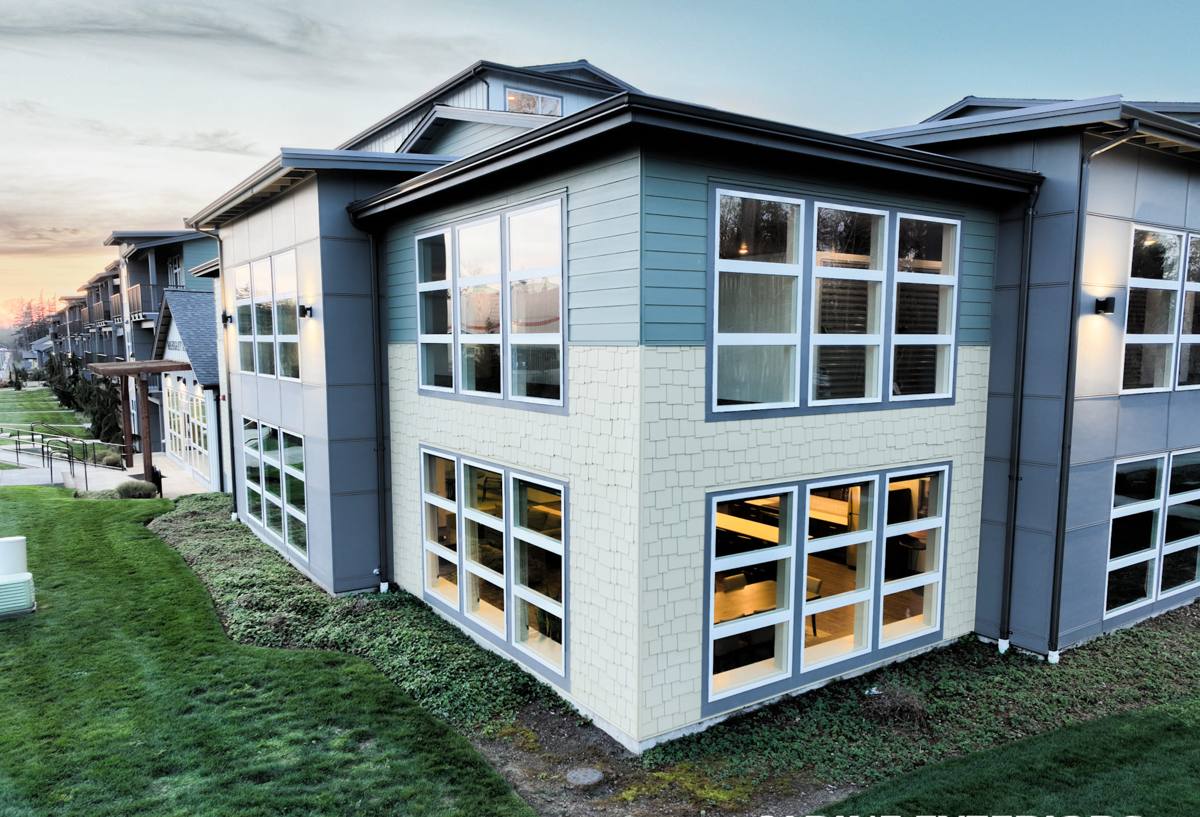
What Vinyl Siding Gets Right
Vinyl has stayed popular for good reasons. It's inexpensive relative to most other siding types, it goes up quickly, it never needs painting, and it doesn't rot or rust the way wood or metal can. For a homeowner on a tight budget who needs a functional, low-maintenance exterior, vinyl solves real problems. We're not going to pretend otherwise.
Vinyl also comes in a wide range of colors and profiles, including options that mimic cedar shake or board-and-batten. Installed correctly, it sheds water reasonably well and holds up to normal weather for a good number of years.
Where Vinyl Runs Into Trouble Here
The issues with vinyl in the Pacific Northwest aren't about the material failing outright — they're about how it ages and how it handles moisture over the long term, which matters more here than almost anywhere else in the country.
- Moisture management is passive, not active. Vinyl is designed to shed bulk water, but it isn't a sealed system — it relies on gaps and laps, and on the water-resistive barrier behind it doing the real work. In a climate with driving rain off Puget Sound, wind-driven moisture can find its way behind panels over time, especially at penetrations and corners.
- It doesn't hold paint. If the color fades, chalks, or simply goes out of style, there's no repainting vinyl — you're replacing it. UV exposure and years of damp cycling do fade vinyl color, even in our cloudier climate.
- It flexes and can crack in cold snaps. Seattle doesn't see brutal cold often, but the occasional hard freeze after a wet spell is exactly when brittle, aged vinyl is prone to cracking at fasteners and corners.
- Moss and mildew show on the surface. Vinyl's textured, low-gloss finishes and horizontal laps give moss and algae plenty of texture to grip, particularly on north-facing walls and under tree cover — extremely common conditions in Seattle's older, tree-canopied neighborhoods.
- It's not a fire-resistant material. Vinyl softens and melts at relatively low temperatures, which matters for insurance conversations and for homeowners increasingly thinking about wildfire smoke and ember exposure during dry summer stretches.
What James Hardie Fiber Cement Does Differently
James Hardie siding is made from cement, sand, and cellulose fibers, pressed and cured into a rigid board. It's a fundamentally different material category from vinyl — closer in behavior to masonry than to plastic. That changes almost everything about how it performs in a wet coastal climate.
The Core Advantages
- Non-combustible. Fiber cement doesn't ignite or melt under direct flame exposure, which is a meaningful difference for wildfire ember resistance and for some insurance underwriting.
- Dimensionally stable. It doesn't expand, contract, or warp with humidity swings the way wood-based products can, so it holds straight lines and tight joints through wet winters and dry summers alike.
- Factory-applied ColorPlus finish. Instead of field-painted or bare vinyl color, Hardie's ColorPlus technology bakes a fade-resistant finish onto the board at the factory, under controlled conditions no job site can replicate, and backs it with its own finish warranty.
- Built for this exact climate. James Hardie manufactures HZ5 product specifically engineered for wet, humid, freeze-prone regions like the Pacific Northwest — it's not a one-size-fits-all national product.
- Resists moss and mildew better long-term. The dense, hard surface doesn't hold moisture the way a softer or more textured material can, which matters through Seattle's long gray moss season.
The Honest Trade-Offs
Fiber cement isn't free of downsides, and we tell homeowners this upfront. It costs more than vinyl, both in material and labor — it's heavier, requires specific fastening patterns, and needs a saw with dust control to cut. It also requires caulking at joints and trim, which means it needs periodic caulk inspection over its life. None of that is a flaw in the product; it's the cost of a rigid, long-lived material done right. But it does mean installation quality matters enormously, which is why we only install it ourselves rather than subcontracting it out.
Side-by-Side Comparison
| Factor | Vinyl Siding | James Hardie Fiber Cement |
|---|---|---|
| Material | PVC plastic | Cement, sand, cellulose fiber |
| Fire behavior | Softens/melts under heat | Non-combustible |
| Color finish | Integral color, fades over time, cannot be repainted long-term without prep issues | Factory-baked ColorPlus finish, warranted against fading and peeling |
| Moisture/moss resistance in wet PNW climate | Moderate; textured surfaces trap moss and algae | Strong; dense surface sheds moisture and resists organic growth |
| Dimensional stability | Expands/contracts with temperature; can warp | Highly stable, minimal movement |
| Typical lifespan installed to spec | 20-30 years | 30-50+ years |
| Upfront cost | Lower | Higher |
| Repair approach | Panel replacement, color-match can be difficult on faded siding | Board replacement or repaint; ColorPlus touch-up available |
Why We Standardized on James Hardie
We install James Hardie exclusively — we don't offer vinyl, LP SmartSide, or other fiber cement brands. That's a deliberate choice, not a sales pitch. After years of working on homes across King County, in neighborhoods ranging from close-in Seattle bungalows to newer builds further out, we found that the products which age well here share a few traits: they don't rely on surface color that fades, they don't trap moisture against wood sheathing, and they don't soften structurally when things get wet for months at a time. James Hardie checks those boxes in a way vinyl generally doesn't, and it comes with a strong, transferable limited warranty that backs up the manufacturer's own confidence in the product.
Standardizing on one system also means our crews install it constantly, understand its fastening schedules, clearances, and flashing details cold, rather than switching between three or four different siding systems and their different quirks. In a climate this unforgiving of installation mistakes, that consistency matters as much as the material itself.
Installation Quality Matters More Than the Brand
Whichever product a homeowner chooses, most siding failures we see aren't material failures — they're installation failures. Even James Hardie siding installed with the wrong nailing pattern, insufficient clearance above grade or decking, or poor flashing at windows and penetrations will trap water and fail early. The reverse is also true: vinyl installed with generous care can outperform a poorly installed premium product for a while, though it will always be limited by what the material itself can do.
What to Check With Any Siding Contractor
- Are they following the manufacturer's written installation instructions, not just "how we've always done it"?
- Do they factory-caulk or field-caulk joints, and what caulk product do they specify?
- What clearance do they maintain between siding and grade, decks, and roof lines?
- Is the water-resistive barrier and flashing detail explained clearly, not glossed over?
- Are they licensed, bonded, and insured in Washington State, with references you can actually call?
- What does the manufacturer's warranty require of the installer to stay valid?
Cost Considerations Beyond the Sticker Price
Vinyl will almost always win on day-one price. But the real comparison is cost over the life of the siding: repainting cycles (vinyl doesn't repaint well once it fades, so replacement is often the only fix), moisture-related sheathing repairs if water gets behind aging panels, and resale perception, since fiber cement is widely recognized by appraisers and buyers as a premium, durable exterior. Homeowners planning to stay in a home for decades, or those preparing it for sale, often find the gap narrows or reverses once those factors are counted.
Seattle-Specific Factors Worth Weighing
King County's climate isn't uniform, and it's worth thinking about your specific site conditions:
- Salt air exposure near the Sound accelerates fastener corrosion and finish breakdown on lower-grade materials — stainless or hot-dip galvanized fasteners and a stable finish matter more here than inland.
- Tree canopy and shade common in older Seattle neighborhoods extend moss season and keep siding damp longer after rain, favoring denser, less porous materials.
- Driving rain during fall and winter storms tests flashing and lap details far more than steady, gentle rainfall would.
- Freeze-thaw cycling, while mild compared to inland climates, still occurs enough winters to stress brittle materials at fastener points.
Making the Right Call for Your Home
There's no universal right answer — a rental property being prepared for a quick sale has different priorities than a forever home. But for homeowners investing in siding they want to last, want to look good without repainting, and want to hold up to a genuinely wet, mossy, salt-touched climate, fiber cement earns its higher price. That's the honest case for why we only install James Hardie, and why we think it's worth a closer look before you commit to a lower-cost alternative.
If you're weighing your options, we're happy to walk your specific home, look at sun exposure, tree cover, and drainage, and give you a straight answer about what makes sense — with a free, no-pressure estimate.