 Seattle
 Kirkland's Exterior Climate Challenge
Kirkland sits on the eastern shore of Lake Washington in King County, and that lakefront location shapes what happens to a home's exterior over time. Moisture off the water, long stretches of overcast drizzle, and a mild-but-damp winter climate combine to create conditions that are hard on siding, roofing, windows, and decks alike. Homes here don't usually fail from one dramatic storm — they wear down gradually, from repeated cycles of wetting and drying, shade-driven moss growth, and materials that were never engineered for the Pacific Northwest in the first place.
We've worked on homes throughout the greater Seattle area, and Kirkland's mix of older established neighborhoods and newer construction means we see the full range of exterior conditions: original 1970s and 1980s siding on its second or third repaint, cedar that's finally given up after decades of maintenance, and newer builds where the wrong product was specified for the climate. The fixes differ, but the underlying cause is almost always the same — water finding a way in and staying there.
Driving Rain and Wind-Driven Moisture
Kirkland doesn't get hurricane-force wind, but it does get sustained periods of rain pushed sideways by wind off the lake and off Puget Sound more broadly. That matters more than people expect. Vertical rain mostly sheds off a wall. Wind-driven rain gets forced into laps, seams, and fastener penetrations that were fine in a dry climate but become weak points here. Over years, that's how water gets behind siding that looks fine from the curb.
The Long Moss Season
Moss isn't just a roof problem in this region — it's an everything problem. North-facing walls, shaded rooflines under mature trees, and areas that stay damp for days after a storm all become hosts for moss and algae growth. Moss holds moisture directly against a surface far longer than open air ever would, and on the wrong siding material that constant dampness is what starts rot, delamination, or paint failure. A long moss season, which in this area can run from fall through spring, means those surfaces rarely get a real chance to dry out between storms.
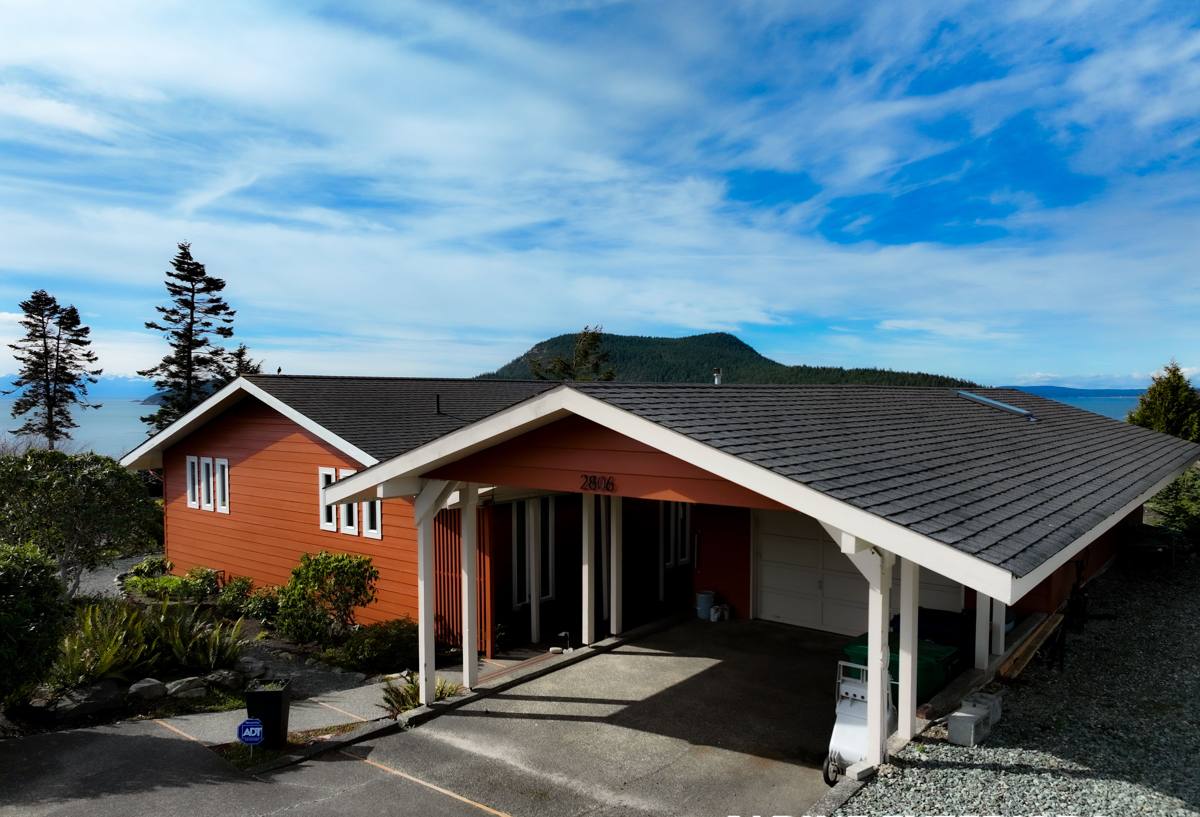
Siding in Kirkland: Why We Only Install James Hardie
Seattle Exterior installs one siding system: James Hardie fiber cement. We don't offer vinyl, LP SmartSide, Cemplank, Allura, primed spruce, or cedar as alternatives, and that's a deliberate standard, not a limitation of what we're capable of installing. Here's the honest reasoning behind it.
What the Alternatives Get Right — and Where They Struggle Here
Cedar has real appeal — it's a natural material with genuine warmth and character, and plenty of Kirkland homes still wear it well. But cedar is an organic wood product, and in a climate with this much sustained dampness and moss pressure, it demands consistent refinishing and vigilant maintenance to keep water out of end grain and fastener holes. Skip a cycle or two and the wood pays for it.
Vinyl siding is inexpensive and low-maintenance in the sense that it doesn't need repainting, but it's a thin material that can warp, crack in cold snaps, and fade unevenly over time. It also relies heavily on correct installation for water management since it isn't rigid enough to bridge minor wall irregularities the way fiber cement can.
LP SmartSide, Cemplank, and Allura are all reasonable products with their own fan base in the industry. Our issue isn't that they're bad products — it's that after years of installations and callbacks across this region, we standardized on one system we trust completely rather than stocking multiple product lines and warranty structures. Primed spruce panel siding, in particular, needs field-applied paint and sealed cuts to perform, and in a climate this wet, that installation-sensitivity is a real liability if any step gets missed.
Why James Hardie
James Hardie fiber cement is non-combustible, dimensionally stable, and manufactured with ColorPlus factory-applied finishes that don't rely on a painter getting field application right on a rainy job site. Hardie's HZ5 product line is engineered specifically for climates with freeze-thaw cycles and sustained moisture exposure — which describes the Puget Sound region well. The finish is baked on and backed by a real, transferable manufacturer warranty, and because the substrate itself is cement-based rather than organic, it doesn't feed rot, moss, or insects the way wood-based products can. When it's installed to Hardie's specifications — correct clearances, proper flashing, sealed joints — it holds up to exactly the kind of weather Kirkland sees most of the year.
Roofing Considerations for Kirkland Homes
Roofing in this region lives or dies on moss control and proper ventilation. A roof that traps moisture underneath the shingles — from poor attic ventilation or ice-dam-prone valleys — will fail from the inside long before the surface material wears out. We look at flashing details around chimneys and skylights, valley construction, and attic airflow as part of any roofing conversation, not just the shingles themselves. Moss removal and prevention matter too; left unchecked, moss lifts shingle edges and creates channels for water to travel under the roofing system entirely.
Windows: Keeping Moisture Out and Efficiency In
Older single-pane and early dual-pane windows in Kirkland homes are frequently the source of fogging, drafts, and sill rot — not because the glass failed, but because the seals and flashing around the window unit broke down under years of wet-dry cycling. When we replace windows, we pay close attention to how the new unit is flashed and integrated with the siding around it, since a poorly flashed window is one of the most common hidden water-entry points we find during siding tear-off.
Decks: Built for Wet Winters
A Kirkland deck spends a large part of the year wet. Ledger board connections, joist tops, and any horizontal surface where water can pool are the first places we check on an aging deck, because that's where rot starts even when the visible decking boards still look fine. Proper flashing at the house connection, adequate drainage, and materials suited to sustained moisture exposure all matter more here than they would in a drier climate.
Why a Local Crew Matters
Exterior work in this climate isn't something you can generalize from a drier region's playbook. A crew that's used to installing in the Southwest or the Southeast is used to different rules — less rain to work around, different flashing priorities, different moss and mildew pressure. A crew based in the greater Seattle area knows how to sequence a job around Kirkland's rain patterns, how to detail flashing for wind-driven moisture, and what a King County building department actually wants to see on a permit set. That local knowledge shows up in the details that don't get noticed until they fail — or don't.
Our Process on a Kirkland Project
- On-site assessment of existing siding, roofing, windows, or deck condition, including moisture and rot checks where relevant
- Honest discussion of what's actually needed versus what can wait
- Written estimate with clear scope — no vague allowances
- Permitting handled where required by the City of Kirkland or King County
- Proper flashing, house-wrap, and water-management detailing before any finish material goes on
- Installation to manufacturer specifications, particularly for James Hardie siding warranty compliance
- Final walkthrough before we consider the job complete
Cost Factors to Understand
Every home is different, but the variables that move a project's cost are consistent. This isn't a price list — it's a guide to what actually drives the number up or down.
| Factor | Why It Matters |
|---|---|
| Extent of existing water damage | Rot found during tear-off means additional framing repair before new material goes on |
| Home size and wall complexity | More corners, dormers, and trim details increase labor time |
| Access and site conditions | Steep lots, tight lake-adjacent lots, or limited staging area affect crew efficiency |
| Product line selected | Hardie's HZ5 panels, lap siding, and shingle profiles carry different material costs |
| Scope bundling | Combining siding with window or roofing work in one project can reduce redundant setup costs |
Maintenance in a Wet Climate
Even the right materials need some basic upkeep in this region. Gutters clear of debris keep water moving away from siding and fascia instead of overflowing down the wall. Trimming back tree limbs that shade siding or roofing helps reduce moss buildup. Periodic rinsing of north-facing walls and shaded rooflines slows moss and algae before it takes hold. None of this is complicated, but skipping it in a climate this damp shortens the life of even good materials.
If your Kirkland home's siding, roofing, windows, or deck are showing signs of wear — or you just want an honest read on what condition they're actually in — we offer free, no-pressure estimates. Fill out the form below and we'll take a look.