 Seattle
 Allura Is a Real Fiber Cement Product — Here's Our Honest Take
Homeowners in Seattle and around King County often come to us with a quote in hand that specs Allura fiber cement siding, sometimes because a builder used it, sometimes because a competing contractor recommended it on price. We want to be upfront: Allura is not a scam product or a "bad" material. It's manufactured cement board siding, made by a legitimate producer, and it will outperform vinyl or untreated wood in most respects. This page exists because we get asked "why won't you install this?" often enough that we'd rather explain our reasoning in detail than give a one-line answer at the estimate table.
Our company installs only James Hardie fiber cement siding. That's a narrow standard on purpose. Before we explain why, it's worth being fair to Allura and describing what it actually is.
Where Allura Gets It Right
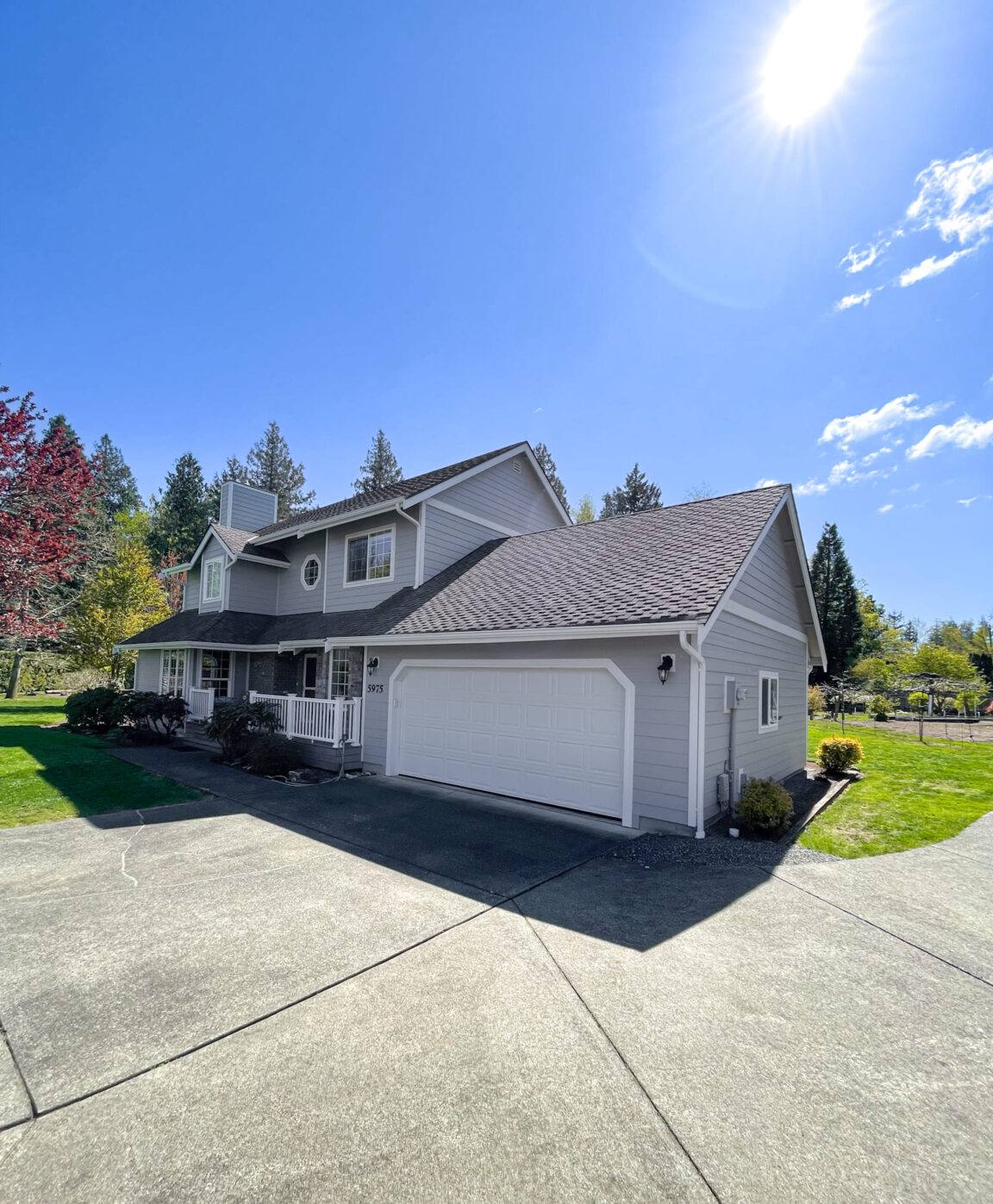
Allura fiber cement is a Portland-cement-and-cellulose-fiber board, pressed and cured the same general way most fiber cement products are made. It's non-combustible, resists rot better than wood, and doesn't attract insects the way cedar or untreated wood trim can. It comes in lap, panel, and trim profiles, and it can be ordered primed for field painting or with a factory finish. For a homeowner comparing it against vinyl siding or old cedar clapboard, Allura is a genuine step up in durability and fire performance.
We also want to be clear that plenty of fiber cement installations using Allura hold up fine when installed correctly. Our decision to standardize on one brand isn't a claim that Allura fails in the field — it's a business and quality-control decision about consistency, warranty structure, and regional engineering, which we'll walk through below.
What Fiber Cement Solves in General
- Won't burn, warp, or rot the way wood siding can
- Holds paint and factory finishes longer than wood
- Resists woodpeckers, carpenter ants, and moisture-driven insect damage
- Handles the Pacific Northwest's wet-dry cycling better than most wood products
Why We Standardized on One Fiber Cement Brand
Running a siding company around several competing fiber cement brands sounds flexible, but in practice it creates real problems: different fastening schedules, different caulk and paint compatibility, different factory-finish warranties, and different training requirements for the crew. We chose to build our entire installation process, crew certification, and warranty backing around James Hardie specifically, and we don't deviate from that for a few concrete reasons tied to what we see working — and not working — on homes in this region.
1. Climate-Engineered Product Lines
James Hardie engineers its siding by climate zone under what it calls HardieZone. Western Washington, including Seattle and King County, falls into the wetter HZ5 zone, and Hardie's HZ5 formulation is specifically built for high-moisture, high-rain environments — different moisture management than the formulation Hardie sells in the arid Southwest. Allura does not offer this kind of zone-specific engineering across its product line the same way. For a region that gets sustained driving rain off the Sound for months at a time, that distinction matters more than it would in a drier climate.
2. Factory Finish Consistency
Hardie's ColorPlus finish is baked on at the factory under controlled conditions and backed by its own separate finish warranty, distinct from the substrate warranty. That two-layer warranty structure — one for the board, one for the finish — is something we've come to rely on when we tell a homeowner what happens if a color fades or a plank fails. Allura's finish and warranty structure is not identical, and mixing warranty language across brands on marketing materials, invoices, and homeowner paperwork is exactly the kind of inconsistency that leads to confusion five or ten years down the road when someone files a claim.
3. One Set of Installation Standards for the Crew
Every fiber cement brand has its own nailing patterns, clearances, and caulking requirements. When a crew installs a single brand exclusively, those standards become muscle memory — clearances above grade, gaps at butt joints, flashing details around windows, fastener spacing. Splitting a crew's attention across two or three brands increases the odds of an installer defaulting to the wrong spec on the wrong product. We'd rather have one standard our whole team knows cold.
The Real-World Trade-Offs We Weigh in Seattle's Climate
Seattle siding doesn't just deal with rain — it deals with sustained damp seasons, salt-tinged air near the Sound and Puget Sound shoreline neighborhoods, and a moss and algae season that can run most of the year on north-facing walls. Any fiber cement product will outperform wood or vinyl here, but the details of moisture management, finish durability, and long-term color retention start to matter more in a climate this persistently wet than they would in, say, Phoenix.
| Climate Factor | Why It Matters Locally |
|---|---|
| Driving rain / long wet season | Puts sustained pressure on butt joints, caulk lines, and factory finish over years, not just storm events |
| Salt air near the Sound | Accelerates fastener and finish wear on lower-quality coatings; consistent factory finish matters more |
| Moss and algae growth | Requires a finish that holds up to occasional pressure washing and cleaning without chalking or fading unevenly |
| Wet-dry cycling | Board expansion and contraction stresses joints and caulk over repeated seasons |
Warranty and Transferability Differences
One of the more practical reasons we standardized on Hardie is what happens when a homeowner sells the house. A transferable, well-documented warranty is a real selling point in the King County market, and it only works cleanly if the paperwork and manufacturer backing are consistent and well understood by buyers, inspectors, and real estate agents. Hardie's warranty terms are widely recognized by appraisers and inspectors in this region simply because of how much of it is already installed here. That familiarity has real value even though it isn't a technical property of the siding itself.
| Factor | What We Weigh |
|---|---|
| Substrate warranty length | Long-term coverage on the board itself, separate from the finish |
| Finish warranty | Coverage on fading, chipping, and peeling of the factory color coat |
| Transferability | Whether coverage follows the house to a new owner without extra paperwork |
| Regional recognition | Whether local inspectors, appraisers, and future contractors recognize the product and its documentation |
Supply Chain and Local Installer Support
Practical, unglamorous factors matter too. Because we exclusively install Hardie, our supplier relationships, lead times, and color-matching for repairs and additions are all built around Hardie's regional distribution. If a homeowner needs a repair panel three years after their original install, we know exactly which Hardie product and color to order and roughly how long it takes to arrive. Supporting a second brand would mean carrying that same level of familiarity across two supply chains, two sets of repair parts, and two color-matching systems — for a trade where matching an existing wall precisely is already one of the harder parts of the job.
What We Install Instead: James Hardie for the Pacific Northwest
For homes in Seattle and King County, we spec Hardie's HZ5 lineup, factory ColorPlus finishes, and Hardie's documented fastening and clearance details for our climate zone. That means:
- Non-combustible fiber cement engineered for a wet, marine-influenced climate
- Factory-applied finish with its own separate warranty, not field-painted primer board
- Fastening and flashing details our crews install the same way on every job
- Local material availability for repairs, additions, and color matching years later
- Warranty documentation that's recognized by inspectors and real estate professionals in this market
Comparing Bids? Here's What to Actually Check
Whether you go with us or another contractor, and regardless of which fiber cement brand ends up on your quote, these are the questions worth asking before you sign anything:
- Is the finish factory-applied or will it be primed and painted on-site?
- What's covered by the substrate warranty versus the finish warranty, and are they from the same manufacturer?
- Is the warranty transferable to a future buyer, and what paperwork does that require?
- Is the crew installing this brand specifically trained and certified on its fastening and clearance specs?
- Can the contractor source matching repair panels locally five or ten years from now?
- Does the quoted product have a formulation suited to King County's wet climate specifically, or is it a general-purpose board?
Get an Honest Estimate
If you're comparing siding options for a home in Seattle or elsewhere in King County, we're happy to walk through what we install, why, and what it would cost for your specific house — no pressure, no hard sell. Reach out for a free estimate and we'll give you a straight answer, whether or not you end up going with us.