 Seattle
 Exterior Work for Bellevue Homes, Built Around Eastside Weather
Bellevue sits close enough to Puget Sound and Lake Washington that homes here deal with a version of the same weather pattern that shapes exterior work across greater Seattle: long stretches of driving rain, humid marine air, and a moss season that runs from fall through spring. Add in tree cover that's heavier in many Bellevue neighborhoods than in denser parts of Seattle, and you get exteriors that stay damp and shaded longer than they would in a drier climate. That combination is exactly what wears down siding, roofing, windows, and decks over time, and it's why the materials and installation details matter more here than they would in a place with a shorter wet season.
We work throughout King County, and Bellevue is part of our regular service area. That matters for reasons beyond convenience — a crew that works this region consistently understands how local building departments handle permits, what inspectors look for on exterior projects, and how houses built in different Bellevue-area eras (postwar ramblers, 1980s-90s subdivisions, newer infill construction) tend to be built and where they tend to show wear first.
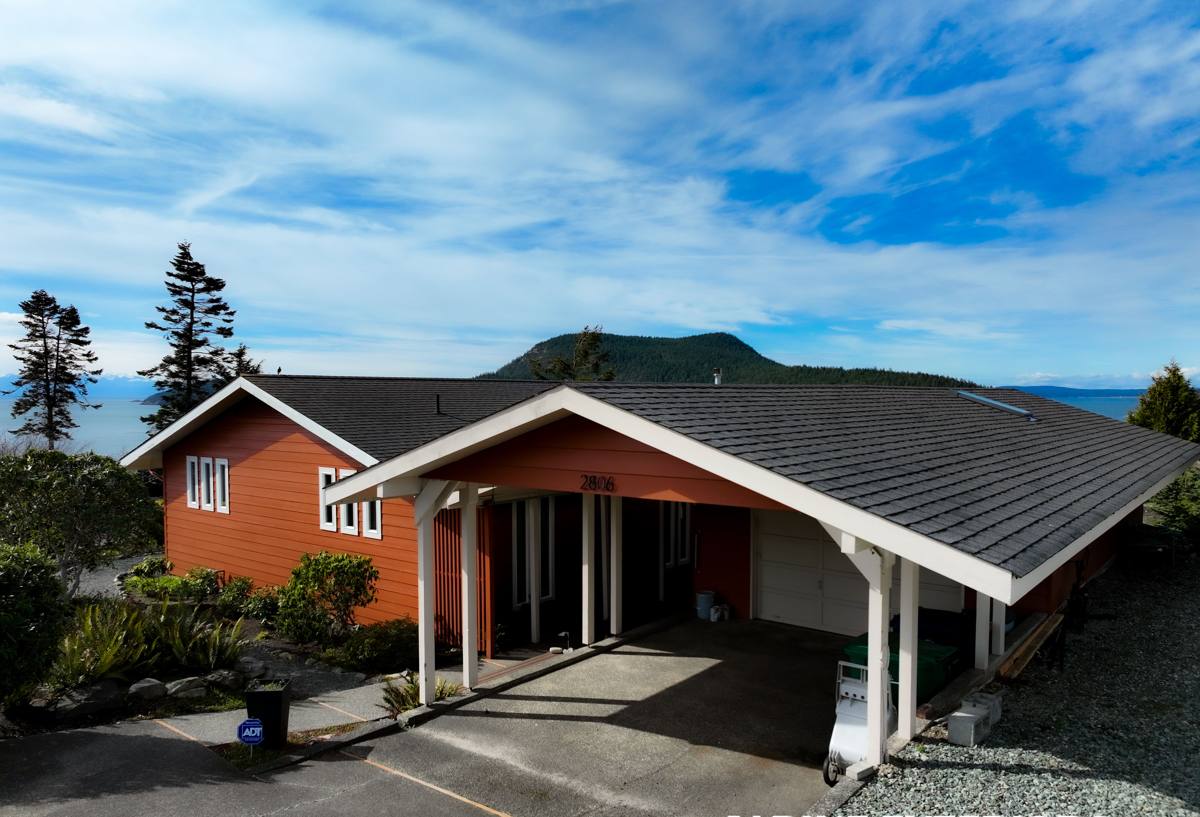
What the Climate Actually Does to an Exterior
Moisture Is the Constant Threat
The Pacific Northwest doesn't get the heavy downpours of a thunderstorm climate as often — it gets steady, prolonged rain that finds every gap, seam, and failure point in an exterior. Over years, that steady exposure does more damage than an occasional storm would, because it never really lets a house dry out completely between rain events.
Moss and Organic Growth
Shaded, north-facing surfaces and roofs with any pitch that holds moisture are prone to moss, algae, and lichen growth. Beyond the cosmetic issue, moss holds water against roofing and siding materials, and root structures can work into seams and fastener points over time. A long moss season means more months where surfaces stay wet, which is a bigger problem for absorbent or poorly sealed materials than for ones engineered to resist it.
Temperature Swings and Wood Movement
Bellevue doesn't see extreme heat or cold most years, but the seasonal swing between summer dryness and winter saturation still puts stress on wood-based products, which expand and contract with moisture content. Repeated cycles are part of why wood and wood-composite siding products need more upkeep here than in drier regions.
Siding: Why We Install Only James Hardie Fiber Cement
We install James Hardie fiber cement siding exclusively — not vinyl, not LP SmartSide, not Cemplank, not Allura, not primed spruce, and not cedar. That's a deliberate standard, not a limitation, and it comes down to how each of those products actually performs under years of Pacific Northwest exposure.
Vinyl siding is affordable and low-maintenance, but it's a thin plastic product that can warp, fade, and crack over time, and it has limited ability to manage the kind of sustained moisture exposure this region produces. LP SmartSide and similar engineered wood products use a wood-strand core that performs well when installation and maintenance are followed exactly, but any breach in the factory coating exposes wood fiber to moisture — a real risk in a climate where surfaces stay damp for months. Cedar and primed spruce are traditional, attractive options, but real wood siding demands ongoing painting, caulking, and moisture vigilance to avoid rot, and that maintenance burden is heavier here than almost anywhere else in the country.
James Hardie fiber cement is non-combustible, dimensionally stable, and doesn't absorb moisture the way wood-based products do. Its ColorPlus factory-applied finish is baked on under controlled conditions rather than site-painted, which gives it more consistent, longer-lasting color performance than field-applied paint. Hardie also engineers specific product lines (HZ5, for example) for different climate zones, so the material specified for the Pacific Northwest is built with this region's moisture and temperature profile in mind. The warranty structure is transferable and backed by a large, established manufacturer — a meaningful difference from smaller or regional siding brands.
None of this means other siding products are without merit — vinyl is inexpensive, cedar is beautiful, and engineered wood has genuine strengths when maintained. But for the specific combination of moss, moisture, and prolonged dampness that defines this region's exterior conditions, fiber cement is the product we're willing to stand behind, and it's the only one we install.
Roofing: Managing Moss and Water in a Wet Climate
Roofing in Bellevue has to deal with the same sustained moisture and moss exposure as siding, but with the added stress of standing water risk at any low-slope section, valley, or poorly flashed penetration. Proper underlayment, flashing detail at every roof-to-wall transition, and adequate ventilation all matter more here than in drier climates, because a small installation shortcut has more time and moisture to turn into a real problem. Moss removal and preventive treatment are also a bigger part of ongoing roof maintenance in this region than in most of the country — a roof that's shedding water properly but growing moss unchecked will still degrade faster than it should.
Windows: Condensation, Seals, and Efficiency
Humid marine air makes window performance a bigger factor in home comfort here than in dry climates. Older single-pane or poorly sealed windows tend to show condensation between panes, fogging, and drafts sooner in this climate because the moisture load on the glazing and seals is higher year-round. Replacement windows with modern insulated glazing and properly installed flashing handle that moisture load far better, and correct installation — flashing integrated with the surrounding siding and weather barrier — matters as much as the window unit itself.
Decks: Rot, Moss, and Material Choice
Decks take the same punishment as roofs in terms of standing water and moss growth, but with the added complication of foot traffic and structural load. Wood decking needs regular sealing and cleaning to hold up through a wet season that can stretch six months or more; composite decking reduces that maintenance burden but still needs proper drainage and airflow underneath to avoid trapping moisture against structural framing. Ledger board attachment, flashing at the house connection, and joist protection are the details that determine whether a deck lasts one or three decades in this climate.
Why a Local Crew Matters
Exterior work in King County involves permitting requirements, inspection expectations, and in some Bellevue neighborhoods, HOA design review — all of which move faster and smoother when the crew doing the work already understands the local process. A crew that works this region regularly also has a working knowledge of how houses from different local building eras were originally constructed, which matters when a project uncovers something unexpected behind the old siding or roofing once it's opened up. That familiarity translates into fewer surprises and a smoother project overall.
Comparing Siding Options for This Climate
| Material | Moisture Resistance | Maintenance | Typical Lifespan |
|---|---|---|---|
| James Hardie fiber cement | High — non-combustible, dimensionally stable | Low — factory-applied ColorPlus finish | 30+ years with proper install |
| Vinyl | Moderate — can warp or crack over time | Low, but limited repair options | 20-30 years |
| LP SmartSide / engineered wood | Moderate — vulnerable if coating is breached | Moderate — coating and caulk upkeep | 20-30 years if well maintained |
| Cedar / primed spruce | Lower — absorbs moisture without upkeep | High — regular painting and sealing | Varies widely with maintenance |
Checklist: Signs Your Exterior Needs a Closer Look
- Moss or dark streaking on north-facing siding or roof sections
- Soft spots, bubbling, or visible warping in siding panels
- Condensation or fogging between window panes
- Soft or spongy decking, especially near the house connection
- Peeling or chalky paint on wood-based siding
- Water stains on interior ceilings or walls near roof penetrations
- Gutters overflowing or pulling away from the fascia
What Drives Cost on Exterior Projects
| Factor | Why It Matters |
|---|---|
| House size and story count | More surface area and access complexity increase labor time |
| Existing material removal | Tear-off and disposal add cost versus a clean substrate |
| Underlying damage | Rot or moisture damage found during removal requires repair before new material goes on |
| Roof/deck complexity | Multiple valleys, levels, or transitions increase flashing and labor detail |
| Material selection | Product line, color, and trim details affect material cost |
If you're noticing any of the warning signs above, or you're simply due for an honest look at how your siding, roof, windows, or deck are holding up against Bellevue's weather, we're glad to come take a look. There's a free, no-pressure estimate form below — reach out and we'll walk the property with you and tell you straight what we see.