 Seattle
 Bellevue homes sit in one of the more comfortable microclimates in the region, but "comfortable" doesn't mean dry. Homes here still take on driving rain that pushes sideways into wall assemblies during Pacific storm systems, long stretches of gray humidity that never quite let a wall surface dry out completely, and a moss season that runs longer than most homeowners expect on shaded, tree-lined lots. Add in the salt-tinged marine air that moves through the greater Puget Sound region, and you have conditions that wear down exterior siding steadily over years, even when nothing dramatic ever happens to the house. This page is about one thing specifically: what a correct siding replacement looks like for a Bellevue home, and why the details of that job matter more here than a lot of homeowners realize.
Signs a Bellevue Home Needs Replacement, Not Repair
Not every siding problem calls for a full replacement. Spot repairs and recaulking can extend the life of siding that's still fundamentally sound. But there's a point where patching stops being the honest answer, and recognizing that point saves homeowners money in the long run rather than costing them more.
Soft or spongy spots when you press on a wall, visible warping or buckling panels, paint that keeps failing in the same spots no matter how often it's recoated, and persistent moss or mildew growth that returns within a season of cleaning are all signs the siding itself — not just its surface finish — has reached the end of its useful life. Gaps that have opened up at seams and corners, especially on north-facing or heavily shaded walls, are another signal, since those are the spots where Bellevue's damp season does the most damage over time.
Why Age Alone Isn't the Right Test
Two homes built the same year in the same neighborhood can be in very different condition, because siding wear depends heavily on sun exposure, tree cover, and how well the original installation handled flashing and moisture management. A wall that gets afternoon sun and good airflow can outlast a shaded, tree-covered wall on the same house by years. That's why we look at the actual condition of a home's siding rather than assuming a birth year tells the whole story.
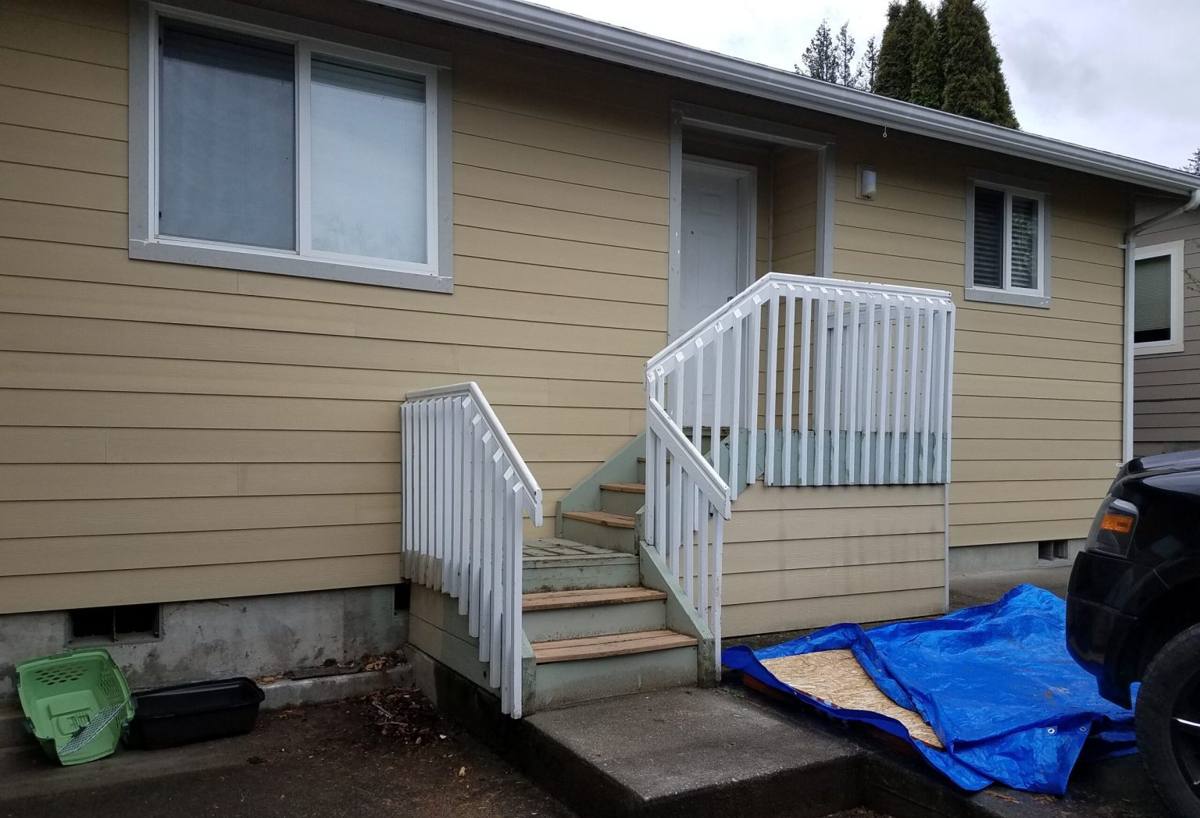
What Bellevue's Climate Actually Does to Siding
Three conditions do most of the damage here. Driving rain, pushed by wind rather than falling straight down, works its way into any gap at a seam, corner, or window opening that wasn't sealed correctly the first time. Sustained humidity — the kind that keeps a shaded wall damp for days after a storm has passed — gives mold, mildew, and moss a foothold that a drier climate simply wouldn't allow. And moss itself, once established on a north-facing or tree-shaded wall, holds that moisture against the surface even longer, extending how much time the material spends wet in a given year.
None of this shows up overnight. It accumulates quietly: a hairline gap at a corner joint that widens a little more with each freeze-thaw cycle, a patch of moss that spreads a few inches further every wet season, a finish that dulls and chalks a bit more each year until it's failing faster than recoating can keep up with. By the time a homeowner notices a real problem, the underlying material has usually been absorbing moisture for longer than the visible symptoms suggest.
Why We Install Only James Hardie Fiber Cement
We install one siding product on every replacement job: James Hardie fiber cement. We don't offer vinyl, LP SmartSide, Cemplank, Allura, primed spruce, or cedar, and that's a deliberate professional standard, not a limited catalog. Each of those products gets something right — vinyl is inexpensive, engineered wood installs quickly and takes paint well, cedar has real natural character — but each also carries a trade-off we don't think holds up well against a climate that stays damp as much of the year as this one does.
Vinyl can grow brittle and warp with age and temperature swings, and its seams are exactly the kind of gap that wind-driven rain exploits over time. Wood-based products, however well treated at the factory, still have an organic core that depends on flawless field priming and caulking at every cut edge to keep sustained moisture out — a hard standard to hold consistently across an entire crew, on every job, for the full service life of the siding. Cedar is genuinely attractive, but it's organic too, and it asks for ongoing upkeep — refinishing, sealing, moss control — to keep performing through a climate that doesn't offer a long dry season to recover in between storms.
Fiber cement handles the core problem differently because it isn't organic. There's no wood substrate for moisture to work into, and it doesn't feed mold, mildew, or moss growth the way wood-based products can. James Hardie also engineers climate-specific HZ product lines built around sustained moisture exposure, rather than selling one generic formulation nationwide. Paired with a factory-applied ColorPlus finish — baked on under controlled conditions instead of painted on-site in variable weather — it holds color and resists cracking longer than most field-applied finishes manage through a wet Pacific Northwest year.
What a Correct Siding Replacement Actually Involves
Replacing siding is not simply pulling off old panels and nailing up new ones. The parts of the job that determine whether it lasts fifteen years or fifty are mostly invisible once the project is finished — which is exactly why it matters who's doing them and how carefully.
Our Process, Step by Step
- Full tear-off and inspection. We remove the existing siding down to the sheathing and inspect for hidden moisture damage, rot, or compromised framing before anything new goes up. Problems found here get addressed before they're sealed behind new siding.
- Weather-resistive barrier. A correctly lapped and sealed moisture barrier goes on next, shingled from the bottom up so water is directed outward and downward rather than trapped against the wall.
- Flashing at every penetration. Windows, doors, hose bibs, light fixtures, and any other wall penetration get integrated flashing — not caulk applied after the fact as a substitute for it. This is the single detail most responsible for whether a wall stays dry over the long term.
- Starter strip and clearance. Proper clearance from grade, decks, and patios keeps the bottom edge of the siding out of standing moisture and splash-back.
- Fastening to spec. Fastener pattern and spacing are matched to the specific Hardie product line and to local wind exposure, not applied generically across every job.
- Joint and seam treatment. Sun-exposed walls and shaded, moss-prone walls get treated differently, because they age differently.
- Final finish and touch-up. Factory-finished ColorPlus color is matched at trim and any field touch-up points so the finished wall reads as one consistent job, not a patchwork.
Skip any one of these steps and you've built a weak point into the wall — the kind that doesn't cause a visible problem for a year or two, and then shows up as a leak, a soft spot, or a callback nobody wants to make.
Comparing Siding Replacement Approaches
| Factor | Generic Approach | Climate-Specific Approach |
|---|---|---|
| Siding material | Whatever's cheapest or most commonly stocked | James Hardie HZ lines engineered for sustained moisture exposure |
| Moisture barrier | Installed quickly, minimal attention to lapping order | Correctly shingled and sealed to shed water downward and outward |
| Flashing at penetrations | Caulk relied on as the primary seal | Integrated flashing at every window, door, and penetration |
| Finish | Field-applied paint on a recurring recoat schedule | Factory-baked ColorPlus finish, less field maintenance |
| Wall-by-wall treatment | Same joint and seam approach on every wall | Adjusted for sun-exposed versus shaded, moss-prone walls |
Cost Factors for a Bellevue Siding Replacement
We don't publish blanket pricing, because a single number wouldn't be an honest one — the real cost drivers are specific to the house in front of us. That said, the factors that move a project's price up or down are consistent enough to lay out plainly.
| Factor | How It Affects Cost |
|---|---|
| Existing wall condition | Hidden rot or moisture damage found during tear-off adds repair scope before new siding can go up |
| Home size and wall complexity | More corners, gables, and penetrations mean more flashing detail and labor time |
| Siding profile and trim package | Board-and-batten or heavier trim details run higher than standard lap siding |
| Access and site conditions | Tree cover, tight lot lines, or a two-story wall can affect staging and labor time |
| Scope bundling | Pairing siding with trim, gutter, or paint work in one project can reduce overlapping setup costs |
What to Check Before Hiring a Siding Contractor
- Manufacturer training or certification specific to the siding product being installed
- A clear, specific explanation of how flashing will be handled at every window, door, and penetration
- Willingness to explain why they recommend one product over another for this specific climate, not just a sales pitch
- Current licensing, bonding, and insurance you can verify independently before signing anything
- A written scope of work and warranty terms you can read and understand, not a verbal promise
- A track record of jobs actually completed in this area, not just a general service radius claim
Why a Crew That Already Works Bellevue Matters
A contractor who works this area regularly has seen, repeatedly, how differently a shaded north wall ages compared to a sun-exposed wall two lots over, and adjusts flashing, joint treatment, and product recommendations accordingly. That judgment comes from doing the work here, on homes with this specific mix of moisture, shade, and rain exposure, not from a spec sheet written for the country as a whole. It also means someone is reachable locally if a warranty question comes up years down the road, rather than tracking down a crew that's moved on to a different region entirely.
Living With New Siding: What Bellevue Homeowners Should Watch For
Correctly installed fiber cement siding is genuinely low-maintenance, but "low-maintenance" isn't "no-maintenance" in a climate like this one. Keeping gutters clear ahead of the wet season prevents overflow from soaking siding and trim at the eaves. Checking shaded, tree-covered walls periodically for early moss growth and addressing it before it spreads keeps moisture from sitting against the surface longer than it needs to. Inspecting caulked joints at trim and penetrations every year or two catches small gaps before driving rain finds them. A contractor who installed the work correctly should be able to walk you through exactly what to watch for on your specific home, not hand you a generic maintenance sheet.
If you're weighing a siding replacement for a Bellevue home, we're happy to take a look and give you a straight read on what your house actually needs — no pressure, no generic pitch. Reach out for a free estimate and we'll walk the property with you and talk through what we see.