 Seattle
 Storm Damage Roof Repair Built for University District Homes
University District sits close enough to Puget Sound and Lake Washington that homes here take on a steady diet of marine air, wind-driven rain, and long stretches of overcast, damp weather. Add in the mature street trees and closely spaced rooflines common to this part of Seattle, and you get a roofing environment that punishes small problems quickly. A missing shingle or a lifted flashing edge that might sit quietly for a season in a drier climate can turn into an active leak here in a matter of weeks. Storm damage roof repair in this neighborhood isn't just about patching what broke during one bad windstorm — it's about understanding how King County's weather pattern keeps working on a roof long after the storm has passed.
We work on homes throughout University District regularly, from older craftsman-style houses near the core of the neighborhood to newer construction and multi-unit buildings closer to campus. That familiarity matters when we're diagnosing storm damage, because the right fix depends on knowing how local roofs are built, what materials hold up here, and where water tends to find its way in.
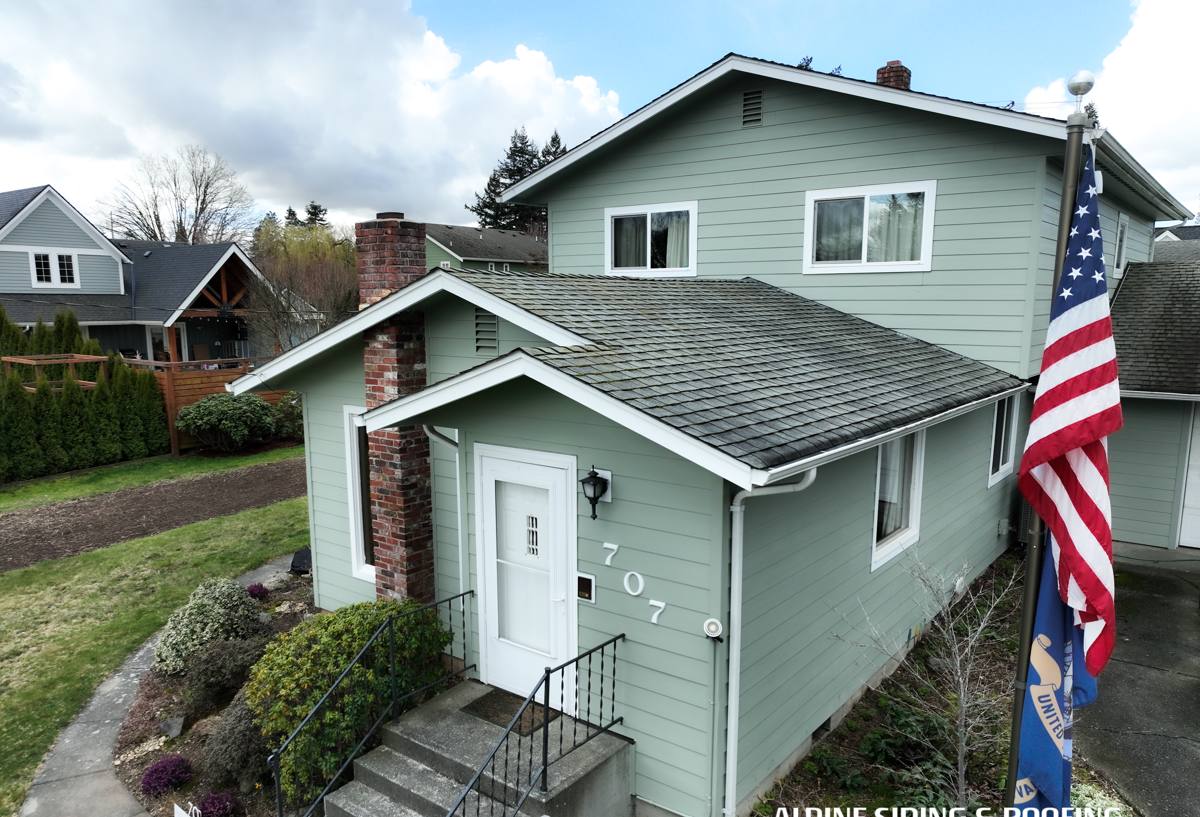
How Storms Actually Damage Seattle Roofs
Most storm damage in this area isn't the dramatic kind. It's rarely a tree limb through the roof deck. It's smaller, cumulative damage that shows up after a windstorm, an atmospheric river event, or just a long wet winter.
Wind
Gusty winter storms lift shingle edges, loosen ridge caps, and work fasteners loose over repeated cycles. A shingle doesn't have to blow off completely to fail — once the seal strip breaks and the tab starts flapping, wind-driven rain gets underneath it every time it rains from the wrong direction.
Driving Rain
Seattle rain is rarely straight down. Storms off the Sound push rain sideways, which means it finds gaps that would never leak in a calm rainfall — under lifted shingle tabs, around flashing that's slightly short, into vents that face the prevailing wind. A roof can look intact from the ground and still be actively leaking during a wind-driven storm.
Moss and Moisture
University District's tree cover and the region's long damp season give moss a real head start. Moss holds moisture against the roofing material, works its way under shingle edges as it grows, and lifts tabs just enough to let water in during the next storm. By the time moss is visible from the street, it's usually already affecting the roofing underneath it.
Debris
Branches and needles from neighborhood trees collect in valleys and behind chimneys, damming water during heavy rain and forcing it sideways under the roofing instead of down and off the roof.
Signs You Have Storm Damage
Storm damage isn't always obvious from the ground, and it isn't always urgent-looking. These are the signs we ask homeowners in this neighborhood to watch for after a windstorm or a stretch of heavy rain:
- Water stains on interior ceilings or upper walls, especially after a specific storm
- Granules collecting in gutters or at downspout outlets
- Shingles that look curled, lifted, or out of alignment with the surrounding roof plane
- Visible moss buildup, particularly on the north-facing or shaded slopes
- Flashing around chimneys, skylights, or roof-to-wall joints that looks bent, separated, or rusted
- Daylight visible through the attic roof deck
- A sudden increase in attic humidity or musty smell after wet weather
Any one of these on its own might be minor. Several at once, or any sign paired with an active interior leak, means it's time for a proper inspection.
What a Correct Storm Damage Assessment Looks Like
A rushed storm damage inspection tends to catch the obvious damage and miss the secondary damage — the fastener that backed out three feet from the visible tear, the underlayment that got wet even though the shingle above it looks fine. We inspect in a specific order so nothing gets missed:
Exterior Roof Surface
We walk the roof plane by plane, checking shingle seal strips, ridge caps, and exposed fasteners, and we pay close attention to valleys and any slope that catches wind off the Sound directly.
Flashing and Penetrations
Chimneys, vents, skylights, and any roof-to-wall transitions get checked individually. These are the most common failure points in a wind-driven rain event, and they're often the source of a leak even when the shingles themselves look fine.
Attic and Interior
Where access allows, we check the underside of the roof deck for staining, wet insulation, or daylight gaps that point to a specific entry point rather than guessing from the outside.
Gutters and Drainage
We check whether water is actually leaving the roof the way it's supposed to. A roof can be structurally fine and still leak if a clogged gutter or undersized downspout is backing water up under the roof edge.
Every homeowner gets a written explanation of what we found, what caused it, and what it will take to fix — not just a repair estimate with no context.
Repair vs. Replacement: How We Make the Call
Not every storm-damaged roof needs full replacement, and we don't default to recommending one. The decision comes down to a few honest factors.
| Factor | Favors Repair | Favors Replacement |
|---|---|---|
| Roof age | Under 12-15 years, good remaining material life | Near or past expected lifespan for the material |
| Damage extent | Isolated to one slope, flashing point, or section | Widespread across multiple slopes or repeated storm events |
| Underlayment condition | Dry, intact underlayment beneath the surface damage | Underlayment saturated or degraded from prior leaks |
| Moss/moisture history | Recent onset, shingles otherwise sound | Long-term moss growth with granule loss and lifted tabs throughout |
| Insurance scope | Damage matches a single documented storm event | Adjuster and inspection agree the roof system is compromised |
When repair is the right call, we do it in a way that matches the existing roofing as closely as possible so the fix doesn't stand out or create a new weak point at the patch edges. When replacement is the honest answer, we'll say so and explain why, rather than stretching a temporary repair further than it should go.
Materials We Recommend for This Climate
Storm damage repair is also a chance to upgrade weak points rather than just replacing like-for-like. In University District's wind and rain pattern, we generally steer toward:
Impact- and Wind-Rated Shingles
Higher wind-rated architectural shingles hold their seal better in gusty conditions than standard three-tab products, which matters directly here given how often storms come in off the water with sustained wind.
Properly Detailed Flashing
We use full-coverage step and counter-flashing at walls and chimneys rather than relying on sealant alone. Sealant degrades faster than metal flashing in this climate's UV and moisture cycle, and a flashing detail that's cut short to save material is one of the most common repeat-leak causes we find on older repairs.
Synthetic Underlayment
Where we're opening up a section of roof anyway, we prefer synthetic underlayment over older felt products for its better water resistance during the exposed window of a repair and its longer service life underneath.
We're straightforward about trade-offs on any material choice — cost, maintenance, and how it behaves over time in wet climates — rather than steering homeowners toward whatever is easiest to install.
Our Storm Damage Repair Process
- Inspection and documentation — full roof, flashing, attic, and drainage check, with photos of the damage for your records and any insurance claim.
- Written scope and estimate — a clear explanation of what's damaged, what caused it, and what the repair involves, with an honest repair-vs-replace recommendation.
- Temporary protection if needed — if there's an active leak, we can address the immediate exposure before the full repair is scheduled.
- Repair work — matched materials, properly detailed flashing, and a cleanup of debris, moss, or damaged sections that contributed to the problem.
- Final walkthrough — we show you what was done and what to watch for going forward.
Why a Crew That Knows University District Matters
Storm damage repair goes faster and holds up longer when the crew already understands the neighborhood. That means knowing which streets sit in wind corridors off Lake Washington, which roof styles are common on the older housing stock here, and how tree cover in this part of Seattle drives moss growth differently than it does in more open parts of King County. It also means being able to respond quickly after a regional storm event, when demand for roof repair spikes across the city and homeowners with an established local contractor tend to get seen faster than those starting from scratch.
We're also familiar with the permitting and inspection expectations that apply within Seattle, which keeps a repair from turning into a compliance headache later.
Maintenance That Prevents the Next Storm Call
A repair is a good time to put a maintenance habit in place, since most of what causes repeat storm damage in this climate is preventable:
- Clear moss buildup before it spreads across a full slope, not after
- Keep gutters and valleys clear of leaf and needle debris through fall and winter
- Trim back branches that overhang the roofline to reduce debris and abrasion
- Schedule a roof check after any major windstorm, even if nothing looks obviously wrong
- Address small flashing or seal issues promptly, before a driving rainstorm turns them into an interior leak
If you're dealing with storm damage on a University District roof — or just want a professional set of eyes on it after a recent windstorm — we're glad to take a look. Reach out for a free, no-pressure estimate using the form below.