 Seattle
 West Seattle's Exterior Climate Problem
West Seattle sits on a peninsula with more direct exposure to Puget Sound than most of the rest of the city. That geography matters for exteriors. Homes closer to the water deal with a steady drift of salt-laden air, and wind off the Sound hits west- and south-facing walls harder than it hits homes tucked into inland neighborhoods. Add in Seattle's long wet season and the moss and moisture pressure that comes with it, and you end up with an exterior that ages faster here than the same house would twenty minutes east.
None of this means West Seattle homes are doomed to constant repair. It means the materials and installation details matter more here than they would in a drier, more sheltered part of King County. A siding system, roof assembly, window package, or deck build that's marginal in a low-exposure location can fail years early on a bluff-facing lot exposed to wind-driven rain and salt air.
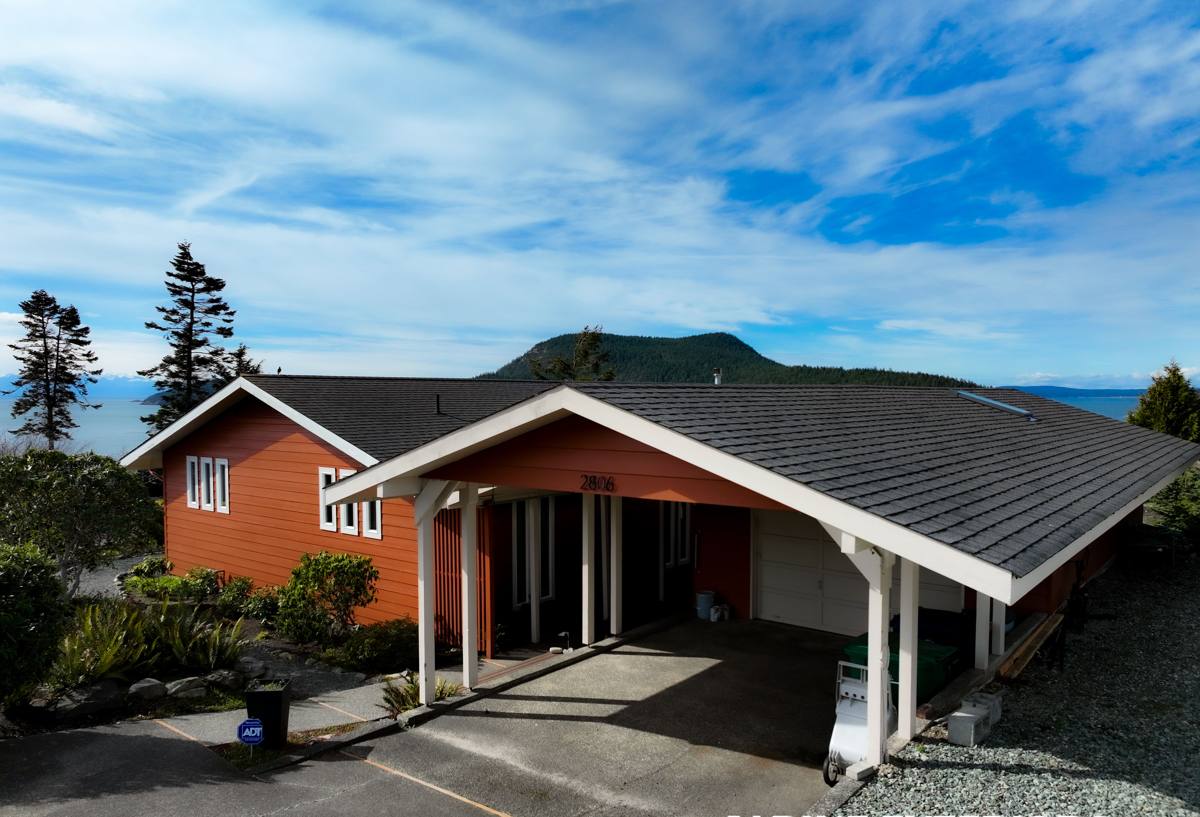
Siding: What Actually Holds Up Here
Salt air and driving rain are a rough combination for siding. Salt is corrosive and works its way into fasteners, seams, and any exposed edge. Driving rain doesn't just fall straight down — it gets pushed sideways into laps, corners, and trim joints, which is exactly where lesser siding systems start to fail first.
We install James Hardie fiber cement siding exclusively, and West Seattle's exposure is a big part of why. Fiber cement doesn't absorb water the way wood-based products do, it doesn't rot, and it's engineered to hold paint and factory finish through repeated wet-dry cycles. Hardie's ColorPlus factory finish is baked on and warranted against fading and cracking, which matters on a house that's going to take direct sun and wind in the same week, several times a year, for decades.
Why We Don't Install Everything on the Market
We get asked about vinyl siding, LP SmartSide, and other fiber cement or engineered wood alternatives fairly often. Each of those products has legitimate use cases somewhere. Vinyl is inexpensive and easy to install, but it expands and contracts more than fiber cement, and in wind-exposed locations that movement shows up as buckling and gapped seams over time. Engineered wood siding has improved a lot over the years, but it's still wood-based at its core, and wood-based products are more sensitive to sustained moisture exposure than cement-based ones — a real consideration in a climate with a long wet season and salt air working on every seam.
We're not trying to talk anyone out of a product that fits their budget elsewhere. We're explaining why, as a company, we standardized on one product line we trust to perform in this specific climate and stand behind the installation without hedging.
Roofing: Moss, Rain, and the Long Wet Season
West Seattle's moss season isn't a minor nuisance — it's a structural issue if it's ignored long enough. Moss holds moisture against roofing material, works into shingle laps and shakes, and on older roofs it can lift edges and create paths for water to get underneath the roofing system entirely. Combined with the volume of rain the area sees over a typical fall through spring stretch, roofs here need attention to flashing, valleys, and roof-to-wall transitions that drier climates can get away with skipping.
What We Look At
- Moss and organic growth buildup, especially on north-facing slopes that stay shaded and damp longer
- Flashing condition around chimneys, skylights, and roof-to-wall intersections — the most common source of hidden leaks
- Gutter and downspout capacity relative to actual rainfall volume, not just code minimums
- Underlayment condition on roofs approaching or past their expected service life
- Ventilation, since a poorly vented attic traps moisture that accelerates decking and shingle deterioration
A roof replacement or repair in this area should account for sustained wet exposure, not just a generic install. That's a scheduling and detailing question as much as a materials one — flashing and transitions done carelessly are where roofs in this climate actually fail, more often than the field material itself.
Windows: Wind-Driven Rain and Older Housing Stock
West Seattle has a mix of housing ages, and a meaningful share of older homes still carry original or early-replacement windows that weren't built for the air and water infiltration standards used today. On wind-exposed lots, wind-driven rain finds gaps in old frames and worn weatherstripping that wouldn't be a problem in a sheltered inland location.
Replacing windows here is as much about the installation detail — flashing, sealant, and how the window integrates with the surrounding siding — as it is about the window unit itself. A high-quality window installed with poor flashing will leak eventually. A modest window installed correctly, with proper integration into the siding system, will outperform it. When we replace windows alongside a siding project, we treat that integration as one continuous water-management system rather than two separate jobs.
Decks: Built for Rain, Not Just Sun
Decks in this part of King County spend more of the year wet than dry. That reality should drive material choice and structural detailing more than looks alone. Ledger board attachment, flashing where the deck meets the house, and gaps between decking boards to allow drainage and airflow all matter more here than in drier regions, because standing moisture is what drives rot and mold growth in deck framing and decking material alike.
Moss growth on deck surfaces is also common in shaded, damp yards, which affects both slip resistance and long-term wear on the decking material. Material choice — wood versus composite — is a real trade-off: wood is less expensive up front but demands more consistent maintenance in a wet climate, while composite costs more initially but handles sustained moisture with less upkeep.
Cost Factors Across Siding, Roofing, Windows & Decks
| Project | Key Cost Driver | Why It Matters in West Seattle |
|---|---|---|
| Siding | Wall area, trim complexity, tear-off vs. overlay | Wind-exposed walls need more attention to seams and fastening detail |
| Roofing | Pitch, layers to remove, flashing detail | Moss removal and flashing repair add labor on older roofs |
| Windows | Unit count, frame type, integration with siding | Proper flashing integration prevents wind-driven rain intrusion |
| Decks | Square footage, framing condition, material choice | Moisture-driven rot in framing often costs more to fix than it would have to prevent |
Signs Your Exterior Needs Attention
- Visible moss or dark streaking on roof slopes, siding, or deck boards
- Soft or spongy spots on deck framing, siding panels, or window sills
- Paint or finish that's peeling, bubbling, or fading unevenly, especially on west- or south-facing walls
- Drafts, fogging, or condensation between window panes
- Water stains on interior ceilings near roof valleys or chimneys
- Gaps or separation at siding seams, corners, or trim joints
Why a Local Crew Matters
Exterior work in West Seattle isn't identical to exterior work in a sheltered inland neighborhood, and it isn't identical to work in a different part of King County with less wind and salt exposure. A crew that works this area regularly knows which walls take the worst of the weather, which roof details tend to fail first on older housing stock, and how to sequence a project around the area's wet season instead of fighting it. That local knowledge shows up in the details — flashing choices, fastener selection, ventilation planning — that don't show up on a basic estimate but determine how well the work holds up over the next twenty years.
It also matters for permitting and inspection, since exterior projects in Seattle and King County go through their own review process, and a crew that handles that routinely avoids delays that catch out-of-area contractors off guard.
What to Expect From an Estimate
A good exterior estimate for a West Seattle home should walk the whole envelope, not just the section that prompted the call. Siding, roofing, windows, and decks all interact — a leak at a window can show up as a stain near the roofline, and a failing deck ledger connection can point to a bigger siding moisture issue behind it. We look at the house as one system, explain what we find in plain terms, and give a straightforward recommendation, including telling you when something doesn't need full replacement yet.
If you're dealing with moss buildup, aging siding, drafty windows, or a deck that's starting to feel soft underfoot, we're happy to take a look. Estimates are free, there's no pressure, and you'll get a clear picture of what your home actually needs.