 Seattle
 Why West Seattle Homes Lose Energy Through Old Windows
West Seattle sits out on the water — bordered by Puget Sound, Elliott Bay, and the Duwamish waterway — which means homes here take a different kind of weathering than houses further inland in King County. Salt-laden air off the Sound works into window hardware and old aluminum frames over the years. Wind-driven rain off the water finds its way into gaps that a calmer climate would never expose. And the long stretch of wet months, roughly October through May, keeps north- and west-facing walls damp enough to grow moss on anything that holds moisture, including window sills and trim.
Old single-pane and early double-pane windows in this climate don't just waste heating dollars — they let in cold drafts near Alki, Fauntleroy, and the ridge above the Sound, they fog and streak with condensation on cold mornings, and their wood sills rot from the inside out because water gets behind the frame instead of running off it. An energy-efficient window replacement in West Seattle has to solve for comfort and utility bills, but it also has to solve for moisture management first — because a window that leaks air is an inconvenience, and a window that leaks water is a repair bill.
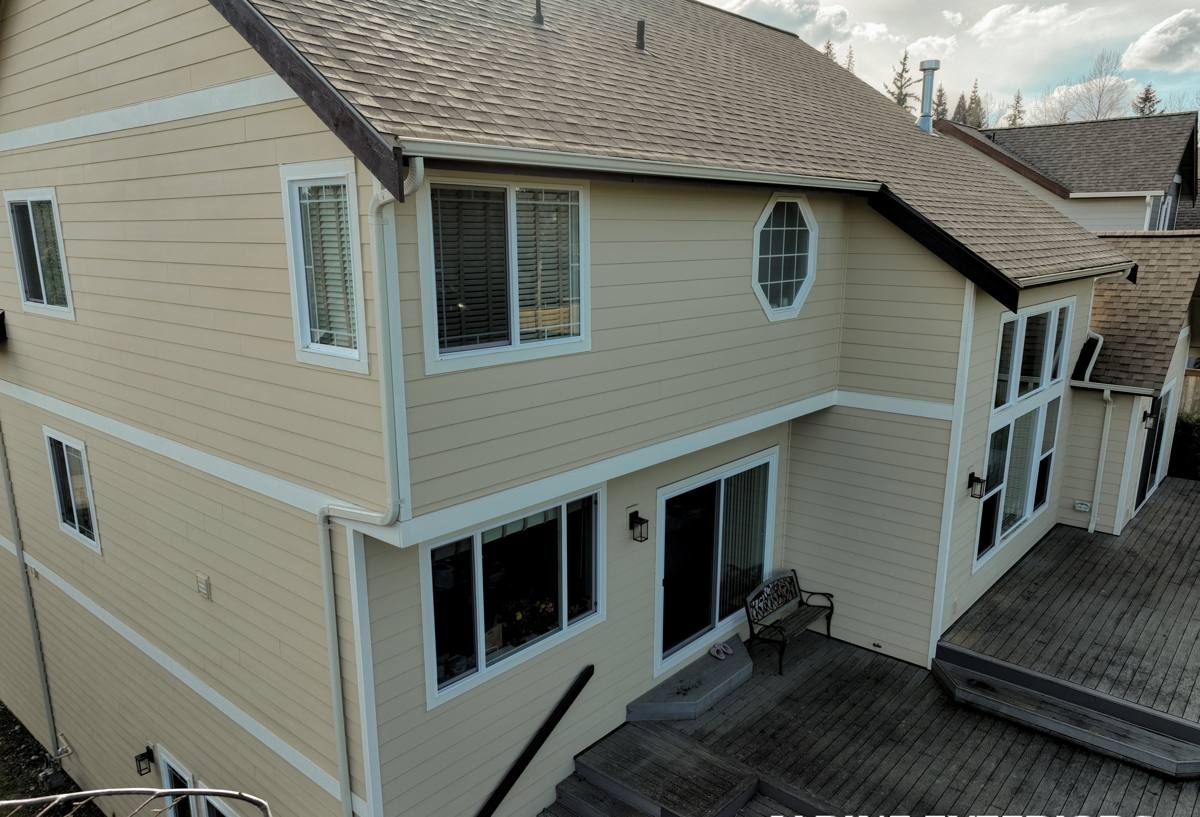
What "Energy-Efficient" Actually Means
The term gets used loosely, so it's worth being specific about what actually separates a genuinely efficient window from one that's just marketed that way. Every legitimate window comes with an NFRC (National Fenestration Rating Council) label listing a few numbers that matter more than any marketing claim:
- U-factor — how well the window resists heat loss. Lower is better; this is the number that matters most for Seattle's mild-but-persistently-cool winters.
- SHGC (Solar Heat Gain Coefficient) — how much solar heat passes through. In our cloudy climate this matters less than in sunnier regions, but it still affects west-facing rooms that catch afternoon sun off the water.
- Air leakage — measured in cubic feet per minute per square foot of frame. This is the number most directly tied to drafts and to moisture getting where it shouldn't.
- Low-E coatings — a microscopically thin metallic layer that reflects heat while still letting light through. Standard on nearly every quality window sold today.
- Gas fill — argon or krypton between panes, which insulates better than plain air and is standard in double- and triple-pane units.
Washington's state energy code sets minimum U-factor requirements for replacement windows, so any legitimate job should meet or beat code — that's a baseline, not a selling point.
Choosing the Right Frame Material for a Marine Climate
Glass performance gets most of the attention, but frame material is what determines how the window holds up to West Seattle's specific mix of salt air, rain, and temperature swings between a cold night and a sunny afternoon. Here's how the common options compare for this environment:
| Frame Material | Performance in Salt Air & Rain | Maintenance | Typical Trade-Off |
|---|---|---|---|
| Vinyl | Good — won't corrode or rot, handles moisture well | Low; occasional cleaning | Limited color/finish options; can expand/contract with big temperature swings |
| Fiberglass | Excellent — very stable, resists both moisture and salt exposure | Low | Higher upfront cost than vinyl |
| Wood (clad exterior) | Good if the cladding is intact; the wood core needs protection from driving rain | Moderate — exterior clad is low-maintenance, interior wood needs occasional attention | Best appearance for craftsman-era homes; more installation-sensitive |
| Aluminum | Poor to fair — conducts cold, and older aluminum hardware is exactly what corrodes near the Sound | Higher — hardware and finish need upkeep | Thin sightlines, but generally not our first recommendation this close to salt water |
We don't rule out aluminum-clad or metal-frame products outright, but this close to Puget Sound, we're honest with clients about the corrosion risk on hardware and the thermal performance gap compared to vinyl or fiberglass. It's a maintenance and longevity trade-off worth understanding before you commit to a look.
Glass Packages Worth Considering
Double-pane with Low-E coating and argon fill is the standard, code-compliant choice and performs well in our climate. Triple-pane adds meaningfully more insulation and sound dampening — useful on a windier, more exposed lot or a busy street — but it adds cost and weight, which matters on larger picture windows or older frames. We'll walk through whether the extra cost pencils out for your specific house rather than defaulting to the upsell.
Full-Frame Replacement vs. Retrofit Windows
This decision matters more than most homeowners realize, and it's where a lot of energy-efficiency promises quietly fall apart.
- Retrofit (insert) windows — the new window is installed inside the existing frame. Faster and less invasive, and often fine when the existing frame is square, dry, and structurally sound.
- Full-frame replacement — the old frame is removed down to the rough opening, exposing the sheathing and flashing underneath. More work, but it's the only way to actually inspect and fix hidden water damage, and it's usually the right call on older West Seattle homes where decades of wind-driven rain may have already gotten behind the original frame.
We won't recommend a quick insert job over a frame you can't see is compromised. If there's any sign of soft wood, staining, or past leaks around a window opening, that's a full-frame conversation, not a retrofit one — patching over hidden rot with a new window on top doesn't fix anything, it just hides it for a while.
Installation Is What Actually Determines Performance
A high-end window installed poorly will underperform a mid-range window installed correctly — this is especially true here, where wind-driven rain off the Sound tests every seam. The materials matter, but the install is where energy efficiency and water-tightness actually get decided. A correct installation includes:
- Removing old caulk, flashing, and any damaged sheathing down to sound material
- Inspecting and repairing the rough opening before the new window ever goes in
- Installing sill pan flashing so any water that does get past the window drains back out, not into the wall
- Proper shimming so the window is square and operates smoothly for years, not just on install day
- Continuous, correctly-lapped flashing tape integrated with the home's existing weather-resistive barrier
- Low-expansion foam and backer rod at the perimeter for both insulation and air sealing, not just caulk alone
- Exterior trim and caulking sealed against the specific direction West Seattle's storms tend to drive rain
Skip any one of these steps and you can end up with a window that tests well on paper but still lets in drafts or, worse, quietly rots the wall framing around it over a few wet seasons.
Matching Windows to West Seattle's Housing Stock
West Seattle has a real mix of building eras, and the right window approach depends on which one you're working with.
Craftsman and Early 1900s Homes
Original wood double-hung windows with divided lites are part of the character of these houses. We can often replicate that look with clad-wood or vinyl windows using simulated divided lites, so you keep the exterior character while gaining real energy performance and none of the maintenance burden of bare exterior wood.
Mid-Century Homes
Many mid-century houses in the area were built with single-pane aluminum sliders or awning windows — efficient to build at the time, but poor performers by today's standard and prone to the corrosion issues aluminum sees near salt air. These are usually straightforward, high-impact upgrades.
View Homes
Homes with a Sound or Olympic Mountain view often lean on large picture windows and sliding or casement units to maximize glass. These need careful attention to structural support, larger glass packages, and frame materials that won't warp or discolor under sun exposure over time.
Our Process
- On-site assessment — we look at every window opening individually, not just the glass. That includes checking for hidden water damage, drafts, and how the existing flashing was done.
- Product recommendation — based on your home's era, exposure to wind and rain, and budget, not a one-size-fits-all package.
- Written estimate — clear on frame material, glass package, full-frame vs. retrofit approach, and what's included.
- Installation — old windows removed, openings inspected and repaired as needed, new windows installed and properly flashed and sealed.
- Cleanup and walkthrough — every window opened, closed, and checked before we consider the job done.
Maintenance Through a Long Wet Season
Even a well-installed window benefits from a little seasonal attention in a climate this wet. A few habits go a long way:
- Rinse exterior sills and tracks periodically to clear salt residue and organic buildup before it turns into moss or algae
- Check exterior caulk lines once a year, typically before the fall rains start, and touch up anything that's cracked or pulled away
- Keep gutters and downspouts clear so runoff isn't sheeting directly across window heads
- Wipe down interior sills after cold snaps if you notice condensation, which is often more about interior humidity than the window itself
- Operate every window a few times a year, even the ones you rarely open, so hardware doesn't seize up
Why a Local West Seattle Crew Matters
Window performance claims are easy to print on a brochure. What actually determines whether a window keeps out West Seattle's rain and holds its energy performance for the next twenty years is how it's flashed, sealed, and fitted to your specific house — and that's a job better done by a crew that already knows how this neighborhood's weather behaves. We work on homes across West Seattle and the broader Seattle and King County area regularly, so we're not guessing at how driving rain off the Sound behaves against a west-facing wall, or which older homes in this area tend to have hidden water damage around original window openings. That local, repeated experience is what keeps a good product from turning into a bad installation.
If you're weighing whether it's time to replace aging windows, we're happy to take a look and give you a straightforward, no-pressure assessment of what your home actually needs. Use the form below to request a free estimate.