 Seattle
 Asphalt Shingle Roofing Built for Magnolia's Climate
Magnolia sits on a wooded peninsula bordered by Puget Sound, and that location shapes what a roof has to deal with here. Salt-laden air drifts in off the water, driving rain comes in sideways during winter storms, and the tree canopy that gives the neighborhood its character also means shade, damp organic debris, and a long moss season on north-facing slopes. An asphalt shingle roof that's installed correctly for this environment can handle all of it. One that's installed generically for "Seattle" without accounting for the specifics of a shoreline-adjacent, tree-heavy neighborhood will show problems years before it should.
This page covers what an asphalt shingle roof needs to hold up on a Magnolia home, what a correct installation actually involves, and how our process works from first inspection to final walk-through.
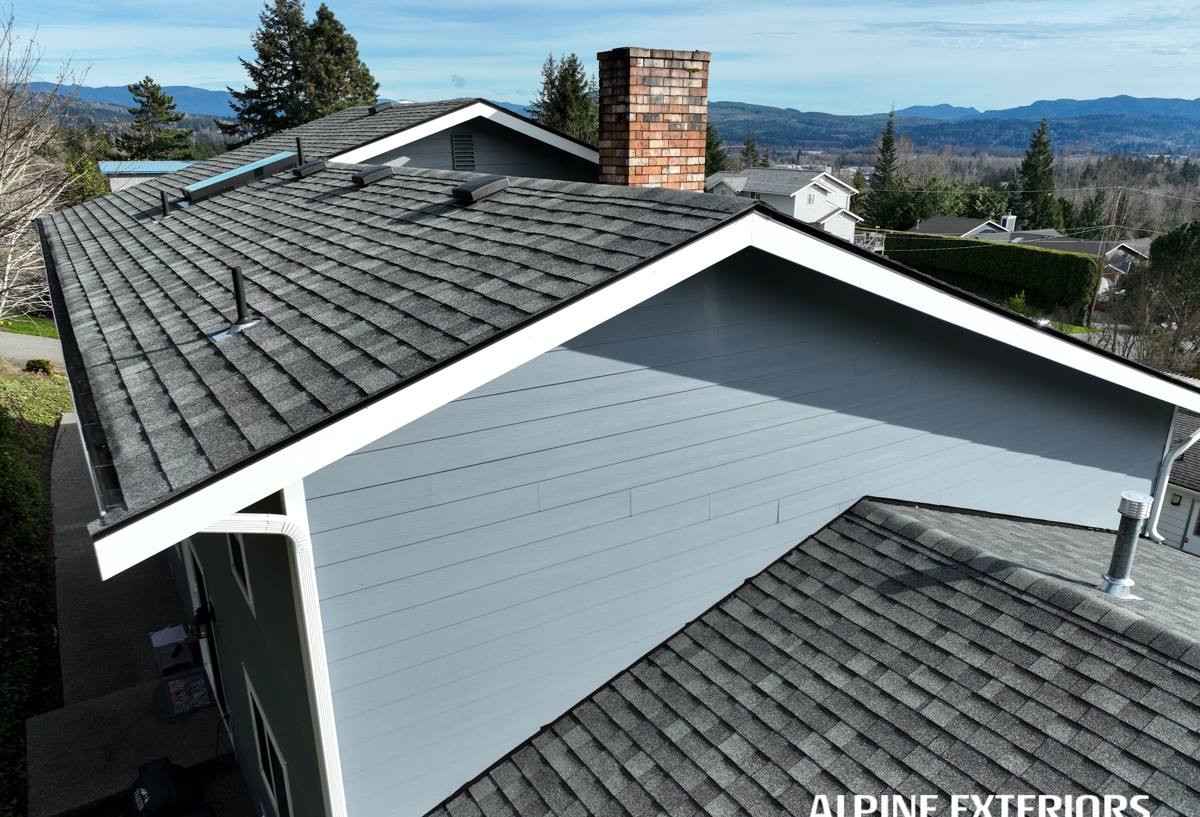
What Magnolia's Environment Does to a Roof Over Time
Salt Air and Metal Components
Homes closer to the water pick up airborne salt that accelerates corrosion on exposed metal — flashing, fasteners, vent stacks, and gutter hardware. Standard galvanized fasteners can start rusting years ahead of schedule in this exposure. It's a small detail that gets skipped on a lot of jobs, and it's one of the first places we upgrade materials on a Magnolia roof.
Driving, Wind-Driven Rain
Storms off the Sound don't always fall straight down. Wind-driven rain gets pushed sideways and upward under shingle edges, around chimneys, and into valleys — the exact spots where a rushed or generic install cuts corners on underlayment and flashing. A roof that would be fine in a calmer climate can leak here if those transition points aren't detailed properly.
Moss, Shade, and Organic Debris
Mature trees are part of what makes Magnolia desirable, but they also drop needles and leaves that trap moisture against the roof surface, and they shade sections of the roof long enough for moss and algae to take hold. Moss isn't just cosmetic — it lifts shingle edges, holds water against the roof deck, and shortens the life of the roofing system if it's left to spread.
Temperature Swings and Wind Exposure
Elevated, exposed sections of the peninsula catch more wind than sheltered inland lots, and freeze-thaw cycles in winter stress shingles and sealant strips that weren't given time to properly bond. All of this adds up to the same conclusion: a Magnolia roof needs to be built for this specific combination of salt, wind, rain, and shade — not just "Pacific Northwest rain" in general.
What a Correct Asphalt Shingle Installation Involves
A shingle roof is a system, not just a layer of shingles nailed to plywood. Every layer underneath the visible shingle does specific work, and skipping or shortcutting any of them is where premature leaks and failures come from.
- Deck inspection and repair — soft, rotted, or delaminated sheathing gets replaced before anything goes back on, not covered over.
- Ice-and-water shield at eaves, valleys, and around every roof penetration — the areas most exposed to wind-driven rain and ice damming.
- Synthetic underlayment across the full deck as a secondary water barrier beneath the shingles.
- Corrosion-resistant flashing and fasteners around chimneys, skylights, and sidewalls, sized appropriately for salt-air exposure.
- Balanced attic ventilation (intake at the eaves, exhaust at the ridge) so heat and moisture don't get trapped under the deck, which accelerates shingle aging from underneath.
- Proper nailing pattern — correct nail count and placement per shingle, which is what actually determines wind resistance, not just the shingle's rated wind speed on the wrapper.
Any one of these done wrong can undercut an otherwise good shingle. It's why we treat the install as a full system rather than a single product swap.
Choosing the Right Shingle for a Magnolia Home
Most Magnolia homes fall into a few categories: mid-century houses, craftsman and traditional builds, and newer construction taking advantage of Sound and mountain views. The right shingle depends on the roof's pitch, sun and shade exposure, and the look that fits the house and the block.
| Shingle Type | Typical Lifespan | Best Fit |
|---|---|---|
| 3-Tab Shingles | 15–20 years | Budget-conscious re-roofs on simpler roof lines |
| Architectural (Dimensional) Shingles | 25–30+ years | Most Magnolia homes — better wind performance and a heavier, layered look |
| Algae-Resistant (AR) Shingles | Same as base shingle, with slower discoloration | Shaded, tree-covered lots prone to moss and algae staining |
| Impact-Rated (Class 4) Shingles | Same as base shingle, added durability | Exposed, wind-heavy sections of the peninsula |
For most homes in this neighborhood, we recommend architectural shingles with an algae-resistant rating as the baseline — the wind performance and moisture resilience are worth the modest cost difference over standard 3-tab, especially on shaded lots.
Our Asphalt Shingle Roofing Process
1. On-Site Inspection and Honest Assessment
We start by getting on the roof, not just looking at it from the ground. We check the deck, existing ventilation, flashing condition, and how much of the roof's wear is age versus moss, shade, or a past install issue. You get a straight answer on whether you need a full replacement or targeted repair.
2. Tear-Off and Deck Inspection
We remove the old roofing down to the deck rather than layering over it. That's the only way to actually see and fix rot, soft spots, or prior water damage before it's sealed under a new roof.
3. Underlayment, Flashing, and Ventilation
This is where the system gets built — ice-and-water shield at vulnerable areas, full underlayment, corrosion-resistant flashing, and ventilation that's balanced for the home's attic, not just whatever was there before.
4. Shingle Installation
Shingles go down with the manufacturer's specified nailing pattern and exposure, with attention to valleys, ridges, and any penetrations. Straight lines and clean transitions aren't just cosmetic — they're a sign the layers underneath were done right too.
5. Cleanup and Walk-Through
We clear the site, run a magnetic sweep for stray fasteners, and walk the finished roof with you so you know what was done and what to expect going forward.
Living With a Shingle Roof in a Moss-Prone Neighborhood
Even a correctly installed roof needs some ongoing attention in a tree-heavy environment. A little maintenance goes a long way toward getting the full lifespan out of the shingles.
- Clear leaves and needles from valleys and gutters at least once or twice a year, more often under heavy tree cover.
- Address moss early with a gentle, roof-safe treatment rather than pressure washing, which strips granules and shortens shingle life.
- Keep overhanging branches trimmed back to reduce shade and debris buildup on the roof surface.
- Make sure gutters drain freely — standing water backed up against the roof edge is one of the more common causes of edge rot we see.
Signs Your Roof Needs Attention
- Granules collecting in gutters or at downspout outlets
- Visible moss or dark streaking, especially on shaded slopes
- Curling, cupping, or cracked shingles
- Daylight visible through the attic roof deck
- Soft or spongy spots when walked on
- Missing or lifted shingles after a windstorm
- Water stains on ceilings near chimneys, skylights, or valleys
Repair or Full Replacement?
Not every roofing problem means a full tear-off. The right call depends on the roof's age, how widespread the damage is, and what's happening underneath the shingles.
| Factor | Leans Toward Repair | Leans Toward Replacement |
|---|---|---|
| Roof Age | Under 12–15 years | Approaching or past 20+ years |
| Damage Scope | Localized (one slope, one valley) | Widespread across multiple slopes |
| Deck Condition | Solid, no rot found | Soft spots or rot present |
| Moss/Algae | Surface-level, recently developed | Long-term, lifting shingle edges |
| Ventilation | Adequate and balanced | Inadequate, contributing to premature wear |
We'll always tell you honestly if a repair is the right call, even if it means a smaller job. A roof that's genuinely repairable doesn't need to be replaced just because it's convenient to sell a bigger project.
Why a Crew That Already Works in Magnolia Matters
Magnolia's terrain is hillier and tighter than a lot of Seattle neighborhoods, with narrow streets, steep driveways, and lots that require careful staging for equipment, material delivery, and safe tear-off. A crew that's worked the area knows how to plan access and protect landscaping without it becoming a first-day surprise.
Local experience also means understanding how individual lots sit relative to the water and tree cover — two houses on the same block can have very different exposure depending on which way they face and how much canopy shades the roof. That affects both the shingle choice and where extra attention to flashing and ventilation actually matters. And because we're already familiar with Seattle's permitting requirements for reroofing, there's no learning curve that turns into delay on your project.
What to Expect From Us
We give straightforward assessments, use materials suited to this specific climate rather than the cheapest option that technically qualifies, and stand behind the workmanship on every roof we install. You'll get a clear scope of work, a realistic timeline, and no pressure tactics.
If your Magnolia home's roof is showing its age, dealing with moss, or you just want an honest opinion on repair versus replacement, we're happy to take a look. Reach out for a free, no-pressure estimate using the form below.