 Seattle
 James Hardie Siding in Rainier Valley: Matched to Seattle's Marine Climate
Rainier Valley covers a lot of housing stock and a lot of different siding conditions — older homes with original wood or early fiber cement siding, mid-century houses that picked up a vinyl re-side at some point, and newer construction that may or may not have been sided correctly the first time. What all of it shares is the same climate load. Like the rest of Seattle and King County, Rainier Valley sits inside a marine climate that puts steady, cumulative stress on exterior siding: salt-tinged air moving in off the Sound, driving rain that comes in sideways as much as it comes straight down, and a moss and mildew season that can run most of the year on shaded or poorly ventilated walls. Siding here isn't decorative — it's the building's primary defense against water, and it's tested constantly.
We install James Hardie fiber cement siding exclusively, and we don't offer vinyl, LP SmartSide, Cemplank, Allura, primed spruce, or cedar as alternatives. That's not a marketing position — it's a standard we settled on after years of doing siding, roofing, window, and deck work throughout Seattle and seeing firsthand which materials hold up to this specific climate and which ones create recurring maintenance and moisture problems. This page covers what a correct James Hardie installation looks like in Rainier Valley specifically, what the climate actually does to siding over time, and why hiring a crew that already works this neighborhood matters more than it might seem.
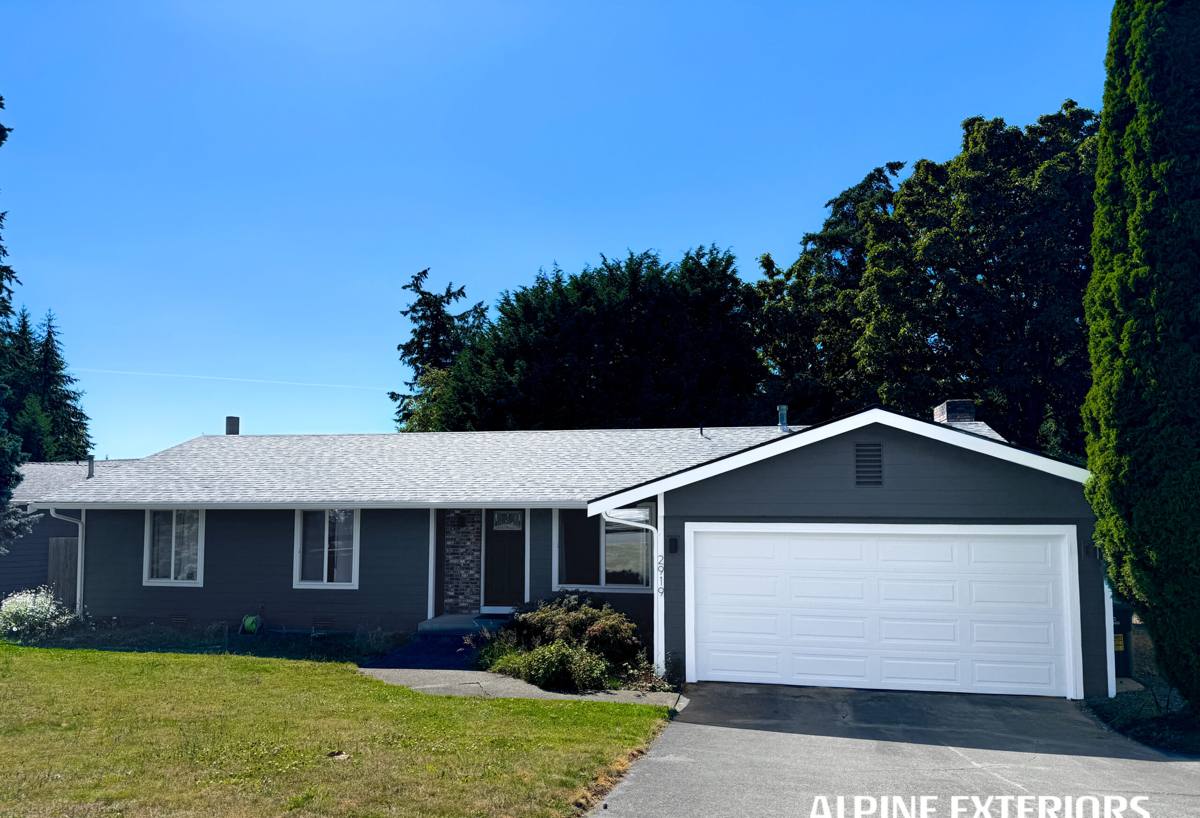
What This Climate Does to Siding Over Time
Salt Air and Surface Degradation
Seattle sits on saltwater, and even neighborhoods set back from the immediate waterfront get enough salt-influenced air moving through to accelerate wear on lower-grade siding materials and fasteners. Salt exposure speeds up fading and chalking on cheap or field-applied finishes, and it corrodes standard-grade fasteners and trim hardware faster than it would in a dry inland climate. Over years, that shows up as a siding system that looks tired well before it's actually reached the end of its useful life.
Wind-Driven Rain
Storms coming off the Sound don't just fall straight down — wind pushes rain sideways into wall assemblies, which means water reaches seams, laps, and joints that would stay dry in a calmer climate. This is the single biggest factor in how siding fails here. A siding product and installation that can't manage wind-driven rain at every joint, corner, and penetration will eventually let water behind the cladding, and once that happens the damage is happening inside the wall where nobody sees it until it's expensive.
Moss, Mildew, and Prolonged Dampness
Mild temperatures combined with near-constant moisture from fall through spring give moss and algae a long growing season across the whole Puget Sound region. Shaded elevations, walls under mature tree canopy, and anywhere siding stays damp between rain events are the spots that show it first. Porous or poorly finished siding materials hold that moisture longer and give moss more to grip onto; a dense, factory-finished material sheds water and dries faster, which matters more here than in almost any other part of the country.
Freeze-Thaw and Seasonal Moisture Cycling
Seattle doesn't see extreme cold, but it does see repeated cycles of saturation followed by cold snaps through the winter months. Siding material that absorbs water and then experiences a freeze cycle is prone to cracking, delaminating, or warping over time. That cycling is part of why product selection matters as much as installation quality — a material engineered for this specific moisture and temperature pattern behaves differently than one that wasn't.
Why We Install Only James Hardie
We get asked fairly often why we don't offer options — why not vinyl for a budget-conscious homeowner, or LP SmartSide for someone who likes the look of engineered wood. The honest answer is that we've handled enough repair and replacement calls on those materials in this exact climate to know where they tend to struggle: seams that separate under sustained wet-dry cycling, edges that swell or delaminate once water gets past a compromised finish, and maintenance schedules that assume a drier climate than King County actually has. Those are real trade-offs, not failures of those products everywhere — they're just trade-offs we've decided not to put on a Rainier Valley roofline.
Non-Combustible Fiber Cement
James Hardie siding is fiber cement — a mix of cement, sand, and cellulose fiber — which makes it non-combustible. That's a meaningful difference from vinyl (which can melt and deform under heat) and from wood-based products, and it's a factor more homeowners are weighing seriously as wildfire smoke seasons have become a more regular part of Pacific Northwest summers.
ColorPlus Factory Finish
Most Hardie siding we install carries ColorPlus Technology, a finish baked onto the board in a factory setting rather than applied on-site. That process applies multiple coats under controlled conditions no jobsite can replicate, and it holds up to fading, chipping, and cracking far better than field-applied paint does — which matters directly in a climate where field paint is fighting salt air and near-constant moisture from the day it's applied.
HZ5: Engineered for This Climate Zone
James Hardie manufactures its boards in different HZ formulations tuned to different climate zones, and for the Pacific Northwest we install the HZ5 line, engineered for colder, wetter conditions. That's a separate decision from color or texture — it's about how the board itself is formulated to handle the moisture cycling and freeze-thaw pattern this region sees, and it's part of why a generic siding job and a climate-matched siding job aren't the same thing even when the material looks similar on a spec sheet.
A Warranty Structure Built Around the Whole System
James Hardie backs its products with a substrate warranty on the board and a separate finish warranty on ColorPlus color, and both are transferable, which matters for resale. A warranty is only as good as the installation behind it, though — a manufacturer's warranty typically has installation requirements attached, and cutting corners on flashing or fastening can put warranty coverage at risk regardless of how good the material itself is.
What Correct Installation Involves
The board itself is only part of the equation. Most of the siding failures we get called out to inspect in Rainier Valley and the surrounding neighborhoods didn't start with the siding material — they started with an installation detail that skipped a step Hardie's own installation instructions require. In a climate this wet, those details aren't optional extras.
Drainage Plane and Rain Screen Gap
A proper installation starts with a weather-resistive barrier behind the siding and, ideally, a rain screen gap that lets any moisture that does get past the cladding drain and dry out instead of sitting against the wall sheathing. Skipping this step is one of the most common corners cut on lower-bid siding jobs, and it's invisible once the siding goes up — which is exactly why it matters who's doing the work, not just what material they're using.
Flashing and Joint Treatment
Every window, door, roofline intersection, and butt joint is a place water can get behind the siding if it isn't flashed and treated correctly. Hardie's installation guidelines specify how joints should be caulked or capped, how much clearance siding needs from rooflines, decks, and grade, and how flashing should lap with the drainage plane beneath it. Caulk that's asked to do the job flashing should be doing is a shortcut that shows up as a leak within a few wet seasons, not decades.
Fastening and Clearances
Fastener type, spacing, and depth all affect how well Hardie siding performs over time, and they're specified for a reason — under- or over-driven fasteners, wrong fastener material, or missing the framing can all lead to premature failure. Clearance from grade, roofing, and other surfaces also matters more here than in a drier climate, since standing water and prolonged wet contact at those transitions is where rot and moisture intrusion usually start.
Signs Rainier Valley Homes Show When Siding Needs Attention
- Visible cracking, warping, or separation at seams and butt joints
- Moss or algae buildup that keeps returning shortly after cleaning, especially on shaded or north-facing walls
- Soft spots, bubbling, or discoloration near window and door trim
- Paint or finish that's peeling, chalking, or fading noticeably faster in one area than the rest of the house
- Gaps or separation where siding meets trim, corners, or roofline flashing
- Interior signs like musty odors, peeling interior paint, or stained drywall near exterior walls
Cost Factors for a Hardie Siding Project
Every Rainier Valley property is different, so a real number only comes from an on-site look, but the factors below are what actually move the price on a Hardie siding project in this area.
| Factor | Why It Matters |
|---|---|
| Tear-off vs. installing over existing siding | Removing old siding down to the sheathing adds labor but lets us inspect and address any hidden moisture damage before it's covered up again |
| Home size and wall complexity | More corners, gables, dormers, and cut-ins mean more labor and material waste than a simple rectangular footprint |
| Siding profile (lap, panel, shingle) | HardiePlank lap siding is the most common and typically most economical; shingle and panel styles run higher due to material and labor |
| ColorPlus factory finish vs. primed-and-painted | Factory finish costs more upfront but eliminates a separate paint job and holds up longer against this climate |
| Underlying sheathing or framing repair | Rot or moisture damage found once old siding comes off adds cost but is far cheaper to fix now than to seal behind new siding |
| Access and site conditions | Steep lots, tight setbacks, or limited equipment access common in some older Rainier Valley lots can add labor time |
Our Process
We start with an on-site inspection of the existing siding and wall assembly — checking for hidden moisture damage, evaluating whether a tear-off or over-existing approach makes sense, and getting a real look at the home's exposure to wind, rain, and shade. From there we walk through product line, profile, and ColorPlus color options, and put together a written scope before any work begins. Once material is ordered, installation follows James Hardie's specifications for drainage, flashing, fastening, and clearances on every job — that's standard practice, not an upgrade. We handle the required permitting and inspections, and we stand behind our installation work separately from the manufacturer's product warranty.
Why a Local Crew Matters
A crew that already works Rainier Valley and the rest of Seattle regularly has already seen how wind-driven rain, salt air, and a long moss season behave on real homes in this specific area, compared to a drier or more sheltered climate. That translates into practical decisions — how much lap a flashing detail gets, how much rain screen clearance is worth building in, which fastener spec holds up best given a particular wall's sun and wind exposure. It also means fewer surprises with permitting and realistic scheduling around the wetter months, since a crew unfamiliar with Seattle's weather patterns can end up caught mid-project by a stretch of rain that a local crew would have planned around.
Before You Hire: A Practical Checklist
- Confirm current Washington contractor licensing and active liability insurance
- Ask whether they're a certified James Hardie installer and how many Hardie installs they've completed in this climate specifically
- Get a written scope that separates the manufacturer's product warranty from the contractor's installation warranty
- Ask directly how they handle rain screen, flashing, and clearance details — not just which siding profile or color you're choosing
- Confirm whether a tear-off inspection is included, so any hidden moisture damage gets addressed before new siding goes up
If your Rainier Valley home is due for a siding update — or you're just not sure whether what's on the wall now still has real life left in it — we're happy to take a look and give you an honest, no-pressure read on your options. Reach out below for a free estimate.