 Seattle
 Exteriors Built for Beacon Hill's Ridge-Top Climate
Beacon Hill sits on one of Seattle's higher ridgelines, and that elevation cuts both ways. Homeowners get some of the best views in King County, but the same exposure that opens up those views also means homes on the hill take more direct wind-driven rain, more temperature swing between sun-facing and shaded walls, and a longer stretch of damp, low-light months than homes tucked into a sheltered valley. Add in Seattle's marine air moving up from Puget Sound and the dense tree canopy that shades many streets on the hill, and you've got a climate that is genuinely hard on exterior building materials — even when a home looks fine from the street.
We work on homes across Beacon Hill and the rest of Seattle, and the exterior problems we see here follow a consistent pattern: moisture that doesn't fully dry out between storms, moss and algae that get a head start in shaded and north-facing areas, and siding, trim, and roofing that were never quite matched to how wet this region actually stays for eight or nine months of the year. This page walks through what that means for siding, roofing, windows, and decks, and how we approach exterior work differently because of it.
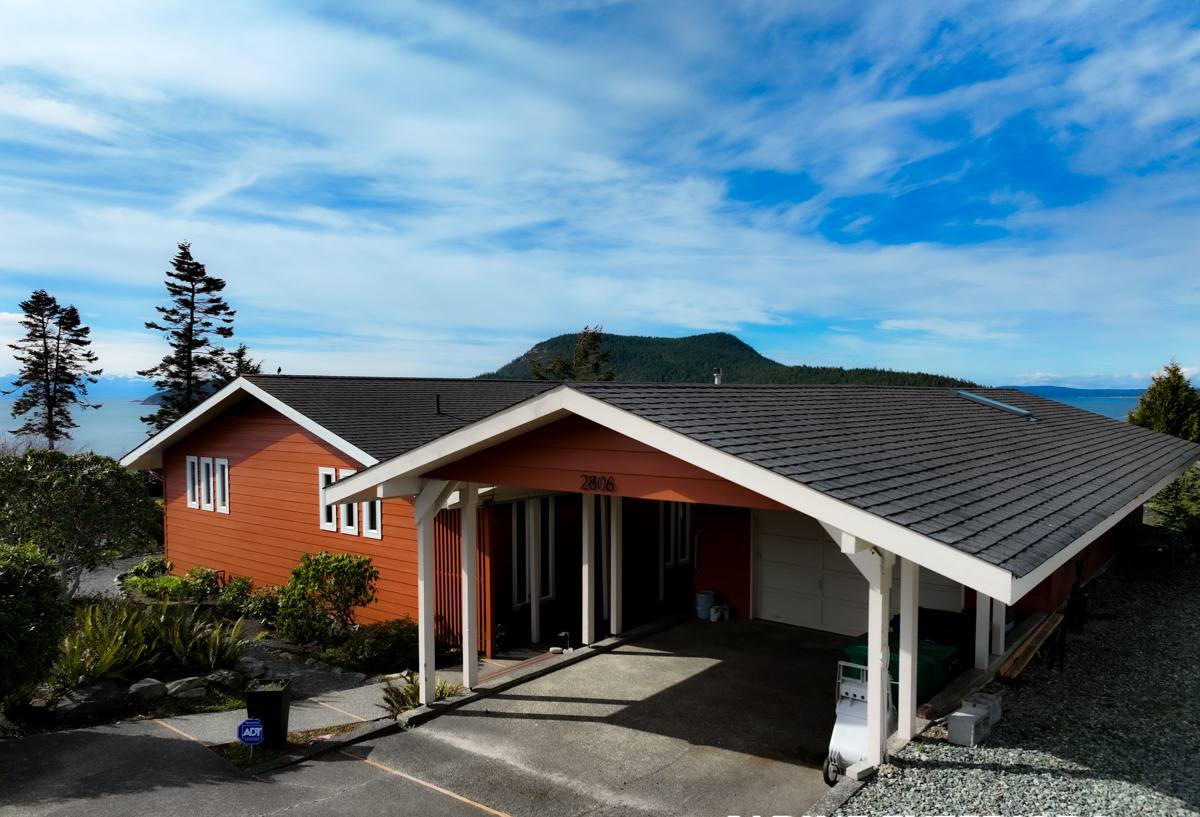
What Elevation and Tree Cover Mean for Your Siding
Beacon Hill's housing stock is a mix — older craftsman and bungalow-style homes from the early-to-mid 1900s alongside newer infill construction — but the exterior challenges are shared across almost all of it. Wood-frame homes on the hill are especially vulnerable to a few specific issues:
- Wind-driven rain on exposed walls. Elevated, less-sheltered lots take rain at more of an angle, which pushes moisture into seams, laps, and fastener points that a flatter, more protected lot wouldn't see.
- Shade and moss growth. Mature trees are common on Beacon Hill's residential streets, and shaded siding stays damp far longer after a storm than siding in full sun. That extended dry-time is exactly what moss, algae, and mildew need to take hold.
- Freeze-thaw cycling, in mild form. Seattle rarely sees hard freezes, but the region does get enough cold snaps each winter that trapped moisture in porous or poorly sealed siding can expand and contract, slowly working joints and paint film loose over years.
- UV and weather cycling on sun-exposed elevations. South- and west-facing walls on hilltop lots get more direct sun between rain events, which accelerates fading and coating breakdown on painted wood and lower-grade composite products.
None of this is unique to Beacon Hill — it's the story across most of Seattle and King County — but the hill's combination of exposure and tree cover means we typically see moisture-related siding failures show up a few years earlier here than on more sheltered lots.
Moss, Roofing, and the Long Wet Season
Roofing on Beacon Hill deals with the same core problem as siding: a long wet season with limited drying time, made worse by shade. Moss on a roof isn't just cosmetic. Left unchecked, it holds moisture against shingles, lifts them at the edges, and shortens the life of the roofing material underneath. North-facing roof slopes and anything shaded by mature trees are the areas we watch most closely on inspections.
A few things matter more here than in drier climates:
- Proper flashing and underlayment detailing at valleys, chimneys, and roof-to-wall transitions, where wind-driven rain is most likely to find a way in.
- Ventilation that actually moves air through the attic space, since trapped moisture under the roof deck is as damaging as moisture on top of it.
- Gutter systems sized and pitched correctly — undersized or clogged gutters on a hilltop lot back up fast during a heavy Puget Sound storm and send water where it doesn't belong.
We coordinate roofing with siding and trim work rather than treating them as separate trades, because on a home this exposed, the two systems either protect each other or both fail at the same seams.
Windows: Comfort and Efficiency on a Hilltop
Older single-pane and early dual-pane windows are common in Beacon Hill's older housing stock, and on an exposed hilltop lot, that shows up as drafts, condensation between panes, and higher heating bills in the wetter, colder months. Wind exposure at elevation makes air leaks around old window frames more noticeable than the same gap would be on a sheltered lot.
When we replace windows here, we're solving for three things at once: proper flashing and sealing so wind-driven rain can't get behind the window frame into the wall assembly, glass and frame performance suited to Seattle's mild-but-damp climate rather than a hot, dry region's spec sheet, and integration with the surrounding siding so the whole wall envelope works as one system instead of a patchwork of old and new materials.
Decks in a Climate That Never Fully Dries Out
Decks take a different kind of abuse in this climate — mostly standing moisture, mildew, and slow rot at ledger boards, joists, and any spot where two pieces of wood meet and trap water. On shaded Beacon Hill lots, a deck surface can stay damp for days after a storm, which accelerates decay in untreated or poorly maintained wood far faster than most homeowners expect.
A well-built deck for this climate depends on a few fundamentals: proper flashing where the deck ledger attaches to the house so water can't wick into the structure, gapped decking that allows airflow and drainage underneath, and hardware and fasteners rated for constant moisture exposure. We build and repair decks with those details as the baseline, not an upgrade.
Why We Install Only James Hardie Fiber Cement Siding
We get asked fairly often why we don't offer vinyl, LP SmartSide, primed spruce or cedar, or other fiber cement brands like Cemplank or Allura. The honest answer is that we standardized on one product line — James Hardie — because it's the one we trust to perform, year after year, in exactly the conditions Beacon Hill homes deal with.
That doesn't mean the alternatives are bad products across the board. Each has a real place in the market. But here's how they weigh out for a climate like ours:
| Product | What it does well | The trade-off in a wet, ridge-top climate |
|---|---|---|
| Vinyl siding | Low upfront cost, no painting | Can warp or crack with temperature swings; seams and lower-grade panels can allow moisture behind the cladding over time |
| LP SmartSide | Engineered wood, reasonable cost | Wood-based core means it depends heavily on unbroken paint and sealant to resist moisture intrusion at cuts and edges |
| Primed spruce or cedar | Natural look, long tradition in the Northwest | Highest maintenance burden — repainting, caulking, and moisture monitoring are ongoing, not one-time |
| Other fiber cement (Cemplank, Allura) | Fiber cement's core durability benefits | Different formulations and finish systems; we've built our installation standards, warranty process, and crew training around one system |
| James Hardie fiber cement | Non-combustible, factory-applied ColorPlus finish, climate-engineered HZ product lines, strong transferable warranty | Higher upfront cost than vinyl; requires correct installation to perform to spec |
James Hardie's HZ5 product line in particular is engineered for regions like ours that see sustained moisture and moderate freeze-thaw activity. The ColorPlus factory finish means the color coat is baked on under controlled conditions rather than field-applied, which matters a lot in a climate where field-painted surfaces rarely get the ideal dry window to cure properly. Fiber cement itself doesn't feed mold or absorb water the way wood-based products can, and it won't warp the way vinyl can under a hot afternoon sun that Beacon Hill's more exposed, less-shaded lots do get in summer.
We standardized on one manufacturer because it lets us install to a single, well-understood spec every time, back it with a real warranty, and train our crews on one system instead of stretching across several. For a hilltop climate that punishes shortcuts, that consistency matters more than having a bigger product menu.
What a Local Crew Actually Does Differently
A crew that works Beacon Hill regularly knows which streets sit in more shade, which lots take the brunt of a southwest storm, and which older homes tend to have moisture already hiding behind the siding before a single panel comes off. That local knowledge shows up in practical ways:
- We check for existing moisture damage and rot in the wall sheathing before we ever talk about new siding — covering up a wet wall with new material just delays a bigger problem.
- We flash and seal every window, door, and penetration to the same standard, because on an exposed hilltop lot, the weak point is rarely the field of the siding — it's the transitions.
- We sequence roofing, siding, window, and deck work so water management is continuous across the whole exterior, not handled trade-by-trade with gaps in between.
- We factor in shade and moss exposure when planning maintenance intervals, not just install quality.
Here's a simple pre-project checklist we walk through with Beacon Hill homeowners before any exterior work starts:
- Inspect siding, trim, and roofing for existing moisture damage or rot, not just surface wear
- Check gutters, downspouts, and drainage paths for correct sizing and slope
- Identify shaded or tree-covered wall and roof areas that will need extra attention for moss and mildew
- Confirm flashing details at every window, door, deck ledger, and roof transition
- Match materials and finishes to the home's actual sun and shade exposure, not a generic spec
Cost Factors on a Beacon Hill Exterior Project
Every home is different, but a few factors consistently move the price on exterior projects in this neighborhood:
| Factor | Why it matters here |
|---|---|
| Existing moisture or rot damage | Hidden damage behind old siding or around old windows has to be repaired before new material goes on — common on older Beacon Hill homes |
| Home access and lot slope | Hillside lots and steep driveways can affect staging, scaffolding, and material handling |
| Roof and wall complexity | Multiple rooflines, dormers, and wall transitions mean more flashing detail and labor |
| Tree cover and shade | Heavily shaded elevations may need moss treatment or extra prep before work begins |
| Scope — single trade vs. full exterior | Coordinating siding, roofing, windows, and decks together reduces duplicate setup and improves how the systems tie together |
Let's Look at Your Home
If you're weighing a siding, roofing, window, or deck project on Beacon Hill, the most useful next step is usually a walk-around of your actual home rather than a guess based on general pricing. We'll look at your exposure, your existing materials, and where moisture and shade are working against you, and give you a straightforward, no-pressure estimate for what your home actually needs. There's a form below — reach out and we'll get you scheduled.