 Seattle
 New Roofs Built for Beacon Hill's Weather, Not a National Average
Beacon Hill sits on a ridge above the rest of Seattle, and that elevation is a mixed blessing. The views are real, but so is the extra weather exposure. Homes up here catch wind off Puget Sound and Elliott Bay, take driving rain straight off the water for months at a time, and sit under tree canopy in enough spots that moss gets a real head start every fall. A roof that was installed to a generic spec sheet, without accounting for any of that, tends to show its age faster than it should. A roof installed correctly for this specific hill tends to just quietly do its job for decades.
We install new roofs across Seattle and King County, and Beacon Hill is one of the neighborhoods we work in regularly. That matters more than it sounds like it should. Knowing which blocks catch the worst wind-driven rain, which lots hold moisture longer because of tree cover, and which older homes have roof decks that need extra attention before new material goes down — that's not something you learn from a brochure. It's something you learn from doing the work here, roof after roof.
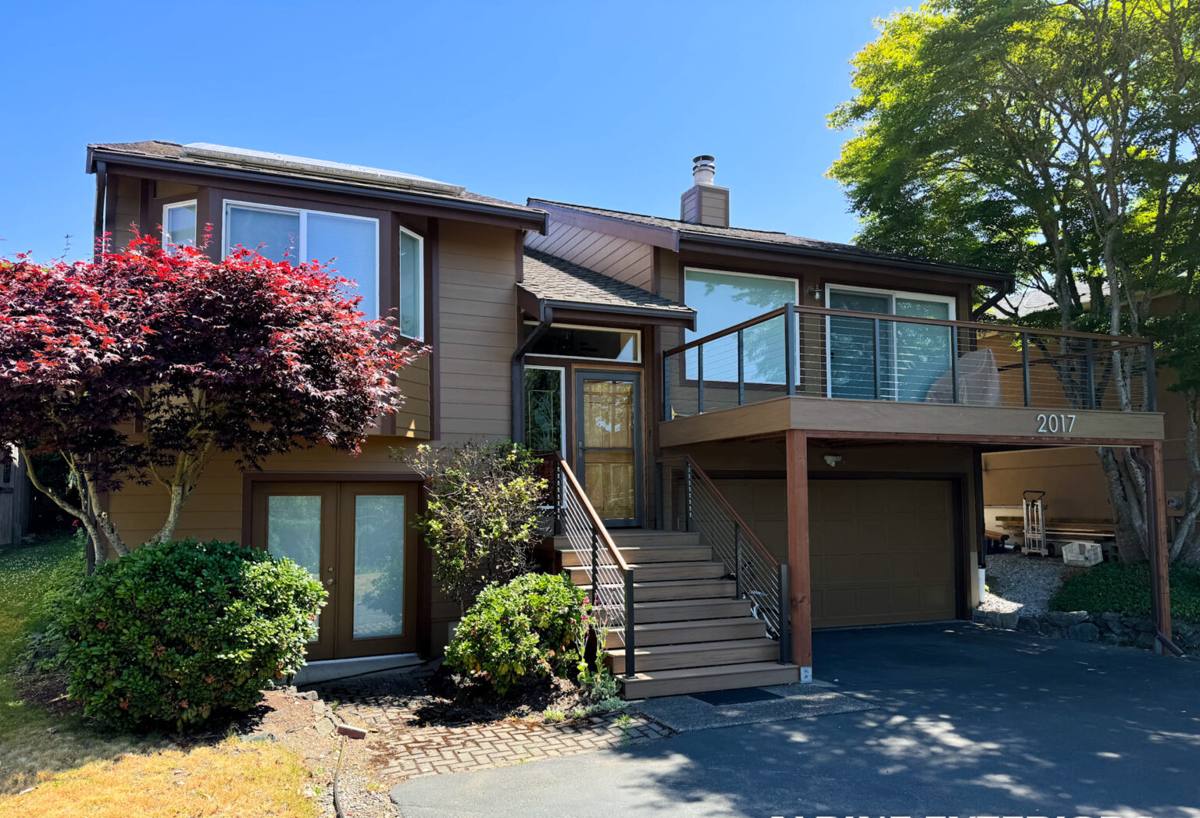
What Beacon Hill's Climate Actually Does to a Roof
Salt Air and Metal Fatigue
Proximity to salt water accelerates corrosion on exposed metal — flashing, fasteners, vent caps, gutter hardware. It's slow and easy to ignore until a fastener head rusts through or flashing starts to pit and leak at a seam. Roofs near the water do better long-term with corrosion-resistant metals and fasteners chosen for that environment specifically, not just whatever's cheapest at the supply house.
Driving Rain and Wind-Driven Water
Seattle's rain isn't usually torrential, but it is persistent, and on an exposed ridge like Beacon Hill it often comes in sideways. That means water gets pushed up under shingle edges and around penetrations in ways that straight-down rain never would. Underlayment quality, shingle nailing pattern, and flashing detail at every penetration matter more here than they would on a sheltered lot in a valley.
Moss, Shade, and Slow-Drying Roof Decks
Where tree cover shades a roof for a good part of the day, moisture lingers longer after every rain, and moss gets a foothold. Moss holds water against the roof surface, works its way under shingle tabs, and can lift material over time. A roof that dries out quickly between storms ages far better than one that stays damp — which is why slope, ventilation, and material choice all play into how well a roof handles a shaded, wet lot.
Signs a Beacon Hill Roof Needs Full Replacement, Not Another Repair
- Granule loss heavy enough that you're finding grit in gutters and downspouts every time it rains
- Shingles that are curling, cupping, or cracking across multiple slopes rather than one isolated area
- Moss or dark streaking that comes back within a season or two of cleaning, even after treatment
- Daylight visible through the roof deck from the attic, or damp insulation after a storm
- Flashing around chimneys, skylights, or valleys that's rusted, loose, or was clearly patched with sealant instead of properly re-flashed
- A roof approaching or past the end of its expected service life, especially if it's never been re-roofed
- Repeated leak calls to the same spot, which usually means the underlying decking or underlayment has failed, not just the surface material
One or two of these on their own might mean a repair is enough. Several at once, especially on an older Beacon Hill home that's taken forty-plus years of hillside weather, usually means it's time to talk replacement instead of continuing to chase leaks.
How We Approach a New Roof Installation
Inspection and Honest Scoping
Every job starts with a real inspection — not just a look at the shingles, but a check of the decking, flashing, ventilation, and any trouble spots specific to the home's exposure. On a hill lot, we're also looking at how the house sits relative to wind and rain direction and where tree cover is going to keep things damp longer. That shapes the material and detailing recommendations, not just the price.
Tear-Off and Deck Assessment
We remove the old roofing down to the deck rather than layering over it, because you can't properly assess or waterproof a deck you can't see. Any soft, rotted, or water-damaged decking gets identified and replaced before anything new goes down. Skipping this step is the single most common shortcut behind a roof that fails early, and it's not one we take.
Underlayment and Water Management
Given how much wind-driven rain this area sees, we pay particular attention to underlayment coverage and ice-and-water shield at vulnerable points — eaves, valleys, and around every penetration. This is the layer doing the real waterproofing work; the visible roofing material is the second line of defense, not the only one.
Flashing and Penetration Detail
Chimneys, skylights, vents, and valleys are where most roof leaks actually start, not in the open field of shingles. We install new flashing at every penetration rather than reusing old pieces, and we size and lap it to shed water correctly under sideways rain, not just straight-down rain.
Ventilation Check
A roof that can't breathe traps moisture underneath it, which shortens its life regardless of how good the shingles are. We check intake and exhaust ventilation as part of every installation and correct it where it's inadequate, which is common on older Beacon Hill homes that were built before current ventilation standards.
Final Walkthrough
Once the roof is on, we walk the job with you, cover what was done, and go over care and warranty information plainly, without sales pressure to add on services you don't need.
Choosing the Right Roofing Material for a Hillside, Water-Exposed Lot
| Material | Where It Performs Well on Beacon Hill | Trade-Offs to Know |
|---|---|---|
| Architectural asphalt shingle | Good all-around performance, wide range of wind ratings, cost-effective for most homes | Needs periodic moss and debris maintenance on shaded lots |
| Standing seam metal | Sheds wind-driven rain well, long service life, sheds moss more easily due to smooth surface | Higher upfront cost; requires correct fastener selection near salt air to avoid corrosion |
| Synthetic/composite shingle | Resists moisture absorption and moss better than organic materials, holds color well | Product quality varies widely by manufacturer; installation sensitivity is higher |
| Cedar shake | Traditional look that suits some older Beacon Hill homes | Highest maintenance burden in a wet, shaded climate; moss and moisture retention are real ongoing concerns |
There's no single "best" material for every lot on this hill — a sun-exposed roof with good airflow has more options open to it than a shaded, tree-covered lot where moisture management has to be the priority. We'll talk through what your specific property actually needs rather than defaulting to whatever's easiest to sell.
What a New Roof Reasonably Costs
Roofing costs vary by roof size, pitch, material, how much decking replacement turns out to be needed, and access difficulty — a steep hillside lot with limited staging space costs more to work on than a flat, open one. As a broad, honest range, most full asphalt shingle replacements on a typical Seattle single-family home fall somewhere in the mid-five-figure range, with metal and premium synthetic materials running higher. We won't give you a real number without seeing the roof, and we're upfront that anyone quoting a firm price over the phone, sight unseen, is guessing.
Before You Sign a Contract: A Practical Checklist
- Confirm the contractor is licensed and insured in Washington, and ask to see current proof
- Get the scope of work in writing — material, underlayment type, flashing approach, and warranty terms, not just a total price
- Ask specifically how decking replacement is priced if rot is found once tear-off starts
- Ask what ventilation changes, if any, are included
- Confirm whether the crew doing the physical work is employed by the company or subcontracted out, and who's accountable if something goes wrong
- Ask how debris and old material will be handled and cleaned up daily, not just at the end of the job
Why a Crew That Already Works Beacon Hill Is Worth Choosing
A lot of roofing problems on this hill aren't exotic — they're the predictable result of standard installation practices meeting non-standard exposure. A crew that's put roofs on here before already knows to size up the flashing detail, to double-check ventilation on older homes, and to talk through material trade-offs for shaded, moss-prone lots instead of treating every job the same. That familiarity shows up later as a roof that ages the way it's supposed to, instead of one that needs attention again in five years.
If you're weighing a new roof for a Beacon Hill home, we're glad to come take an honest look, walk you through what your specific roof needs, and put together a clear, no-pressure estimate — no obligation, just a straight answer about where things stand.