 Seattle
 Vinyl Siding Isn't a Bad Product — It's the Wrong Product for This Climate
We want to start with the honest part: vinyl siding is not junk. It's affordable, it's fast to install, it never needs painting, and for a lot of the country it does a perfectly reasonable job for a couple of decades. If you've gotten quotes from us and wondered why vinyl isn't one of them, it's not because we think the manufacturers are scamming anyone. It's because after years of tearing old siding off Seattle homes, we've seen how this specific product behaves under this specific climate, and we made a call: we only install James Hardie fiber cement. Here's the reasoning, laid out plainly, so you can make your own informed decision even if you end up choosing differently.
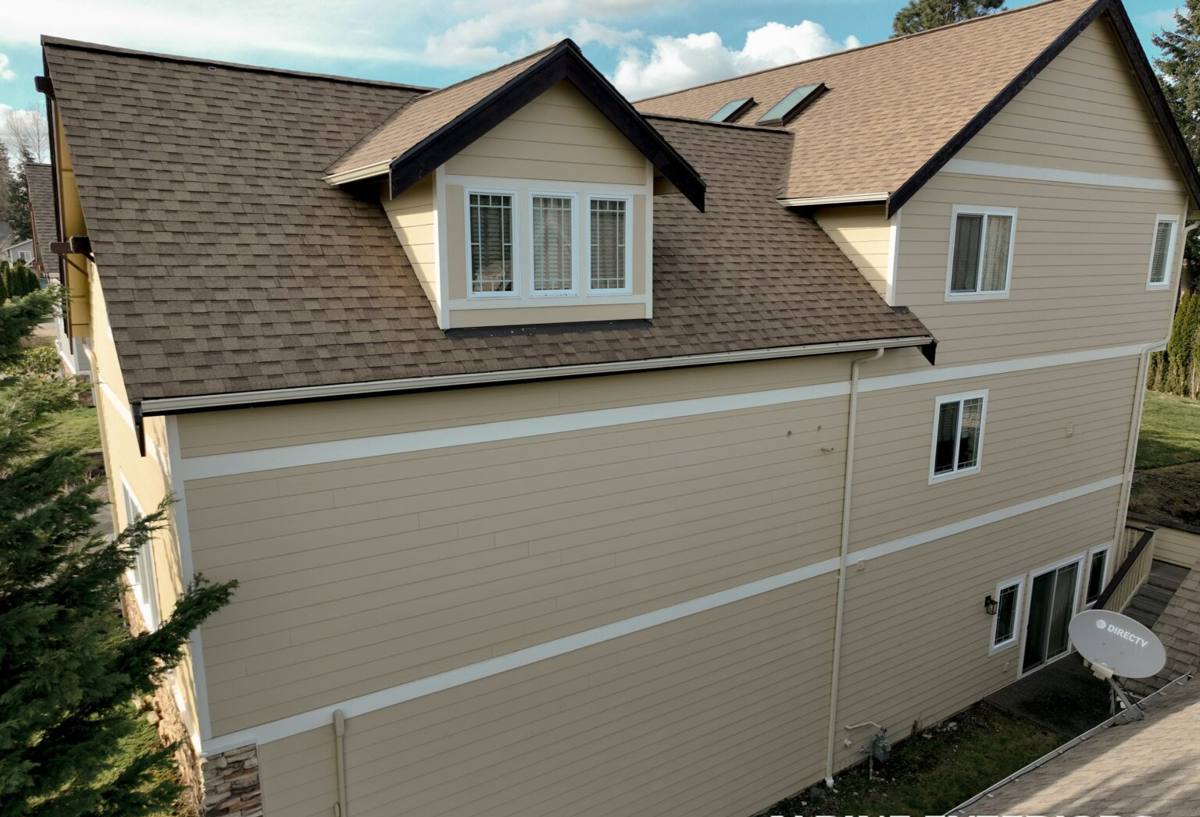
What Seattle's Climate Actually Does to a House
King County isn't a brutal climate in the way Minnesota winters or Arizona summers are brutal. It's a slow, patient climate. We get driving rain off the Sound for months at a stretch, salt-tinged air in neighborhoods close to Puget Sound and Elliott Bay, and a moss season that can run from October well into May. None of that is dramatic on any given day. But siding on a Seattle house doesn't fail from one storm — it fails from thousands of freeze-thaw-damp cycles, from moss holding moisture against a surface for weeks at a time, and from UV exposure during the brief sunny stretches that follows all that dampness.
That combination — sustained moisture plus intermittent UV plus salt air in coastal-adjacent neighborhoods — is exactly the kind of environment where the weak points of vinyl siding show up fastest.
Salt Air and Material Fatigue
Homes within a few miles of the water deal with airborne salt that settles on every exterior surface. It doesn't dissolve vinyl, but it does accelerate the chalking and brittleness that vinyl panels develop with age, and it works its way into fastener heads and seams faster than it would inland. We see it most clearly on west-facing elevations of homes in neighborhoods like West Seattle, Magnolia, and parts of Ballard.
Moss Season and Trapped Moisture
Moss doesn't just grow on roofs. On north-facing walls and anywhere siding stays shaded and damp, moss and algae will colonize the surface of any siding material, vinyl included. The difference is what happens underneath. Fiber cement is dimensionally stable and doesn't wick moisture the way wood-based products do, and it holds paint and factory finish in a way that sheds standing moisture better over time. Vinyl's issue isn't that moss destroys it — it's what moss and trapped moisture do to the wall assembly behind it, which we'll get to.
The Real Issue: What's Happening Behind the Panel
Vinyl siding is installed as an overlapping shell, hung loosely on nails so it can expand and contract with temperature. That design assumes water occasionally gets behind it — every vinyl installation manual says so — and relies on a drainage plane and weather-resistant barrier behind the panels to manage it. That's a fine system when it's built and maintained correctly. The problem in a market like Seattle's is twofold:
- Vinyl doesn't ventilate or dry the wall cavity itself — it depends entirely on what's behind it, so any weakness in the house wrap or flashing details gets amplified by nine months of rain a year.
- Once water is behind vinyl in a persistently damp climate, it has far more days per year to do damage before a dry spell shows up to help things dry out, compared to drier regions.
Fiber cement isn't magic here either — it still needs correct flashing and a drainage plane. But the material itself doesn't degrade the way OSB sheathing or wood framing does if it stays slightly damp for a while, and it doesn't buckle, warp, or pop off its fasteners the way vinyl can when a wall assembly isn't perfect. In an older Seattle neighborhood where we're often re-siding a house with decades of accumulated moisture issues behind the original cladding, that margin for error matters.
Installation Sensitivity: Vinyl Punishes Small Mistakes
Vinyl siding has a reputation as an easy DIY or fast-crew product, and that reputation is part of the problem. Panels need to be nailed loosely enough to allow for thermal movement — nail it too tight and panels buckle or crack in a cold snap; nail it too loose and wind-driven rain (which we get plenty of) works its way behind the panel edges. Corner posts, J-channels, and utility trim all need to be sized with expansion gaps that most homeowners never think to check when comparing quotes.
We're not saying every vinyl installer in the region does this poorly. We're saying it's a product where installation quality is the single biggest variable in how long it lasts, and a rushed crew on a low-bid job can turn a 30-year product into a 12-year problem — and you often won't know it happened until a windstorm peels a section off or you find soft sheathing during an unrelated repair.
Impact, Wind, and Appearance Over Time
Two more practical differences show up over a decade of ownership:
Impact Resistance
Vinyl is a thin, flexible plastic. It handles hail reasonably well but cracks or shatters from direct impact — a ladder, a thrown branch during one of our fall windstorms, even an errant baseball — in a way that's hard to repair invisibly, since matching faded vinyl color years later is nearly impossible.
Wind Uplift
Seattle doesn't see hurricane-force wind, but we do get regular fall and winter windstorms with gusts strong enough to lift improperly fastened vinyl panels off older installations. Fiber cement's heavier, mechanically fastened installation holds up better under sustained gusts.
Long-Term Appearance
Vinyl color is mixed into the material, which sounds durable, but UV exposure causes it to fade and chalk unevenly, especially on south and west elevations that get the most sun between rain systems. Because you can't repaint vinyl without voiding warranties on most product lines, a faded 15-year-old vinyl-sided house has no real refresh option short of replacement. A Hardie ColorPlus finish or field-painted fiber cement wall can be refreshed with paint when the time comes.
Cost Comparison: Where the Numbers Actually Land
We'll be straight about this: vinyl is cheaper upfront, often by a meaningful margin. The honest comparison isn't upfront cost — it's cost per year of service life, and what happens at replacement time.
| Factor | Vinyl Siding | James Hardie Fiber Cement |
|---|---|---|
| Typical upfront cost | Lower | Moderate to higher |
| Realistic service life (Seattle climate) | 15–25 years, highly install-dependent | 30–50 years with correct install and maintenance |
| Maintenance | Occasional washing; no repainting option | Occasional washing; repaintable if field-finished |
| Impact/wind damage repair | Panel replacement, color matching is difficult | Section repair possible, more forgiving |
| Fire resistance | Combustible plastic, can melt or deform near heat sources | Non-combustible, fiber cement core |
| Resale perception | Viewed as budget/entry-level in this market | Viewed as a premium, low-maintenance upgrade |
None of this means vinyl is a poor value for every homeowner in every situation — for a rental property or a short-hold flip, the lower upfront cost can make sense. We're simply not the contractor for that particular calculation, because our reputation is built on siding jobs that are still performing well two and three decades out.
Warranty Structure: Read the Fine Print
Vinyl warranties look impressive on paper — lifetime coverage is common marketing language — but they're typically prorated after the first several years, meaning the payout for a failure at year 18 can be a small fraction of replacement cost, and coverage is usually tied to the original owner or has limited transferability. James Hardie's warranty structure on its fiber cement products is written for exactly the kind of long-hold homeownership common in King County, with meaningful non-prorated coverage periods and a transferable structure that matters if you sell the house before the warranty period ends — a real factor in a market where siding condition comes up in nearly every inspection.
Why We Standardized on Hardie Instead
Once you're only installing one product, you get very good at installing it correctly, and your callbacks tell you everything about whether that decision was right. We chose James Hardie because:
- It's non-combustible, which matters more each year given regional wildfire smoke seasons and ember exposure risk, even well outside direct fire zones.
- The ColorPlus factory finish is baked on and warrantied against fading in a way field paint can't match, while still allowing repainting down the road if a homeowner wants a color change.
- Hardie's HZ5 product line is engineered for climate zones like ours — freeze-thaw cycling, sustained moisture, and coastal exposure.
- It holds up to the impact, wind, and moss/algae exposure we see on real Seattle houses, not just in a lab.
- The warranty is structured for people who plan to own their home, or sell it, without the siding becoming a liability either way.
We don't install LP SmartSide, Cemplank, Allura, primed spruce, or cedar either, for related but distinct reasons specific to each product. Standardizing on one system means every crew member knows the flashing details, fastener schedule, and joint treatment cold — there's no "we usually do it this way but this job's different" gap that creates callbacks.
A Quick Checklist If You're Comparing Siding Options Yourself
Whatever you choose, and whoever you hire, these are the questions worth asking before you sign anything:
- Is the warranty prorated, and after what year does coverage start declining?
- Is the warranty transferable to a future buyer, and under what conditions?
- What's the manufacturer's rated wind and impact resistance for the specific product line quoted?
- Is the product rated or engineered for Pacific Northwest moisture exposure specifically, not just a generic climate zone?
- What happens to the drainage plane and house wrap during installation — is it being inspected or replaced?
- Can the finish be repainted or refreshed in 15–20 years, or does that void the warranty?
- Does the installer specialize in one siding system, or install several — and if several, how do they decide which to recommend to you?
If you're weighing siding options for a home anywhere in Seattle or King County, we're happy to walk your property, look at your specific exposure — sun, wind, proximity to water, existing moisture issues — and give you a straight answer about what we'd recommend and why. The estimate is free, there's no pressure, and if Hardie genuinely isn't the right fit for your situation, we'll tell you that too.