 Seattle
 Why Beacon Hill Siding Takes a Different Kind of Beating
Beacon Hill sits up on a ridge above the rest of Seattle, and that elevation cuts both ways. Homes here get some of the best views in King County, but they also catch weather that lower, more sheltered neighborhoods don't see as directly. Wind off Puget Sound and Elliott Bay carries salt air inland, driving rain hits siding at an angle instead of falling straight down, and the tree cover and damp shade that make the neighborhood so livable also make it a near-perfect moss incubator for most of the year.
None of that is unique to one house or one block — it's a function of being in this part of Seattle, in this part of King County, in a marine climate that rarely gives siding a real dry season to recover in. Siding on a Beacon Hill home is working harder, more months of the year, than siding on a house thirty miles inland. That's the lens we use when we talk about siding replacement here: not "what's the cheapest way to cover the walls," but "what actually holds up under these specific conditions, year after year."
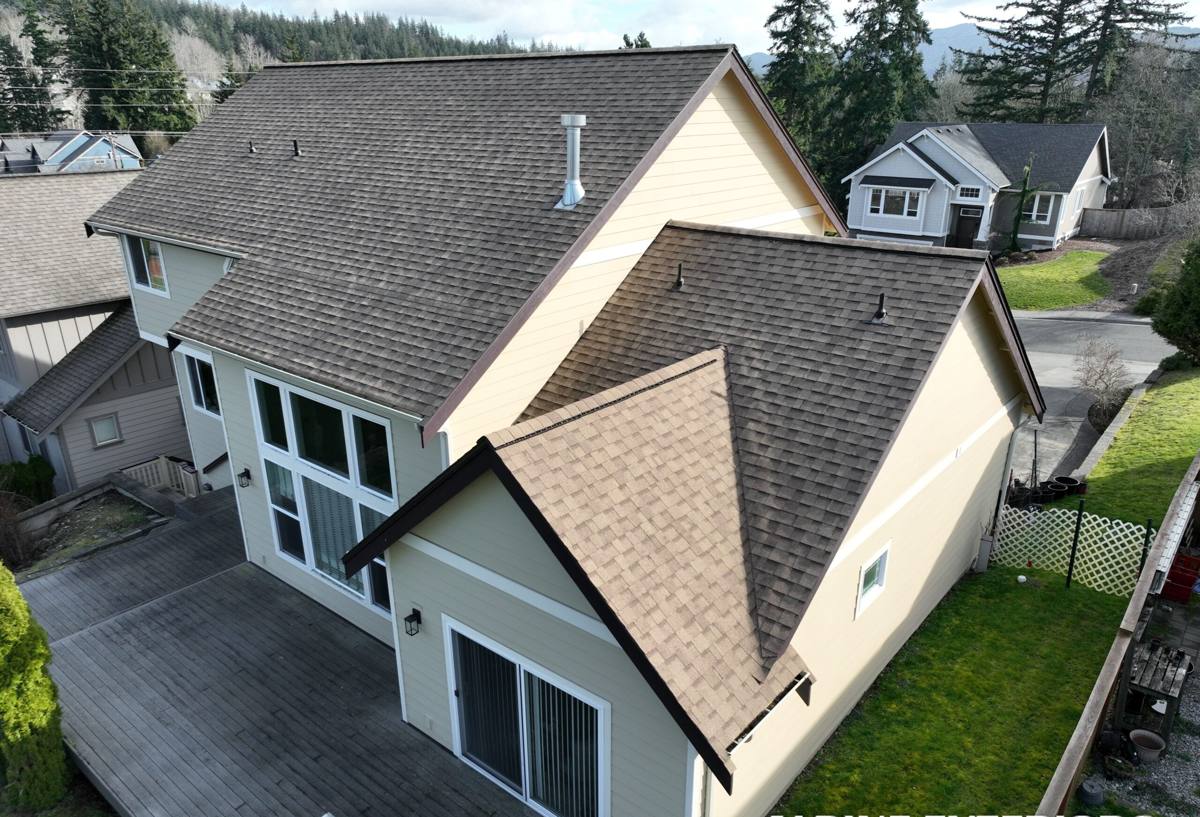
Signs a Beacon Hill Home Needs Siding Replacement, Not Just Repair
Siding problems in this climate rarely show up as one dramatic failure. They show up as small, slow signs that most homeowners notice for months before calling anyone. Worth paying attention to:
- Soft or spongy spots when you press on the siding, especially near the bottom courses and around window and door trim
- Paint that's peeling, bubbling, or needing repainting far more often than it used to
- Persistent moss or dark streaking that comes right back within weeks of being cleaned off
- Visible gaps, warping, or buckling panels, particularly on the north and west-facing walls that see the most driving rain
- A musty smell in a room along an exterior wall, or interior drywall that feels damp to the touch
- Siding that's original to a home built decades ago and has never been fully replaced, only patched
Any one of these can sometimes be handled with a repair. Several of them together, especially combined with visible rot when a board is pulled back, usually means the water-resistive barrier underneath has been compromised for a while and the smarter long-term move is a full replacement rather than another round of patching.
What a Correct Siding Replacement Actually Involves
Siding replacement isn't just swapping old panels for new ones. In a climate like Seattle's, most of the work that determines whether a job lasts happens in the layers you never see again once the new siding goes up.
Tear-Off and Inspection
We remove the old siding down to the sheathing and actually look at what's underneath — sheathing condition, framing, any existing rot or moisture damage — instead of covering problems up. This is the point where hidden damage from years of moisture intrusion gets found and dealt with, rather than sealed behind a new wall.
Water Management Layer
A correctly detailed weather-resistive barrier, properly lapped and sealed, is what actually keeps bulk water out of the wall assembly. In a region that gets sustained wind-driven rain, this layer matters more than the siding material itself. Flashing at windows, doors, and any wall penetrations gets installed to shed water down and out, not to trap it against the sheathing.
Ventilation and Drainage
A drainage plane or rain screen gap behind the siding lets any moisture that does get past the outer layer drain and dry out instead of sitting against wood. This is one of the most commonly skipped details on lower-end jobs, and it's one of the main reasons siding fails early in wet Pacific Northwest climates.
Siding Installation
Proper fastening, clearances, and caulking at joints and trim — done to the manufacturer's actual specifications rather than "close enough" — is what determines whether the siding performs for its full expected life or starts failing at the seams within a handful of years.
Why We Only Install James Hardie Fiber Cement
We standardized on James Hardie fiber cement siding and don't install vinyl, LP SmartSide, cedar, primed spruce, Cemplank, or Allura. That's not a marketing position — it's a professional standard we came to after weighing how each of those materials actually holds up against sustained moisture, salt-laden air, and moss pressure over years, not just how they look on installation day.
Vinyl is inexpensive and low-maintenance in the sense that it doesn't need painting, but it can warp under heat, becomes brittle in cold snaps, and its seams and J-channels give moisture a path in if not detailed carefully — with limited ability to correct that later without replacing panels. Cedar and primed wood siding can look excellent, but they demand ongoing painting, staining, and moisture vigilance that most homeowners underestimate, and in a climate this wet, that maintenance schedule is unforgiving. Engineered wood products bring their own moisture sensitivity at cut edges and exposed seams, which is a real liability in a region where siding almost never gets a long stretch to fully dry out.
James Hardie fiber cement is non-combustible, holds paint and factory-applied ColorPlus finishes far longer than wood, and Hardie engineers specific product lines (HZ5 and HZ10) for different climate exposures, including the kind of sustained damp, marine conditions Beacon Hill sits in. It doesn't rot, it resists moss and mildew far better than wood-based products, and it carries a strong transferable warranty backed by a manufacturer that's been refining this specific product category for decades. When it's installed to spec, with the water management details above, it's the product we're comfortable standing behind on a home that has to deal with Seattle rain for the next thirty-plus years.
How the Common Siding Options Compare in This Climate
| Material | Moisture resistance | Maintenance | Typical lifespan here |
|---|---|---|---|
| Vinyl | Moderate — seams are a weak point | Low, but hard to repair damage invisibly | 15-25 years |
| Cedar / primed wood | Poor without diligent upkeep | High — regular painting/staining | 10-20 years |
| Engineered wood (LP SmartSide) | Moderate — edge and seam sensitive | Moderate | 15-25 years |
| James Hardie fiber cement | Strong, climate-engineered lines | Low — factory finish, occasional wash | 30-50 years with correct install |
These are general performance patterns, not guarantees for any individual product line — the installation quality behind any of these materials matters as much as the material itself.
Our Process for a Beacon Hill Siding Replacement
The process doesn't change dramatically house to house, but the details we pay closest attention to are shaped by what this specific neighborhood's weather does to a wall assembly over time.
- On-site assessment of current siding, trim, and any visible moisture damage, with a straightforward explanation of what we find
- A written estimate covering material, labor, and any additional carpentry needed for rot repair or trim replacement
- Tear-off and full inspection of the sheathing and framing before anything new goes on
- Repair of any damaged sheathing or framing found during tear-off — addressed, not covered over
- Installation of a properly lapped weather-resistive barrier and correct flashing at every penetration
- James Hardie fiber cement installation to manufacturer specification, including fastening, clearances, and joint treatment
- Final walkthrough so you can see the finished work and ask questions before we consider the job done
Why Hiring a Crew That Already Works Beacon Hill Matters
Siding installation isn't identical everywhere in King County, even within Seattle. A crew that mostly works drier, more sheltered inland areas can develop habits — lighter flashing details, thinner drainage gaps, less attention to moss-prone shaded walls — that hold up fine there and fail here. A crew that regularly works neighborhoods like Beacon Hill has already seen what happens to a wall assembly that isn't detailed for sustained wind-driven rain and salt air, and builds accordingly from the first nail.
Local experience also means fewer surprises around permitting, typical house ages and construction styles in the area, and realistic scheduling around this region's rainy stretches — all things that affect how smoothly a project actually goes, not just how it looks in a proposal.
Protecting Your Investment After Installation
James Hardie siding is low-maintenance, not zero-maintenance. A simple annual routine keeps it performing the way it's designed to in this climate:
- Rinse the siding once or twice a year to keep moss and mildew from establishing, especially on shaded, north-facing walls
- Keep gutters clear so overflow doesn't run down the siding face repeatedly
- Trim back vegetation and tree branches that keep siding damp and shaded longer than necessary
- Re-caulk trim joints if you notice gaps opening up over time
- Have any impact damage looked at promptly rather than leaving an opening for water to get behind the panel
If your Beacon Hill home is showing early signs of siding trouble, or you're simply planning ahead before the next wet season, we're happy to take a look and give you an honest read on where things stand. Use the form below to request a free, no-pressure estimate.