 Seattle
 Beacon Hill Windows Work Harder Than Most
Beacon Hill sits up on a ridge south of downtown Seattle, which means the homes here catch wind and weather that lower, more sheltered blocks don't see as directly. That elevation is part of what makes the neighborhood desirable — open sightlines, more light, better airflow in summer — but it also means window assemblies take a steady beating from wind-driven rain, salt-tinged marine air moving in off Puget Sound, and the long stretch of damp, low-sun months that let moss and mildew get a foothold on anything that stays wet too long. A window that would hold up fine in a drier inland climate can fail years early here if it wasn't installed with this specific exposure in mind.
Custom windows are the right call for a lot of Beacon Hill houses precisely because "standard size, standard install" doesn't always fit. Whether you're dealing with an older home that's settled and shifted over the decades or a newer build with view-oriented openings that don't match a catalog size, getting a correct fit and a weathertight seal matters more here than in most parts of King County.
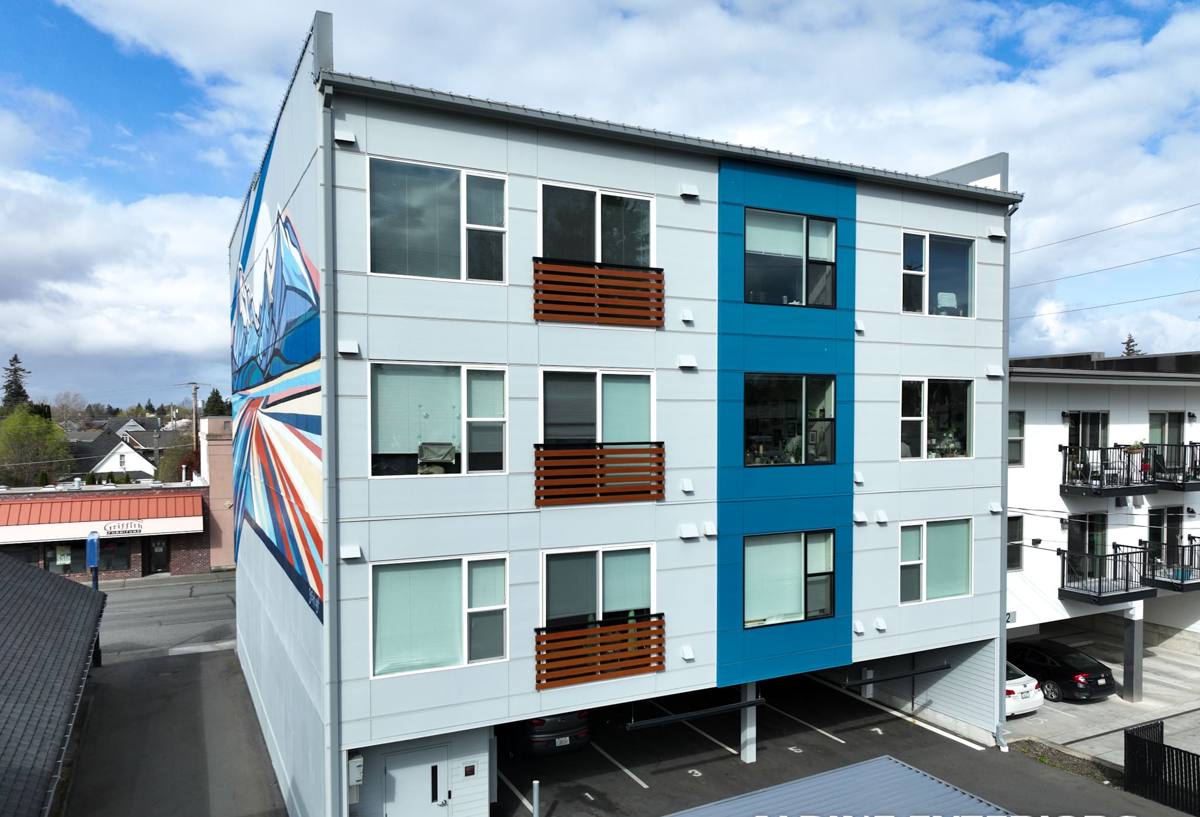
What Seattle's Marine Climate Does to Windows Over Time
Driving Rain and Wind-Driven Moisture
Seattle's rain isn't usually the dramatic downpour kind — it's the steady, sideways, all-day kind, pushed by wind off the Sound. That matters for windows because it drives water into places a straight-down rain never would: under trim, behind cladding, into gaps around a frame that's a quarter-inch out of square. Over years, that repeated wind-driven moisture is what causes rot in framing and staining on interior sills long before the glass itself is the problem.
The Long Moss and Mildew Season
Our moss season runs a good part of the year, and it doesn't need much — just consistent damp and shade. Wood sills, vinyl tracks, and window wells that don't drain and dry between rain events give moss and mildew exactly the conditions they want. Once organic growth gets established in a window channel or sill, it holds moisture against the material constantly, which speeds up whatever decay process is already underway.
Seasonal Swings and Condensation
Our temperature swings are mild compared to inland climates, but the humidity swings are significant. Single-pane or poorly sealed older windows fog up and sweat condensation on the inside during our cold, wet stretches, and that moisture running down onto sills and window casings is a slow, steady contributor to interior wood damage that homeowners often don't notice until it's advanced.
Beacon Hill's Housing Stock and What It Means for a Custom Fit
Beacon Hill has a genuine mix of housing ages and styles — older single-family homes from earlier decades sit alongside newer construction and remodels, and a fair number of houses take advantage of the hill's slope with view-oriented window placement. That mix matters for window work in a few practical ways:
- Older homes often have window openings that are slightly out of square after decades of settling, so a true custom measurement — not an assumed stock size — is what gets a tight, correct seal.
- Original wood-sash windows, where they still exist, may have historic or character value worth preserving in some cases, while in others the frames are too far gone and full replacement is the honest recommendation.
- View-oriented picture windows and larger openings common on hillside lots need frames engineered for wind load and glass weight, not treated like a standard bedroom window.
- Homes with additions or remodels sometimes have a patchwork of window ages and styles, which is worth addressing as part of a coordinated plan rather than window by window with no bigger picture.
None of this means every Beacon Hill home needs the same solution. It means the first step on any real custom window job has to be an honest, in-person look at the specific house — not a phone quote based on square footage.
What a Correct Custom Window Installation Actually Involves
Removal Without Collateral Damage
Pulling an old window out cleanly, without tearing up surrounding siding, trim, or interior wall finish, takes patience and the right approach for the specific wall assembly. Rushed removal is one of the most common ways a window job creates extra repair costs that weren't part of the original estimate.
Flashing and Water Management
This is the single most important — and most often shortcut — part of window work in our climate. Proper flashing directs any water that gets past the exterior trim back out and away from the wall assembly, rather than letting it collect against sheathing or framing. In a climate with as much wind-driven rain as ours, a window that looks fine but was flashed poorly will eventually cause hidden rot, sometimes years before it becomes visible from inside the house.
Air Sealing and Insulation
The gap between a new window frame and the rough opening needs to be sealed and insulated correctly — not just caulked on the surface. Done right, this cuts down on drafts, condensation, and energy loss. Done wrong, it leaves a gap where moist air can move in and condense inside the wall.
Interior and Exterior Finish Work
The trim, casing, and sealant work that finishes a window job isn't just cosmetic — it's the last line of defense against water intrusion at the edges of the frame. A window installation isn't finished until this final detail work is done cleanly and matches the surrounding house.
Choosing a Window Material for This Climate
There's no single "best" window material for every Beacon Hill home — it depends on the house, the budget, and how much long-term maintenance an owner wants to take on. Here's an honest comparison of the main options we work with:
| Material | Moisture Performance | Maintenance | Typical Lifespan |
|---|---|---|---|
| Vinyl | Good — won't rot, handles moisture well | Low — occasional cleaning | 20-30 years |
| Fiberglass | Very good — dimensionally stable in wet/dry cycles | Low | 30-40+ years |
| Wood, unclad | Requires diligent upkeep — vulnerable to our rain and moss season | High — regular painting/sealing | Varies widely with maintenance |
| Wood/aluminum-clad | Good exterior protection with interior wood look | Moderate | 25-35 years |
We're generally cautious about recommending unclad wood exteriors for exposed, view-facing walls on hillside homes in this climate — not because wood windows are a bad product, but because the maintenance burden of keeping exterior wood properly painted and sealed against near-constant marine moisture is significant, and a missed maintenance cycle can shorten the window's life considerably. That's a maintenance trade-off worth knowing before you choose, not a knock on any manufacturer.
Our Process, Start to Finish
- On-site assessment of your current windows, the house's exposure, and any existing moisture or rot issues.
- Precise measurement of each opening — no assumed stock sizes, especially on older or settled homes.
- A straightforward walkthrough of material and style options, with honest pros, cons, and price ranges for your specific situation.
- Scheduling that accounts for Seattle's weather windows, so installation happens when we can keep the opening protected and dry.
- Careful removal, correct flashing and air sealing, and finish work matched to your home.
- A final walkthrough with you before we consider the job done.
Signs Your Current Windows Are Already Failing
A lot of homeowners live with early warning signs for years before calling anyone, mostly because the symptoms seem minor on their own. Worth checking for:
- Condensation or fogging between panes, which usually means a failed seal on double-pane glass.
- Soft or discolored wood on sills, casings, or the wall just below the window.
- Visible moss, algae, or black mildew staining around the frame or track.
- Drafts you can feel with a hand near the frame on a windy day.
- Windows that stick, won't stay open, or are hard to lock properly.
- Noticeably higher heating bills without any other explanation.
Any one of these on its own might just need a repair. Several together, especially on an older home, usually mean it's time to talk about replacement before the surrounding wall framing gets involved.
Why a Crew That Already Works Beacon Hill Matters
Window work here isn't generic exterior work — it's shaped by the specific combination of hillside exposure, older housing stock, and a wet marine climate that doesn't forgive shortcuts. A crew that already works this neighborhood and this part of King County knows what to expect from a given house's age and orientation before the first measurement is even taken, and knows how to sequence a job around our weather rather than getting caught mid-install when a system rolls in off the Sound.
Local familiarity also means straighter answers. We'd rather tell you a window can be repaired instead of replaced, or that a lower-maintenance material makes more sense for a hard-to-reach, view-facing wall, than upsell you on something that doesn't fit your house or your budget. That's the standard we hold ourselves to on every Beacon Hill job, not just the ones that are easy to get to.
If your windows are showing any of the signs above, or you're planning ahead for a home on Beacon Hill that could use a custom fit rather than an off-the-shelf replacement, we're glad to take a look. The estimate is free, there's no pressure attached to it, and you'll get a straightforward assessment of what your home actually needs — use the form below to get started.