 Seattle
 Kirkland's Climate and What It Does to Siding
Kirkland sits on the eastern shore of Lake Washington in King County, and homes here deal with a specific combination of weather stresses. It's worth being precise about what that combination actually is. Kirkland doesn't take direct salt spray the way waterfront homes on Puget Sound do — it's a freshwater lake, not the ocean. But the broader Puget Sound region's marine, moisture-saturated air still settles over the eastside, and Kirkland's lakefront exposure means humidity lingers longer here than it does a few miles inland. Combine that with the Pacific Northwest's long wet season — months of driving rain, low sun angles, and shaded north-facing walls that rarely dry out — and you get ideal conditions for moss, mildew, and slow moisture intrusion behind siding that isn't detailed correctly.
None of this is dramatic. It's cumulative. A siding system that's a little bit wrong at the flashing, the butt joints, or the bottom clearance doesn't fail in year one. It fails in year eight or twelve, quietly, behind paint that still looks fine from the street. That's the real argument for getting a replacement done correctly the first time — not because Kirkland's climate is uniquely harsh, but because it's relentlessly consistent, and consistent moisture finds every shortcut eventually.
Why Fiber Cement Is the Right Match for This Climate
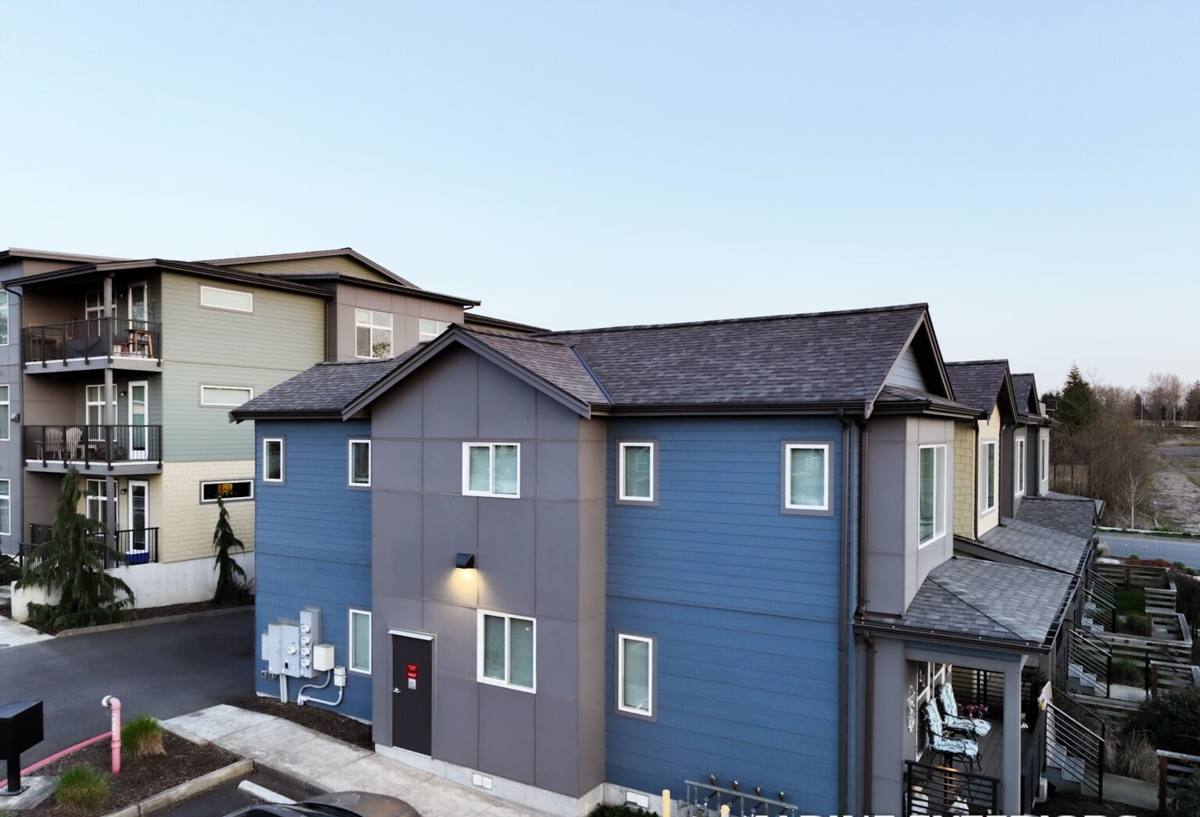
We install James Hardie fiber cement siding exclusively, and Kirkland's climate is a large part of why. Fiber cement is dimensionally stable — it doesn't swell, cup, or delaminate the way wood-based products can when they take on repeated moisture cycles. It doesn't provide a food source for the mold and algae that thrive in shaded, damp conditions the way wood fiber can. And it holds paint and factory finish far longer than wood substrates in a climate that never really dries out for half the year.
ColorPlus Finish and Moss-Prone Walls
James Hardie's ColorPlus factory finish is baked on and backed by its own finish warranty, which matters most on the shaded, north- and west-facing walls of Kirkland homes that stay damp longest and are most prone to moss and mildew staining. A factory finish holds up to washing and normal maintenance far better than field-applied paint on a porous substrate.
HZ5 Engineering for the Pacific Northwest
Hardie engineers its HZ5 product line specifically for climates with significant moisture exposure and freeze-thaw cycling, which describes the greater Seattle area accurately. That's not marketing language — it reflects real differences in the product's moisture-resistant additives and the installation specs Hardie publishes for this region.
Signs Your Kirkland Home Needs Siding Replacement
Moisture and Structural Signs
- Soft or spongy spots when you press on the siding, especially near the bottom courses
- Visible warping, buckling, or panels pulling away from the wall
- Peeling or bubbling paint that keeps recurring in the same spots year after year
- Interior signs — musty smells, staining, or soft drywall near exterior walls
Moss, Mildew, and Surface Wear
- Persistent moss or dark streaking on shaded walls that returns within a season of cleaning
- Chalking, fading, or a finish that no longer sheds water cleanly
- Caulk joints that are cracked, gapped, or missing in multiple places
Any one of these on its own might just need a repair. Several at once, especially on a home more than 20 years old, usually means the underlying moisture barrier and the siding itself have been absorbing damage for a while, and patch repairs are treating the symptom rather than the cause.
What a Correct Siding Replacement Job Involves
Tear-Off and Inspection
Full replacement starts with removing the old siding down to the sheathing and actually inspecting what's underneath, not just what's visible from the outside. This is where hidden rot, compromised sheathing, or a failed original moisture barrier gets caught. Skipping this step and re-siding over existing problems is one of the most common shortcuts in the industry, and it's the single biggest reason a "new" siding job fails early.
Water-Resistive Barrier and Flashing
A new weather-resistive barrier goes on correctly lapped, and flashing gets installed at every window, door, and penetration before a single piece of siding goes up. This is the layer that actually keeps water out — the siding sheds most of the rain, but the WRB and flashing are what handle the water that gets past it, which in a climate like Kirkland's is not a hypothetical.
Installation to Manufacturer Spec
James Hardie publishes specific installation requirements — minimum clearance from grade and roofing, fastener patterns, gapping at butt joints, and caulking details — and those specs exist because they're what the product's warranty is actually conditioned on. Installing Hardie siding without following them doesn't just risk premature wear; it can void the warranty the homeowner is paying for.
Trim, Caulking, and Finish Details
The visible finish work — corner boards, trim, caulk lines, touch-up paint at cut edges — is what a homeowner judges the job by, but it's the last step, not the whole job. A crew that rushes to this stage without getting the water management right underneath is optimizing for how the house looks at handoff, not how it holds up in year ten.
Our Process From Estimate to Cleanup
- On-site assessment — we look at the current siding, check for moisture damage, and evaluate trim, flashing, and drainage around the home before quoting anything.
- Written estimate — a clear scope of work and price, with the Hardie product line and profile specified, not a vague allowance.
- Permitting — as with most cities in King County, siding replacement in Kirkland that exposes sheathing or alters the building envelope typically requires a building permit, which we handle as part of the job.
- Tear-off and inspection — old siding comes off, sheathing gets inspected, and any rot or damage is documented and addressed before moving forward.
- Weather barrier and flashing — new WRB and flashing installed at every penetration, inspected before siding goes up.
- Installation — Hardie siding installed to manufacturer spec, with attention to fastener pattern, clearances, and joint treatment.
- Final finish and walkthrough — trim, caulking, touch-up, and a walkthrough so you know exactly what was done and why.
Cost Factors for Siding Replacement in Kirkland
Every home is different, so we don't publish flat pricing, but the variables that actually move the number are consistent. This gives you a framework for comparing estimates rather than just comparing a single total.
| Factor | Why It Matters |
|---|---|
| Extent of hidden damage found at tear-off | Rot or compromised sheathing found underneath the old siding adds material and labor that can't be known before removal |
| Siding profile and product line | HardiePlank lap siding, HardiePanel vertical siding, and HardieShingle carry different material and labor costs |
| Home size and wall complexity | Dormers, multiple stories, and cut-up wall lines increase labor time and waste factor |
| Trim and accessory scope | Full trim replacement versus reusing sound existing trim changes both cost and long-term consistency |
| Access and site conditions | Steep lots, tight side yards, or limited staging space near Lake Washington waterfront properties can affect labor time |
Permits, HOAs, and Working in Kirkland
Many Kirkland neighborhoods, particularly newer developments and some waterfront-adjacent communities, have HOA design guidelines that govern approved siding colors, profiles, or exposure widths. A crew that's worked in the area regularly knows to ask about this up front, because discovering an HOA restriction after material is ordered causes real delays and sometimes real cost. Permitting works the same way — knowing what triggers a permit review in Kirkland versus a smaller scope repair saves time compared to finding out mid-project.
Why Hiring a Crew That Already Works Kirkland Matters
Siding installation quality varies more by crew than by product. A contractor who regularly works in Kirkland and the broader eastside has already dealt with the specific things that come up here repeatedly: HOA approval processes, the moisture patterns on shaded lakefront and hillside lots, and the local permitting expectations. That's not a substitute for good workmanship, but it does mean fewer surprises, fewer delays, and a job that accounts for how this specific climate behaves rather than a generic install plan.
What to Ask Before Hiring
- Are you a James Hardie certified or preferred installer, and can you explain their installation spec for this region?
- Will you inspect and document the sheathing condition before quoting a final price?
- What's included in the flashing and weather-resistive barrier scope, specifically?
- Do you pull permits, and have you worked in Kirkland's HOA communities before?
- What does your warranty cover, and how does it interact with James Hardie's manufacturer warranty?
Getting Started
If your Kirkland home is showing signs of moss buildup that keeps coming back, recurring paint failure, or siding that's simply reached the end of its service life, it's worth getting a straightforward, no-pressure assessment before problems move from cosmetic to structural. Use the form below to request a free estimate, and we'll take a real look at what your home needs.