 Seattle
 Why West Seattle Roofs Take a Different Kind of Beating
West Seattle sits out on a peninsula with open exposure to Puget Sound, and that location shapes how roofs age here. Homes closer to the water deal with salt-laden marine air that speeds up corrosion on flashing, fasteners, and any exposed metal roofing components. Add in wind gusts that come off the Sound with little to break them up, and you get roofs that take more direct wind-driven rain and uplift stress than homes tucked into more sheltered parts of the city.
Then there's the rest of the year. King County's long, wet fall-through-spring stretch means shingles rarely get a real chance to dry out between storms. Moss and moisture-loving growth get a head start on any roof with even partial shade, and once organic growth takes hold it holds water against the roofing material far longer than plain rain does. None of this means West Seattle roofs are poorly built — it means they're working harder than roofs in drier climates, and storm damage here tends to compound existing wear rather than show up as an isolated event.
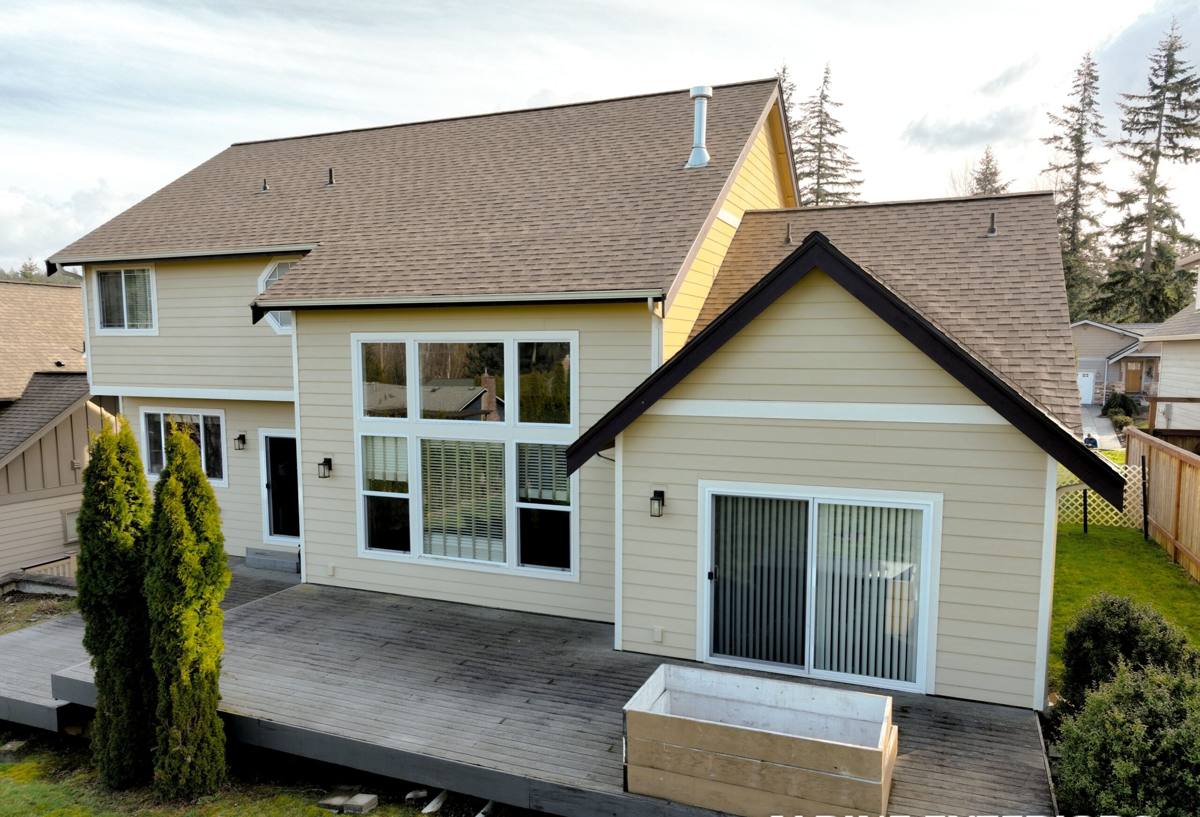
What Counts as Storm Damage (and What Doesn't)
Not every roof problem after a windstorm is actually storm damage, and it matters which one you're dealing with — for your budget and for any insurance claim. Storm damage is damage with a clear, datable cause: wind that lifted or creased shingles, a branch or debris impact, or wind-driven rain that got forced under flashing that was otherwise intact. Wear-related damage is different — it's the slow result of age, UV exposure, or moss that's been sitting on the roof for a season or more.
The two often show up together, which is exactly why a proper inspection matters. A storm can be the event that finally causes a leak, but the underlying cause might be years of moss holding moisture against aging shingles, or flashing that was already loose. We tell homeowners honestly which is which — it affects whether the fix is a straightforward storm repair or a sign that more of the roof needs attention.
Common Storm Damage We See on West Seattle Roofs
| Damage Type | Typical Cause | What It Looks Like |
|---|---|---|
| Lifted or creased shingles | High wind gusts off the Sound | Shingles that flap, sit at an odd angle, or show a visible crease line |
| Torn-off shingles or tabs | Sustained wind uplift, often near roof edges | Bare patches of exposed underlayment or decking |
| Flashing separation | Wind flexing the roof deck, aging sealant | Water stains near chimneys, skylights, or wall intersections |
| Impact damage | Falling branches or wind-carried debris | Cracked, punctured, or dented roofing material in a localized spot |
| Moss-related moisture intrusion | Long wet season plus shaded roof areas | Soft or spongy shingles, granule loss, dark staining |
The moss-related row is worth calling out on its own, because it's the damage pattern most specific to this region. A single storm rarely causes it, but a storm often forces the issue — wind-driven rain finds the weak spot moss has already created and pushes water past it.
Signs You Can Check From the Ground
- Shingle granules collecting in gutters or at downspout outlets after a storm
- Visible gaps, curling, or shingles that look out of alignment from the street
- New or worsening water stains on interior ceilings, especially near exterior walls
- Moss growth that's thickened or spread since the last time you looked
- Debris — branches, needles, leaf mats — built up in valleys or against the chimney
Our Storm Damage Repair Process
We keep the process straightforward because storm damage is stressful enough without added confusion.
- Inspection. We get on the roof (or use a safe vantage point when conditions don't allow it) and document the actual damage — not just what's visible from the ground.
- Honest assessment. We tell you what's storm-caused, what's pre-existing wear, and what your realistic options are. No upselling a full replacement when a targeted repair will hold.
- Written estimate. You get a clear scope of work and price before anything happens, including documentation you can use for an insurance claim if you're filing one.
- Repair. We match materials as closely as possible, properly re-flash and seal any disturbed areas, and check surrounding shingles for wind uplift that hasn't fully failed yet but will if left alone.
- Final walkthrough. We show you what was done and flag anything worth watching, especially if moss or drainage issues contributed to the damage.
Repair vs. Replace: How We Make the Call
Storm damage doesn't automatically mean a new roof, but sometimes it's the honest answer. Here's how we think through it.
| Factor | Favors Repair | Favors Replacement |
|---|---|---|
| Extent of damage | Localized to one section or slope | Widespread across multiple slopes |
| Roof age | Well within expected lifespan | Already near the end of its service life |
| Underlying condition | Decking and structure are sound | Decking is soft, rotted, or moisture-damaged |
| Moss/moisture history | Minor, surface-level growth | Long-term moisture intrusion under the roofing layer |
| Material availability | Matching shingles are available | Discontinued product with no reasonable match |
When repair is the right call, we do it properly — matched materials, correct fastening patterns, and flashing detail that won't create the next leak six months from now. When replacement is genuinely the better long-term value, we'll say so plainly and explain why.
Moss, Debris, and Storm-Season Aftercare
Because of how long the wet season runs here, storm repair and moss management go hand in hand. A repair that ignores an overhanging tree limb or a moss-covered north-facing slope is a repair that's likely to face the same problem again. Where it makes sense, we'll point out drainage issues, shaded areas prone to organic growth, or gutter clogging that's feeding moisture back under the roofline — not as an upsell, but because it directly affects whether your repair lasts.
Regular debris clearing and moss treatment between storms is one of the most effective, low-cost things a West Seattle homeowner can do to reduce future storm damage. A clean, well-draining roof sheds wind-driven rain the way it's designed to; a roof choked with moss and debris gives water places to sit and work its way in.
Insurance Claims: What to Know
Many storm repairs are covered under standard homeowner's policies, but coverage depends on your specific policy, the cause of damage, and your insurer's determination of whether it's storm-related versus wear-related. We're not your insurance adjuster and won't promise a claim outcome, but we can provide clear photo documentation and a written scope of damage that supports your claim. If you're filing, document the damage yourself as soon as it's safe to do so, and avoid extensive DIY repairs before your adjuster has seen the roof — temporary measures to stop active leaking are reasonable, but full repairs before documentation can complicate a claim.
Why Hire a Crew That Already Works in West Seattle
Storm damage repair isn't just about patching what's visible — it's about understanding why the damage happened in the first place and whether the fix will hold up against the next storm. A crew that regularly works West Seattle roofs already has a feel for how exposure to the Sound, prevailing wind direction, and the neighborhood's moss and rainfall patterns tend to show up on a roof. That's the difference between a repair that's cosmetically fine today and one that's actually built to handle what this specific location deals with year after year.
We also know that storm damage response needs to be fast without being rushed. A tarped or exposed section of roof is vulnerable to every rain event that follows, so we prioritize getting a proper temporary fix in place quickly, then scheduling the permanent repair as soon as materials and weather allow.
What to Do Right After a Storm
- Check your attic and ceilings for new water stains, dampness, or dripping — this is often the first real sign of a breach
- Photograph any visible roof damage from the ground before doing anything else
- Clear debris from gutters and downspouts if it's safe to do from ground level
- Avoid getting on the roof yourself, especially on wet or steep sections
- Call for an inspection promptly — even minor storm damage tends to worsen with continued rain exposure
- Hold off on major DIY repairs if you plan to file an insurance claim, until damage is documented
If a recent storm has left you with missing shingles, a new leak, or just a roof you want checked before the next system rolls through, we're happy to take a look. We offer free, no-pressure estimates for West Seattle homeowners — an honest inspection now is a lot cheaper than a delayed repair later. Use the form below to get started.