 Seattle
 West Seattle sits out on a peninsula, with much of the neighborhood facing Puget Sound and Elliott Bay directly. That location is part of what makes it such a desirable place to live, but it also means the homes here take on more weather than a house a few miles inland in Seattle. Salt-laden air moves off the water, driving rain comes in sideways during winter storms, and shaded, tree-lined lots keep moss growing for a good chunk of the year. Siding is the first line of defense against all of it, and when it starts to fail, the damage is rarely just cosmetic. This page covers what West Seattle's climate does to siding, what a correct repair actually involves, and how we approach this work on homes in the area.
Why West Seattle Siding Wears Differently
Three conditions do most of the damage here, and they compound each other. Salt air off Puget Sound and Elliott Bay corrodes exposed fasteners and accelerates the breakdown of lower-grade paint and trim finishes, especially on homes closer to the water or up on exposed, view-facing lots where wind carries that salt spray further inland. Driving rain, pushed by storms coming off the Sound, doesn't just fall straight down onto roofs — it drives sideways into wall assemblies, working into any seam, gap, or under-caulked joint that wasn't sealed correctly the first time. And a long moss season, fed by King County's wet stretches and the shade many West Seattle lots get from mature trees, keeps damp, organic growth sitting on siding surfaces far longer than it would in a drier or sunnier spot.
None of these show up overnight. A section of siding that looks fine in the fall can be holding moisture against the wall by spring, and a homeowner often doesn't notice until paint starts bubbling, a board goes soft, or moss has colonized an entire north-facing wall. Homes on elevated or shoreline-facing lots — areas like Alki, where wind and salt exposure are more direct — tend to show wear a little faster than more sheltered pockets of the neighborhood, but no West Seattle home is fully protected from these conditions.
Older Homes Add Another Layer
West Seattle has a lot of older housing stock — craftsman bungalows and early-to-mid-century homes mixed in with newer construction. Older homes were often built with wood-based siding and trim details that were never designed for today's level of moisture exposure, and decades of prior paint jobs, caulk repairs, and partial siding swaps can hide a lot of history behind the surface. A repair on one of these homes isn't just about matching what's there — it's about understanding what's actually happening behind it.
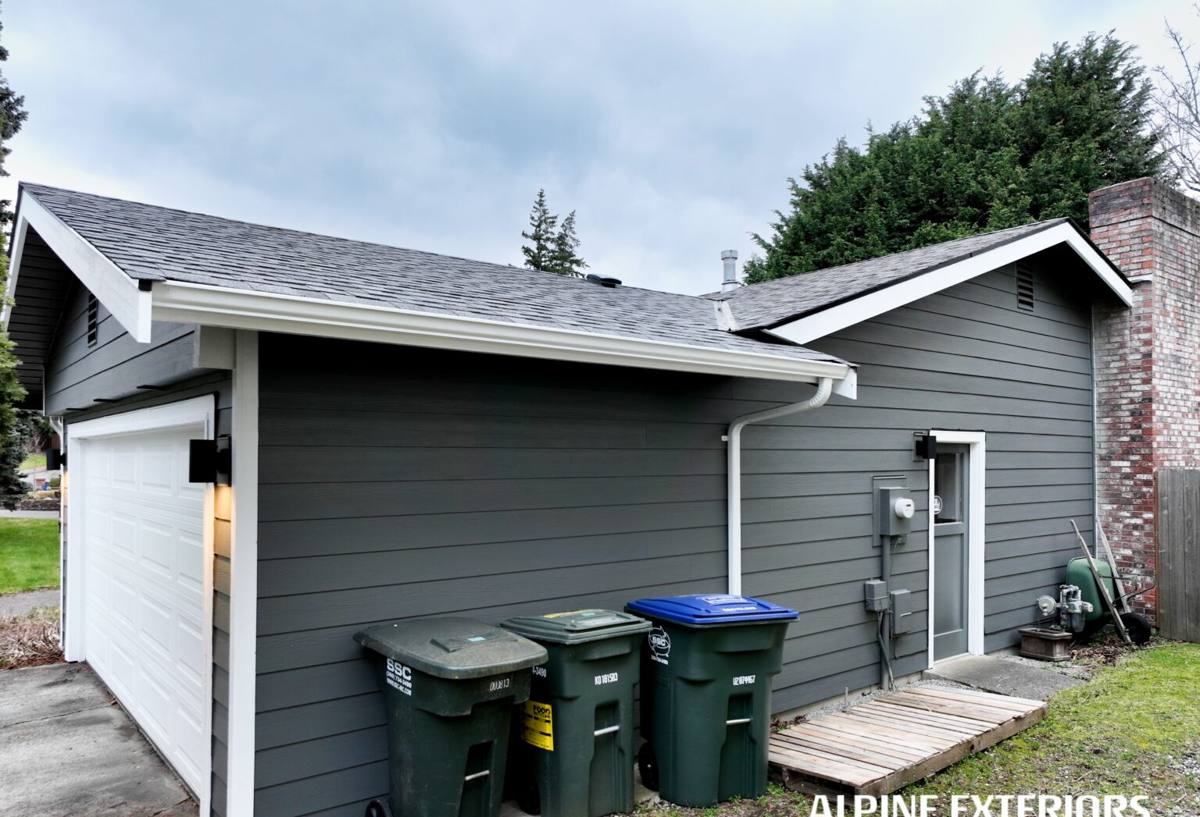
Signs Your West Seattle Home Needs Siding Repair
Most siding problems give some warning before they become expensive. Catching them early is the difference between a targeted repair and a much larger project.
- Boards that look warped, bowed, or buckled, especially on walls that get the most wind and rain exposure
- Soft or spongy spots when you press on a board — a sign moisture has already gotten into the material
- Visible moss, algae, or dark staining that keeps coming back even after cleaning
- Paint that's peeling, bubbling, or cracking at seams and joints rather than evenly across a whole wall
- Gaps opening up around trim, window frames, or corner boards
- Rust streaks running down from fasteners or metal flashing
- A musty smell near an exterior wall, or a noticeable jump in heating costs with no other explanation
Any one of these on its own might be minor. Several showing up on the same wall usually means water has been getting behind the siding for a while, and it's worth having someone look at what's underneath, not just what's visible from the yard.
What a Correct Siding Repair Actually Involves
A siding repair that only addresses what's visible from the ground is a repair that's likely to fail again. Doing it right means treating the damaged section as a window into the rest of the wall assembly.
Checking What's Behind the Siding, Not Just the Surface
Before replacing a damaged board or panel, we pull it back far enough to check the water-resistive barrier, flashing, and sheathing underneath. If moisture has already worked its way past the siding, patching over the visible damage without addressing what's behind it just buries the problem for another season. This step matters more in a climate like West Seattle's, where driving rain regularly tests every seam and joint on a house.
Matching Existing Material Correctly
If your home already has fiber cement siding, a proper repair matches the existing profile, exposure, and factory finish as closely as possible so the repaired section doesn't stand out. If the existing siding is a different material nearing the end of its useful life, we'll be honest about whether a patch repair is the right call or whether the section — or the whole wall — is better served by a full replacement with a product built for this climate.
Flashing, Fasteners, and Sealant Details
Most repeat siding failures trace back to flashing and fastening details, not the siding material itself. A correct repair re-establishes proper flashing laps at windows, doors, and any penetration in the repaired section, uses corrosion-resistant fasteners appropriate to a coastal-influenced climate, and seals joints with attention to which walls get the most sun versus which stay shaded and damp longer. Skipping any of these is how a repair turns into a callback a year or two later.
Repair, Section Replacement, or Full Re-Side: Choosing the Right Scope
Not every siding problem calls for the same level of work. Part of doing this job honestly is recommending the smallest scope that actually solves the problem — not the biggest one.
| Approach | Best For | What to Watch For |
|---|---|---|
| Patch or spot repair | Isolated damage — one board, a small impact area, minor moisture at a single joint | Only appropriate if the surrounding wall assembly is confirmed dry and sound |
| Section replacement | Damage concentrated on one wall or elevation, often the side facing the most wind and rain | Worth checking whether the underlying moisture barrier needs attention across the whole section |
| Full re-side | Aging siding nearing the end of its service life, or moisture damage found in multiple areas | Often the more cost-effective long-term choice once repair costs start stacking up |
As a general rule, isolated and recently developed damage is a good candidate for a targeted repair. Damage that's spread across a wall, or that keeps recurring in the same spot after previous repairs, is usually a sign that the underlying problem is bigger than the visible symptom — and that's worth an honest conversation before more money goes into patchwork fixes.
Our Siding Repair Process
- Inspection. We look at the damaged area and the surrounding wall, checking for moisture, soft spots, and flashing condition rather than just assessing what's visible from a distance.
- Honest scope recommendation. We tell you plainly whether a patch, a section replacement, or a broader re-side is the right call, and why.
- Material matching or replacement. If repairing, we match existing material as closely as possible. If replacing a section, we use James Hardie fiber cement sized to the surrounding wall and finished to match.
- Correct flashing and sealing. Every repair re-establishes proper flashing laps and sealant details rather than caulking over the surface and calling it done.
- Final check and cleanup. We confirm the repair sits flush, is properly fastened and sealed, and leave the site clean.
Why We Repair and Replace Only with James Hardie Fiber Cement
When a repair calls for new siding material — whether it's a single board or a full section — we use James Hardie fiber cement and nothing else. We don't install vinyl, LP SmartSide, Cemplank, Allura, primed spruce, or cedar, and that's a deliberate standard rather than a limited product list. Each of those products gets something right: vinyl is inexpensive, engineered wood installs fast and takes paint well, cedar has real natural character. But each also carries a trade-off we're not willing to build into a repair on a home exposed to West Seattle's salt air and driving rain.
Vinyl can warp with age and temperature swings, and its seams are exactly the kind of gap wind-driven rain works into over time. Wood-based products depend on flawless field priming and caulking at every cut edge to keep moisture out of an organic substrate — a hard standard to hold consistently across every repair, on every home, for years. Cedar is genuinely attractive but asks for ongoing refinishing and moss control to keep performing in a climate that doesn't offer much of a dry stretch to recover in between storms.
Fiber cement doesn't have that organic core, so it isn't feeding moisture damage or moss growth the way wood-based siding can. James Hardie builds HZ product lines engineered for coastal and high-moisture climates specifically, rather than one generic formulation sold everywhere in the country, and its factory-applied ColorPlus finish cures under controlled conditions instead of drying in the field during a gray Seattle winter. For a repair section to hold up as long as the rest of the wall, it needs to be built from a material that's engineered for the conditions it's actually going to face — and that's why Hardie is what we put back on a wall, not because it's the only option on the market.
Why Hiring a Crew That Already Works in West Seattle Matters
Siding repair looks straightforward from the street, but West Seattle's mix of hillside lots, view-facing homes, older housing stock, and shoreline exposure means the details change block to block. A crew that regularly works in the neighborhood already understands which walls tend to take the worst of the wind and salt spray, how older homes here were typically built and previously repaired, and what Seattle's permitting requirements look like for exterior work when a project goes beyond a simple like-for-like repair. That local familiarity shows up in fewer surprises once a wall is opened up, and in a scope recommendation that's grounded in what actually happens to siding in this specific part of King County, not a generic national playbook.
It also matters for access. Hillside and view-lot homes in West Seattle sometimes have tighter site access, retaining walls, or steep grades that affect how a crew stages materials and equipment safely. A contractor unfamiliar with the neighborhood is more likely to underestimate that on a bid; a crew that's done the work here before has already accounted for it.
Keeping Repaired Siding Performing Long-Term
A correct repair should last, but a little seasonal attention extends that further in this climate.
- Keep gutters clear ahead of the fall and winter wet season so overflow doesn't soak siding and trim at the eaves
- Check shaded, north-facing walls periodically for early moss growth and address it before it spreads
- Inspect caulked joints at trim, windows, and penetrations every year or two, since driving rain finds gaps before anything else does
- Rinse siding gently on a normal cleaning schedule rather than letting salt residue and grime build up for years at a time
- Have any new soft spots, staining, or paint failure looked at promptly rather than waiting for it to spread
None of this is a heavy lift, but it's the difference between a repair that quietly holds up for decades and one that needs revisiting sooner than it should.
If you're seeing signs of siding damage on your West Seattle home, or you just want an honest read on whether a repair or a larger replacement makes more sense, we're happy to take a look. Reach out for a free, no-pressure estimate and we'll walk the property with you and tell you plainly what we see.