 Seattle
 West Seattle sits close enough to the water that its decks take a different kind of beating than decks further inland. Between the salt-laden air off Puget Sound, driving rain that comes in sideways during winter storms, and a moss season that can stretch from October through May, a deck here needs to be built — and maintained — differently than one in a drier climate. We've built and repaired decks throughout West Seattle's hillside and waterview lots long enough to know what actually holds up and what fails within a few seasons.
What West Seattle's Climate Does to a Deck
West Seattle's exposure to Puget Sound means homes here deal with a combination most inland Seattle neighborhoods don't face at the same intensity: salt air pushed inland by wind off the water, near-constant winter dampness, and shaded, north-facing lots where moss and algae never fully dry out. Each of these attacks a deck in a specific way.
Salt Air and Metal Fasteners
Salt-laden air accelerates corrosion in any fastener, bracket, or ledger connector that isn't rated for it. Standard galvanized hardware can start showing rust streaks and pitting years before it should, and once a fastener corrodes it loses holding strength — not just looks. This is a bigger issue for homes closer to the water and on more exposed hillside lots, but even a few blocks inland the air carries enough salt to matter over a couple decades.
Driving Rain and Water Intrusion
Rain in this part of the county doesn't always fall straight down. Wind-driven storms push water sideways into ledger boards, under railing posts, and into any gap where flashing was skipped or done poorly. A deck that isn't detailed correctly at the house connection will let water behind the siding, which is one of the more expensive mistakes we get called out to fix — not because the decking failed, but because the water got into the wall assembly behind it.
Moss, Algae, and a Long Wet Season
Shaded lots, tree cover, and King County's long stretch of overcast, wet weather mean moss and algae growth is a near year-round concern on many West Seattle properties. Beyond looking bad, moss holds moisture against the deck surface, which speeds up wood decay and makes composite and wood surfaces alike dangerously slippery.
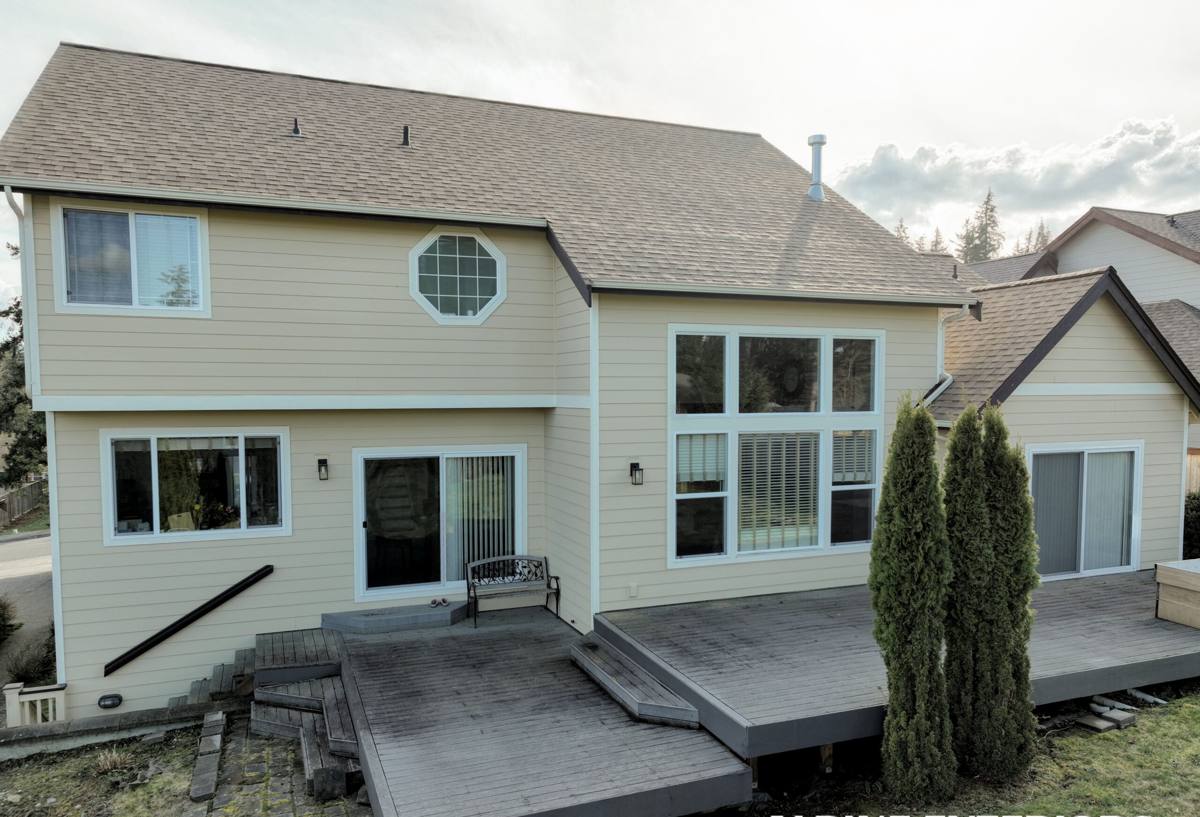
What a Correctly Built Deck Looks Like Here
A deck built for this environment isn't dramatically different in appearance from any other deck — the difference is almost entirely in details that aren't visible once the project is finished.
- Ledger board properly flashed and sealed where it meets the house, with a drainage gap or flashing detail that keeps water from tracking behind the siding
- Fasteners, joist hangers, and structural connectors rated for coastal or high-moisture exposure, not standard-grade galvanized
- Post bases set on proper footings above grade, not buried in soil where they'll wick moisture
- Joist spacing and blocking sized for the actual decking material, not the minimum code spacing for a different product
- Gaps between boards sized to let water drain and air circulate underneath, reducing the moss and mildew that builds up in tight, still-damp spots
- Railing posts through-bolted to framing rather than just screwed to the rim joist, since wind loads on hillside and view lots can be significant
Choosing Materials for a Wet, Salt-Exposed Deck
There's no single "right" decking material for West Seattle — the right choice depends on budget, how much upkeep the homeowner wants to do, and how exposed the site is. Here's how the common options compare for this specific climate.
| Material | Moss/Algae Resistance | Salt Air Durability | Maintenance | Typical Lifespan |
|---|---|---|---|---|
| Pressure-treated wood | Needs regular cleaning | Good with corrosion-rated hardware | Annual cleaning and periodic sealing | 15–20 years |
| Cedar | Naturally resists rot, still grows moss if shaded | Good | Sealing every 2–3 years to hold color and protect wood | 15–25 years |
| Composite decking | Better resistance, especially capped boards | Excellent | Periodic washing, no sealing needed | 25–30 years |
| PVC decking | Best resistance in shaded, damp spots | Excellent | Low — occasional washing | 25–30+ years |
We'll walk through these trade-offs honestly during an estimate rather than steering everyone toward the same product. A sunny, open lot in West Seattle can do fine with well-maintained cedar; a shaded, north-facing lot near tree cover is usually a better fit for composite or PVC simply because it needs far less scrubbing to stay safe underfoot.
Framing and Structure: Where Most Deck Failures Actually Start
Most deck problems we're called to fix aren't decking-surface problems — they're framing problems that eventually show up as decking problems. A sagging board, a spongy spot, or a railing that wiggles almost always traces back to something in the substructure: an under-sized joist, a ledger that was never flashed, a post base sitting in standing water, or hardware that's corroded past the point of holding load.
Because King County's building code has specific requirements for ledger attachment, joist hangers, guardrail loads, and footing depth, framing isn't a place to cut corners or guess. We build to code as a floor, not a ceiling — meaning where the climate calls for something beyond the code minimum, like upgraded fastener coatings, we use it.
Footings and Grade
West Seattle's terrain includes plenty of sloped and hillside lots, which changes how footings need to be engineered compared to a flat backyard. Proper footing depth and placement matters more here, both for frost and for handling the drainage patterns that come with sloped ground during heavy rain events.
Our Process for a West Seattle Deck Project
We keep the process straightforward and give homeowners a clear idea of what's happening and when.
- On-site assessment — we look at the existing structure (if there is one), the grade, sun/shade exposure, and how the deck ties into the house
- Design and material conversation — we talk through decking material, railing style, and layout based on how the space will actually be used and how much upkeep the homeowner wants
- Permitting — most new decks and significant rebuilds in Seattle require a permit; we handle that process rather than leaving it to the homeowner
- Demolition and framing — old material removed, footings set or verified, framing built with corrosion-rated hardware throughout
- Decking, railing, and finish work — boards installed with proper drainage gaps, railings through-bolted, and any finishing (staining, sealing) completed
- Final walkthrough — we go over the finished deck with the homeowner, including basic maintenance guidance specific to the material chosen
Repair, Rebuild, or Replace?
Not every deck problem means starting over. We evaluate three things before recommending a path: the condition of the framing and footings, the age and condition of the surface material, and whether the original structure was built to handle the loads and exposure it's actually getting.
- Repair makes sense when the framing is sound but individual boards, railings, or stairs have failed or been damaged
- Partial rebuild fits when the substructure is solid but the decking surface has reached the end of its life or was the wrong material for the site
- Full replacement is the right call when ledger flashing was done incorrectly, framing shows widespread rot or corrosion, or the structure was never sized for current guardrail and load requirements
Maintenance That Actually Matters in This Climate
A well-built deck still needs upkeep in a climate like this one. The maintenance schedule below is a general guide — shaded or waterfront lots may need more frequent attention than open, sunny ones.
| Task | Frequency | Why It Matters Here |
|---|---|---|
| Sweep and clear debris | Monthly, more in fall | Trapped leaves hold moisture and speed up moss growth |
| Wash surface (deck cleaner or mild solution) | 1–2x per year | Removes moss/algae buildup before it becomes a slip hazard |
| Inspect fasteners and railings | Annually | Salt air corrosion can loosen connections before it's visually obvious |
| Reseal wood decking | Every 2–3 years | Protects against the region's extended wet season |
| Check under-deck drainage | Annually, before winter | Clogged drainage traps water against framing through the wet months |
Why Hire a Crew That Already Works in West Seattle
A deck contractor who mostly works drier, inland areas can still build a structurally sound deck — but they may not default to corrosion-rated hardware, they may not think through ledger flashing for wind-driven rain, and they may not size drainage gaps with West Seattle's moss season in mind. Those aren't exotic details; they're the difference between a deck that needs major work in eight years and one that's still solid in twenty-five. We work throughout Seattle and King County, and West Seattle's mix of hillside lots, water exposure, and shaded terrain is territory we already know.
If you're planning a new deck, replacing an aging one, or just not sure whether what you have needs repair or a rebuild, we're happy to take a look and give you a straight answer. Reach out for a free, no-pressure estimate using the form below.