 Seattle
 Why West Seattle Decks Wear Differently
West Seattle sits close to Puget Sound, which means homes here deal with a combination most inland Seattle neighborhoods don't get in the same mix: salt-tinged marine air off the water, wind-driven rain that hits decks at an angle instead of falling straight down, and long stretches of gray, damp weather that keep surfaces wet for days at a time. Add King County's mild winters — rarely a hard freeze, but plenty of freeze-thaw cycling in the shoulder seasons — and you get a deck environment that's less about extreme heat or cold and more about sustained moisture exposure, nine or ten months a year.
That combination is exactly what composite decking was designed to handle, but only when it's specified and installed correctly for the site. A composite deck built the same way you'd build one in a dry inland climate will underperform here. The material matters, but the substructure, drainage, and airflow underneath matter just as much.
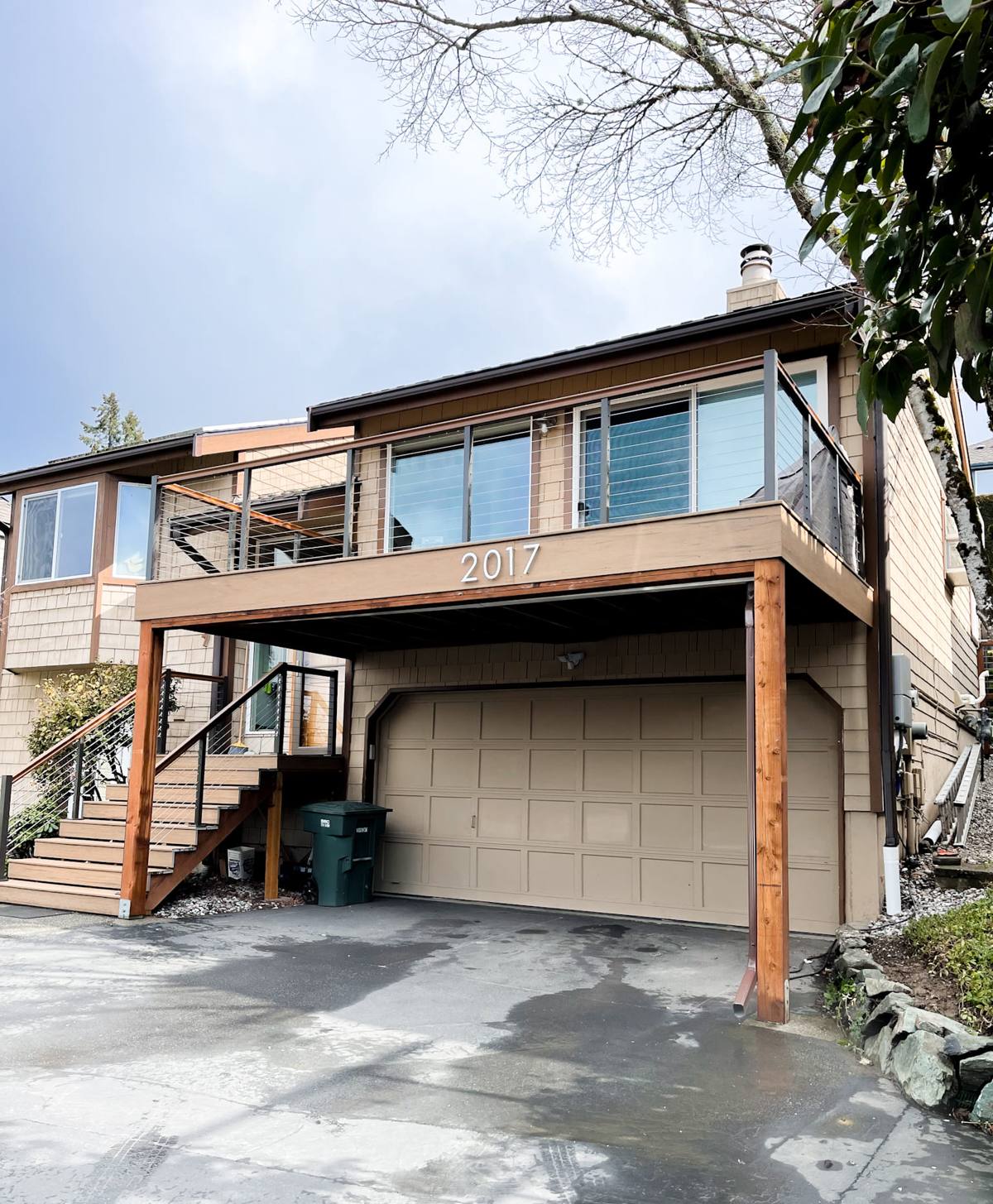
What Composite Decking Needs to Hold Up Here
Drainage Under the Boards
Composite boards themselves don't rot, but the framing underneath them is almost always still wood — pressure-treated joists and beams. In a marine climate, standing water and trapped moisture under a deck are the real long-term threat, not the board surface. Proper slope away from the house, gaps between boards for airflow, and keeping the ground or crawlspace under low decks from turning into a permanent damp trap all matter more here than in drier parts of the country.
Salt-Air Hardware
Any fastener, bracket, or ledger connection exposed to marine air should be corrosion-resistant — stainless steel or coated fasteners rated for coastal exposure, not standard interior-grade hardware. This is a small cost difference at install time and a real difference in how the deck's structural connections look and perform after a decade near the water.
Surface Texture and Moss Resistance
Moss and algae growth on decking isn't a defect in the material — it's biology finding a damp, shaded surface to colonize, and West Seattle's canopy cover and long wet season give it plenty of opportunity. Composite boards with a capped surface (a shell that seals the wood-plastic core) resist moisture absorption and are easier to clean than uncapped composite or wood, but no decking surface is moss-proof if it never gets sun or airflow. Board orientation and any nearby landscaping trimmed back for light and air movement make a real difference in how much upkeep the deck needs.
Composite vs. Other Decking Materials for This Climate
| Material | Moisture Behavior | Maintenance | Typical Lifespan Here |
|---|---|---|---|
| Capped composite | Sealed shell resists water absorption, swelling, and rot | Occasional wash-down; no staining or sealing | 25–30+ years with proper substructure |
| Uncapped composite | More prone to moisture absorption at cut edges and fastener holes | Low, but more susceptible to mold in shaded, damp spots | 15–20 years, climate-dependent |
| Pressure-treated wood | Absorbs and releases moisture constantly; prone to cupping/splitting | Annual cleaning, periodic staining/sealing | 10–15 years before major repair or replacement |
| Cedar | Naturally rot-resistant but still absorbs moisture over time | Regular sealing to maintain color and water resistance | 15–20 years with consistent upkeep |
| PVC decking | Fully synthetic, essentially waterproof | Very low | 25–30+ years, but can look and feel less like natural wood |
We install composite decking as our standard recommendation for most West Seattle homes because it strikes the right balance for this climate: strong moisture resistance without the plastic look some PVC products have, and none of the annual sealing burden that wood decking demands in a place that's wet as often as it's dry.
Our Installation Process
- Site and structure assessment. We look at existing framing (if it's a rebuild), ledger attachment to the house, drainage path, sun exposure, and how close the deck sits to grade or landscaping.
- Substructure build or repair. Joists, beams, and posts are sized and spaced to the manufacturer's specifications for the composite product chosen — composite is heavier and behaves differently than wood decking under load, so joist spacing that's fine for a wood deck can be too wide for composite.
- Flashing and ledger detail. Where the deck attaches to the house, proper flashing keeps water from working its way behind siding — one of the most common sources of hidden rot on older Seattle-area homes.
- Fastening system. Hidden fastener clips or color-matched screws, corrosion-resistant hardware throughout, and correct board gapping for expansion and drainage.
- Finish details. Fascia, stair stringers, railing, and any picture-frame border trim are installed to match the board line and manufacturer's edge requirements.
- Final walk-through. We go over board care, what to expect from the surface in year one versus year five, and answer any questions before we consider the job done.
Permits and Local Code
Most new decks and significant deck rebuilds in Seattle require a permit, and the requirements can shift depending on deck height, footing depth, and proximity to property lines — details that vary by lot even within West Seattle. We handle the permit process as part of the job rather than leaving homeowners to sort it out with the city, and we build to current code for footings, guardrail height, and stair geometry rather than matching whatever the old deck happened to have.
Moss Season: What to Actually Expect
Even a well-built composite deck in West Seattle will show some moss or algae film in shaded, low-airflow spots during the wet months — that's the climate, not a failure of the material. The difference between a capped composite deck and older wood decking is how easily it comes off. A periodic rinse and a soft-bristle brush (or a low-pressure wash following the manufacturer's guidelines) handles most of it. Pressure washing on too high a setting or too close to the board can scar the surface, so it's worth following the specific product's care instructions rather than treating all decking the same.
A Simple Seasonal Checklist
- Rinse or sweep debris off the deck regularly through fall, when leaves and needles trap moisture against the boards
- Clear gutters and downspouts near the deck so runoff isn't draining directly onto or under it
- Check that board gaps and drainage channels aren't clogged with debris or moss buildup
- Trim back overhanging branches or shrubs that keep sections of the deck in constant shade and damp
- Inspect railing posts, stair connections, and ledger flashing once a year for any movement or gaps
- Address any soft spots, discoloration, or fastener issues promptly rather than waiting for a full season
Cost Factors Worth Understanding
Composite decking costs more upfront than pressure-treated wood, board for board. What that upfront number doesn't show is the maintenance side: wood decking in this climate typically needs cleaning and resealing on a recurring schedule to keep moisture from working into the grain, while composite's ongoing cost is mostly just occasional cleaning. Over the life of the deck, the total cost gap narrows considerably. Beyond material choice, the biggest cost variables on a real West Seattle job are usually: deck height and whether it needs a permit-driven railing and stair design, condition of the existing substructure if this is a replacement, ledger and flashing work at the house connection, and site access for material delivery on tighter urban lots.
Why a Crew That Works West Seattle Specifically Matters
A lot of deck problems we get called to fix aren't caused by bad composite material — they're caused by a substructure or drainage detail that was fine for a different climate but wasn't right for this one. A crew that regularly works West Seattle and the greater Seattle/King County area has already seen how local lots drain, how salt air near the water treats hardware over time, and how much shade and moss pressure a given yard's tree cover creates. That's the kind of judgment that doesn't come from a spec sheet — it comes from building and later inspecting decks in this specific environment, season after season.
It also matters for permitting and inspection timing. Knowing the local process, what inspectors here typically flag, and how to sequence a job around Seattle's wetter months saves real time and avoids the kind of mid-project surprises that stall a build.
Getting Started
If you're planning a new composite deck or replacing an aging wood deck in West Seattle, we're happy to take a look at your site, talk through material options for your specific yard and sun exposure, and give you a straightforward, no-pressure estimate. Use the form below to get in touch.