 Seattle
 West Seattle's Siding Problem Isn't Like Other Neighborhoods'
West Seattle sits up on bluffs facing Puget Sound, which means homes here take weather that inland Seattle neighborhoods simply don't see in the same combination. You've got salt-laden air coming off the water, wind-driven rain that hits walls sideways instead of falling straight down, and a wet season that runs long enough to grow a healthy crop of moss on anything that stays damp. Any one of those is manageable. Together, over years, they're what separates a siding job that looks fine at installation from one that actually holds up.
This page is about one service in one place: James Hardie fiber cement siding installed correctly on West Seattle homes. Not a general siding overview, not a citywide pitch — the specific conditions this neighborhood deals with and what it actually takes to install siding that's built for them.
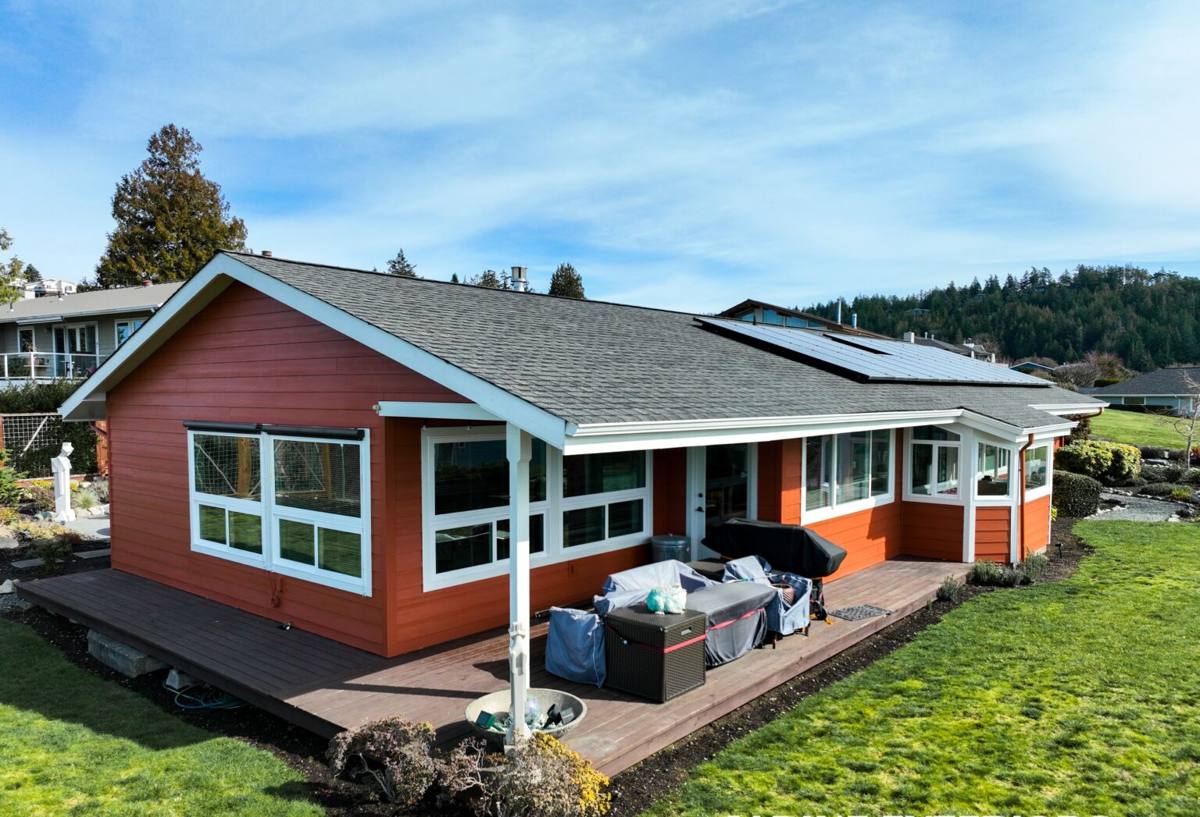
What Salt Air, Driving Rain, and Moss Actually Do to Siding
Salt Air
Airborne salt from Puget Sound doesn't just sit on the surface — it gets pulled into any porous or compromised material and accelerates corrosion of fasteners, trim metal, and anything with exposed edges. Siding materials that rely on paint film alone for protection are more vulnerable here than in a dry inland climate, because salt speeds up the breakdown of that film at seams, cut edges, and fastener heads.
Driving Rain
West Seattle's exposure to the Sound means rain frequently arrives at an angle, not straight down. That matters because siding systems are engineered around water shedding downward and outward — wind-driven rain tests every horizontal joint, every piece of trim, every place where two pieces of siding meet. A house on a sheltered inland lot can get away with average flashing and caulking. A bluff-facing West Seattle home usually can't.
Moss and Sustained Moisture
Western Washington's wet season is long, but West Seattle's combination of marine humidity and shaded north- and west-facing walls extends the window where surfaces stay damp long enough for moss and algae to establish. Moss doesn't just look bad — its root structure holds moisture directly against the siding surface, which is a slow but real problem for any material that absorbs water or swells when wet.
Why We Only Install James Hardie Here
We don't install LP SmartSide, vinyl, Cemplank, Allura, primed spruce, or cedar. That's not a marketing position — it's a standard we hold because of what we've seen these materials do over time in exactly the conditions West Seattle produces. Wood-based and engineered-wood sidings depend on an intact paint or resin seal to keep moisture out; once that seal is compromised at a cut edge, a fastener hole, or a joint that's taken years of driving rain, moisture gets into the substrate and the clock starts on swelling, delamination, and rot. Vinyl handles moisture fine but is a thin, flexible material that can be marred by close contact with salt-corroded fasteners in trim and doesn't offer the same fire performance.
James Hardie fiber cement is engineered specifically to resist this. It's non-combustible, it doesn't absorb and swell the way wood-based products do, and Hardie's HZ5 product line is engineered for the kind of high-moisture, marine-influenced climate zone the Puget Sound region falls into. The factory-applied ColorPlus finish is baked on under controlled conditions and backed by its own finish warranty — a meaningfully different proposition than field-applied paint trying to hold up against salt air and UV over years of West Seattle weather.
Where James Hardie Earns Its Keep in This Climate
| Local Condition | What It Does to Weak Siding | How Hardie Fiber Cement Responds |
|---|---|---|
| Salt-laden marine air | Accelerates paint film breakdown and fastener corrosion | Factory ColorPlus finish resists fading and film failure; correct fastener specs limit corrosion points |
| Wind-driven, sideways rain | Forces water into joints and seams not engineered for lateral pressure | Rigid board profile holds tight tolerances at laps and joints when installed to spec |
| Extended damp/moss season | Wood-based products can swell, delaminate, or hold moisture against the substrate | Fiber cement doesn't swell with moisture the way wood or engineered wood does |
| UV plus marine humidity cycling | Field-applied paint chalks and fades faster under repeated wet-dry cycling | Factory-cured finish is more consistent and better protected than field-applied coatings |
What a Correct James Hardie Installation Involves
The material is only half the equation. Most siding failures we get called out to inspect aren't a product problem — they're an installation problem. On a house exposed to Sound-driven weather, the details matter more, not less.
- Weather-resistive barrier and flashing first. The siding is the visible layer, but the water-resistive barrier and flashing details around windows, doors, and penetrations are what actually stop bulk water from reaching the sheathing.
- Rain screen gap where conditions call for it. A drainage gap behind the siding lets any moisture that does get past the surface drain and dry out instead of sitting against the wall — particularly relevant on wind-exposed, west- and south-facing walls in this neighborhood.
- Correct fastener type and placement. Hardie specifies fastener material, length, and placement for a reason; in a salt-air environment, using the wrong fastener accelerates the exact corrosion problem the siding is otherwise built to resist.
- Proper clearances at grade, decks, and roof lines. Siding installed too close to grade, a deck surface, or a roofline holds moisture against the bottom edge — one of the most common failure points we see on older installations here.
- Factory-mitered or properly caulked joints. Every horizontal and vertical joint is a place wind-driven rain will test. Manufacturer-specified caulking and joint treatment isn't optional trim work — it's part of the water management system.
How Our Process Works on a West Seattle Home
1. On-Site Assessment
We look at your home's specific exposure — which walls face the Sound and prevailing wind, where moss and staining are already showing up, condition of existing trim and flashing, and any signs of moisture behind the current siding. West Seattle homes on bluff lots often need a different exposure plan wall-to-wall than an inland home would.
2. Tear-Off and Substrate Check
Once the old siding is off, we check the sheathing and framing underneath for moisture damage before anything new goes up. This is the point where hidden problems from years of an underperforming siding system usually surface — and it's much cheaper to address now than after new siding is closed up over it.
3. Water Management Layer
Weather-resistive barrier, flashing at every penetration and transition, and a rain screen gap where the wall's exposure warrants it. This layer is what actually protects the structure; the siding above it is the second line of defense, not the only one.
4. James Hardie Installation to Manufacturer Spec
Correct fastener schedule, clearances, joint treatment, and panel or plank alignment, installed by a crew that installs this one product and knows its tolerances rather than switching between several different siding systems.
5. Final Walkthrough
We walk the exterior with you, check clearances and finish work, and go over basic care so you know what normal weathering looks like versus something worth a call.
Product Choices Within the James Hardie System
James Hardie offers a few plank and panel profiles, and for a West Seattle home the choice usually comes down to the look you want balanced against your wall exposure. Lap siding is the most common choice and performs well across most of the neighborhood's home styles. Panel systems with battens can suit more modern designs. In every case, we spec HZ5 for the Puget Sound climate zone rather than a lower-moisture-zone product, because that's what the region's marine exposure calls for.
Maintenance That Actually Matters Here
James Hardie is low-maintenance, not no-maintenance. In West Seattle's climate, a short annual routine goes a long way:
- Rinse siding annually to clear salt residue and early moss growth, especially on shaded or north-facing walls
- Keep gutters clear so overflow doesn't run down the siding face repeatedly
- Trim back vegetation and landscaping that keeps a wall section shaded and damp longer than the rest of the house
- Check caulked joints periodically for cracking or separation, particularly on the most wind-exposed walls
- Address any moss buildup before it spreads rather than letting a full wet season pass
Why Hiring a Crew That Already Works West Seattle Matters
Siding installation isn't identical from neighborhood to neighborhood. A crew that mostly works sheltered inland lots may not default to a rain screen detail or the fastener spec that a Sound-facing wall needs — not because they don't know it exists, but because it's not their daily habit. A crew that regularly works West Seattle's bluffs and exposed lots treats wind and salt exposure as the standard case, not the exception. That shows up in the small decisions on a job site: where to add extra flashing, which walls get the drainage gap, how tight the joint tolerances need to be. We also carry the King County and City of Seattle permitting and code familiarity that keeps a project moving instead of stalling at inspection.
What Affects Cost on a West Seattle Job
| Factor | Why It Matters |
|---|---|
| Home size and wall complexity | More corners, gables, and transitions mean more cutting, flashing, and joint work |
| Condition of existing sheathing | Any moisture damage found at tear-off needs repair before new siding goes on |
| Exposure and elevation | Bluff-facing and higher-wind walls may call for additional water management detail |
| Trim and profile choice | Lap versus panel systems and trim detail level affect material and labor |
| Existing moss or moisture damage | Remediation before install adds scope but prevents sealing problems behind new siding |
We don't quote a number without seeing the house — every West Seattle property's exposure is different enough that a real estimate has to start with a walkthrough.
Get a Straight Answer About Your Home
If you're dealing with moss buildup, failing caulk, or siding that's just past its useful life on a West Seattle home, we're happy to take a look and tell you honestly what we see — including whether repair makes more sense than full replacement in your case. Request a free, no-pressure estimate using the form below.