 Seattle
 West Seattle's Marine Climate Puts Real Stress on Siding
West Seattle sits out on a peninsula with water on three sides, and that location shapes everything about how siding ages here. Homes catch salt-laden air off Puget Sound, driving rain that comes in sideways during winter storms, and a moss season that can stretch from fall through spring. None of that is dramatic on its own, but stacked together year after year, it's exactly the combination that wears out the wrong siding material faster than homeowners expect.
Salt air is corrosive to fasteners and finishes. Wind-driven rain finds gaps that would never be a problem in a drier climate. And constant damp shade, common on the north and west sides of West Seattle homes, keeps moss and algae growing on siding surfaces for months at a stretch. A siding replacement done right here has to account for all three, not just look good on install day.
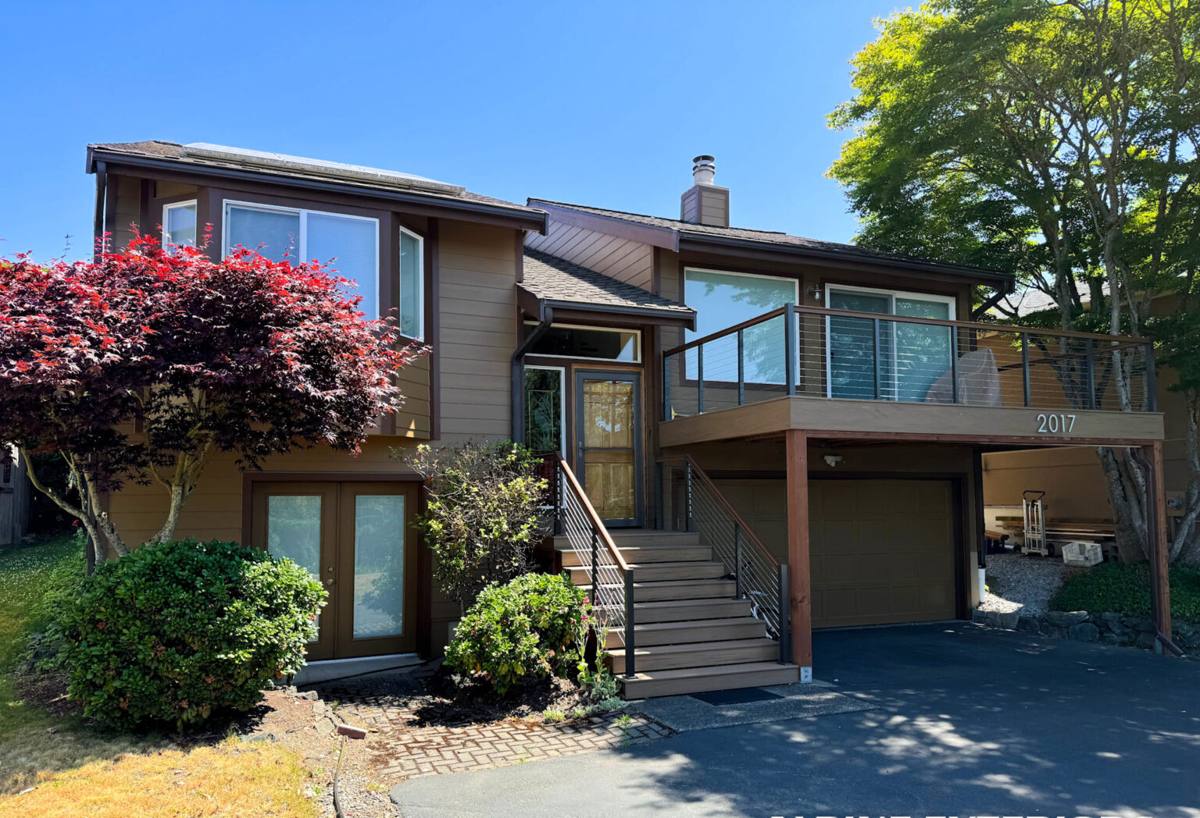
How to Tell Your Siding Has Reached the End of Its Life
Siding failure in this climate is usually gradual, which is why a lot of homeowners wait longer than they should. Watch for these signs:
- Soft or spongy spots when you press on the siding, especially near the bottom courses and around windows
- Paint that's failing repeatedly in the same spots no matter how often it's repainted
- Persistent moss or dark streaking that comes back within weeks of cleaning
- Visible cupping, warping, or buckling panels, particularly on walls facing the water or prevailing weather
- Gaps opening at seams, corners, or trim that weren't there when the siding was new
- Interior signs — musty smell, peeling interior paint, or damp drywall on exterior walls
Any one of these can sometimes be handled with a repair. When several show up together, or when they keep recurring after repairs, that's usually the material telling you it's done, not just a maintenance gap.
Why We Install Only James Hardie Fiber Cement
We standardized on James Hardie for every siding replacement we do, including here in West Seattle, and we don't offer vinyl, LP SmartSide, cedar, primed spruce, or other fiber cement brands as alternatives. That's a deliberate call based on how those products actually perform over time versus what Hardie does, not a sales preference.
Fiber cement is non-combustible, which matters increasingly to insurers and homeowners alike. It's dimensionally stable, so it doesn't expand and contract the way wood or some engineered wood products do when they take on moisture — a real issue in a climate with as much sustained dampness as ours. Hardie's ColorPlus factory-applied finish is baked on under controlled conditions rather than field-applied, which gives it more consistent coverage and better resistance to fading and peeling than a job-site paint job.
Hardie also engineers its siding by climate zone. The formulation used in the Pacific Northwest is built for a cold, wet climate profile rather than a hot, humid one — the product is matched to the actual weather it has to survive, not a one-size-fits-all mix. Combined with a strong transferable warranty, that's the combination we're willing to put our name behind.
What This Means Compared to Other Materials
| Concern in West Seattle's Climate | Typical Vinyl or Wood-Based Siding | James Hardie Fiber Cement |
|---|---|---|
| Moisture absorption | Wood-based products can swell, warp, or rot if moisture gets behind them | Cement-based composition resists moisture damage and doesn't rot |
| Salt air exposure | Finishes and fasteners can degrade faster near the water | Factory finish and proper fastening hold up to sustained salt exposure |
| Moss and algae growth | Textured or porous surfaces can hold onto growth | Smooth factory finish is easier to keep clean and resists staining |
| Fire exposure | Combustible in the case of wood-based products | Non-combustible fiber cement |
| Long-term appearance | Field-applied paint or thin caps can fade or peel unevenly | Factory-cured ColorPlus finish holds color more evenly over time |
What a Correct Siding Replacement Actually Involves
Siding is only as good as what's underneath it. A large share of the siding failures we see on tear-offs weren't caused by the siding itself — they were caused by a weather barrier or flashing detail that was never done correctly the first time. In a climate that gets as much wind-driven rain as ours, those details matter more than they would somewhere drier.
A correct replacement includes:
- Full removal of the old siding and inspection of the sheathing underneath for hidden rot or damage before anything new goes up
- A continuous, properly lapped weather-resistive barrier, not just patched around the old one
- Correct flashing at every window, door, and penetration, installed so water is directed out and down, never trapped behind the cladding
- Fastening to manufacturer spec — the right nail type, spacing, and penetration depth, since under-fastened siding is a common cause of premature failure
- Proper clearance at the bottom of the wall and around any grade-level contact points, so siding isn't sitting in standing moisture
- Caulking and sealant only where Hardie's installation instructions call for it — over-caulking can trap moisture instead of keeping it out
Skipping any one of these doesn't usually show up as a problem right away. It shows up two, five, or ten years later, which is exactly why it's worth asking a contractor to walk through their installation process before you sign anything.
Our Process, Start to Finish
1. Estimate and Assessment
We walk the exterior with you, look at the current siding and what's likely underneath it, and talk through what's actually needed versus what's optional. This is a free, no-pressure visit — you're not obligated to move forward.
2. Scope and Product Selection
We go over the Hardie product line, profile, and color options that fit the home, and put together a clear, written scope so there's no ambiguity about what's included.
3. Tear-Off and Inspection
Old siding comes off and we inspect the sheathing before anything new goes up. If we find hidden moisture damage, we bring it to you before proceeding, not after.
4. Weather Barrier, Flashing, and Installation
We install the weather-resistive barrier, flashing, and Hardie siding to manufacturer specification, with the fastening and clearances a marine climate actually requires.
5. Final Walkthrough
We walk the finished job with you, cover care and maintenance, and make sure everything matches what was scoped at the start.
What Affects the Cost of a West Seattle Siding Replacement
| Factor | Why It Matters |
|---|---|
| Condition of the sheathing underneath | Hidden rot or water damage found during tear-off adds repair work before new siding can go on |
| Home size and wall complexity | More corners, gables, and trim details mean more labor and material cuts |
| Siding profile and color | Certain Hardie profiles and factory finishes cost more than standard lap siding |
| Access and site conditions | Sloped lots, tight side yards, and multi-story sections common in West Seattle can affect staging and labor time |
| Trim and detail work | Window and door trim, corner boards, and soffit work are often bundled with siding replacement |
We don't quote broad numbers on a page like this because every home is different — the only honest way to give you a real figure is to look at your house.
Why Local West Seattle Experience Actually Matters
West Seattle's terrain and layout aren't the same as siding a flat, uniform lot. Many homes here sit on slopes with view orientations toward the water, which affects how wind and rain hit different walls of the same house, and how staging and access get planned around narrower lots and elevation changes. A crew that regularly works this specific part of King County has already worked through those logistics — where the moss builds up worst, which wall orientations take the brunt of winter storms, and how to sequence a job around tight access without surprises mid-project.
That familiarity also shows up in smaller ways: knowing which details tend to get missed on homes exposed to open water versus more sheltered inland streets, and building the schedule around King County's weather patterns instead of guessing at it.
Caring for Hardie Siding After Installation
One advantage of switching to fiber cement in this climate is how little upkeep it needs compared to what many homeowners are used to. Even so, a few habits keep it looking right longer:
- Rinse the siding once or twice a year, more often on shaded or north-facing walls where moss tends to concentrate
- Trim back vegetation and tree cover that keeps siding damp and shaded for extended periods
- Check and clear gutters regularly so overflow isn't running down the wall face
- Address any caulking or sealant gaps at trim and penetrations promptly rather than letting them sit through a wet season
- Avoid pressure washing directly at high pressure into seams or up under the bottom edge of courses
None of this is intensive maintenance — it's the kind of upkeep most homeowners can handle in an afternoon a couple of times a year.
If your siding is showing wear, or you're just planning ahead for a replacement, we're happy to take a look and walk you through what your home actually needs. Use the form below to request a free, no-pressure estimate.