 Seattle
 Metal Roofing Built for Bellevue's Weather, Not Just Its Curb Appeal
Bellevue sits in a part of King County where a roof rarely gets a break. Rain falls for months at a stretch, moss finds a foothold on anything shaded or north-facing, and the mix of Puget Sound moisture and salt-tinged air slowly works on fasteners, flashing, and finishes. A metal roof handles that combination better than most materials on the market, but only when it's specified and installed correctly for this climate. A metal panel system installed the way it would be in a dry inland state won't perform the same way here, and the details that get skipped are exactly the ones that cause leaks five or ten years down the road.
This page covers what a metal roof needs to do in Bellevue specifically, what a correct installation actually involves, and how we approach the job from first estimate to final cleanup.
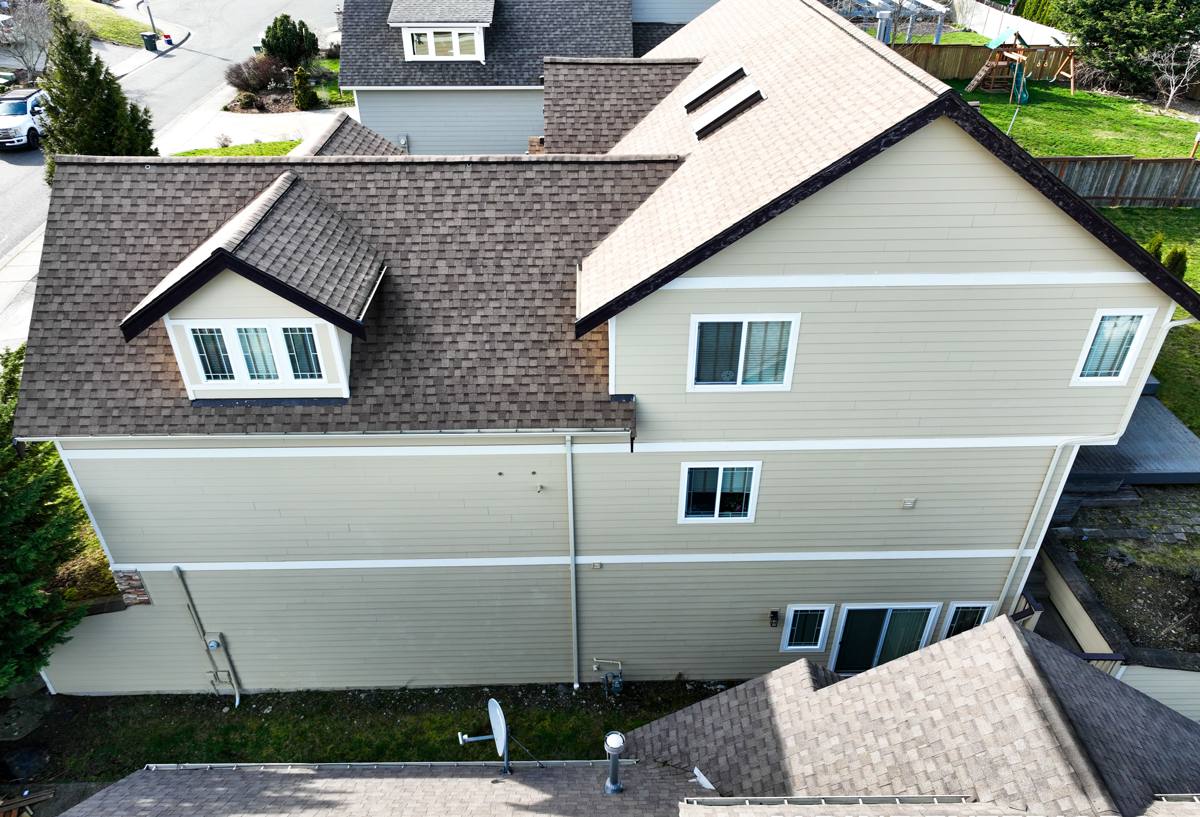
What Bellevue's Climate Actually Does to a Roof
Homeowners often assume a roof's biggest enemy is a single big storm. In practice, it's the slow, repeated exposure that causes the most damage.
Driving Rain and Wind-Driven Moisture
Storms coming off the Sound frequently push rain sideways rather than straight down. That means water gets forced up under shingle laps, around vents, and into any gap in flashing that would stay dry in a calmer climate. Metal roofing, when the panels and seams are engineered for that kind of load, sheds wind-driven rain far more reliably than a lapped shingle system — but the seams, end laps, and penetrations still have to be detailed for it. A panel system with the wrong seam type or under-built flashing will let water in exactly the same way a poorly installed shingle roof does.
Moss and Organic Growth
King County's long wet season, combined with tree cover common in Bellevue neighborhoods, gives moss and algae a long runway to establish themselves. On composition roofing, moss roots into the granule surface and holds moisture against the decking. Metal doesn't give moss the same texture to grip, so growth is slower and shallower, and what does form typically rinses or brushes off without damaging the panel underneath. That's a real, meaningful advantage in this climate — not a marketing claim, just how the material behaves.
Salt Air and Corrosion
Bellevue isn't oceanfront, but Lake Washington and the broader Puget Sound air carry enough moisture and mineral content to accelerate corrosion on unprotected metal over time. This is why fastener choice and panel coating matter as much as the panel material itself. A steel or aluminum roof with the right protective coating and compatible, corrosion-resistant fasteners is built for this environment. Mixing incompatible metals, or using standard fasteners instead of coated, gasketed ones, is a shortcut that shows up as rust streaks and loosening panels well before the roof's expected lifespan is up.
Choosing the Right Metal Roofing System
"Metal roofing" isn't one product — it's a category, and the right choice depends on the home's roofline, budget, and how the owner wants it to look. We walk through these tradeoffs honestly rather than pushing whatever has the best margin.
| System | Best For | Tradeoffs |
|---|---|---|
| Standing seam | Low-slope sections, modern or clean-lined homes, maximum water-shedding performance | Higher material and labor cost; needs a crew experienced with seaming equipment |
| Metal shingles / stone-coated steel | Homes wanting a traditional shingle or shake look with metal's durability | More seams and fasteners than standing seam, so installation detail matters more |
| Exposed-fastener panels | Outbuildings, shops, budget-conscious projects | Fasteners are visible and need periodic re-torquing over the roof's life; not our first recommendation for a primary residence in this climate |
For most Bellevue homes, we lean toward standing seam or a stone-coated steel shingle system, because both minimize the number of exposed fastener penetrations — the most common failure point on any metal roof in a wet climate.
What a Correct Metal Roof Installation Involves
The panels themselves get all the attention, but most metal roof failures we're called to inspect trace back to what's underneath or around them, not the metal itself.
Deck Inspection and Prep
Before any panel goes down, the existing deck needs to be checked for soft spots, delamination, or old moisture damage — common in older Bellevue homes where a prior roof sat too long. Metal roofing is unforgiving of an uneven or compromised deck, since panels need a flat, solid substrate to seat and seam correctly.
Underlayment
In a climate with this much rain, we install a high-temperature synthetic or self-adhered underlayment rated for the sustained moisture exposure metal roofing sees here, with extra ice-and-water-style membrane at eaves, valleys, and any low-slope transition. This is the roof's backup layer if wind ever drives water past the panel seams.
Fasteners and Flashing
Every fastener should be corrosion-resistant and compatible with the panel metal to avoid galvanic corrosion — dissimilar metals in contact with each other corrode faster in a moist environment. Flashing at chimneys, skylights, sidewalls, and valleys gets custom-formed and layered correctly with the underlayment, not just caulked over gaps.
Ventilation
A metal roof over a poorly ventilated attic can trap moisture underneath the deck, which defeats the purpose of a durable roof surface. We check and correct intake and exhaust ventilation as part of the scope, not as an upsell after the fact.
Our Process, Start to Finish
- On-site inspection and measurement — we get on the roof (weather permitting) rather than estimating from photos alone, so the quote reflects the actual deck condition, roof lines, and penetrations.
- System selection and honest walkthrough — we go over standing seam vs. metal shingle options for the specific home, with real cost and appearance tradeoffs, not a single default pitch.
- Written estimate — scope, materials, and price laid out plainly, with any deck repair contingencies noted up front instead of surprise change orders later.
- Tear-off and deck repair — old roofing removed, deck inspected, and any damaged sheathing replaced before anything new goes down.
- Underlayment and flashing installation — the moisture-management layer goes in correctly before a single metal panel is placed.
- Panel installation and seaming — panels run, seamed, and fastened to manufacturer spec, with attention to thermal expansion gaps metal roofing requires.
- Final inspection and cleanup — magnetic sweep for stray fasteners, gutter and downspout check, and a walkthrough with the homeowner before we consider the job done.
What Metal Roofing Costs Depend On
We won't quote a number without seeing the roof, but these are the factors that move the price up or down on most Bellevue projects:
| Factor | Why It Matters |
|---|---|
| Roof complexity (valleys, dormers, penetrations) | More cuts, flashing, and labor hours per square |
| System type | Standing seam typically costs more per square than stone-coated steel shingles |
| Deck condition | Rot or delamination found during tear-off adds repair cost before panels go on |
| Roof pitch and access | Steep or hard-to-access roofs require more safety setup and time |
| Existing layers | Removing multiple old roofing layers adds disposal and labor cost |
Metal roofing typically costs more upfront than asphalt shingles, but the tradeoff is a longer service life, less frequent maintenance, and better resistance to the specific wear this region's weather causes — moss, wind-driven rain, and repeated wet-dry cycling.
Maintaining a Metal Roof in a Wet Climate
Metal roofing needs less maintenance than shingles, but "less" doesn't mean "none," especially with Bellevue's tree cover and rainfall. A short annual routine keeps small issues from becoming leaks:
- Clear leaves, needles, and debris from valleys and around any penetrations where organic matter can trap moisture against the panel
- Check gutters and downspouts are clear so water isn't backing up against eave flashing
- Look for any loose or lifted flashing around chimneys, skylights, and sidewalls after major windstorms
- Rinse off any moss or algae buildup in shaded areas rather than letting it sit for multiple seasons
- Have fasteners on exposed-fastener systems checked periodically, since they can loosen slightly as the metal expands and contracts with temperature swings
Why Local Installation Experience Matters
Metal roofing is forgiving of good workmanship and punishing of shortcuts, and the shortcuts that fail in Bellevue aren't always the same ones that fail in a drier climate. A crew that mostly works dry-climate installs may under-detail flashing or skip extra underlayment at valleys because it's never bitten them before. A crew that works King County roofs regularly knows where wind-driven rain actually gets forced, which valleys and low-slope transitions need extra membrane, and how much clearance to leave for panels to expand and contract through a wet Pacific Northwest winter and a dry summer. That local pattern recognition is the difference between a metal roof that's watertight for decades and one that develops a slow leak nobody can find.
Signs Your Current Roof Is Ready for a Change
Not every roof needs full replacement, but these are common indicators worth having checked, especially on older Bellevue homes:
- Granule loss or bald patches on an aging asphalt shingle roof
- Persistent moss growth that returns within a season of cleaning
- Visible rust, curling, or lifted flashing around chimneys and vents
- Staining on interior ceilings after heavy rain or wind events
- A roof already past, or approaching, the manufacturer's expected service life
If you're weighing metal roofing for a Bellevue home, we're glad to take a look and walk you through what's actually needed — no pressure, no inflated scope. Fill out the form below for a free estimate and straightforward answers about your roof.