 Seattle
 Asphalt Shingle Roofing Built for Bellevue's Weather
Bellevue sits in a spot that looks mild on paper and is actually tough on roofs. The Eastside gets less rain than parts of Seattle proper, but what it does get comes sideways off the lake during winter storms, and the tree cover that makes Bellevue neighborhoods so pleasant to live in also means shade, moisture, and a long moss season on north-facing slopes. An asphalt shingle roof that's installed correctly for this climate will handle all of that quietly for decades. One that's installed with shortcuts will show problems in the first two or three wet seasons, usually right where a homeowner can't see them.
We install and repair asphalt shingle roofs across Bellevue and the rest of King County, and the patterns we see are consistent: moss creeping up from the eaves, granule loss on the west-facing slopes that catch the worst of the driving rain, and ventilation problems that show up as premature curling or dark staining under the shingles. Good asphalt shingle roofing here isn't about picking a nicer-looking shingle. It's about the underlayment, the flashing, the ventilation, and the details at every penetration doing their job for the full life of the roof.
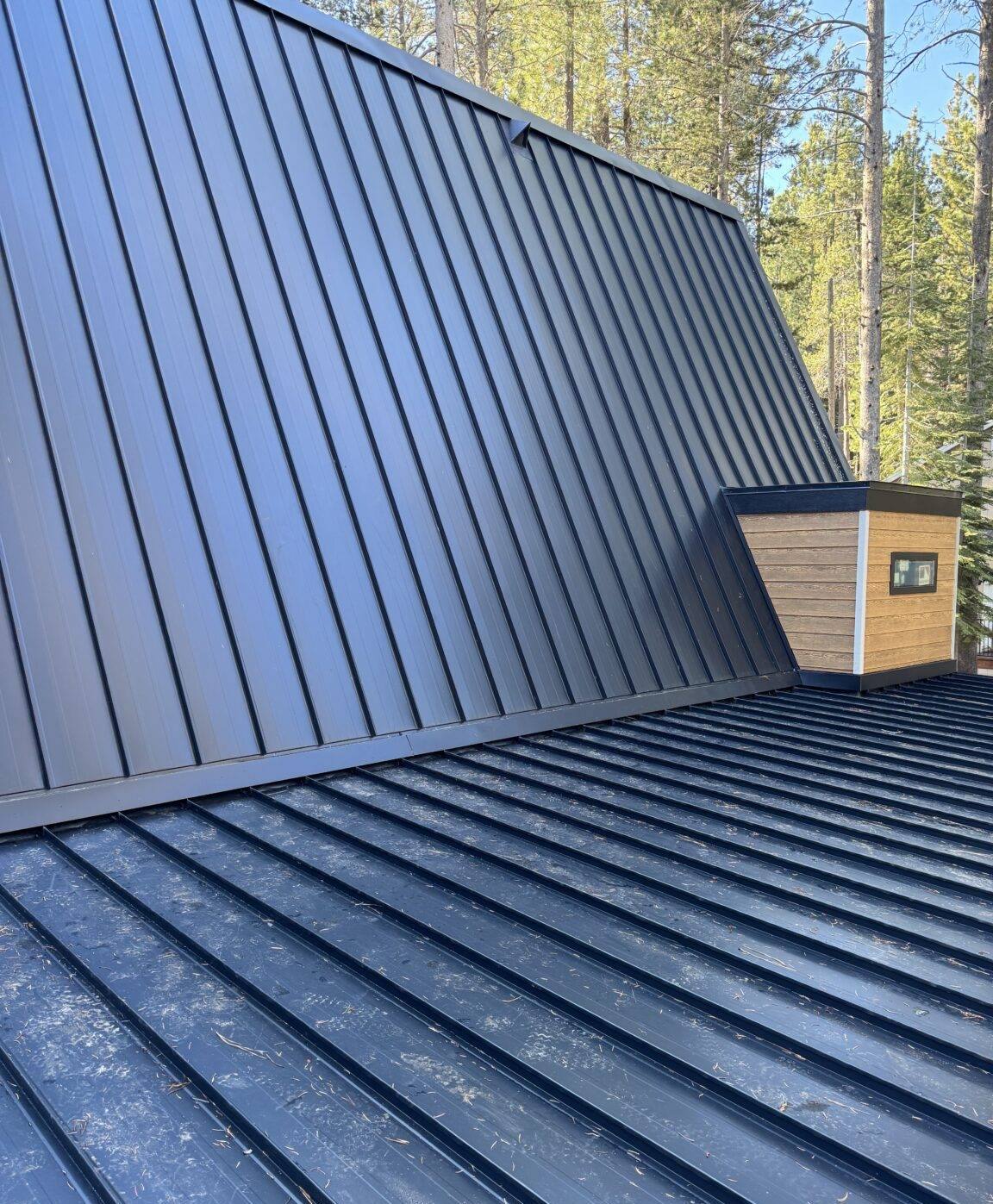
What Bellevue's Climate Actually Does to a Roof
Moss and Organic Growth
Moss is the single biggest asphalt shingle killer in this part of King County. It doesn't just sit on top of the shingle looking bad — its root structure works into the shingle mat, lifts tabs, and holds moisture against the roof deck long after the rest of the roof has dried out. Once moss gets a foothold on a shaded north slope, it spreads. Left untreated for a few seasons, it can shorten the usable life of an otherwise sound roof by a decade or more.
Driving Rain and Wind-Driven Water
Storms coming off Lake Washington and the Sound don't always fall straight down. Wind-driven rain gets pushed up and under shingle tabs, into ridge and hip laps, and around chimneys, skylights, and vent pipes. A roof that would be fine in a calmer climate can leak in Bellevue if the underlayment, ice-and-water membrane at the eaves, and step flashing aren't installed with that sideways rain in mind.
Temperature Swings and Freeze-Thaw
Bellevue doesn't get brutal winters, but it does get enough freeze-thaw cycling — especially at elevation on the Eastside hills — to stress trapped moisture in a shingle system. Water that gets under a shingle and then freezes expands, and that's how small installation flaws turn into real damage over a few winters.
What a Correct Asphalt Shingle Installation Includes
A shingle roof is a system, not a single layer. Every component below has to be right, because the shingles themselves are only doing part of the work of keeping water out.
- Deck inspection and repair — soft, delaminated, or water-stained decking gets replaced before anything new goes down, not covered over.
- Ice-and-water shield at eaves and valleys — a self-adhering waterproof membrane in the areas most exposed to wind-driven rain and ice damming.
- Synthetic underlayment — a full water-resistant layer across the deck, lapped correctly so every course sheds water into the one below it.
- Drip edge at eaves and rakes — directs water off the roof edge and into the gutter instead of behind the fascia.
- Step flashing and counter-flashing at walls, chimneys, and dormers — one of the most common failure points on older Bellevue roofs when it's missing or reused instead of replaced.
- Proper nailing pattern — correct nail count and placement per shingle, since under-nailing is a leading cause of wind and rain intrusion.
- Balanced attic ventilation — intake at the eaves and exhaust at the ridge, sized to the attic, so heat and moisture don't build up under the deck.
- Valley and penetration detailing — vent pipes, skylights, and valleys sealed and flashed to shed water, not just caulked.
Ventilation: The Part Homeowners Don't See but Always Notice Later
Attic ventilation doesn't get much attention because it isn't visible from the ground, but it has more to do with how long a Bellevue roof lasts than the shingle brand does. In a marine climate like ours, a poorly ventilated attic traps warm, moist air against the underside of the roof deck. In summer that heat bakes shingles from underneath and accelerates aging. In winter it contributes to condensation, and on shaded, moss-prone slopes it adds to the moisture load the shingles are already fighting from outside. We size and balance intake and exhaust ventilation as part of every full roof install, not as an upsell — it's part of doing the job correctly the first time.
Choosing the Right Shingle for a Bellevue Home
Not every asphalt shingle is built the same way, and in a wet, moss-prone climate the differences matter more than they would somewhere dry. We steer homeowners toward algae-resistant shingles with copper or zinc granules on any roof with significant tree shade, because standard shingles in those spots will streak and grow moss faster regardless of how well they're installed. Beyond that, the choice usually comes down to budget, wind rating, and how long you plan to be in the home.
| Shingle Type | Typical Lifespan Here | Best Fit |
|---|---|---|
| 3-tab standard | 15-20 years | Budget-conscious re-roofs, less tree cover |
| Architectural / laminate | 25-30 years | Most Bellevue homes — better wind rating, better look |
| Algae-resistant architectural | 25-30 years | Shaded lots, north-facing slopes, moss-prone yards |
| Impact-resistant (Class 4) | 30+ years | Homes wanting the strongest wind/hail performance, potential insurance discount |
We're straightforward about trade-offs rather than steering everyone to the priciest option. A well-vented, well-flashed 3-tab roof will outperform a premium shingle installed with poor ventilation or reused flashing every time. Material quality matters, but installation quality is what actually determines how long the roof lasts on your house.
Our Process for a Bellevue Roofing Project
1. On-Site Inspection and Honest Assessment
We start by getting on the roof, not just looking at it from the driveway. We check the deck condition, existing ventilation, flashing at every penetration, and how much moss or granule loss is already present. You get a straight answer about whether you need a full replacement, a repair, or a maintenance plan to buy a few more years.
2. A Written Scope, No Surprises
Before any work starts you get a clear scope covering materials, underlayment system, ventilation plan, flashing details, and a real timeline. If deck repair turns out to be needed once tear-off starts, we stop and tell you before proceeding, not after the fact on the invoice.
3. Tear-Off and Deck Prep Done Right
Full tear-off to the deck on replacements, so we're not layering a new roof over old problems. Every section of decking gets inspected and any soft or damaged sheathing is replaced.
4. Installation to the Details, Not Just the Field
The field shingles are the easy part. We put the real attention into eaves, valleys, chimneys, skylights, and vent penetrations — the spots that cause the vast majority of roof leaks in this climate.
5. Final Walkthrough and Cleanup
We walk the finished roof and the property with you, confirm gutters and downspouts are clear and functioning, and do a magnetic sweep for nails and debris before we consider the job done.
Repair, Maintenance, or Full Replacement?
Not every roof problem in Bellevue means a full replacement. We evaluate the roof honestly and give you the range of realistic options.
- Spot repair — isolated flashing failures, a handful of damaged shingles, or a single leak with an otherwise sound roof.
- Moss treatment and gutter/vent maintenance — for roofs that are structurally fine but need moss removal, zinc strip installation, and clogged intake vents cleared.
- Partial re-roof — when one slope (usually the shaded north side) is failing well ahead of the rest.
- Full replacement — when the deck, underlayment, or shingle field are past the point where repair makes financial sense.
As a rough guide, a roof under 12-15 years old with an isolated issue is usually a repair candidate. A roof pushing 20+ years with granule loss across multiple slopes, recurring leaks, or visible sagging is typically closer to a replacement conversation. We'll tell you honestly which category your roof falls into rather than defaulting to the bigger job.
Why a Locally Familiar Crew Matters in Bellevue
Roofing codes, permitting, and inspection expectations vary by jurisdiction across King County, and Bellevue has its own permitting process separate from Seattle's. A crew that already works this area knows what the local building department expects, understands how HOA architectural guidelines in many Bellevue neighborhoods affect shingle color and style choices, and has already seen how the tree-heavy, view-lot layouts common here affect ventilation and moss exposure. That familiarity shows up in fewer surprises — permits that get approved without back-and-forth, and a roof design that accounts for your specific lot's shade pattern instead of a one-size-fits-all approach.
Maintenance That Protects Your Investment
A correctly installed asphalt shingle roof in this climate still needs periodic attention to hit its full lifespan. A short annual checklist goes a long way:
- Clear moss and debris from valleys and north-facing slopes before it builds up
- Keep gutters and downspouts flowing freely, especially after fall leaf drop
- Trim back overhanging branches that hold shade and moisture on the roof
- Check attic ventilation isn't blocked by insulation or debris
- Have flashing around chimneys, skylights, and vents inspected every few years
- Address small granule loss or lifted shingles before they become active leaks
None of this is complicated, but skipping it is how a well-installed roof loses years off its life in a climate like ours.
Get a Straightforward Estimate
If you're dealing with moss buildup, a leak, or a roof that's simply getting old, we're happy to take a look and give you an honest read on what it actually needs — repair, maintenance, or replacement. Reach out for a free, no-pressure estimate using the form below.