 Seattle
 Bellevue Roofs Take a Different Kind of Beating
Bellevue sits in the wettest, greenest part of King County, and its roofs pay for it. The region's long wet season, the marine-influenced air that moves in off Puget Sound, and the heavy tree cover in many Eastside neighborhoods combine to create conditions that are hard on every roofing material eventually. It isn't dramatic weather most of the year — it's steady, driving rain over many months, moisture that never fully dries out of shaded roof sections, and moss and algae that get a running start every fall and don't let up until late spring.
None of that means a roof is doomed. It means roof repair in this area has to account for moisture and organic growth as ongoing conditions, not one-time problems. A repair that only patches the visible symptom — without addressing why water or moss found a way in — tends to fail again within a season or two. That's the standard we hold ourselves to on every Bellevue repair call.
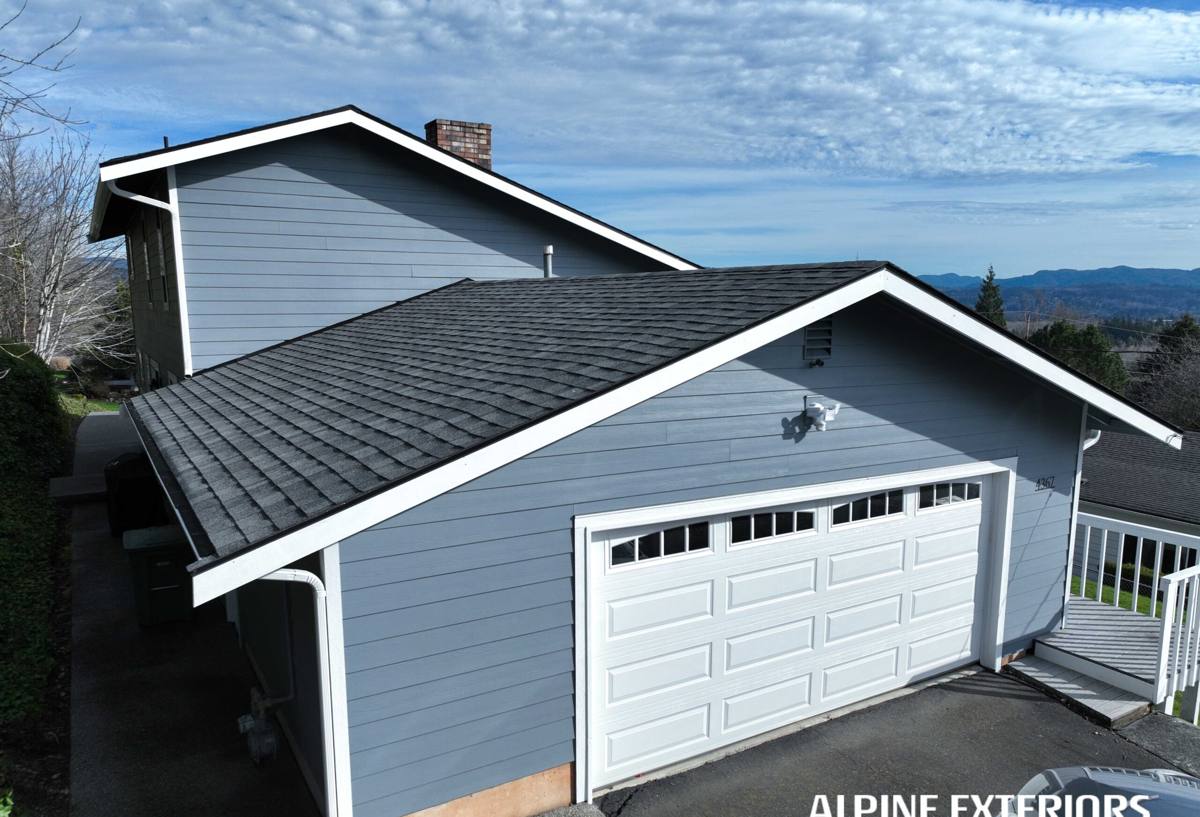
Common Roof Repair Issues We See in Bellevue Homes
Most repair calls in this area fall into a handful of recurring categories. Recognizing which one you're dealing with helps set expectations for what the fix actually involves.
Moss and Algae Damage
Moss doesn't just look bad — its root structure lifts shingle edges and holds water against the roof deck, which accelerates rot and granule loss. Left unaddressed through even one full moss season, a section that started as a cosmetic issue can turn into a moisture-intrusion repair.
Flashing Failures
Flashing around chimneys, skylights, and roof-to-wall transitions is one of the most common failure points on any roof, and constant rain exposure in this region shortens its working life. Cracked sealant or corroded metal at these junctions is a frequent source of leaks that show up well away from the actual entry point.
Valley and Gutter-Line Leaks
Roof valleys concentrate a large volume of water into a narrow channel, and debris from overhanging trees — common on Bellevue's wooded lots — can dam that flow and force water backward under the shingles. Clogged gutters create the same effect at the eaves.
Wind and Storm Damage
Winter windstorms in the Puget Sound region routinely lift or crack shingles, especially on roofs already weakened by age or moss. These repairs are usually straightforward if addressed promptly, but delayed attention lets water into the deck underneath.
What a Correct Roof Repair Actually Involves
A roof repair done right starts with diagnosis, not patching. That means finding the actual entry point of water — which is often several feet from where the stain or drip shows up inside the home — before any material gets replaced. Water travels along the underside of decking and rafters before it becomes visible, so a repair based only on where the ceiling stain appears will frequently miss the real problem.
Once the source is confirmed, a proper repair matches the existing roofing material as closely as possible, reinstates proper underlayment and flashing detail at the repair area, and reintegrates the new section with the surrounding roof so water sheds correctly across the seam. A patch that isn't properly woven into the existing roofing can create a new leak point right at its own edge.
Our Bellevue Roof Repair Process
- Inspection. We walk the roof (or use a camera on steep or fragile sections) to trace the actual source of the problem, not just the symptom.
- Straight assessment. We tell you what's actually needed — a targeted repair, a larger section replacement, or in some cases that repair isn't the right long-term answer — and explain why.
- Written scope. You get a clear description of the repair area, materials, and what the work will and won't include, before anything is scheduled.
- The repair. Matching materials, correct flashing and underlayment detail, and a tie-in to the surrounding roof done to shed water properly.
- Cleanup and check. Debris removed, gutters checked for related clogs, and a final look to confirm the fix addressed the actual source.
Repair or Replace? What Actually Decides It
Most homeowners ask this question before they ask anything else, and it's a fair one. The honest answer depends on a few factors working together, not any single one.
| Factor | Favors Repair | Favors Replacement |
|---|---|---|
| Roof age | Well within expected material lifespan | At or past the material's typical service life |
| Extent of damage | Isolated to one section or feature (flashing, one valley) | Recurring leaks in multiple, unrelated areas |
| Deck condition | Solid decking under the affected area | Soft, rotted, or delaminated decking found on inspection |
| Moss/algae history | First occurrence, treatable and manageable | Heavy, repeated growth across most of the roof |
| Material match | Matching material still available | Original product discontinued, visible mismatch likely |
When a roof checks most of the "favors repair" boxes, a targeted fix is the responsible recommendation — there's no reason to sell a homeowner a full replacement they don't need yet. When several "favors replacement" factors line up at once, we say so plainly, along with why.
Roofing Materials We Repair
Bellevue homes are roofed in a mix of materials, and each behaves differently once it needs repair work.
Composition (Asphalt) Shingle
The most common roofing type in the area and generally the most straightforward to repair, provided a reasonably close color and profile match is available for the age of the roof.
Cedar Shake
Cedar repair requires matching grain and thickness carefully, and special attention to the underlayment, since cedar's natural moisture cycling means the repair has to breathe correctly with the rest of the roof. We're upfront that cedar carries a higher long-term maintenance load in this climate than other materials — that's a maintenance and moisture-behavior trade-off worth knowing, not a reason to avoid cedar outright if you already have it or prefer its look.
Metal Roofing
Repairs typically center on fastener backouts, seam sealant failure, or flashing at penetrations. Metal is generally durable against moss compared to shingle roofs, but valley and transition details still need the same careful attention.
Tile
Tile itself often outlasts the underlayment beneath it. Many "tile repairs" are actually underlayment repairs done carefully around fragile, walkable-with-care tile — a job that rewards experience with the material.
Moss and Moisture: An Ongoing Reality, Not a One-Time Fix
Because of how much rain this region gets and how many roofs sit under partial tree shade, moss and algae aren't a problem you solve once. Roof repair often includes a moss removal and treatment component, and we're straightforward about the fact that regrowth is likely without some level of ongoing maintenance — that's simply how a wet, shaded climate behaves, not a shortcoming in the repair itself. Zinc or copper control strips, periodic gentle cleaning, and keeping overhanging branches trimmed back all reduce how fast it comes back, but none of them make it permanent.
Why a Crew That Already Works Bellevue Matters
Roofing done right in this region isn't just a general skill — it's shaped by local conditions. A crew that regularly works Bellevue and the surrounding Eastside area already knows how this region's rain patterns and moss growth actually behave on roofs, what King County permitting requires for the scope of work involved, and how to schedule around the wet season instead of fighting it. That local familiarity shows up in fewer surprises once a repair is underway, not just in faster response times.
Signs You Need a Roof Repair Now
Some roof problems can wait for a scheduled inspection. Others shouldn't. If you're seeing any of the following, it's worth getting a professional look soon rather than waiting for the next dry stretch:
- Water stains on ceilings or upper interior walls, especially after a heavy rain
- Visible moss buildup thicker than a light green film, or moss on ridge lines
- Shingles that are cracked, curling, or missing after a windstorm
- Granules collecting in gutters or at downspout outlets
- Daylight visible through the roof deck from inside the attic
- Sagging in any section of the roofline
- Persistent musty smell in an upper room or attic space
If any of this sounds familiar, or you'd just like an honest opinion on what your roof actually needs, we're happy to take a look. Fill out the form below for a free, no-pressure estimate — we'll tell you straight whether it's a repair job or something bigger, and why.