 Seattle
 Why Kirkland Decks Wear Out Faster Than the Manual Says
Decking manufacturers write their maintenance schedules for a generic climate that doesn't really exist anywhere in the Pacific Northwest. In Kirkland, a deck sits under a canopy of fir and cedar drip, catches moisture off Lake Washington, and goes months at a time without a full dry-out. Add King County's long, low-intensity rain season and the moss and algae that come with it, and most decks here are working harder than their warranty paperwork assumes.
That combination — persistent dampness, shaded framing, and slow evaporation — is what actually ages a deck. It's rarely one dramatic storm. It's water sitting in a joint, moss holding moisture against a board, or a fastener that started corroding the second winter and finally let go on year twelve. A deck built and detailed for this specific environment lasts meaningfully longer than one built to a national spec sheet.
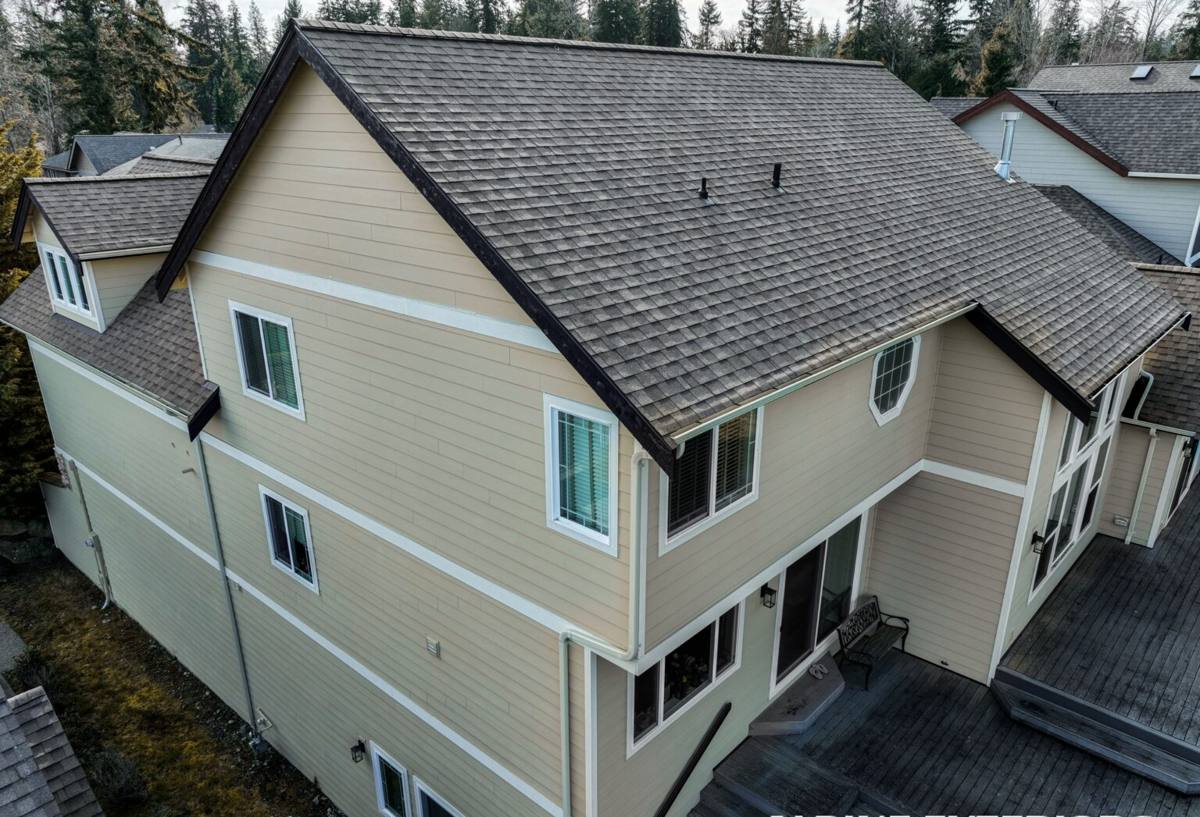
Repair or Replace? Reading the Signs on a Kirkland Deck
Not every worn deck needs full replacement, but in this climate the line gets crossed sooner than homeowners expect. Surface staining or a little board cupping can often be repaired. The framing underneath is a different story, and it's the part most homeowners never actually inspect.
- Soft or spongy spots when you walk the deck, especially near the ledger board where it meets the house
- Persistent moss or dark streaking that returns within weeks of cleaning
- Rust staining around fastener heads or visibly corroded joist hangers
- Gaps opening between boards, or boards that have twisted despite being fastened down
- A ledger connection with no visible flashing, or flashing that's cracked and letting water track behind the siding
- Posts or footings that feel loose, or a deck that has a noticeable bounce compared to when it was new
If more than one or two of these show up, especially anything involving the ledger or framing, patching the surface is a short-term fix. The structure underneath is what actually fails in this climate, and it's what a replacement is meant to correct.
What a Correct Deck Replacement Actually Involves
A deck replacement isn't just swapping old boards for new ones. Done right, it's a rebuild of everything that keeps water from sitting where it shouldn't.
Framing and Ledger
The ledger board — where the deck attaches to the house — is the single most common failure point in this region, because it's the one spot where the deck structure meets the building envelope. A correct replacement includes proper ledger flashing that sheds water away from the house framing, not just a bead of caulk. Joists get sized and spaced for the actual span and load, not just matched to whatever was there before.
Footings and Post Bases
Footings need to sit below frost depth and bear on undisturbed soil, and post bases should hold the post above the deck surface so it never sits in standing water. A lot of older Kirkland decks have posts buried directly in soil or concrete — that detail alone shortens a structure's life by years in a climate this wet.
Decking Surface
Board spacing, orientation, and fastening pattern all affect how fast water sheds off the surface and how much debris collects between boards. Tight, debris-packed gaps are exactly where moss gets a foothold.
Fasteners and Hardware
Every piece of hardware in contact with treated lumber needs to be rated for it. Mismatched fasteners corrode quietly for years before they show a stain, and by then the damage is already inside the wood.
Choosing a Decking Material for This Climate
There's no single right answer for every homeowner — budget, maintenance appetite, and how the deck gets used all factor in. What matters is going in with realistic expectations for how each material behaves once it's wet more often than it's dry, which is most of the year here.
| Material | How it handles PNW moisture | Maintenance reality |
|---|---|---|
| Pressure-treated wood | Performs well when detailed and sealed correctly; most affordable upfront | Needs re-staining or sealing every 1-3 years to resist moss and graying |
| Cedar | Naturally rot-resistant, handles moisture well, ages to a silver-gray if left untreated | Softer surface, benefits from periodic cleaning and occasional refinishing |
| Composite decking | Doesn't absorb water like wood; resists rot but can still grow surface moss/algae if shaded | Low upkeep — periodic washing, no staining, but not maintenance-free |
| Capped composite / PVC | Best moisture resistance of the group; shrugs off standing water and splashback | Highest upfront cost, minimal ongoing maintenance |
We're candid with clients about trade-offs rather than pushing one product line. Wood costs less to install but asks more of the homeowner every year. Composite and capped composite cost more upfront but shift the maintenance burden way down — which matters when your deck spends half the year damp.
What Actually Drives the Cost of a Deck Replacement
| Factor | Why it matters here |
|---|---|
| Deck size and shape | More linear footage of framing, decking, and railing directly scales material and labor |
| Height above grade | Taller decks need more substantial footings, posts, and often code-required guardrails |
| Ledger and flashing condition | Rotted rim joists or siding damage found during demo add scope but shouldn't be skipped |
| Material choice | Wood, composite, and capped composite span a wide price range per square foot |
| Access and site conditions | Sloped Kirkland lots, retaining walls, and tight side-yard access can add labor time |
| Permit and inspection requirements | Structural decks typically require a permit and inspection, which adds a fixed cost and timeline |
We walk every deck before quoting so the number reflects what's actually under the boards, not a guess based on square footage alone.
Our Deck Replacement Process
- On-site assessment — we check the ledger, framing, footings, and drainage, not just the surface boards, and explain what we find in plain terms.
- Design and material selection — we go over material options, layout, and railing choices against your budget and how you use the space.
- Permitting — we handle the permit application and coordinate required inspections so you're not chasing paperwork.
- Demolition — full removal of the old deck surface and framing, with a check for hidden rot at the house connection before anything new goes up.
- Rebuild — new footings, framing, ledger flashing, decking, and railing, built to current code and detailed for long-term drainage.
- Final walkthrough — we go over the finished deck together, including what maintenance (if any) the chosen material will need going forward.
Permits and Local Code in Kirkland and King County
Most full deck replacements in Kirkland require a building permit, since the work touches structural framing and often guardrails — this isn't optional paperwork, it's what confirms the footings, framing, and railings will actually hold up and pass inspection. Requirements can vary depending on deck height, size, and proximity to property lines, and Kirkland's permitting process is separate from unincorporated King County's. We handle this step as part of the job rather than leaving it to the homeowner, and we build to the code that applies to your specific lot and deck height rather than a one-size-fits-all standard.
Protecting Your New Deck Through the Wet Season
A correctly built deck still needs a little seasonal attention — the goal of a good rebuild is reducing that burden, not eliminating it entirely.
- Sweep leaves and needles off the surface regularly in fall; trapped debris holds moisture against boards
- Rinse off moss and algae as soon as it appears rather than letting it establish
- Keep gutters and downspouts near the deck clear so runoff isn't draining onto or under it
- Check the ledger flashing and any caulked joints once a year for cracking
- Trim back overhanging branches that keep the deck surface shaded and slow to dry
- Re-seal or re-stain wood decking on the schedule appropriate to the product, not just when it looks faded
Why Hiring a Crew That Already Works in Kirkland Matters
A deck built to a generic spec sheet and a deck built for a specific Kirkland lot — its shade pattern, its drainage, its exposure to weather off the lake — are not the same project, even if the materials list looks identical. Crews that work this area regularly already know which details matter most locally: how the flashing needs to be handled given the rain patterns, which framing details actually resist the moss and algae that show up here, and what Kirkland's permitting process expects before work starts. That local familiarity shows up less in the sales pitch and more in the parts of the deck you never see once it's finished — the flashing, the footings, the fastener choices — which are exactly the parts that determine whether it's still solid in fifteen years.
If your deck is showing its age, or you're just not sure whether it needs a repair or a full replacement, we're happy to take a look and give you a straight answer. Fill out the form below for a free, no-pressure estimate.