 Seattle
 Magnolia's Siding Problem Isn't Like Other Seattle Neighborhoods
Magnolia sits on a peninsula, with water exposure on multiple sides and elevation changes that push wind and rain into siding at angles a flatter, more sheltered lot never sees. That combination of salt-laden air off the water, driving rain that comes in sideways during winter storms, and a moss season that can run most of the year creates a specific kind of wear pattern on siding. It's not the same failure mode you'd see on a house in a dry inland suburb, and it doesn't respond to the same fixes.
Salt air accelerates corrosion on fasteners, flashing, and any exposed metal trim. Driving rain finds every gap in caulking, every hairline crack in old paint, and every seam where siding wasn't lapped correctly to begin with. And moss doesn't just sit on the surface — given enough time, it holds moisture against the siding face and keeps that section of wall damp long after the rest of the house has dried out. In King County's climate, that's most of the year.
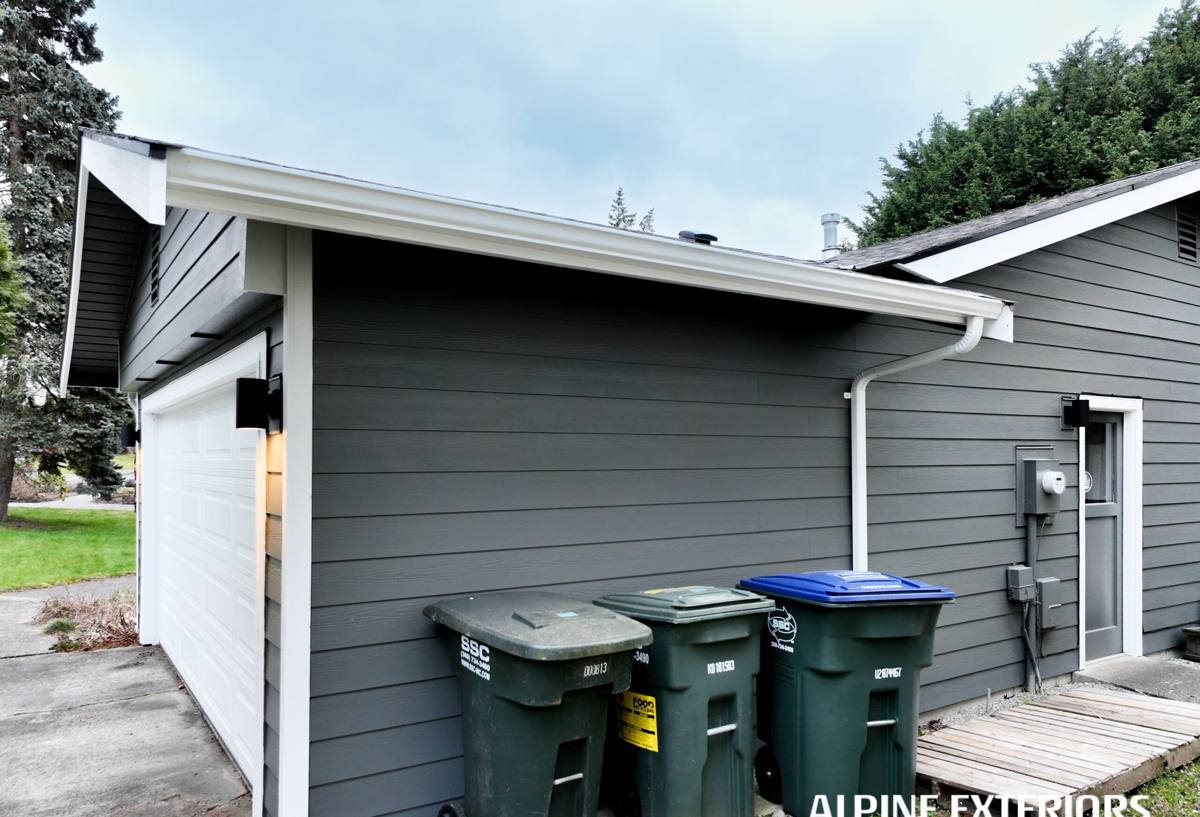
Signs a Magnolia Home Needs Siding Repair, Not Just a Wash
Homeowners often assume moss or discoloration is a cosmetic problem that a pressure wash will solve. Sometimes that's true. Often, by the time moss is visible, moisture has already been working on the siding underneath for a while. Here's how to tell the difference.
Soft Spots and Give in the Material
Press gently on siding near the ground, under eaves, or anywhere moss has been growing for more than a season. If it flexes, feels spongy, or crumbles slightly at an edge, moisture has gotten past the surface and into the substrate. This is common on older wood-based sidings and on any siding where caulking has failed at a seam.
Cracking, Buckling, or Bowing
Cracks that run along a board, panels that bow away from the wall, or boards that have visibly buckled usually mean water got behind the siding and either swelled the material or rotted the sheathing behind it. This isn't a paint problem — it's a moisture problem, and painting over it won't fix anything.
Paint Failure in Specific Patterns
Peeling or bubbling paint that's concentrated on one side of the house — typically the side facing prevailing wind and rain — is a strong sign of driving rain intrusion rather than simple age. Uniform fading across the whole house is normal weathering; localized failure is a symptom.
Persistent Moss and Dark Staining
Moss that keeps coming back within weeks of cleaning, especially on north-facing or shaded walls, means the surface is staying wet longer than it should. That's often a combination of siding condition, poor drainage, and tree or roof shading that never lets that section dry.
What a Correct Siding Repair Actually Involves
A repair that's done right is not just pulling one damaged board and nailing in a replacement. It starts with figuring out why that section failed in the first place — because if the underlying cause isn't addressed, the same spot fails again in a year or two.
- Identify and remove all compromised material, not just what's visibly damaged — rot and moisture often extend beyond the obvious problem area
- Check the water-resistive barrier and flashing underneath for damage or gaps once siding is removed
- Inspect for any sheathing damage that needs to be addressed before new siding goes back on
- Correct the underlying issue — bad flashing, a failed seam, missing kick-out flashing, or improper lap — not just replace the material
- Match replacement material, profile, and reveal to the existing siding as closely as possible
- Reseal and refinish so the repair is weathertight and blends with the surrounding wall
Skipping any of these steps is how you end up with a repair that looks fine for a season and then fails again in the same spot.
Why We Don't Patch With Whatever Material Is Handy
It's tempting, when repairing a small section of siding, to just find something close enough and patch it in. We don't do that. Every repair we perform uses James Hardie fiber cement — the same product line we install on full projects — because mixing materials on a wall creates long-term problems that outweigh the short-term convenience.
Fiber cement doesn't absorb water the way wood does, so it won't swell, rot, or feed the kind of persistent moss growth that keeps homeowners cleaning the same wall every year. It's non-combustible, which matters for insurance and safety, not just appearance. And Hardie's ColorPlus factory finish is engineered to hold color and resist the exact kind of moisture cycling that Puget Sound weather puts siding through — repeated wetting from rain, drying between storms, and repeated freeze-thaw stress in colder stretches.
Patching a fiber cement wall with a piece of cedar, primed spruce, or a vinyl scrap might match visually for a little while, but the two materials expand, contract, and absorb moisture differently. That mismatch shows up as gaps, uneven weathering, or a patch that fails faster than the surrounding wall. If your existing siding isn't Hardie, we'll talk honestly about whether a like-for-like patch makes sense or whether the affected section is a good candidate to transition to Hardie now rather than repeating the same repair later.
Common Trouble Spots We See on Magnolia Homes
Bluff-Facing and Water-Facing Walls
Elevated lots with unobstructed exposure toward the water take the brunt of both salt air and wind-driven rain. These walls typically show wear first and need closer inspection during any repair visit, even on sections that look fine at a glance.
North-Facing and Shaded Sections
Walls that stay in shade for most of the day, especially where mature trees or a neighboring structure block sun and airflow, are where moss takes hold hardest and dries out slowest. These sections deserve a longer look even if the damage isn't obvious from the ground.
Aging Original Siding
A lot of homes in this part of Seattle are older housing stock, and many still carry original wood siding or older replacement products that were never rated for this level of sustained moisture exposure. These often show multiple small failure points rather than one obvious problem, which is why a full assessment matters more than a quick spot-fix.
How We Handle a Magnolia Repair Call
We keep the process straightforward because homeowners don't need a runaround for what should be a clear job.
- On-site assessment — we walk the exterior, check moisture levels with a meter where damage is suspected, and identify every affected section, not just the one that prompted the call
- Honest scope discussion — we tell you plainly whether this is a targeted repair, a larger section replacement, or something that points toward a bigger issue behind the wall
- Material match or upgrade plan — we confirm whether we can match existing siding or whether transitioning the repaired section to Hardie is the better long-term move
- Repair execution — remove compromised material, address the underlying moisture path, install and finish the replacement correctly
- Cleanup and walkthrough — we leave the site clean and show you exactly what was done and why
What Affects the Cost of a Siding Repair
Repair costs vary a lot based on cause and extent, and we'd rather explain the real drivers than throw out a number that doesn't hold up once we're actually on the roofline or scaffold.
| Factor | Why It Matters | Effect on Scope |
|---|---|---|
| Extent of hidden moisture damage | Rot often extends past the visible section | May require removing more material than initially expected |
| Wall accessibility | Steep lots and elevated water-facing walls often need lift or scaffold access | Adds labor and equipment time |
| Existing siding material | Matching old wood, LP, or vinyl is harder than matching Hardie | May push toward partial replacement instead of a patch |
| Underlying cause | Failed flashing or missing kick-out flashing needs correction, not just a cosmetic fix | Adds a repair step but prevents recurrence |
| Number of affected sections | Salt air and shade exposure often damage more than one wall at once | Bundling repairs in one visit is usually more efficient than repeat calls |
Keeping Repaired Siding From Failing Again
A correct repair should hold up for years, but a few habits make a real difference in a climate that stays damp as much as Seattle's does.
- Clean moss and organic buildup at least once a year, more often on shaded or north-facing walls
- Keep gutters clear so overflow doesn't run down the siding face
- Trim back vegetation that keeps a wall section shaded and slow to dry
- Check caulking at seams, trim, and penetrations annually, especially after a harsh winter
- Address any new soft spots or cracking early — small repairs stay small if caught quickly
Why Local Experience on This Peninsula Matters
Magnolia's exposure isn't uniform — a wall that takes a beating on one lot might be fully sheltered a few blocks away depending on elevation and orientation toward the water. A crew that already works this neighborhood knows to check the water-facing and shaded sections closely, understands how Seattle's permitting and weather windows affect scheduling repair work, and isn't guessing at how fast moss comes back on a given exposure. That local pattern recognition is what separates a repair that actually solves the problem from one that just covers it up until the next wet season.
If you're seeing moss that won't quit, soft spots, cracking, or paint failure on your Magnolia home, we're happy to come take an honest look. The estimate is free, there's no pressure to do more work than the house actually needs, and we'll tell you straight whether it's a repair, a partial replacement, or something to keep an eye on.