 Seattle
 Siding Repair Is a Different Job Than Siding Installation
A lot of contractors treat a repair call the same way they'd treat a new install — patch the visible damage, match the paint as best they can, and move on. That approach misses what actually causes most Kirkland homeowners to call about siding in the first place: a small, visible problem is usually a signal that something behind the wall has been wrong for a while. Doing a repair correctly means understanding why that section failed before touching it, not just replacing what's broken and hoping the cause fixed itself.
Kirkland sits on the shore of Lake Washington in King County, and homes here deal with a Pacific Northwest marine climate that's tougher on exterior materials than it looks from the street. Moisture-laden air moving in off Puget Sound, combined with the humidity that sits over the lake itself, keeps siding damp longer than in drier parts of the country. That has real consequences for how repairs should be diagnosed and done, not just how they look when finished.
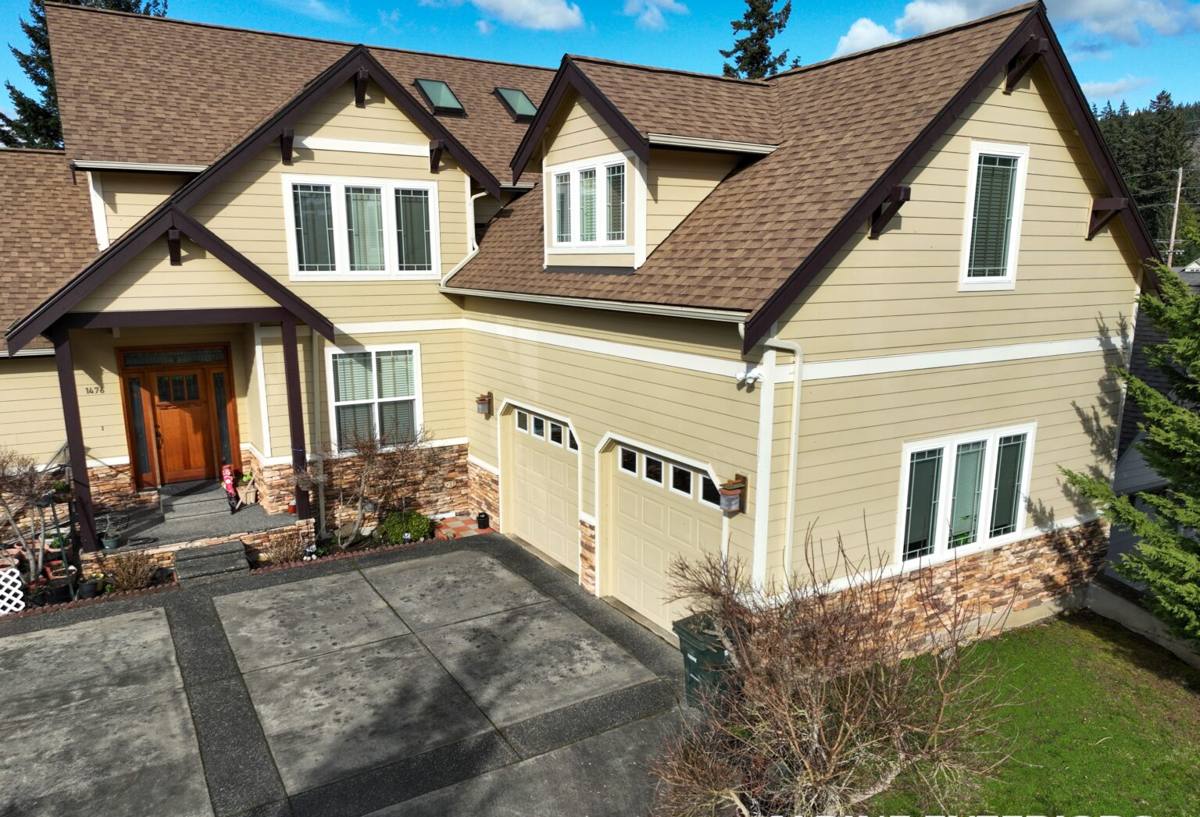
What Kirkland's Climate Does to Siding Over Time
Driving Rain and Wind-Driven Moisture
Storm systems moving through the Puget Sound area regularly push rain sideways into walls instead of straight down. That matters because siding, trim, and flashing are designed primarily to shed water falling downward — wind-driven rain tests seams, laps, and corners in ways gravity alone never would. Homes with exposure to prevailing weather, or with limited roof overhang protecting the wall below, tend to show wear first in these spots.
Salt-Influenced Marine Air
Even away from direct waterfront, marine air carried inland off Puget Sound accelerates corrosion in fasteners, flashing, and other metal components over time. Once a fastener starts to corrode, it loses holding strength and can open a small gap at the point where it penetrates the siding — exactly the kind of entry point that gets worse with each storm rather than better.
A Long Moss and Mildew Season
Mature tree canopy is common throughout Kirkland's older and established residential areas, and the shade it creates keeps north-facing and tree-shaded walls damp well past the point where sunnier walls have dried out. Combined with the region's mild, wet winters, that adds up to a moss and mildew season that can run most of the year on the shadiest sides of a house. Organic growth doesn't just look bad — it holds moisture against the siding surface, extending every wet cycle the material goes through.
Signs a Section of Siding Needs Repair
Most homeowners notice siding problems well before they call, but it's common to assume a small issue can wait. Some of these signs point to something that's still a straightforward repair; left alone, they tend to become bigger jobs.
- Soft, spongy, or discolored siding when pressed, especially near the bottom of walls or below windows
- Visible cracking, splitting, or buckling in individual boards or panels
- Paint that's peeling, bubbling, or failing in one concentrated area rather than evenly across the house
- Persistent moss or dark streaking on the same section of wall no matter how often it's cleaned
- Gaps opening up at seams, corners, or trim where caulk has failed or shrunk
- A musty smell or soft drywall on the interior side of an exterior wall
- Rust staining running down from fastener heads or metal trim
Any one of these can be a contained repair if it's caught early. The risk is in waiting, since moisture problems behind siding tend to spread outward from the original entry point rather than staying put.
What a Correct Repair Actually Involves
Replacing a damaged board or panel is the easy, visible part of a repair. The part that determines whether the repair actually lasts happens underneath it.
Finding the Actual Cause, Not Just the Symptom
Before any siding comes off, the damaged section and the area around it need a real inspection — checking for a failed flashing detail, a gap in the water-resistive barrier, a clogged gutter dumping water onto a wall, or grade sloped toward the foundation instead of away from it. Replacing siding without addressing the underlying cause just resets the clock on the same failure.
Checking What's Behind the Siding
Once a section is opened up, the sheathing and water-resistive barrier behind it should be inspected for hidden damage. Sometimes the visible siding damage is minor but the sheathing behind it is already soft or delaminating, which changes the scope of the repair. Skipping this step is one of the most common ways a "repair" fails again within a year or two.
Matching Material and Finish
A repair that fixes the underlying problem but looks obviously patched isn't a job done well either. Matching profile, reveal, and color as closely as possible — and knowing when an older product genuinely can't be matched and a larger section needs to be replaced instead — is part of doing the work honestly rather than talking a homeowner into more than the situation calls for.
Re-Sealing and Re-Flashing Correctly
Every repair is an opportunity to correct a detail that was wrong the first time. That means proper flashing sequencing at any penetration in the repaired area, correctly lapped house wrap, and sealed cut edges — not just caulk smeared over the seam where new material meets old.
Repair vs. Full Re-Side: How We Decide
Not every siding problem calls for a full re-side, and not every isolated repair is the right long-term answer either. The table below covers the factors that typically drive that decision.
| Factor | Favors Targeted Repair | Favors Full Re-Side |
|---|---|---|
| Extent of damage | Isolated to one or two wall sections | Recurring across multiple elevations |
| Underlying cause | Single identifiable issue (flashing, gutter, grade) | Systemic water-resistive barrier failure |
| Age and condition of existing siding | Siding is otherwise sound and within its service life | Siding is near end of life or already discontinued/hard to match |
| Material match | Current product is still available or close enough to match | Product is obsolete or visibly mismatched after patching |
| Cost over time | Lower upfront cost, addresses the immediate issue | Higher upfront cost, resets the whole wall's service life at once |
We'll give a straight answer on which side of this table your situation falls on, including when a repair is genuinely the right call rather than defaulting to a bigger job than you need.
Why We Only Work With James Hardie Fiber Cement
When a repair does call for new material — whether patching a section or replacing a full wall — we install James Hardie fiber cement rather than vinyl, LP SmartSide, or wood-based products. Fiber cement is dimensionally stable and doesn't swell, wick, or delaminate the way wood-based sidings can after repeated wet-dry cycling, which matters in a climate that keeps materials damp longer than average. It's also non-combustible, holds its ColorPlus factory finish for years without repainting, and Hardie's HZ product lines are engineered for the moisture and temperature swings of climates like this one. That doesn't mean other materials can't be repaired or matched when that's what a home already has — but when we're recommending new siding, Hardie is what we put on the wall and what we stand behind.
Our Process for a Kirkland Repair Call
- Inspection: We look at the damaged area and the surrounding wall, checking gutters, grade, flashing, and any related moisture sources — not just the visible symptom.
- Diagnosis: We identify the actual cause of the failure and explain it in plain terms, including whether it's contained or likely to recur elsewhere on the house.
- Scope and estimate: We lay out what a proper repair involves, what it costs, and where a full re-side would make more sense instead, so the decision is yours to make with full information.
- Repair: We remove the affected material, inspect and repair anything compromised behind it, correct any flashing or drainage issue at the source, and install matched or new material to spec.
- Final check: We walk the finished area with you, confirm the fix addresses the original cause, and answer any remaining questions before we consider the job done.
Why Hiring a Crew That Already Works in Kirkland Matters
Siding repair work benefits from local familiarity in ways that are easy to underestimate. Kirkland has its own permitting and inspection process separate from neighboring King County jurisdictions, and some neighborhoods and HOAs here have their own exterior design guidelines that affect what color and material changes are allowed on a repair. A crew that regularly works in the city already knows how that process runs and won't lose time figuring it out mid-project.
Mature landscaping is common throughout Kirkland's established neighborhoods, and working around it — protecting root systems, navigating tight side yards, managing scaffolding near trees — takes a level of care that crews unfamiliar with the area sometimes skip to save time. And because so much of the region's siding damage traces back to the same handful of climate-driven causes — driving rain, marine air, and long moss seasons — a crew that sees this pattern repeatedly across Kirkland homes diagnoses it faster and more accurately than one seeing it for the first time.
Getting an Honest Second Opinion
If you're not sure whether what you're looking at is a quick repair or something bigger, that uncertainty is normal — it's genuinely hard to tell from the outside how far a moisture problem has traveled behind the wall. We'd rather look at it in person and tell you honestly what we find, including if the answer is that it's a smaller job than you expected.
If you have a section of siding that's cracking, staining, holding moss, or just looks off, we're happy to take a look and give you a straight assessment. Reach out below for a free, no-pressure estimate.