 Seattle
 Kirkland Homes Face a Specific Set of Siding Challenges
Kirkland sits in one of the wetter, greener corners of King County, and that combination is tougher on exterior siding than most homeowners realize. The marine-influenced air moving through the greater Seattle region carries persistent moisture even on days without visible rain. Add long stretches of driving rain through fall and winter, heavy tree cover in many neighborhoods, and a moss and algae season that can stretch for months, and you have an environment that punishes the wrong siding material or a sloppy installation. Siding here doesn't just need to look good on day one — it needs to shed water correctly, resist organic growth, and hold its finish through repeated wet-dry cycles for decades.
This page focuses specifically on fiber cement siding for Kirkland properties: what the climate demands, what a correct installation actually involves, how our process works, and why it matters to hire a crew that already understands this area rather than a general contractor working outside their usual territory.
Why Fiber Cement Holds Up Where Other Materials Struggle
Wood siding — cedar, primed spruce, and similar products — looks good when new but requires ongoing paint maintenance and is vulnerable to moisture intrusion at seams, corners, and fastener points. In a climate with this much sustained dampness, wood siding that isn't perfectly maintained starts to show rot, cupping, and paint failure years before it should. Vinyl siding sheds water reasonably well but flexes with temperature swings, can crack in cold snaps, and its seams and J-channels give moss and algae plenty of places to take hold. Neither material is "bad" outright — but both come with real maintenance trade-offs that this climate makes worse, not better.
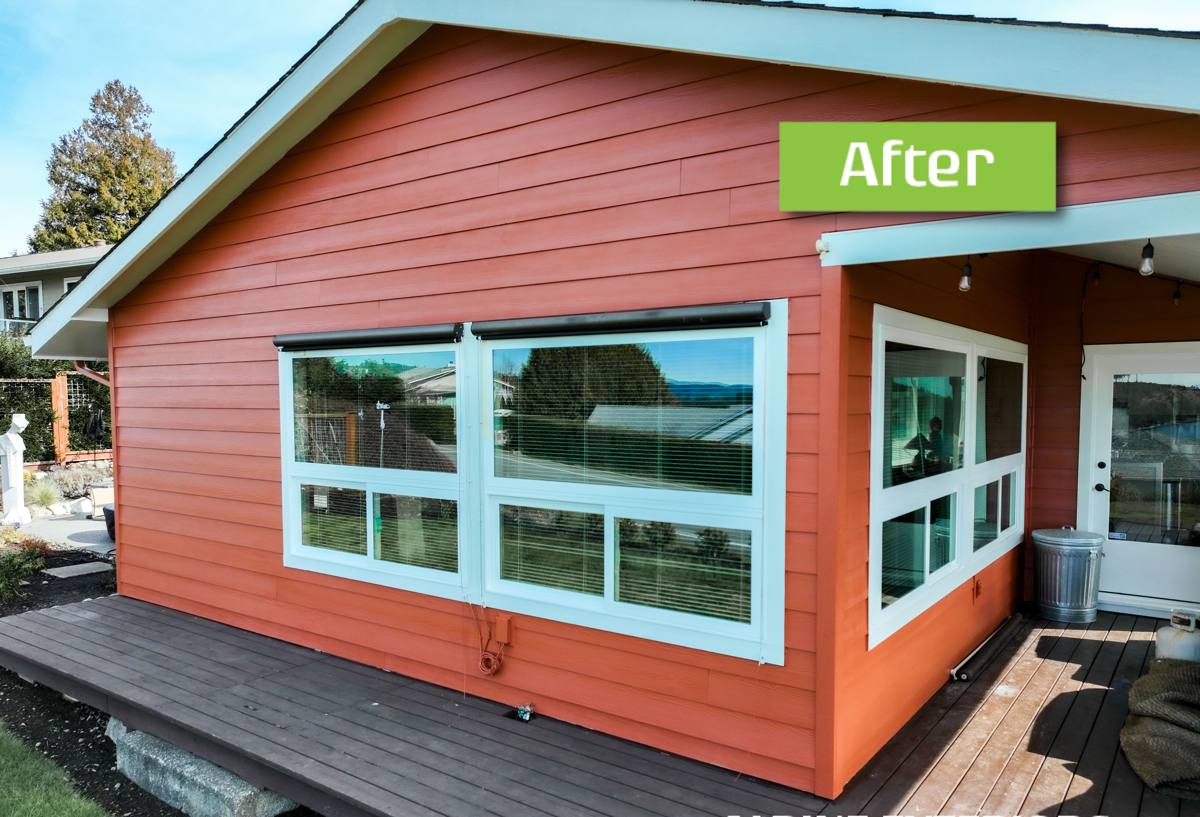
Fiber cement is a different category of material. It's a composite of cement, sand, and cellulose fiber, engineered to be dimensionally stable — it doesn't expand and contract the way wood or vinyl does, which means fewer stress points where water can work its way in over time. It's also non-combustible, resists impact better than vinyl, and takes a factory-applied finish that doesn't rely on the homeowner repainting every few years to stay protected.
Why We Install Only James Hardie Products
We standardized on James Hardie fiber cement siding exclusively. We don't install LP SmartSide, vinyl, Cemplank, Allura, or unfinished wood siding — not because those products have no merit, but because after years of doing this work in this specific climate, Hardie's combination of moisture engineering, factory finish, and long-term warranty support is what we're willing to put our name behind. Products like LP SmartSide use an engineered wood substrate that, while treated, still relies on wood fiber at its core — a material category that behaves differently in sustained damp conditions than true fiber cement. Vinyl's seams and thermal movement create long-term maintenance issues we'd rather not hand a homeowner. We'd rather install one product correctly and stand behind it than offer several and hedge our recommendation.
James Hardie's HZ5 Line and Why the Zone Rating Matters
James Hardie engineers its siding to different regional moisture and temperature profiles, sold under HZ (HardieZone) designations. The Pacific Northwest, including King County and Kirkland, falls into the HZ5 zone — engineered specifically for climates with significant year-round moisture exposure. That's not a marketing detail; it affects the actual composition and moisture resistance of the board itself. Installing siding engineered for a drier, more moderate climate in a region like this one is exactly the kind of mismatch that shortens a siding job's real lifespan, regardless of how well it's installed.
ColorPlus Factory Finish
Most of our installs use Hardie's ColorPlus finish — a baked-on, factory-applied color coat that's more consistent and more weather-resistant than field-applied paint. It matters here specifically because it removes one of the biggest maintenance liabilities in a wet climate: a finish that was applied on-site, in variable weather, by hand. ColorPlus finishes also come with their own dedicated finish warranty, separate from the substrate warranty, which is a meaningfully different guarantee than "we painted it and it should hold."
What a Correct Fiber Cement Installation Actually Involves
Fiber cement siding is only as good as the installation behind it. A huge share of the siding failures we get called out to inspect aren't material failures — they're installation shortcuts that let water in behind a perfectly good product. A correct job includes:
- A properly lapped, continuous weather-resistant barrier installed before any siding goes on
- Correct flashing at every window, door, and roofline transition — the single most common failure point on older installs
- Proper fastener placement and depth, per Hardie's published installation specifications, not just "close enough"
- Correct expansion gaps at butt joints and trim, sized for the material and climate
- Rain-screen or drainage detailing where the wall assembly calls for it, so incidental moisture behind the siding has somewhere to go
- Sealant only where Hardie's specifications call for it — over-caulking is a common mistake that traps moisture rather than shedding it
Skipping any one of these doesn't usually cause a visible problem immediately. It shows up two, five, or ten years later as staining, soft trim, or a section of siding that has to come off to find out what went wrong underneath. That lag is exactly why installation quality matters more than most homeowners expect when they're comparing bids.
Our Process for a Kirkland Fiber Cement Project
We run the same disciplined process on every job, adjusted for the specifics of the home:
- On-site assessment — we walk the exterior, check the condition of existing siding, sheathing, and trim, and look for any moisture damage that needs to be addressed before new siding goes on.
- Scope and estimate — a written estimate covering material, labor, removal/disposal of old siding, and any carpentry repair needed underneath.
- Weather barrier and flashing — installed or repaired to current standards before a single course of siding goes up, since this layer does most of the real water-management work.
- Siding installation — HardiePlank or the appropriate Hardie product installed to manufacturer specification, including fastener schedule, gapping, and flashing integration.
- Trim, caulking, and touch-up — finished with Hardie trim products and color-matched sealant only where specified.
- Final walkthrough — we review the completed work with the homeowner before calling the job done.
Cost Factors for a Kirkland Fiber Cement Project
Every home is different, and we don't quote pricing without seeing the property, but these are the main variables that move a Kirkland fiber cement project up or down in cost:
| Factor | Why It Affects Cost |
|---|---|
| Removal of existing siding | Tear-off, disposal, and any sheathing repair found underneath add labor and material beyond a straightforward re-side |
| Home size and wall complexity | More corners, dormers, and roof transitions mean more flashing detail and cut waste |
| Siding profile and plank exposure | Wider or narrower plank reveals and specialty profiles (shingle-style accents, panel siding) affect material and labor time |
| Trim and color complexity | Multiple ColorPlus colors, accent trim, and custom detailing add coordination and material cost |
| Site access | Steep lots, limited driveway access, or dense landscaping common in some Kirkland neighborhoods can slow staging and setup |
| Underlying moisture damage | Rot or compromised sheathing found once old siding comes off requires repair before new siding can go on correctly |
Maintaining Fiber Cement Siding in This Climate
One of the real advantages of correctly installed Hardie siding is how little maintenance it needs compared to wood — but "little" isn't "none," especially with a moss season as long as this region's. A simple annual routine keeps siding performing the way it's designed to:
- Rinse the siding down once a year, focusing on north-facing and shaded walls where moss and algae take hold fastest
- Keep gutters clear so overflow water isn't running down the siding face repeatedly
- Trim back vegetation and tree cover that keeps a wall surface damp and shaded longer than the rest of the house
- Inspect caulking annually at trim and penetration points, and address any cracking before it becomes a water path
- Watch for moss or algae buildup at the base of walls near grade, where splashback keeps siding wetter longer
Why Hiring a Crew That Already Works in Kirkland Matters
Siding work in this region isn't generic. A crew that regularly works Kirkland and the surrounding King County communities already understands the permitting expectations, the moisture patterns specific to shaded and waterfront-adjacent lots, and the kind of flashing and drainage detail that this much sustained rain actually requires — not just what a general installation guide says is the minimum. That experience shows up in the small decisions made on-site: how a corner is flashed, where a rain-screen gap is added even though it isn't strictly required, how much lap is built into a barrier at a roof-to-wall transition. Those are the details that separate a siding job that looks right for the first year from one that performs correctly for the next thirty.
If you're planning a re-side or new construction project in Kirkland, we'd be glad to take a look at your home and put together a straightforward, no-pressure estimate. There's a form below — reach out and we'll get back to you with next steps.