 Seattle
 What Kirkland Storms Actually Do to a Roof
Kirkland sits right up against Lake Washington, and that location shapes how weather hits local roofs. Winter and early spring windstorms roll across the water and pick up speed before they hit the hillside neighborhoods, driving rain sideways under shingle edges instead of straight down where flashing and underlayment are built to handle it. Add in the broader Puget Sound region's salt-tinged marine air, and you get roofing materials that corrode and fatigue faster than the same products would in a drier inland climate. None of this means every storm causes damage that's visible from the ground. A lot of what we get called out for in Kirkland is damage that's been quietly working on a roof for weeks before anyone notices a stain on the ceiling.
Wind Off the Lake and Driving Rain
Wind damage to a Kirkland roof rarely looks like a missing section of shingles you can spot from the driveway. More often it's a handful of tabs lifted just enough to break their seal, a ridge cap that's shifted a quarter inch, or nails that backed out under repeated flexing. Once a shingle's seal is broken, wind-driven rain doesn't need a big gap to get underneath it — a fraction of an inch is enough when the wind is pushing water uphill against gravity instead of letting it run off.
The Moss Season Nobody Talks About Until It's a Leak
Western Washington's long, wet moss season is a slower kind of storm damage, but it's just as real. Moss and algae hold moisture against the roof surface for months at a time, and on shaded, north-facing slopes — common on the wooded lots around Kirkland — that moisture works into granule loss, lifted shingle edges, and eventually soft decking underneath. A single windstorm can then be the thing that finally opens up a spot that moss has been softening for a year or two. That's why we always look past the obvious storm damage to check for moss-related wear nearby; treating one without the other usually means a callback.
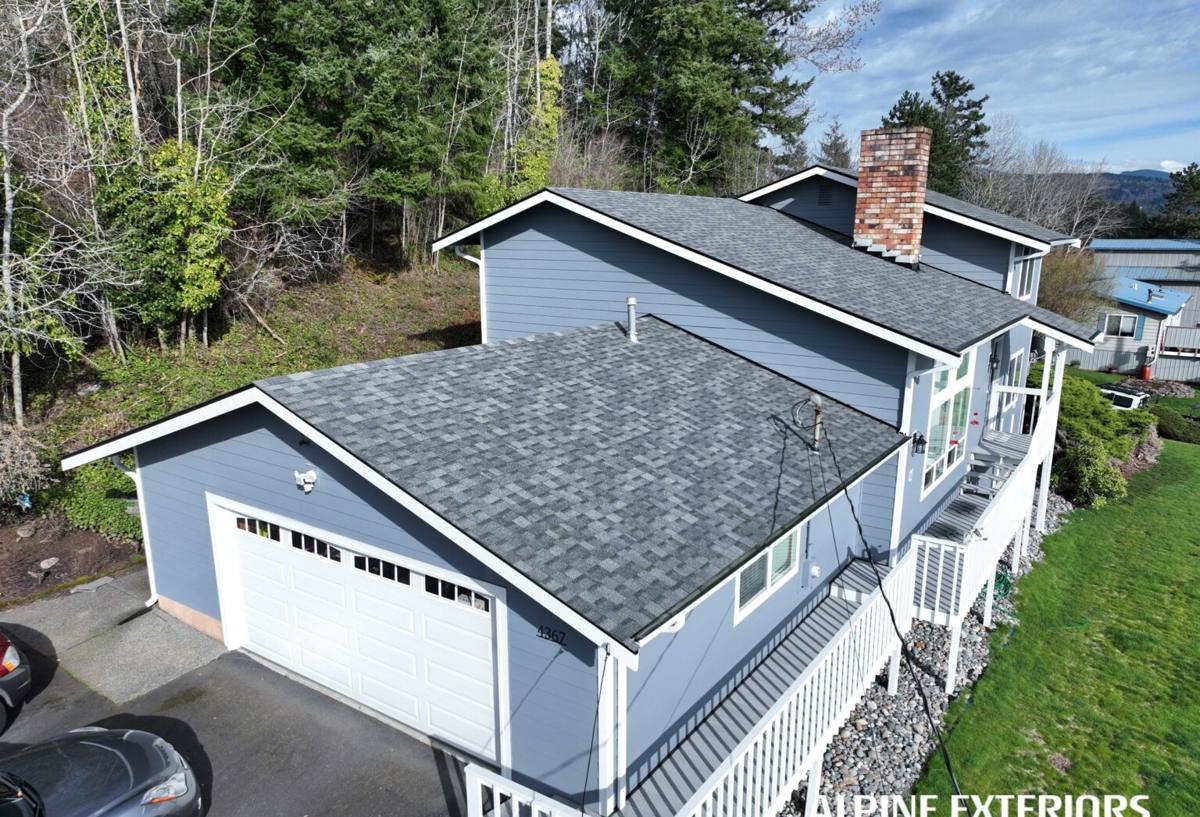
How to Tell You Have Storm Damage (Even When Nothing Looks Wrong)
Most homeowners call us either right after a bad windstorm or after they've noticed a stain, but a fair number of legitimate storm claims start with something small. Here's what we tell Kirkland homeowners to actually check after a significant wind or rain event:
- Granules collecting in gutters or at downspout outlets — a sign of accelerated shingle wear, not just normal shedding
- Shingles that look curled, lifted, or slightly out of line with their neighbors, even if none are missing
- Soft or spongy spots when the roof is walked, which usually means the decking underneath has taken on water
- New or worsening water stains on ceilings or upper-floor walls, especially near chimneys, skylights, or valleys
- Daylight visible through the roof deck from inside the attic
- Bent, creased, or missing flashing around vents, chimneys, and roof-to-wall transitions
- Debris strikes — branches or heavier limbs that hit the roof, even if they've since been cleared away
If more than one of these shows up after a storm, it's worth a proper inspection rather than waiting to see if it gets worse. Storm damage on a roof rarely improves on its own between one Puget Sound weather system and the next.
What a Correct Storm Damage Repair Actually Involves
Assessment Before Anything Gets Fixed
A correct repair starts with figuring out how far the damage actually extends, not just patching what's visible from the ground. That means getting on the roof, checking the decking underneath compromised shingles, and tracing water stains back to their actual entry point — which is often several feet from where the stain shows up inside the house, since water travels along rafters and sheathing before it drips. Skipping this step is the most common reason a "repaired" roof leaks again at the next storm.
Matching Repairs to the Rest of the Roof
Storm repairs should blend into the existing roof, not just seal the hole. That means matching shingle type, color, and exposure to what's already installed, using flashing details consistent with the original roof age and slope, and making sure new material ties into old material correctly at every seam rather than just being caulked over the top. A patch that doesn't match the surrounding roofline is usually a sign the repair was done fast rather than done right.
Repair vs. Replace: How We Make That Call
Not every storm-damaged roof needs a full replacement, and not every roof is a good candidate for another round of patching. We walk Kirkland homeowners through the same factors every time:
| Factor | Points Toward Repair | Points Toward Replacement |
|---|---|---|
| Roof age | Under 10-12 years, still within expected lifespan | Near or past the material's rated service life |
| Extent of damage | Localized to one slope or a small section | Spread across multiple slopes or repeated repair history |
| Decking condition | Sound, no soft spots found on inspection | Soft, delaminated, or water-stained decking in several areas |
| Moss/algae history | Minor, treatable, isolated | Long-term coverage with granule loss across large areas |
| Underlayment condition | Intact where exposed during the repair | Brittle, torn, or original to a much older roof |
We'd rather tell a homeowner a repair will hold than sell a replacement that isn't needed yet — and we'll say so plainly if a repair genuinely won't hold.
Our Storm Damage Repair Process
- Initial inspection, including attic and decking check where storm damage is suspected but not obvious from the exterior
- Photo documentation of damage, useful whether or not an insurance claim is involved
- A written scope explaining exactly what's damaged, what's being repaired, and why
- Temporary weatherproofing (tarping, sealing) if a repair can't happen the same day and the roof is actively leaking
- The repair itself, including any decking replacement, flashing correction, or shingle matching required
- A final walk-through so you can see what was done before we consider the job finished
We size the crew to the job — a lifted ridge cap after a windstorm doesn't need the same time on site as decking replacement after a limb strike, and we'd rather scope it accurately up front than pad the estimate.
Materials We Use — and Why We're Selective
For storm repairs we generally match the existing roof's shingle line where the manufacturer still supports it, since mismatched granule color and exposure age visibly on a roof over the next few years. Where wind resistance matters — which, given Kirkland's exposure off the lake, is most repairs — we favor shingles with a higher wind rating and proper six-nail patterns over the four-nail minimum, even when code would allow less. On flashing, we use metal over adhesive-only strip products in high-exposure areas like valleys and chimney saddles; metal flashing costs more up front but handles the freeze-thaw and wind-driven rain cycles this region gets far better over time, and it's less sensitive to installer error than a fully adhered membrane. These are our standards, not a claim that other approaches can't work — we just don't think they hold up as well against this specific climate, and we'd rather build that into the repair than have you find out the hard way.
Storm Damage and Insurance Claims
Many storm repairs in King County involve an insurance claim, and a documented, well-scoped repair makes that process smoother on both ends. We provide photo documentation and a written scope of damage that homeowners can hand directly to their adjuster, and we're happy to walk the roof with an adjuster if that's useful. What we won't do is inflate a scope to match a deductible or claim damage that isn't actually storm-related — that approach tends to cause more problems with a claim than it solves, and it's not how we want to do business.
Why a Crew That Already Works Kirkland Roofs Matters
Roofing crews who mostly work drier inland climates sometimes underbuild for what Puget Sound storms actually do — using the code minimum nail pattern, skipping ice-and-water shield in valleys, or not accounting for how much moss pressure a shaded slope near the lake will see over a few years. A crew that regularly works Kirkland and the surrounding King County neighborhoods has already seen how local roofs age and fail, and builds repairs to match those conditions rather than a generic spec sheet. That local pattern recognition is often the difference between a repair that holds through the next windstorm season and one that reopens the following winter.
If you've had storm damage — or you're just not sure whether that stain on the ceiling is new — we're glad to take a look. The estimate is free, there's no pressure to sign anything on the spot, and you'll get a straight answer about whether you need a repair, a replacement, or nothing at all. Use the form below to get started.