 Seattle
 Roof Repair Built for Kirkland's Climate
Kirkland sits right on Lake Washington, and that waterfront position shapes what a roof deals with here. Homes get a steady mix of driving rain off the lake, long stretches of overcast damp weather, and a moss season that can run from fall through spring. None of that is dramatic on its own, but together it adds up to slow, cumulative wear that a lot of homeowners don't notice until water is already inside the attic or running down an interior wall. Roof repair in Kirkland isn't about chasing storm damage the way it might be in other parts of the country — it's about catching what King County's wet climate quietly does to shingles, flashing, and underlayment over time.
We work on roofs throughout Kirkland and the surrounding Eastside, so we see the same patterns street after street: north-facing slopes holding moss longer than the rest of the roof, valleys collecting debris from mature trees, and flashing around chimneys and skylights that's been slowly failing for years without an obvious leak to announce it. Knowing those patterns ahead of time means less guesswork and a repair that actually addresses the cause, not just the symptom.
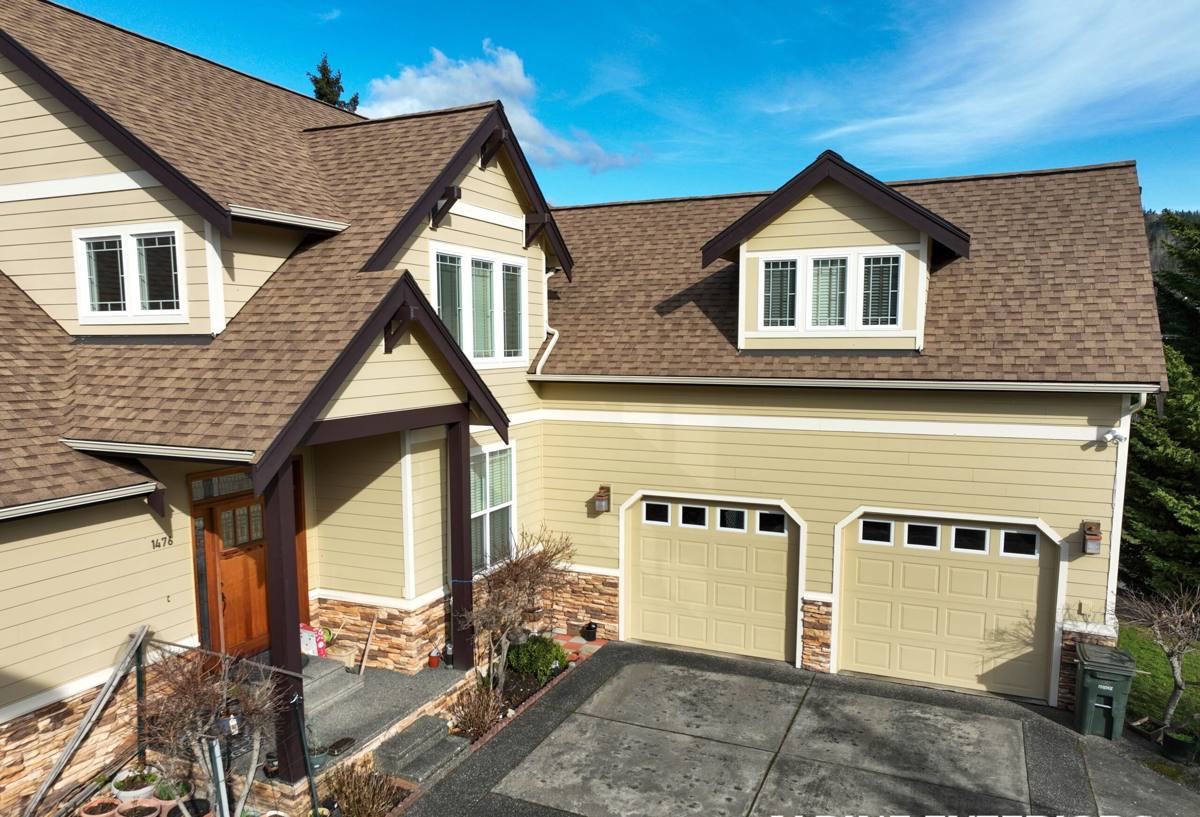
What the Local Climate Does to a Roof
Moss and Organic Growth
Moss is probably the single biggest roof-repair driver we see in this part of Washington. It thrives on shaded, north-facing, and tree-covered slopes that stay damp for days at a time. Left alone, moss lifts shingle edges, holds moisture against the roof deck, and works its way into seams — which is exactly how small leaks get started. Moss removal has to be done carefully; scraping too aggressively can strip granules and shorten the life of shingles that were otherwise fine.
Driving Rain and Wind-Driven Moisture
Storms coming off the lake don't just fall straight down — wind pushes rain sideways under shingle edges, around vents, and into any gap in the flashing. A roof that would shed a light, calm rain without issue can still leak in a wind-driven storm if the flashing details aren't tight. This is why we pay close attention to laps, seals, and fastener patterns, not just whether shingles look intact from the ground.
Prolonged Dampness and Slow Rot
Kirkland doesn't get many hard freezes, but it does get long stretches of gray, damp weather. That kind of sustained moisture is harder on wood and underlayment than a single big storm, because it never really gets a chance to dry out. Roof decking under a failed section of underlayment can soften and rot gradually, which is one reason a "small" leak repair sometimes uncovers a larger area of compromised sheathing once we open things up.
Common Roof Repair Issues We See in Kirkland
- Moss buildup on shaded or north-facing slopes, lifting shingle edges and trapping moisture
- Cracked or deteriorated flashing around chimneys, skylights, and roof-to-wall transitions
- Clogged valleys and gutters from fir needles and leaf debris, causing water to back up under shingles
- Nail pops and lifted shingle tabs from wind exposure near the lake
- Worn or brittle underlayment on older roofs, especially where moss has held moisture for years
- Soft or spongy decking discovered once a leak source is traced back and opened up
- Improperly sealed or aging pipe boots and vent flashing
What a Correct Roof Repair Actually Involves
A roof repair that holds up in this climate is more than patching the spot where water showed up inside the house. Interior stains and drips often show up several feet from the actual entry point, since water travels along rafters and decking before it finds a way through the ceiling. Doing the job right means tracing the leak to its real source, not just the visible symptom.
Our General Process
- Roof inspection — We walk the roof (or use a ladder and binoculars where walking isn't safe) to check shingles, flashing, valleys, vents, and any visible moss or debris buildup.
- Interior check — If there's an active leak, we look at the attic or ceiling to trace water paths and identify how far moisture has traveled from the actual entry point.
- Diagnosis — We identify the specific cause: failed flashing, worn shingles, a clogged valley, moss-related moisture intrusion, or a combination.
- Repair plan and estimate — We explain what we found, what it will take to fix it correctly, and give you a clear, honest estimate before any work starts.
- Repair work — This may include replacing damaged shingles, re-flashing a chimney or skylight, clearing and repairing a valley, or replacing sections of underlayment and decking if moisture has caused rot.
- Moss and debris treatment — Where moss is a contributing factor, we address it as part of the repair so the same failure doesn't recur in a year or two.
- Final check — We confirm the repair area is properly sealed and, where relevant, walk you through what we found and what to watch for going forward.
Repair vs. Replacement: How We Help You Decide
Not every roof issue in Kirkland needs a full replacement, and we're not going to push one on you if a targeted repair will genuinely solve the problem. But we also won't patch over an issue that's likely to fail again soon just to keep the job small. Here's generally how we think through it:
| Factor | Leans Toward Repair | Leans Toward Replacement |
|---|---|---|
| Age of roof | Under 15-20 years, otherwise healthy | Nearing or past expected lifespan |
| Extent of damage | Isolated to one area (a valley, a flashing point) | Widespread across multiple slopes |
| Decking condition | Solid, no rot found | Soft or rotted decking in multiple spots |
| Moss/moisture history | First significant issue | Repeated leaks or moss damage over several years |
| Shingle condition overall | Rest of roof still has good granule coverage | Widespread granule loss, curling, brittleness |
When a repair makes sense, we'll say so plainly. When the underlying roof is genuinely at the end of its useful life, we'll explain why a repair would likely be a short-term fix rather than a real solution, and let you decide from there with full information.
Materials and Craftsmanship Standards
For repair work, we match materials as closely as possible to what's already on the roof — same shingle type and, where we can source it, a close color match — so the repaired section blends in and performs consistently with the rest of the roof. We use flashing details and fastening patterns built for wind-driven rain, since a flashing repair that looks fine but isn't sealed against sideways-blown water will leak again the next time a storm rolls off the lake.
On underlayment and decking replacement, we don't cut corners to save time on a section that's already opened up. If we find rot while addressing a leak, we'll show you what we found and explain the scope of what needs to be replaced rather than covering over compromised wood.
Maintenance That Prevents Repeat Repairs
A lot of roof repair work in Kirkland is preventable with basic seasonal upkeep. A few habits go a long way in this climate:
- Keep gutters and valleys clear of needles and leaves, especially heading into fall
- Have moss addressed early, before it has a chance to lift shingle edges
- Trim back tree limbs that overhang the roof and keep it shaded and damp
- Get a roof looked at after any major windstorm, even if nothing looks obviously wrong from the ground
- Address small leaks quickly — a stain that seems minor now can mean rot is already spreading in the decking
We're happy to point out maintenance issues during a repair visit even when they're not the reason you called, since catching a developing problem early is almost always cheaper and less disruptive than waiting for it to turn into a bigger repair.
Why Local Experience with Kirkland Roofs Matters
A roof repair crew that works across King County regularly sees how differently roofs age depending on tree cover, slope orientation, and proximity to the lake. That local pattern recognition matters when diagnosing a leak — knowing that a particular style of home in this area commonly has a certain flashing detail, or that a north-facing slope with heavy tree cover is almost always where moss-related damage shows up first, saves time and leads to a more accurate diagnosis. It also means we're not learning the region's climate behavior on your roof; we already understand what driving rain and long damp winters do to roofing systems here.
We also know that most homeowners calling about a roof repair are dealing with an active leak or visible damage, which is stressful. Our goal is a clear, honest assessment — what's actually wrong, what it will take to fix it, and a straightforward estimate — without pressure toward unnecessary work.
Get a Free, No-Pressure Estimate
If you're dealing with a leak, noticing moss buildup, or just want a roof checked before the next round of Pacific Northwest storms, we're glad to take a look. Fill out the form below for a free estimate — no pressure, just an honest assessment of what your roof needs.