 Seattle
 Why Renton Windows Take More Punishment Than People Expect
Renton sits close enough to Puget Sound and Lake Washington that homes here deal with a specific mix of weather stress: salt-tinged marine air, long stretches of driving rain off the water, and a moss and algae season that can run most of the year on shaded, north-facing walls. None of that is dramatic on its own, but it adds up. Aluminum window frames corrode faster near the water. Wood sills and jambs stay damp longer under tree cover or on the shaded side of a house. Wind-driven rain finds any gap in old flashing or failed caulk and pushes water sideways, not just down.
Windows are one of the few parts of a house that get tested by all of this at once — sun, wind, rain, temperature swings, and constant humidity. In King County's climate, a window that was installed correctly twenty-five years ago is often still functional but no longer efficient, while a window that was installed poorly ten years ago may already be rotting the framing around it. Replacement isn't just about new glass — it's about resetting the water management and insulation at that opening so it can handle another few decades of this weather.
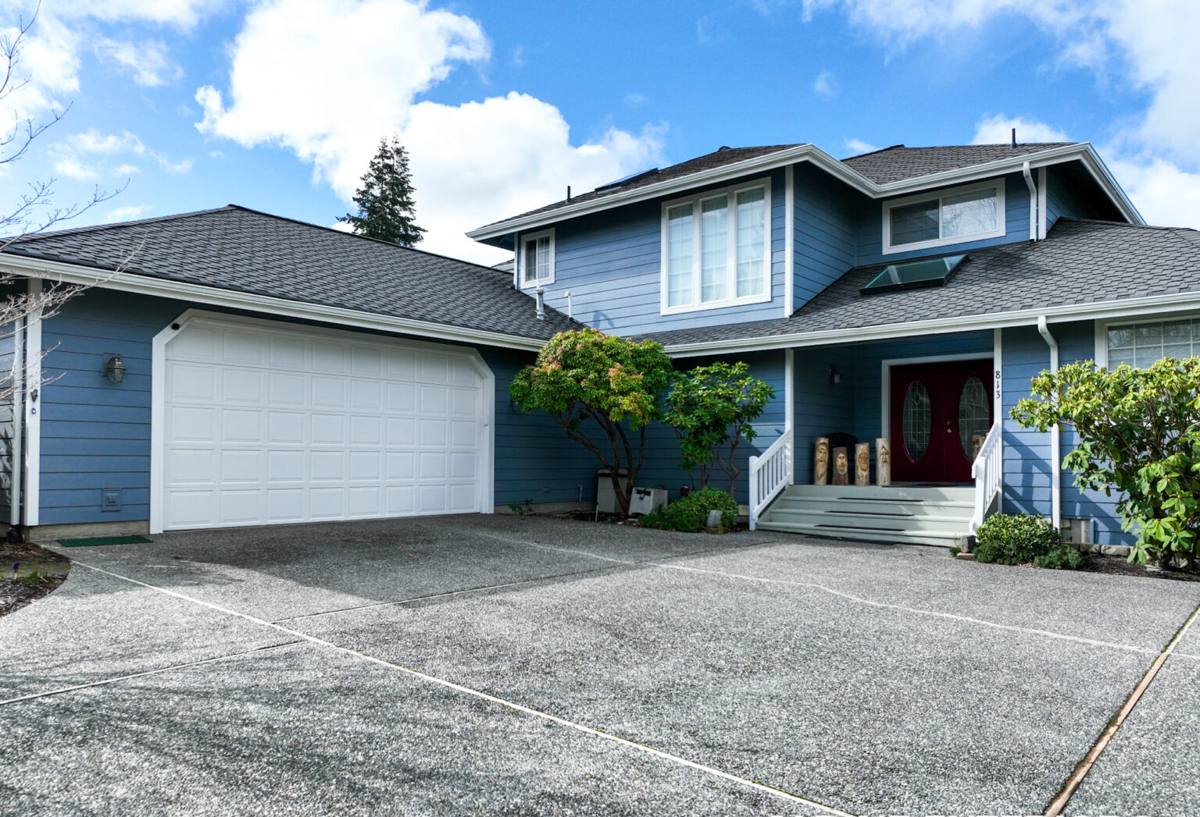
Signs a Renton Home Actually Needs Window Replacement
Not every old window needs to come out immediately. But there are clear signals that replacement — not just a repair — is the right call.
- Fog, haze, or moisture trapped between panes of a double-pane window (the seal has failed and can't be restored)
- Condensation forming on the inside of the glass regularly, especially in colder months
- Visible soft spots, dark staining, or paint bubbling on the wood sill or bottom corners of the frame
- Windows that are painted shut, warped, or take real effort to open and close
- A noticeable draft you can feel with your hand near the frame on a windy day
- Single-pane glass anywhere still in daily use, especially on the west or south side of the house
- Visible moss, algae, or persistent green staining building up on the frame or sill that keeps returning after cleaning
- Street or neighborhood noise that seems louder than it should be for the window's age
If you're seeing two or more of these on the same window, replacement is usually more cost-effective than continuing to patch it.
Why Failed Seals Show Up So Often Here
Insulated glass units rely on a sealed gas gap to perform. Constant humidity and temperature swings — common through a Puget Sound winter — stress that seal more than a drier climate would. Once moisture gets between the panes, there's no fixing it without replacing the glass unit or the whole window.
What a Correct Window Replacement Actually Involves
The window itself is only part of the job. The other half — often the more important half — is how the opening is prepared and sealed before that window ever goes in. This is where a lot of shortcuts happen, and where the water damage from a bad install eventually shows up.
Water Management First
Every replacement opening should get a sloped sill pan or sill flashing so any water that gets past the window drains back outside instead of sitting on the framing. Head flashing and side flashing need to integrate with the existing weather-resistive barrier or siding, not just sit behind trim and hope for the best. This matters more in a region where wind-driven rain is a regular event, not an occasional storm.
Air Sealing and Insulation
The gap between the window frame and the rough opening needs to be insulated — typically with low-expansion foam or backer rod and sealant, not stuffed with fiberglass that does little for air sealing. Over-filling with high-expansion foam can bow the frame and cause the window to operate poorly, so the product and technique matter as much as using "some" insulation.
Exterior and Interior Sealant
Exterior caulking has to be a product rated for continuous outdoor exposure and movement, applied over properly lapped flashing — sealant should be a backup layer, not the only line of defense against water intrusion. Interior sealing and trim work should restore a clean, finished look without covering up an unresolved gap.
Choosing a Frame Material for This Climate
There's no single "best" window material — the right choice depends on the home, the budget, and how much upkeep an owner wants to take on. Here's how the common options hold up in a wet, marine-influenced climate like Renton's.
| Frame Material | How It Handles Local Weather | Maintenance |
|---|---|---|
| Vinyl | Good moisture resistance, no corrosion risk from salt air, solid insulating value | Low — occasional cleaning |
| Fiberglass | Excellent stability in temperature and humidity swings, very durable long-term | Low |
| Wood (clad exterior) | Warm interior look, but exposed wood needs protection from constant moisture | Higher — periodic refinishing of any exposed wood |
| Aluminum | Prone to corrosion near salt air and conducts cold, leading to more interior condensation | Moderate to high |
We don't push aluminum replacement windows in this market — not because the material is inherently bad, but because uncoated or lower-grade aluminum performs poorly against salt air and thermal bridging compared to vinyl or fiberglass, and that shows up as condensation and corrosion over time. If a homeowner wants an aluminum-look profile, there are clad and coated options that perform much better than bare aluminum ever did.
Glass Packages Worth Asking About
For this region, the glass matters as much as the frame. Look for:
- Low-E coatings tuned for the Pacific Northwest (balancing heat retention with glare control on the rare sunny days)
- Argon or krypton gas fill between panes for better insulating value
- A U-factor and condensation resistance rating suited to a marine climate, not a desert one
- Tempered glass where code requires it — near doors, low sills, and other hazard locations
Full-Frame Replacement vs. Insert Replacement
There are two general approaches to replacing a window, and picking the right one depends on the condition of the existing frame.
Insert (Pocket) Replacement
The new window is built to fit inside the existing frame, which stays in place along with the exterior trim and siding. This is faster, less invasive, and usually less expensive — but it only makes sense if the existing frame and sill are still solid and dry.
Full-Frame Replacement
The old window and its frame are removed down to the rough opening, exposing the flashing and framing underneath. This costs more and takes longer, but it's the only option when there's rot, water damage, or a frame that's out of square. It's also the better long-term choice on any wall that's taken on water before, since it lets us actually see and fix what's behind the window.
We'll tell you honestly which one your windows need after a look at the actual condition — not just default to whichever is faster to install.
What Drives the Cost of a Renton Window Replacement
| Factor | Why It Matters |
|---|---|
| Insert vs. full-frame | Full-frame requires more labor, trim work, and sometimes siding repair |
| Frame material and glass package | Fiberglass and upgraded glass cost more upfront but reduce long-term maintenance and energy loss |
| Number of windows and access | Second-story or hard-to-access windows take longer and need more setup |
| Existing damage | Rot repair, resheathing, or re-flashing adds time before the new window can even go in |
| Permitting | Certain replacements, especially egress or structural changes, require permit review |
Broad ranges vary a lot based on these factors, which is why we walk the actual windows before giving a number rather than quoting off a phone call.
Permits and Energy Code in Renton and King County
Straight like-for-like window replacement — same size opening, same use — is often exempt from a separate permit in many King County jurisdictions, but that's not universal, and it's not something to assume on every project. Anything that changes the size of the opening, involves a bedroom egress window, or is part of a larger remodel typically does require permit review. Washington's state energy code also sets minimum performance requirements for replacement windows, which is one more reason "just match what's there" isn't always the right approach — sometimes code requires an upgrade in performance even for a straight swap.
We handle the permit question upfront rather than leaving a homeowner to find out mid-project that something needed sign-off.
How We Handle a Renton Window Replacement Project
- On-site assessment of each window — frame condition, signs of water intrusion, and whether insert or full-frame replacement is the right call
- Honest walkthrough of frame material and glass options suited to your home's exposure (sun side, shade side, wind-facing walls)
- Written estimate covering scope, materials, and any anticipated repair work
- Careful removal of the old window without damaging surrounding siding or interior finishes
- Sill pan flashing, head and side flashing, and proper integration with the existing weather barrier
- Correct low-expansion foam or backer rod and sealant at the gap — not overfilled, not underfilled
- Exterior caulking with a product rated for sustained outdoor exposure, plus interior trim and finish work
- Final walkthrough and operation check on every window before we call the job done
Why a Crew That Already Works Renton Matters
A window replacement crew that works this area regularly already knows what Renton's housing stock tends to look like — the mix of mid-century ranch homes, split-levels, and newer construction common across the Puget Sound suburbs — and what kind of water and moisture issues show up on which sides of a house. That's not something you get from a national franchise crew rotating through on a regional schedule. It also means we're not far away if a question comes up after the install, whether that's a settling sound in cold weather or a question about cleaning a new finish.
Local also means we're used to the permitting expectations in this part of King County and don't have to relearn them project to project. That familiarity shows up as fewer surprises during the job, not just a nicer sales pitch.
Living With New Windows in a Wet Climate
New windows still need a small amount of care in a climate like this. Keep weep holes at the base of the frame clear of dirt and moss so water can drain out as designed. Rinse pollen, salt residue, and grime off the glass and frame a couple of times a year, especially on walls exposed to wind off the water. And keep an eye on the exterior caulk line where the window meets the siding — sealant is a wear item, and catching a cracked bead early is a lot cheaper than dealing with water damage later.
If you're dealing with drafts, foggy glass, or a window that's simply had enough after years of Puget Sound weather, we're happy to take a look. We offer free, no-pressure estimates for Renton homeowners — just fill out the form below and we'll get back to you with a straight answer about what your windows actually need.