 Seattle
 Building Decks That Actually Hold Up in Renton
Renton sits in a part of King County that gets a lot of moisture — long wet winters, a marine layer that rolls through much of the year, and enough shade and dampness in older, tree-lined neighborhoods to keep moss and algae going strong for months at a stretch. A deck built here isn't just outdoor furniture; it's a structure that has to shed water, resist rot, and stay safe underfoot through a lot of gray, damp weeks every year. We build decks in Renton with that reality in mind, not as an afterthought.
A lot of deck problems we get called out to fix didn't start as bad workmanship — they started as decisions that made sense somewhere drier. Untreated fasteners, flat ledger connections with no flashing, decking laid tight against the house, joists sized for a sunny climate instead of a wet one. None of that shows up as a problem in year one. It shows up in year five or six, usually right when a homeowner is ready to sell or host something outdoors.
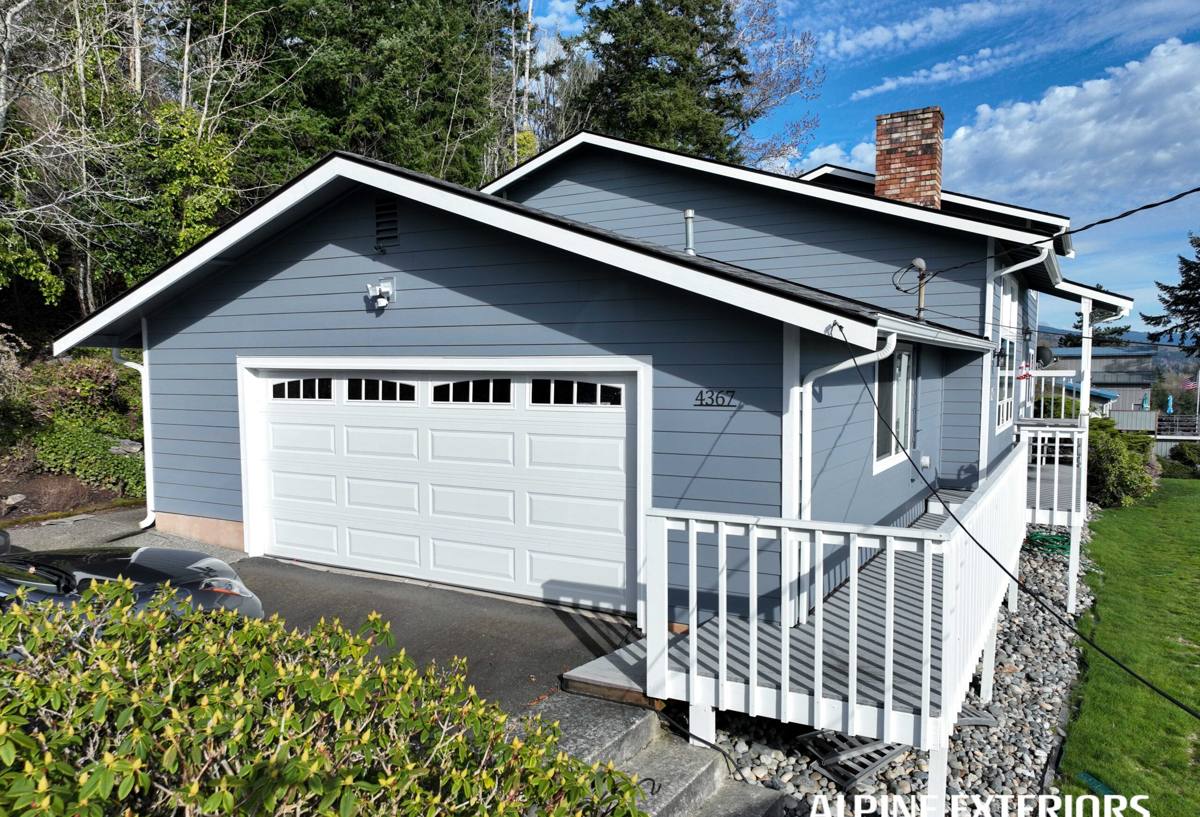
What Driving Rain and Moss Season Do to a Deck
Three things define deck wear in this region, and they compound each other:
- Prolonged dampness — wood and even some composite products stay wet longer here than in drier climates, which is what actually drives rot, not rain itself.
- Driving rain — wind-driven rain gets pushed sideways into ledger connections, railing posts, and any spot where the deck meets the house siding.
- Moss and algae — shaded lots, mature trees, and constant moisture turn deck boards, stairs, and railings green and slick for a good part of the year if the surface and drainage aren't designed to shed water and dry out between rains.
None of these are dealbreakers. They're just things a deck has to be designed and built around — correct slope, the right fasteners, proper flashing at the house connection, and material choices that match how the deck will actually be used and maintained.
What a Correct Deck Build Involves
The Structure Nobody Sees
The framing is where most long-term problems start or get prevented. That means:
- Footings sized and set to the correct depth for our soil and frost conditions, not just poured to "what's always worked."
- Ledger board attachment done with proper structural fasteners and flashing that actually directs water away from the house rim joist — this is the single most common failure point we see on older decks.
- Joist spacing and beam sizing matched to the actual decking material and span, since composite and PVC products often have different span ratings than wood.
- Corrosion-resistant, code-rated hardware throughout — in a climate this wet, cutting corners on fasteners is one of the fastest ways to build a deck that fails early.
The Surface You Actually Use
On top of solid framing, the decking surface needs a slight slope away from the house, gapping appropriate to the material for drainage and expansion, and stair and railing details that meet current code — not just "looks about right." Railings in particular matter here: wet, mossy surfaces make secure footing and solid railings more than a style choice.
Choosing a Decking Material for This Climate
There's no single "best" decking material — there's a best material for how you'll use the deck, how much upkeep you want to do, and your budget. Here's how the common options actually compare for a wet, moss-prone climate like ours:
| Material | Moisture Behavior | Maintenance | Typical Lifespan Here |
|---|---|---|---|
| Pressure-treated wood | Absorbs and releases moisture; needs to dry between rains | Annual cleaning and re-staining/sealing to control moss and graying | 10–15 years with upkeep |
| Cedar | Naturally rot-resistant but still absorbs moisture | Regular sealing to maintain color and resistance | 15–20 years with upkeep |
| Capped composite | Shell resists moisture absorption; core is protected | Periodic washing to keep surface film of algae/moss off | 25–30 years |
| PVC decking | Doesn't absorb water at all | Lowest upkeep; occasional washing | 25–30+ years |
Our general standard: in shaded, damp yards common around Renton, we lean homeowners toward capped composite or PVC for anything low-maintenance, and toward cedar or treated wood only when the homeowner wants that look and is genuinely willing to do the yearly upkeep. That's not a knock on wood — it's an honest trade-off between appearance, cost, and how much time you want to spend on maintenance.
A Note on Uncapped Composite
Older, uncapped composite products can absorb moisture at the surface over time, which in a climate with this much sustained dampness can lead to swelling, staining, or mold growth faster than a capped product. It's why we favor fully capped composite or PVC over uncapped composite when a client wants a low-maintenance deck — it's a maintenance and moisture-behavior decision, not a brand judgment.
Our Deck Building Process
- On-site assessment — we look at the lot's grade, drainage, sun/shade exposure, and how the deck will attach to the house before we talk materials.
- Design and material selection — sizing, layout, railing style, and decking material chosen around how you'll use the space and how much maintenance you want long-term.
- Permitting — we handle the permit application and inspections required for the scope of work, so the deck is built to what actually passes inspection, not just what looks finished.
- Footings and framing — correct footing depth, ledger flashing, joist and beam sizing, and code-compliant hardware throughout.
- Decking, stairs, and railings — installed with proper gapping, fastening, and slope for drainage.
- Final walkthrough — we go over the finished deck with you, including what maintenance (if any) the material you chose will need going forward.
Permits and Code in King County
Most new decks and many significant deck replacements in Renton require a building permit, and inspections at key stages — footings before they're covered, framing before decking goes on. Requirements around guardrail height, baluster spacing, stair rise and run, and footing depth are set by the adopted building code and enforced consistently regardless of who builds the deck. A contractor who skips the permit isn't saving you money — they're passing the risk to you if there's ever an issue with a sale, insurance claim, or safety inspection down the road. We pull permits and handle inspections as a standard part of the job.
What This Means for Older Decks
A lot of decks we're asked to look at in established Renton neighborhoods were built before current code, or without a permit at all. That's not automatically a problem, but if you're planning a significant repair or addition, it's worth having someone confirm what you're building on before investing more money into it.
Maintaining a Deck Through Moss Season
Whatever material you choose, a little seasonal attention goes a long way in this climate:
- Sweep debris and standing leaves off the deck surface regularly, especially in fall — trapped moisture under leaves is what feeds moss and mildew.
- Keep gutters and downspouts near the deck clear so runoff isn't draining directly onto or under the deck surface.
- Wash the deck surface at least once a year with a deck-safe cleaner to remove algae and moss film before it gets slick or embedded.
- Check railings, stair treads, and ledger flashing annually for movement, soft spots, or gaps — small issues here are cheap to fix and expensive to ignore.
- If you have wood decking, re-seal or re-stain on the schedule appropriate to that product — skipping a cycle in a climate this wet accelerates graying and rot.
Why a Crew That Already Works in Renton Matters
Building a deck that holds up here isn't about a special trick — it's about not skipping the boring, unglamorous details that matter in a wet climate: real flashing at the ledger, correctly rated hardware, footings set to the right depth for our soil, and a material choice that matches how much upkeep you actually want to do. A crew that works Renton and the surrounding King County area regularly already knows the inspection process, the drainage issues common to specific lot types in the area, and which materials perform well versus which ones create callbacks two winters later. That experience shows up in fewer surprises during the build and a deck that's still solid a decade in.
If you're planning a new deck or replacing one that's past its prime, we're happy to walk the site with you, talk through material options honestly, and put together a straightforward estimate — no pressure, no upsell. The form below gets you a free estimate whenever you're ready.