 Seattle
 Siding Replacement Built for Renton's Weather, Not Just Any Weather
Renton sits in a part of King County where the terrain does a lot of the talking: lake-adjacent lowlands near Lake Washington, wooded hillside neighborhoods, and the flatter valley floor along the Cedar River. That variety means siding on a Renton home rarely deals with just one microclimate. A hillside lot under mature tree cover holds moisture and shade differently than a more open lot closer to the valley floor, but almost every home in the area shares the same baseline challenge: a long wet season, persistent humidity, and the driving rain that comes with living in the greater Puget Sound region. Add a moss season that can stretch for months on shaded, north-facing walls, and you have a climate that is genuinely hard on exterior materials, not just cosmetically but structurally.
A siding replacement in Renton isn't just about picking a color and a texture. It's about choosing a product and an installation method that can actually stand up to the way water moves across and behind a wall in this region, year after year.
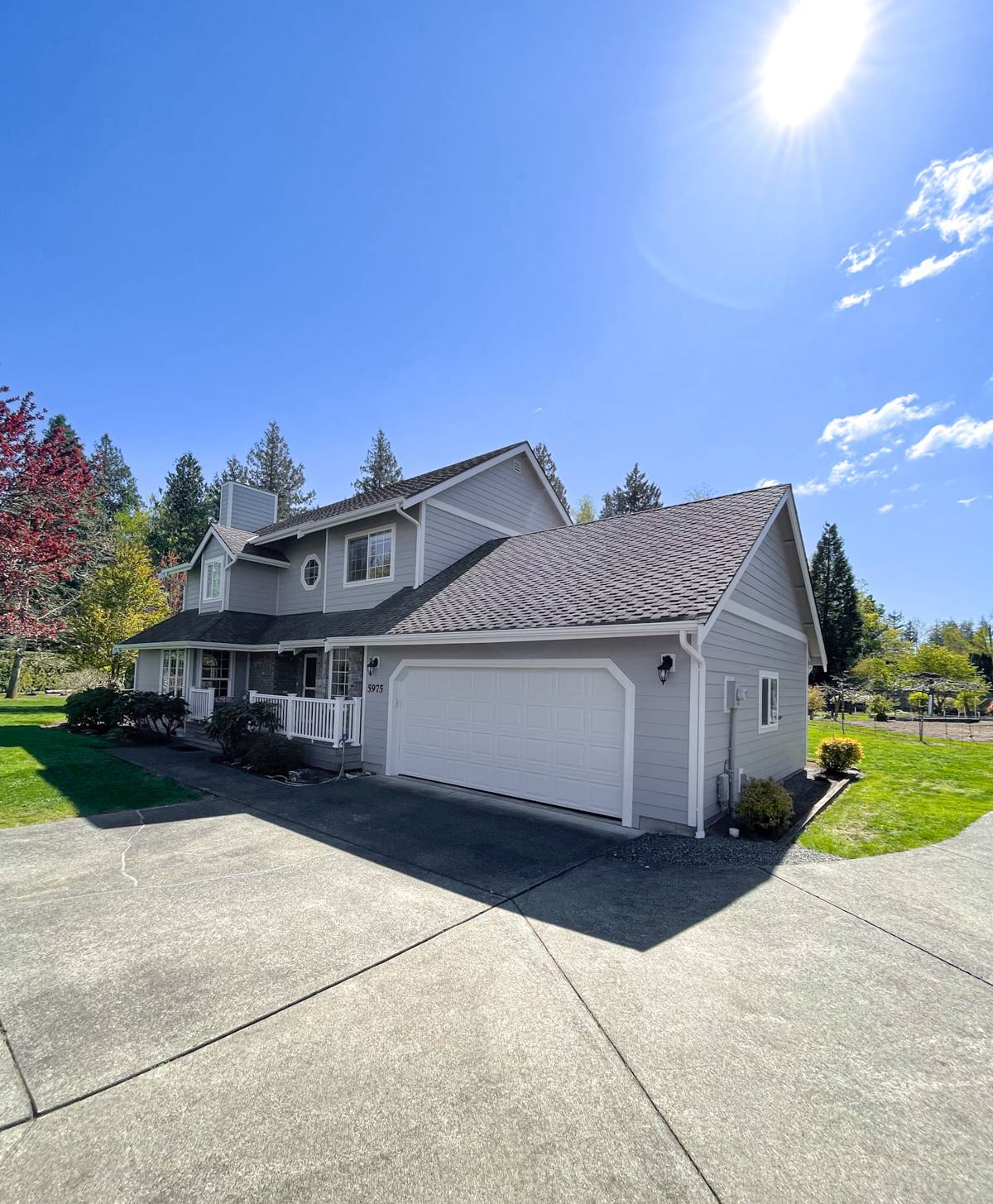
What Driving Rain and a Long Moss Season Do to Renton Siding
Wind-driven rain doesn't just wet the surface of a wall — it pushes moisture up and under laps, into seams, and behind trim if those details aren't built correctly. In a climate where the wet season runs long, that moisture doesn't always get a chance to fully dry out between storms. Over enough seasons, that's what leads to soft trim, delaminating panels, or paint that fails years ahead of schedule.
Moss is the more visible symptom. Shaded walls, especially on the north and east sides of a home under tree cover, stay damp longer and grow moss and mildew on siding surfaces that never get direct sun to dry them out. Beyond the appearance issue, moss and algae growth trap additional moisture against the siding surface, which accelerates whatever underlying problem already exists in the material or the installation.
Why Moisture Management Matters More Than Color
Homeowners often shop for siding by color and style first. In this climate, the more important questions are: how does this product handle water that gets past the surface, and how is it installed so water sheds away from the wall assembly instead of getting trapped in it? Get those two things right, and the color choice is the easy part.
Why We Only Install James Hardie Fiber Cement Siding
What We Don't Install, and Why
We don't install vinyl siding, LP SmartSide, Cemplank, Allura, primed spruce, or cedar. That's a deliberate standard, not an oversight, and it's worth explaining honestly rather than just stating it.
Vinyl siding is inexpensive and low-maintenance in the sense that it doesn't need repainting, but it's a plastic product that expands and contracts with temperature swings, can warp or deform in direct sun exposure, and relies on lapped seams that are never fully sealed against wind-driven rain by design. In a climate with as much sustained wet weather as ours, that seam behavior matters more than it would somewhere drier.
Wood-based and wood-composite products — cedar, primed spruce, and engineered wood siding like LP SmartSide — can look excellent and perform well when maintenance stays current. The trade-off is that they're organic materials in an inherently wet climate: they need consistent recoating, caulking, and inspection to keep moisture from working its way into the substrate. Miss a maintenance cycle or two here, in a region where the wet season is long and moss growth is constant, and the consequences show up faster than they would in a drier climate.
Fiber cement products from other manufacturers may use similar raw materials to Hardie, but we've standardized on one system so we can guarantee installation to a single, well-documented spec and back it with one accountable warranty structure, rather than juggling installation details and warranty terms across multiple product lines.
Where Hardie Fits This Climate
James Hardie fiber cement is non-combustible, dimensionally stable across our temperature swings, and doesn't rely on a field-applied finish to hold up over time — its ColorPlus factory finish is baked on and warranted separately from the substrate. Hardie also engineers regional product lines (HZ10 for climates like ours) specifically around moisture and humidity exposure rather than a one-size-fits-all national formula. None of that makes it maintenance-free, but it removes the two biggest variables — repainting cycles and moisture-driven warping — that cause the most callbacks on other materials in this climate.
What a Correct Siding Replacement Actually Involves
What's Underneath Matters As Much As What's On Top
Any siding replacement is only as good as what's hidden behind it. Tear-off is the point where a crew either finds problems or covers them up. That means checking sheathing and framing for rot or water staining, especially around window and door openings, roof-to-wall transitions, and any spot where the old siding showed staining or soft spots. Damaged sheathing gets replaced before anything new goes up — covering it over just locks the existing problem behind a new wall.
After that comes the weather-resistive barrier and flashing details: proper overlap and sealing at every penetration, correct flashing above windows and doors, and a weep path at the base of the wall so any moisture that does get behind the siding has somewhere to go. In a climate with this much sustained rain, these hidden details do more to prevent future problems than the siding material itself.
Fastening and Clearances Most Installers Skip
James Hardie publishes specific installation requirements — fastener type, spacing, and placement; minimum ground clearance; gaps at trim and butt joints that get properly caulked rather than jammed tight; and cutting methods that control dust and keep cut edges properly sealed and painted. Skipping these details doesn't void the workmanship immediately, but it's exactly the kind of shortcut that shows up as a callback in a wet climate a few years down the road, and it can affect what a manufacturer warranty actually covers.
Choosing the Right Hardie Product Line for a Renton Home
Most homes use a primary lap or panel product with accent trim, but the right combination depends on the home's architecture and the look the homeowner wants.
| Product | Typical Use | Look | Notes |
|---|---|---|---|
| HardiePlank lap siding | Primary siding on most home styles | Traditional horizontal lap | Most common choice; wide range of ColorPlus finishes and textures |
| HardiePanel vertical siding | Modern or mixed-material facades | Clean vertical lines | Often paired with lap siding as an accent on gables or entries |
| HardieShingle siding | Accent areas, gables, dormers | Staggered or straight-edge shingle | Best used selectively rather than on an entire elevation |
| HardieTrim boards | Corners, window/door surrounds, fascia | Clean painted trim lines | Matched ColorPlus finish reduces future repainting |
ColorPlus factory finishes are worth the upgrade over field-primed products in this climate specifically because the finish is cured and warranted independently of the substrate, which matters more where paint failure from sustained moisture is a real risk over a standard field-applied coating.
Our Process From Estimate to Cleanup
- On-site assessment of the existing siding, trim, and any visible moisture or rot issues
- Written scope of work with product line, color, and trim selections before any work starts
- Full tear-off with inspection of sheathing and framing underneath
- Repair of any damaged sheathing or framing found during tear-off
- Installation of weather-resistive barrier and flashing at all windows, doors, and transitions
- Hardie siding and trim installed to manufacturer fastening and clearance specifications
- Caulking and touch-up painting of cut edges and joints
- Final walkthrough with the homeowner and full site cleanup
What Drives the Cost of Siding Replacement in Renton
Every bid should be able to explain its number in terms of these factors, and homeowners should expect a meaningful range rather than a flat per-square-foot quote sight unseen:
- Home size and number of stories, which affects both material and labor time
- How many layers of old siding need to come off, and whether any of it is asbestos-containing material requiring special handling
- Condition of the sheathing and framing underneath — hidden rot repair is the most common source of a bid changing mid-project
- Trim complexity: window and door surrounds, corner details, and accent areas all add labor
- Product line and finish selection, including any accent materials like HardieShingle
- Site access — hillside lots, tight lake-adjacent lots, and mature landscaping can all add time for material staging and protection
What to Have Ready Before Your Estimate
Knowing the age of your current siding, whether you've had any past water intrusion or repairs, and roughly which walls get the least sun exposure all help a contractor give you a more accurate range on the first visit rather than after tear-off begins.
Why Hiring a Crew That Already Works in Renton Matters
A crew that regularly works in Renton already understands the mix of terrain the city presents — hillside access considerations, valley-floor lots with different drainage patterns, and the shaded, tree-covered properties that see moss and mildew build up faster than more open sites. That familiarity also extends to the City of Renton's permitting expectations for exterior work, which keeps a project moving instead of stalling on paperwork. None of that replaces a correct installation, but it does mean fewer surprises between the estimate and the finished wall.
If you're weighing a siding replacement on a Renton home, we're happy to take a look and walk you through what your specific walls, exposure, and existing siding actually need — no pressure, no obligation. Request a free estimate below and we'll get you a straightforward assessment and a written scope you can actually compare against other bids.