 Seattle
 A Redmond roof doesn't fail all at once during a storm — it fails at the one weak point the wind and rain find first, and then that failure quietly gets worse every time the next front rolls through. Between wind gusts that snap limbs out of mature trees, rain that drives sideways instead of falling straight down, and a moss season that lasts most of the year, this part of King County puts a specific kind of stress on a roof. Storm damage repair here isn't just patching whatever's visibly broken; it's finding every point where a storm compromised the roof's ability to shed water, and fixing all of them before the next storm shows up. This page covers what storm damage actually looks like on a Redmond home, what a correct repair involves, and how our process works from the first call to the final walk-through.
Why Storm Damage Hits Redmond Roofs Differently
Redmond sits inland from Puget Sound on the Eastside, which means storms here don't always look like a coastal town's storms — but the region's marine climate still shapes how a roof takes damage and how long that damage sits unnoticed.
Wind and Falling Debris
Many Redmond neighborhoods have mature tree canopy — tall conifers and deciduous trees that shed limbs during windstorms even when the tree itself is healthy. A falling branch doesn't have to be large to crack a shingle, punch through underlayment, or knock a section of flashing loose. The damage from a direct branch strike is usually obvious. The damage from wind alone — lifted shingle tabs, loosened fasteners, flashing worked slightly out of place — is not, and it's often the more common problem after a windstorm passes through.
Driving Rain Intrusion
The marine air that moves through the greater Puget Sound region brings rain that frequently arrives at an angle rather than straight down, pushed by wind rather than falling passively. That matters because a roof detail that sheds rain fine in calm conditions can still leak under wind-driven rain if a seam, lap, or flashing point was ever compromised. A storm doesn't need to tear a hole in a roof to cause a leak — it just needs to find the one spot where water can get pushed sideways under a shingle edge or around a fastener that's backed out slightly.
Moss and Prolonged Dampness
King County's long wet season keeps roofs damp for extended stretches, especially on shaded, north-facing slopes and anywhere tree cover slows drying. That prolonged dampness does two things after a storm: it feeds moss growth that lifts shingle edges and holds water against the roofing material, and it hides storm damage longer, since a slow leak into already-damp framing can go unnoticed until staining or sagging finally shows up inside.
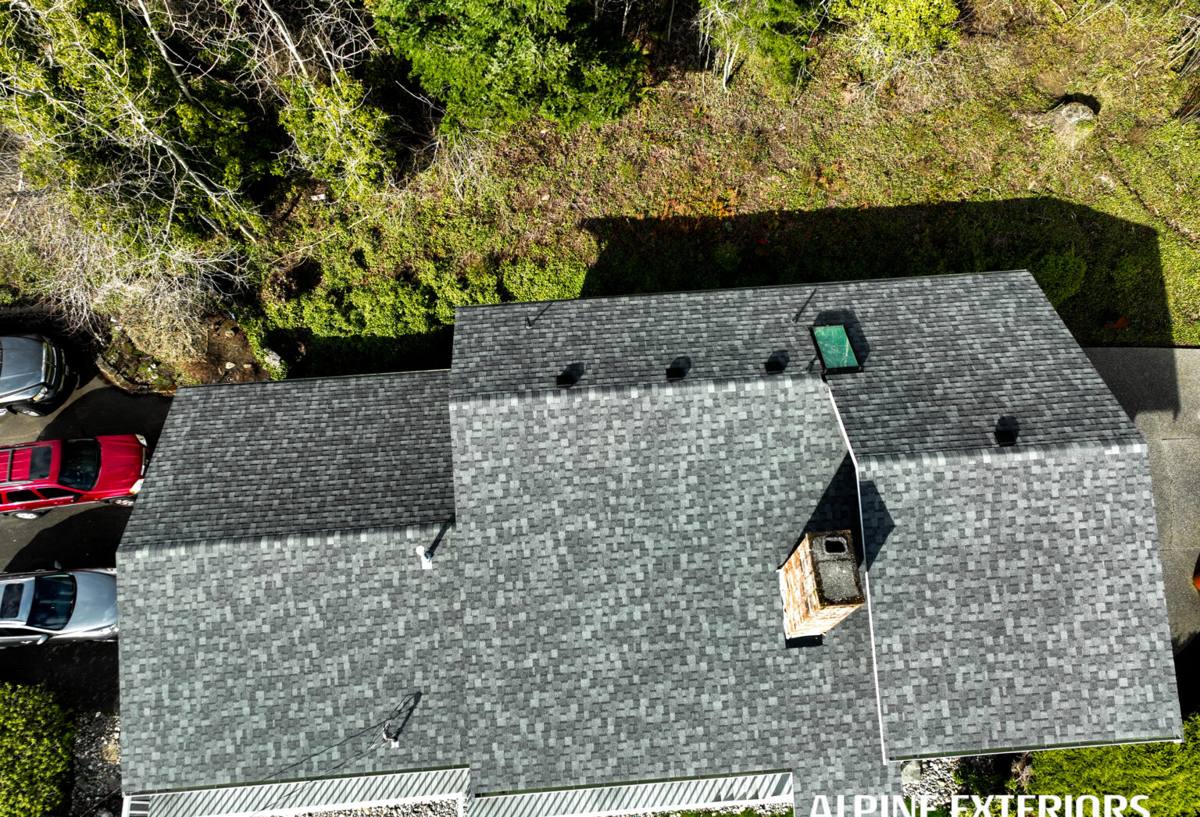
Signs of Storm Damage on a Redmond Roof
Some storm damage is obvious from the ground. A lot of it isn't, which is why a post-storm inspection matters even when nothing looks wrong from the driveway.
- Shingles that are cracked, torn, creased, or missing entirely, even in small numbers
- Granules collecting in gutters or at downspout outlets after a windstorm
- Lifted or curled shingle tabs, especially along ridges and edges where wind uplift is strongest
- Flashing that looks bent, loosened, or separated at chimneys, vents, or roof-to-wall transitions
- Dented or dislodged vent caps, gutters, or downspouts
- Visible branch strikes or debris still resting on the roof surface
- New water stains on ceilings or in the attic following a storm, even a small one
- A musty smell in the attic, which can indicate moisture getting in somewhere not yet visible
Right After a Storm: What Actually Helps
What a homeowner does in the first day or two after storm damage affects how much the repair ends up costing and how well it's covered by insurance.
- Stay off the roof. Storm-damaged roofing is unstable and often wet; a ground-level and window-level look is enough to spot obvious problems.
- Document what you can see. Photos of visible damage, debris, and any interior water intrusion are useful for both the repair estimate and an insurance claim.
- Address active leaks. Buckets, moved belongings, and basic interior protection limit damage while a proper repair is scheduled.
- Get a professional inspection promptly. The damage you can't see from the ground is usually the damage that gets worse fastest if it's left alone through the next rain.
- Avoid unsolicited repair offers at the door. Legitimate contractors are glad to schedule an inspection; pressure to sign a contract on the spot is a red flag, storm or no storm.
Repair or Replace: How We Make That Call
Not every storm-damaged roof needs full replacement, and not every roof that "looks fine" from the ground is actually fine underneath. The decision comes down to how much of the roof's remaining service life is intact and how widespread the damage is.
| Situation | Usually Repair | Usually Replace |
|---|---|---|
| Damage extent | Isolated to one section, slope, or a handful of shingles | Spread across multiple slopes or a large percentage of the roof |
| Roof age | Well within its expected service life | Already near or past the material's typical lifespan for this climate |
| Deck condition | Sound decking under the damaged area | Rot or soft sheathing found once the damaged section is opened up |
| Pre-existing wear | Roof was in good shape before the storm | Storm damage compounds moss buildup, prior leaks, or granule loss already underway |
| Material availability | Matching shingles or panels are reasonably available | Discontinued product makes a seamless patch impossible |
We'll give you a straight answer on which category your roof falls into after inspecting it, not before. A roof that only needs a repair doesn't need to be sold a replacement, and a roof with hidden deck damage shouldn't be patched over and called done.
What a Correct Storm Damage Repair Involves
A repair that only replaces the shingles you can see from the ground tends to fail again at the next storm, because it doesn't address what's underneath.
Full Inspection Before Any Work Starts
We check the full roof, not just the area where damage was reported — wind and debris rarely limit themselves to one spot, and a second problem area found later usually means a second call and a second disruption for the homeowner.
Removing Back to Sound Material
Damaged shingles, underlayment, and any compromised decking get removed back to material that's actually sound, rather than patching directly over a questionable edge. A repair built on top of hidden damage just relocates the problem a few months down the line.
Underlayment and Flashing Repair
Given how often wind-driven rain is the real culprit, we pay close attention to underlayment continuity and flashing integration at the repair boundary — this is where a rushed patch job most often leaks again.
Matching Materials
We match shingle or panel type, profile, and color as closely as the market allows so a repair doesn't stand out as a visibly different patch, while being upfront when an older roof's exact product is no longer available.
Post-Repair Check
Once the repair is complete, we check surrounding areas — gutters, downspouts, adjacent flashing — since storm damage often shows up as more than one problem even when only one is reported.
Working With Your Insurance on a Storm Claim
Most homeowner policies cover sudden storm damage, though coverage details, deductibles, and depreciation vary by policy. A few things make the claims process smoother regardless of carrier:
- Get a written, itemized inspection report and repair estimate before the adjuster visit if possible
- Keep photos of both the exterior damage and any interior water intrusion, dated as close to the storm as you can manage
- Be present, or have your contractor present, when the adjuster inspects the roof
- Ask for a scope of work that matches what's actually damaged — not padded, and not shorted
- Be cautious of any contractor who asks you to sign over your insurance check or claim rights before work begins
We provide honest documentation and estimates that reflect the actual damage found, and we're glad to walk a homeowner through what a scope of work should and shouldn't include.
Our Storm Damage Repair Process
- Initial call and scheduling. We prioritize active leaks and safety hazards first when scheduling storm response inspections.
- Full roof inspection. We assess the reported damage area and the rest of the roof, checking flashing, ventilation, and decking condition where accessible.
- Written estimate. We document findings with a clear scope of work and cost estimate, useful whether you're paying directly or filing an insurance claim.
- Temporary protection if needed. For active leaks or exposed decking, we can arrange interim weatherproofing to prevent further damage before full repair scheduling.
- Repair work. Damaged material is removed back to sound substrate, underlayment and flashing are corrected, and matching roofing material is installed.
- Final inspection and walk-through. We review the completed repair with you and note anything worth watching going forward.
Why Hire a Crew That Already Works in Redmond
After any significant windstorm in King County, out-of-area crews start knocking on doors offering fast repairs — sometimes legitimate, sometimes not, and often gone by the time a repair needs a warranty callback. A crew that already works Redmond and the surrounding Eastside has a reputation to maintain here past the storm season, knows what King County permitting requires for roof work, and isn't guessing at how local wind patterns and tree cover typically damage a roof in this specific area. That local accountability matters more with storm work than almost any other kind of roofing job, since storm damage repairs are exactly the kind of work where a rushed, unlicensed patch can look fine for a few months and then fail at the next heavy rain.
Preventing the Next Round of Storm Damage
A correct repair addresses what already happened. A few ongoing habits reduce what the next storm can do:
- Keep tree limbs trimmed back from roof edges, especially branches that hang directly over the roofline
- Clear gutters and downspouts before the wet season so storm rain has somewhere to go
- Address moss growth before it spreads, since moss-lifted shingles are more vulnerable to wind uplift
- Have flashing and roof penetrations checked periodically, not just after visible damage occurs
- Don't ignore a small leak after a storm — it rarely stays small through the next one
If a recent storm left you with damage, or you just want a professional set of eyes on your roof before the next one rolls through, we're happy to take a look. Reach out for a free, no-pressure estimate using the form below.