 Seattle
 Ballard's Climate Puts Real Stress on Exterior Walls
Ballard sits close to Puget Sound and the Ship Canal, and that proximity to water shapes what siding has to survive here. Salt-laden air moves off the Sound, driving rain rolls in off winter Pacific storms at a steep angle that finds every gap in a wall, and the tree cover and marine humidity common across King County stretch moss and mildew season out for much of the year. A siding product that isn't built for that combination will show it early — usually as swelling, staining, or moss taking hold in shaded, north-facing walls long before the rest of the house.
This isn't a generic Seattle problem. Ballard's mix of older craftsman bungalows, mid-century houses, and newer infill construction all sit on lots where at least one wall rarely sees direct sun and stays damp for days after a storm. That's exactly the condition where the wrong material, or a correctly-rated material installed poorly, fails first.
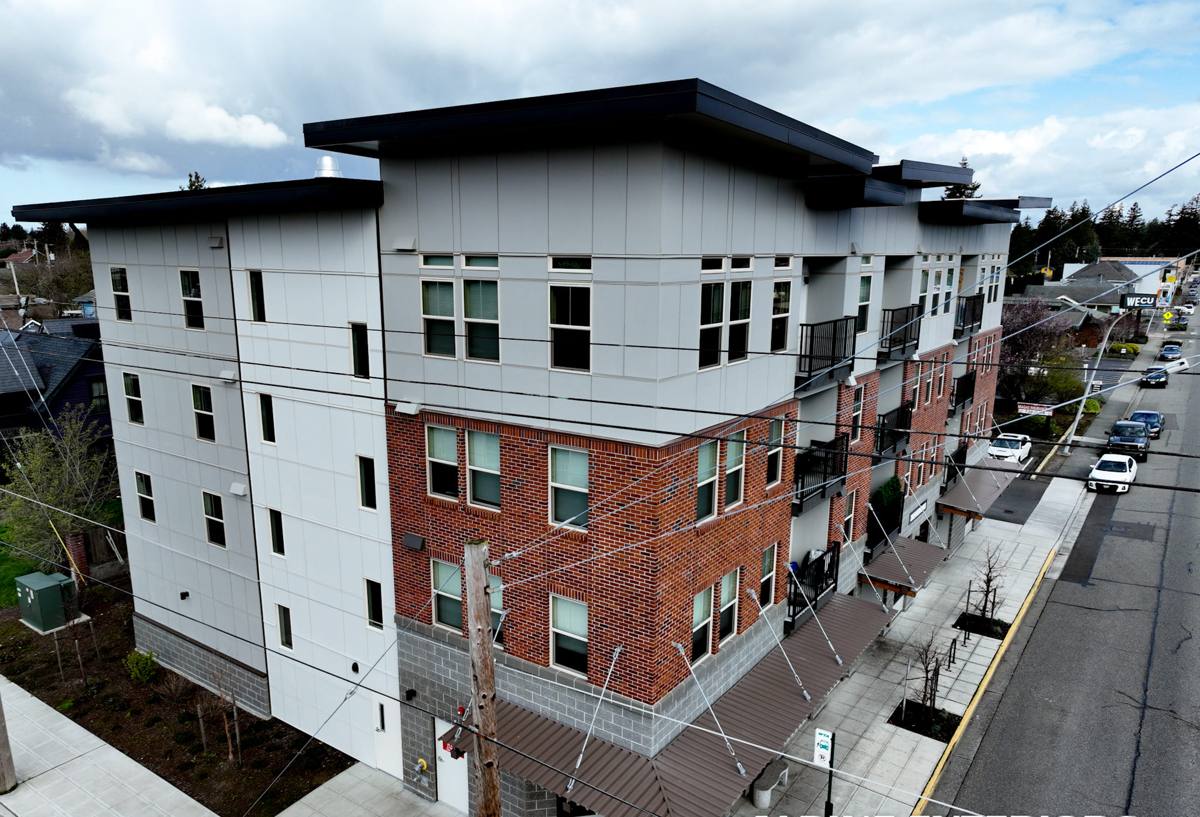
Why We Install Only James Hardie Fiber Cement Here
We standardized on James Hardie fiber cement siding for every job we do, including in Ballard, and we don't install vinyl, engineered wood, or unfinished wood siding. That's a deliberate choice based on how those products actually perform over years of exposure to a climate like this one, not a sales position.
Engineered for Wet, Salt-Exposed Climates
James Hardie makes climate-specific product lines, and the HZ5 line is engineered for regions like the Pacific Northwest that see sustained moisture, freeze-thaw cycling, and coastal air. The fiber cement itself is non-combustible and doesn't absorb and swell the way wood-based products can, which matters directly in a neighborhood where damp shade is the norm rather than the exception.
A Factory Finish That Doesn't Rely on Field Caulking Alone
Hardie's ColorPlus finish is baked on at the factory under controlled conditions, rather than field-painted after installation. That gives it better adhesion and UV resistance than a job-site paint job, and it means the color and protective layer are consistent across every board, not dependent on weather conditions the day the crew painted.
Signs Your Ballard Home's Siding Is Already Losing the Battle
Because moisture damage in this climate tends to start hidden and stay hidden, it helps to know what to check for before a small problem becomes a sheathing repair. Walk your exterior, especially the shaded and water-facing sides, and look for:
- Dark green or black staining that keeps returning within weeks of being cleaned off
- Soft spots, or siding that flexes when you press on it
- Paint that's bubbling, peeling, or chalking heavily on one side of the house but not others
- Visible gaps or separation at seams, corners, and trim boards
- Moss establishing itself directly on the siding surface, not just on the roof or in gutters
- A musty smell near exterior walls inside closets or along baseboards
Any one of these on its own isn't necessarily an emergency, but several together — especially moss plus soft or bubbling siding — usually means moisture has been getting behind the material for a while.
What a Correct Installation Actually Involves
Fiber cement siding is only as good as the assembly behind it. In a wet, salt-air climate like Ballard's, the details most people never see are what determine whether a siding job lasts fifteen years or fifty.
Drainage Plane and Rainscreen Gap
Water gets behind siding eventually — that's true of every exterior wall system. What matters is whether it can get back out. A weather-resistant barrier installed correctly behind the siding, with an air gap or drainage mat where conditions call for it, gives moisture a path to drain and dry instead of sitting against the sheathing.
Flashing at Every Penetration and Transition
Windows, doors, hose bibs, light fixtures, and roof-to-wall transitions are where driving rain finds its way in. Correct flashing at each of these points, installed in the right sequence with the weather barrier, is non-negotiable in a climate that gets wind-driven rain as often as this one does.
Fastening and Clearances
Hardie specifies fastener type, spacing, and placement for a reason, and the manufacturer also specifies minimum clearances between the bottom of the siding and grade, roofing, decks, and walkways. Skipping those clearances is one of the most common ways otherwise-good siding starts absorbing moisture at the bottom edge.
Caulking Done Right (and When Not To)
Caulk has a job at trim joints and penetrations, but it isn't a substitute for proper flashing and drainage, and over-caulking can trap moisture instead of shedding it. Knowing where caulk belongs and where it doesn't is part of installing to spec rather than just installing fast.
How Common Siding Materials Hold Up in a Climate Like Ballard's
Homeowners often ask why we don't offer alternatives. Here's an honest look at how the main options compare under sustained moisture, salt air, and moss pressure — the conditions Ballard actually delivers.
| Material | Moisture Resistance | Moss/Mildew Resistance | Maintenance Burden |
|---|---|---|---|
| James Hardie fiber cement (HZ5) | Engineered for wet climates; doesn't swell or rot | Factory finish resists staining and growth | Low — periodic cleaning, no repainting for years |
| Vinyl siding | Doesn't absorb water, but seams and panels can trap moisture behind them | Can grow moss/mildew on the surface in shaded areas | Low, but prone to warping and fading over time |
| Engineered wood (e.g. LP-type products) | Vulnerable at cut edges and joints if not sealed correctly | Moderate risk if moisture gets into the substrate | Moderate — relies on consistent field maintenance |
| Cedar or primed wood siding | Absorbs moisture; needs a sound paint film to stay protected | Higher risk, especially in shaded, damp locations | High — repainting and moisture checks every few years |
This isn't a claim that other materials can't be installed well elsewhere — it's why our crews, working specifically in this region, only put Hardie on the homes we work on.
Our Process, Start to Finish
- Assessment. We look at your existing siding, check for hidden moisture damage, and identify problem areas like shaded walls or poor drainage before quoting the job.
- Tear-off and sheathing check. Old siding comes off and we inspect the sheathing underneath — this is where hidden rot or past moisture intrusion actually shows up.
- Weather barrier and flashing. We install the drainage plane and flashing at every window, door, and penetration before a single piece of siding goes up.
- Hardie installation. Boards are installed to manufacturer clearance, fastening, and joint specifications, not shortcuts that just look right from the ground.
- Trim and finish check. Corners, trim, and caulk joints are finished and checked for consistency across the whole house.
- Final walkthrough. We go over the finished work with you before calling the job done.
What Cost Depends On
| Factor | Why It Matters |
|---|---|
| Square footage and home shape | More wall area and more corners/angles mean more material and labor |
| Condition of existing siding and sheathing | Hidden moisture damage found during tear-off adds repair work before new siding goes up |
| Siding profile and trim detail | Lap widths, panel styles, and trim complexity affect both material cost and install time |
| Site access | Narrow side yards, fencing, or limited staging space can add time on tighter Ballard lots |
| Paint/color selection | Factory ColorPlus finishes vs. field-applied finishes carry different cost and long-term maintenance profiles |
We give real numbers after seeing the actual house — broad online estimates rarely account for what tear-off reveals or how a particular home is laid out.
Why Hiring a Crew That Already Works in Ballard Matters
Ballard's housing stock isn't uniform. A crew that regularly works this neighborhood has already seen how older bungalows were originally sided and flashed, how narrow lots limit staging and scaffolding, and how mature trees and neighboring structures create the shaded, slow-drying walls where moss and moisture problems start first. That familiarity shows up in fewer surprises once tear-off starts and in sequencing work efficiently around tight side-yard access that's common throughout Seattle's older neighborhoods.
It also matters for permitting and code requirements specific to King County and the City of Seattle, which a crew working elsewhere may not deal with regularly.
Keeping Your Siding Performing After Installation
Correctly installed Hardie siding is low-maintenance, not no-maintenance. A yearly rinse-down keeps early moss growth from taking hold, especially on shaded sides of the house. Keep gutters clear so overflow isn't running down the siding face, and take a look at caulk joints around trim and penetrations every couple of years — catching a failed joint early is a five-minute fix, not a moisture-damage repair.
If you're weighing a siding replacement in Ballard, or you've noticed some of the warning signs above, we're happy to take a look and give you a straightforward, no-pressure estimate — just fill out the form below.