 Seattle
 Building a Deck That Actually Holds Up in Redmond
Redmond sits in one of the more tree-covered, shaded pockets of the Eastside, and that shade comes at a cost for anything built outdoors. A deck here spends most of the year damp, gets long stretches without direct sun to dry out, and picks up moss and algae faster than a deck built in a drier, more open part of King County. Add in the region's driving rain — the kind that comes in sideways during a fall or winter storm — and you've got conditions that will find every weak point in a deck's design within a few years if the build wasn't done right the first time.
This page is about one thing: building or replacing a deck in Redmond so it's still solid, safe, and good-looking a decade or two from now, not just for the first summer.
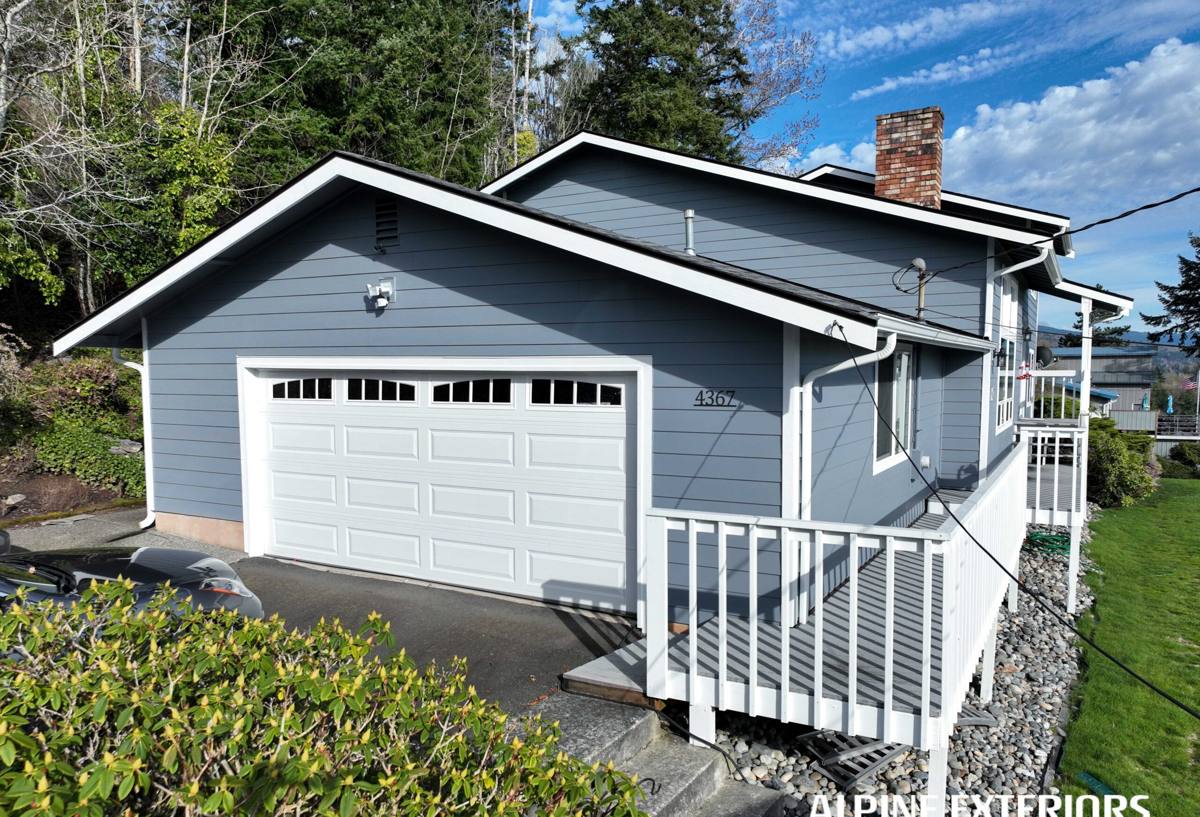
What Redmond's Climate Actually Does to a Deck
Moss and Algae
Shaded lots, tree canopy, and the region's long wet season give moss and algae everything they need to take hold on horizontal surfaces — deck boards, stair treads, and railing caps especially. Beyond looking bad, moss holds moisture against the wood or composite surface and turns boards slick, which is a real slip hazard on stairs and ramps.
Driving Rain and Standing Water
Wind-driven rain doesn't just fall straight down — it gets pushed under railings, into ledger connections, and into any gap where flashing or fasteners weren't installed correctly. Combined with our long rainy season, that means water finds its way into fastener holes, joist hangers, and the ledger board connection to the house faster here than in drier climates.
Freeze-Thaw and Wood Movement
King County doesn't get extreme cold most winters, but we do get enough freeze-thaw cycling to stress joints and fasteners that are already compromised by trapped moisture. Wood that's been sitting wet all winter and then freezes expands and contracts in ways that loosen connections over time.
What a Correctly Built Deck Involves
A deck that's going to hold up to Redmond's conditions isn't just about picking a decking board and screwing it down. The parts that matter most are usually the ones you can't see once the project is finished.
- A ledger board connection that's properly flashed and sealed against the house — this is the single most common failure point on older Redmond decks
- Footings sized and set below frost depth, appropriate for our soil conditions
- Joists spaced correctly for the decking material chosen, with proper hardware — not just nails
- Consistent drainage slope away from the house so water doesn't pool against the structure
- Fasteners and hardware rated for exterior, wet-climate use
- Railings and stairs built to code, with attention to how moss and moisture affect footing on stair treads
Skip any one of these and the deck may look fine for a season or two, but the failure shows up as soft spots, rot at the ledger, or a railing that's gone spongy — usually a few years down the road, and usually more expensive to fix than it would have been to build correctly the first time.
Choosing the Right Decking Material for This Climate
There's no single "best" decking material for every Redmond project — it depends on budget, how much maintenance you're willing to do, and how much sun or shade the deck actually gets. Here's how the common options compare under our conditions specifically.
| Material | Moisture & Moss Behavior | Maintenance | Typical Lifespan |
|---|---|---|---|
| Cedar | Naturally rot-resistant, but still needs to breathe and dry; moss will grow on shaded boards without upkeep | Annual cleaning and periodic sealing or staining | 15-20 years with maintenance |
| Pressure-treated pine/fir | Treated against rot, but end cuts and fastener holes are still vulnerable; prone to moss in shaded areas | Regular cleaning, sealing every 1-2 years | 15-20 years with maintenance |
| Capped composite | Won't rot, resists moss staining much better, but surface can still get slick when wet or shaded | Periodic washing, no sealing or staining | 25-30+ years, manufacturer-dependent |
| Uncapped composite | Better than wood for rot, but the exposed core can absorb moisture over time and is more prone to mold/mildew staining | Regular cleaning, more prone to visible staining in shade | Shorter effective life than capped composite |
In a shaded, moss-prone yard, we generally steer clients toward capped composite or a well-detailed cedar build with a real maintenance plan behind it. Uncapped composite has its place on sunnier, better-drained lots, but we're honest with clients about the extra staining risk it carries in a shadier Redmond backyard.
Framing, Footings, and Drainage — The Parts You Don't See
Most deck problems we get called out to inspect in this area didn't start at the surface — they started underneath it. A ledger board that wasn't properly flashed lets water track behind the siding and into the rim joist, which can go unnoticed for years because the visible decking still looks fine. Footings that weren't set to the right depth can shift slightly with our seasonal ground saturation, which shows up eventually as a deck that feels less solid or a railing post that's started to lean.
Drainage matters just as much. A deck built without a slight slope away from the house, or without any thought given to where water goes once it hits the surface, will pool — and pooling water is exactly what accelerates rot and feeds moss growth. Good drainage detailing at the framing stage is cheap. Fixing water damage after the fact is not.
Railings, Stairs, and Code Requirements
Railings and stairs are where safety and moisture problems overlap the most. Moss-slicked stair treads are a real fall hazard, especially on a deck used daily through a Northwest winter. We build stairs and railings to current code requirements for height, baluster spacing, and load, and we pay particular attention to surface texture and drainage on treads so they shed water and moss buildup rather than holding onto both.
Railing post connections are another common weak point on older decks — a post that was only toe-nailed or lag-bolted into the rim joist without proper blocking can loosen over time as the wood around it cycles between wet and dry. We detail these connections so they stay tight for the life of the deck, not just the first few years.
Our Deck-Building Process
Every Redmond deck project follows the same basic sequence, adjusted for the specifics of your yard and home:
- Site assessment — we look at sun exposure, tree cover, drainage patterns, and the condition of the existing structure if there is one
- Design and material discussion — honest conversation about which decking material fits your budget, maintenance appetite, and how much shade the deck will actually get
- Permitting — we handle the permit process for the scope of work that requires it
- Demolition and prep — removing the old structure if applicable, and correcting any drainage or ledger issues we find underneath
- Framing and footings — built to code and sized for our soil and seasonal moisture conditions
- Decking, railings, and stairs — installed with attention to fastening, flashing, and drainage detail throughout
- Final walkthrough — we go over care and maintenance specific to the material you chose
Maintenance: What to Expect Season to Season in Redmond
No deck in this climate is maintenance-free, even composite. What changes is how much and how often.
Spring
This is when moss and algae buildup from the wet months is most visible. A thorough cleaning at the start of the dry season keeps buildup from getting ground into the surface.
Summer
Our short dry season is the window for any sealing, staining, or repair work on wood decking — boards need to be genuinely dry for a sealer to do its job.
Fall and Winter
Clearing leaves and debris regularly matters more than people expect — trapped leaves hold moisture against the surface and accelerate both rot and moss growth right through the wettest months of the year.
We walk every client through a maintenance schedule specific to the material we installed, so there's no guesswork about what your deck actually needs.
Why a Crew That Already Works Redmond Matters
A deck built to a generic national spec doesn't account for how much shade a typical Redmond lot gets, how aggressively moss grows here compared to drier parts of the state, or how our particular rain pattern stresses ledger connections and fasteners over time. A crew that works this area regularly has already seen which details fail first in this climate and builds around them from the start — not after a callback.
We're also familiar with the local permitting process and typical lot conditions across Redmond neighborhoods, which keeps projects moving without the delays that come from a contractor learning the local requirements as they go.
Get a Free, No-Pressure Estimate
If you're planning a new deck or looking at replacing one that's showing its age, we're happy to come take a look and give you a straightforward assessment — no pressure, no obligation. Fill out the form below and we'll follow up to schedule a time that works for you.