 Seattle
 Roof Replacement Built for Redmond's Climate
Redmond sits close enough to Lake Washington and the broader Puget Sound air mass that homes here deal with a specific combination of punishment: salt-tinged moisture carried in off the water, long stretches of driving rain from fall through spring, and a moss season that can run eight or nine months out of the year. None of that is dramatic on any single day. It's the accumulation that wears a roof down early. A roofing system that would hold up fine in a drier climate can fail years ahead of schedule here if it wasn't installed with this specific weather pattern in mind.
When we talk about roof replacement in Redmond, we're not describing a generic service we run everywhere with the city name swapped in. The underlayment spec, the ventilation math, and the flashing details we use on a Redmond roof are chosen because of what this roof will actually face: sustained damp, low winter sun angles that keep north-facing slopes shaded and wet longer, and tree cover that drops needles and organic debris into valleys and gutters year-round.
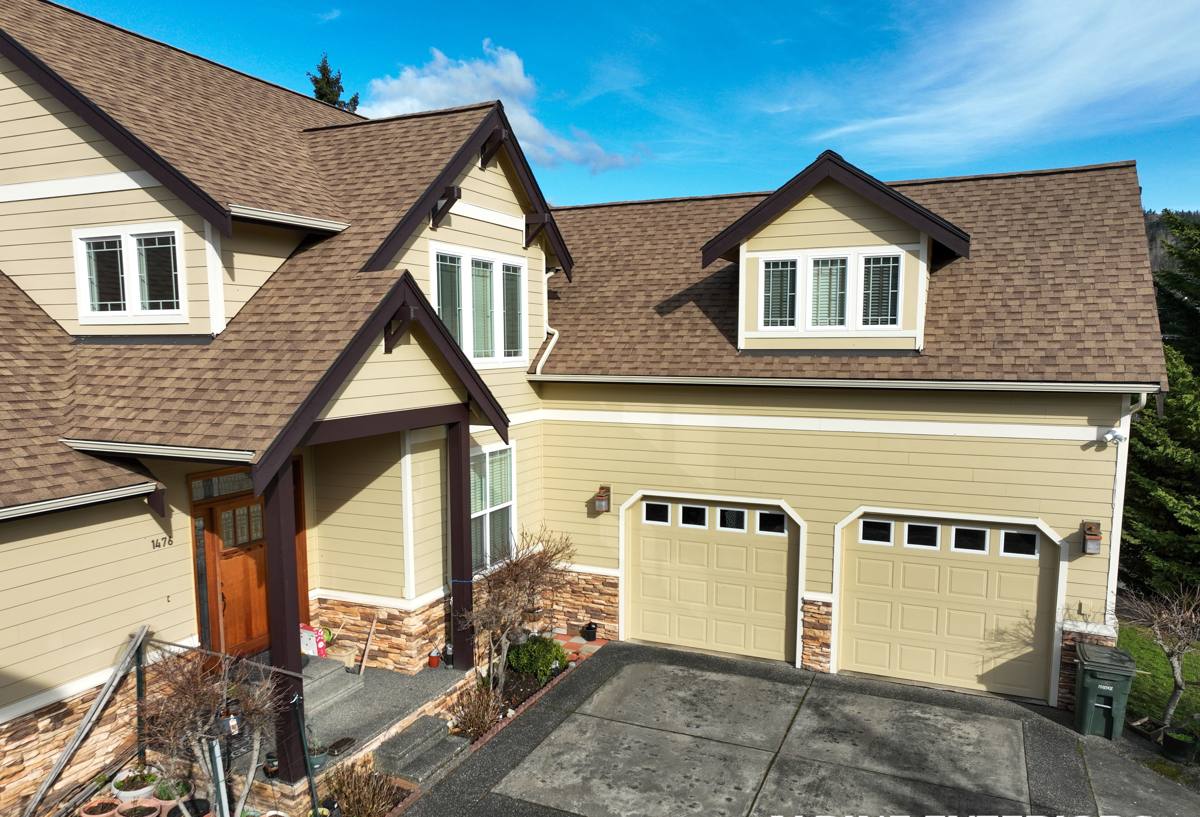
Why Redmond Roofs Wear Out the Way They Do
Moss and Organic Growth
Moss doesn't just sit on top of shingles looking unattractive — it holds moisture against the roofing material for extended periods and works its rhizoids into the granule surface. Over years, that lifts and loosens shingle edges, and it's a major contributor to premature failure on older Redmond roofs we've evaluated. A roof with a north or northeast exposure and any amount of tree canopy overhead is especially prone to it.
Driving Rain and Wind-Driven Moisture
King County storms frequently push rain sideways rather than straight down. That matters because a roof only rated for standard drainage can still let water intrude at laps, fasteners, and flashings when the wind is driving moisture uphill under the shingle line. Proper underlayment coverage and fastening patterns matter more here than in calmer climates.
Salt and Marine Air Exposure
Redmond isn't oceanfront, but the regional air carries enough marine influence to accelerate corrosion on exposed metal — flashing, fasteners, vent caps, and gutter hardware. Cheaper or mismatched metal components corrode faster than the roofing material around them, which is a common cause of leaks that have nothing to do with the shingles themselves.
Temperature Swings and Attic Condensation
Even though Redmond doesn't see extreme heat, warm, moist interior air rising into a poorly ventilated attic during our cool, damp months causes condensation on the underside of the roof deck. Left unaddressed, that moisture rots sheathing from the inside — a problem invisible from the ground and often missed until it shows up as a stain on a ceiling.
What a Correct Roof Replacement Actually Involves
A roof replacement is not just stripping old shingles and nailing down new ones. Done right, it's a system, and every layer has a job:
- Tear-off and deck inspection: full removal down to the sheathing so we can actually see the condition of the wood, not guess at it from the surface.
- Sheathing repair or replacement: any soft, delaminated, or water-damaged panels get replaced before anything new goes down — covering rot with new shingles just hides the problem.
- Ice-and-water shield at vulnerable areas: valleys, eaves, and roof-to-wall transitions get self-adhered waterproof membrane, not just felt.
- Full synthetic underlayment: a continuous water-resistant layer across the whole deck, which matters more here than in drier regions given how long our roofs stay wet.
- Metal flashing at every penetration and transition: chimneys, skylights, sidewalls, and vents all get properly formed and lapped flashing rather than caulk-and-hope patches.
- Balanced ventilation: intake at the eaves and exhaust at the ridge, sized to the attic volume, to keep moist air moving out instead of condensing on the deck.
- Correct fastening and exposure: manufacturer-specified nail placement and shingle exposure, since under- or over-driven fasteners are one of the most common causes of early wind and water damage.
Skip any one of these steps and the roof may look finished on installation day while still carrying a hidden weakness that shows up two or three wet seasons later.
Choosing the Right Roofing System for This Area
There's no single "best" roofing material for every Redmond home — it depends on the roof's pitch, exposure, tree cover, and the homeowner's budget and maintenance tolerance. Here's how the common options compare for this specific climate:
| Roofing Type | Moss/Moisture Resistance | Typical Lifespan Here | Maintenance Needs |
|---|---|---|---|
| Architectural asphalt shingles | Good, especially with algae-resistant granules | 25-30 years with proper care | Periodic moss treatment and gutter clearing |
| Standard 3-tab asphalt | Fair — more prone to moss anchoring at thinner tabs | 15-20 years | More frequent moss removal recommended |
| Metal (standing seam) | Excellent — moss struggles to anchor on smooth metal | 40-50+ years | Low; occasional inspection of seams and fasteners |
| Cedar shake | Poor without diligent upkeep — organic material invites moss and rot | 20-30 years with active maintenance | High; regular treatment and inspection required |
| Synthetic/composite shingle | Very good — engineered to resist moisture uptake | 30-50 years depending on product | Low to moderate |
We don't push cedar shake as a first recommendation for shaded, tree-heavy Redmond lots. It's not that cedar is a bad product — it's that it demands a maintenance commitment most homeowners underestimate, and in a climate this damp, deferred maintenance shows up as rot faster than in drier regions. If a homeowner wants the look and understands the upkeep, we'll install it correctly. We just won't oversell it as low-maintenance, because it isn't here.
Our Roof Replacement Process
1. On-Site Assessment
We start with a physical inspection of the roof, attic, and ventilation — not a satellite-image estimate. That includes checking for soft decking, moss density, flashing condition, and signs of past leaks that may not be visible from inside the house.
2. Written, Itemized Proposal
We put the scope of work, materials, and pricing in writing before anything is scheduled. No verbal-only estimates, and no vague "roofing package" line items — you should be able to see exactly what you're paying for.
3. Material Selection
We walk through the tradeoffs above in person, based on your roof's actual exposure and your budget, rather than defaulting to whatever we happen to have the most of in inventory.
4. Scheduling Around the Weather
Because a torn-off roof is fully exposed until dried-in, we plan installation windows around forecasts and keep the deck protected if weather moves in mid-project. Rushing a tear-off into a rain system is how homes end up with interior water damage.
5. Installation and Daily Site Cleanup
Tear-off, deck repair, underlayment, flashing, and shingle installation proceed in sequence with the crew clearing debris and nails from the property daily — not just at the end of the job.
6. Final Walkthrough
Before we consider the job done, we walk the roof and the property with the homeowner, review the completed work, and go over care and warranty details.
Signs a Redmond Roof May Need Replacement Rather Than Repair
- Granule loss heavy enough that shingles look patchy or bald in sections, especially on south- and west-facing slopes
- Moss coverage that returns quickly after cleaning, suggesting the shingle surface underneath is already compromised
- Curling, cupping, or cracked shingles across large areas rather than isolated spots
- Daylight visible through the roof deck from inside the attic
- Soft or spongy spots when walked on, indicating deck rot
- Recurring leaks in the same area despite prior patch repairs
- A roof approaching or past the upper end of its material's expected lifespan, especially if it's never had a full tear-off
Not every one of these means full replacement is the only option — a roof with isolated damage and a sound deck may just need targeted repair. Part of an honest assessment is telling you when repair is the smarter money, not just recommending the bigger job.
Why Hiring Local, Redmond-Familiar Crews Matters
A roofing crew that works across King County regularly sees how houses in this specific area age — which slopes hold moss longest, how tree cover on a given street affects debris buildup, and which older Redmond neighborhoods tend to have ventilation that was undersized by today's standards. That familiarity shows up in small decisions: where to add extra ice-and-water protection, how much ridge venting a given attic actually needs, and which flashing details are worth upgrading during a replacement even if they weren't part of the original build.
It also matters for permitting and code compliance. Roofing requirements and permit processes vary by jurisdiction, and a crew that regularly pulls permits in this area already knows the local requirements rather than learning them on your project.
Caring for a New Roof in the Pacific Northwest
A well-installed roof still benefits from basic seasonal attention in a climate like ours:
- Clear gutters and downspouts at least twice a year, more often if you're under heavy tree cover
- Have moss growth treated before it spreads across the roof plane, not after
- Keep overhanging branches trimmed back to reduce debris buildup and abrasion
- Check attic ventilation isn't blocked by insulation or storage
- Schedule a professional inspection after major windstorms
None of this is expensive or time-consuming, but skipping it is how a well-installed roof loses years off its expected lifespan.
Get a Straight Answer About Your Roof
If you're weighing repair versus replacement, or just want an honest read on how much life is left in your current roof, we're happy to take a look and give you a clear, no-pressure estimate. Use the form below to request a free assessment for your Redmond home.