 Seattle
 Redmond's Climate Is Harder on Siding Than It Looks
Redmond sits inland on Seattle's Eastside, tucked between Lake Washington and Lake Sammamish, and it's easy to assume that distance from open water means an easier ride for a house's exterior. It doesn't, not really. King County's marine climate doesn't stop at the shoreline — the same weather systems that push salt-tinged air across Puget Sound also carry it inland on the wind, and Redmond gets its share of driving rain, long gray stretches of damp weather, and a moss season that can run most of the year on shaded siding. Add in the mature tree canopy that covers a lot of Redmond's older and newer neighborhoods alike, and you get walls that stay wet longer than they would on an open, sun-exposed lot.
None of that makes Redmond an extreme climate. It makes it a demanding one in a quieter, more grinding way — steady moisture, steady shade, and a lot of months where siding never fully dries out between rain events. That's the environment we build for when we install siding on a Redmond home, and it's why the material and the installation details matter as much here as they would on a house closer to the water.
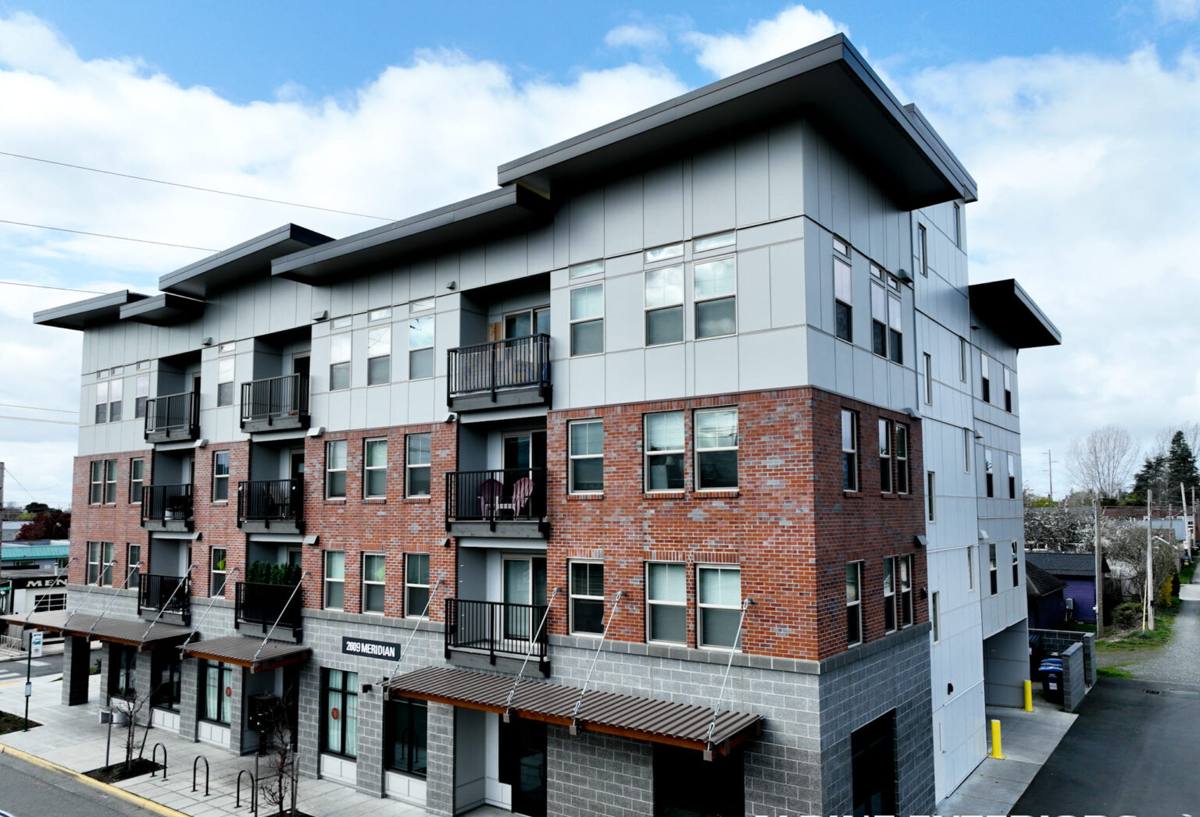
What Fiber Cement Siding Has to Handle Here
Driving Rain and Wind-Driven Moisture
Pacific storm systems moving through King County rarely drop rain straight down. Wind pushes it sideways into lap joints, trim edges, and any seam where two building materials meet. That sideways load is a tougher test of a siding system's water management than the region's total rainfall numbers suggest, and it's exactly the condition that exposes a rushed installation years before it would show up in a drier climate.
Shade and a Long Moss Season
Redmond's tree cover is part of what makes the area livable, but it also means a lot of north-facing and tree-shaded walls that don't get much direct sun through fall and winter. Mild temperatures plus consistent moisture plus limited sun add up to a moss and mildew season that can stretch across most of the year on those surfaces. Any siding material with even a little surface porosity becomes a growth medium under those conditions, and it shows up on the shaded side of a house well before it's visible from the street.
Humidity Cycling
Even without hard freezes, Redmond sees repeated cycles of damp, cool weather followed by drier stretches. Siding materials that absorb moisture expand and contract through those cycles, and repeated movement is what eventually opens gaps at joints and fastener points if the material and the installation weren't built to resist it in the first place.
Why We Only Install James Hardie Siding
We install James Hardie fiber cement exclusively. We don't offer LP SmartSide, vinyl siding, Cemplank, Allura, primed spruce, or cedar, and that's a professional standard we've settled on rather than a supply arrangement or a sales angle. Each of those products has a legitimate place in the broader siding market and homeowners who are satisfied with them. Our decision comes down to what holds up best, with the widest margin for error, under Redmond's specific pattern of sustained moisture and shade.
- Non-combustible core: fiber cement is made from portland cement, sand, and cellulose fiber, formed and cured rather than milled from wood. It doesn't feed a fire the way wood-based siding can.
- Dimensional stability: the inorganic core doesn't swell, cup, or warp the way wood and engineered-wood products can after repeated wet-season moisture cycling.
- Factory-applied ColorPlus finish: the color is baked on under controlled factory conditions, not brushed on in the field, so it holds up longer against fading, chalking, and moisture intrusion than a field-applied paint film.
- Climate-engineered HZ product lines: Hardie's HZ5 formulation is built specifically for regions with sustained moisture exposure and cycling weather, which describes Redmond and the broader Puget Sound region well.
- A strong, transferable warranty: Hardie backs its products with one of the stronger warranty structures in the industry, provided the installation follows their specification.
We used to work with a wider range of siding products. What changed our approach wasn't a single bad experience, it was a pattern we kept seeing on tear-offs and service calls across King County's damp, shaded neighborhoods — material choice mattered, but installation discipline mattered just as much, and wood-based products gave us less room to absorb a missed detail before moisture became a problem. Fiber cement gave us a wider margin, so we made it our standard and stopped offering the alternatives.
Choosing the Right Hardie Product for a Redmond Home
James Hardie isn't a single product, it's a system with different profiles suited to different homes and details. Getting this part right is as much about matching the product to the house as it is about the installation itself.
| Product | Typical Use | Why It Fits |
|---|---|---|
| HardiePlank lap siding | Most traditional single-family homes | Widest range of textures and exposures; the standard choice for most re-sides |
| HardiePanel vertical siding | Modern builds, accent walls, gable ends | Clean vertical lines, often paired with board-and-batten detailing |
| HardieTrim boards | Window and door surrounds, corners, fascia | Matches the siding's moisture performance instead of mixing in a wood trim weak point |
| HardieSoffit panels | Eaves and overhangs | Resists the moisture and shade conditions common under Redmond's tree canopy |
The right combination depends on the home's age, its architectural style, and which elevations take the most direct weather. We walk through those options during the estimate rather than defaulting to one profile for every house.
What Correct Installation Actually Involves
Choosing Hardie is only half the job. Fiber cement performs the way it's engineered to only when the installation follows the manufacturer's specification closely, and in a climate like Redmond's, the details that are easiest to rush are usually the ones that matter most.
- A rainscreen gap behind the siding gives any moisture that does get past the surface a path to drain and evaporate instead of sitting against the wall sheathing.
- Correct fastener type and spacing — Hardie specifies both for a reason, and loose spacing or the wrong fastener is one of the more common causes of early failure we find on tear-offs.
- Properly lapped house wrap and flashing at every seam, window, and penetration, so water sheds outward and downward instead of finding a way behind the cladding.
- Sealed joints and trim transitions, since open or poorly sealed seams are where moisture finds its way in first on a shaded, damp wall.
- Correct clearance from grade, roofline, and decks, so splash-back and standing moisture don't sit against the bottom course longer than they need to.
None of this is exotic. It's the manufacturer's own installation spec, followed consistently on every elevation rather than shortcut on the parts of the wall that are harder to see once the job is finished and the crew has moved on.
Fiber Cement Compared to the Alternatives
Homeowners researching a re-side in Redmond usually run into the same handful of materials. Here's an honest look at how they compare under this area's specific moisture and shade conditions.
| Factor | James Hardie Fiber Cement | Vinyl | Wood-Based (cedar, primed spruce, LP SmartSide) |
|---|---|---|---|
| Core material | Cement, sand, cellulose fiber (inorganic) | PVC plastic | Wood or engineered wood fiber (organic) |
| Moisture response | Does not swell, cup, or warp | Doesn't absorb water, but can warp or crack in temperature swings | Absorbs moisture at cut edges and joints; can swell or rot if the finish fails |
| Combustibility | Non-combustible | Combustible; can melt or deform near heat sources | Combustible |
| Finish longevity | Factory-baked ColorPlus finish resists fading and moisture at the coating level | Color molded through material, but can fade and chalk over time | Depends heavily on paint film staying intact; higher maintenance |
| Moss and mildew resistance | Inorganic core doesn't feed growth | Resistant, but growth can still form on the surface in shaded spots | Organic surface can support growth if damp for extended periods |
| Typical service life when installed to spec | Multiple decades, often with a transferable warranty | Multiple decades, limited warranty on fading and cracking | Shorter without diligent, ongoing maintenance |
Our Installation Process
We keep the process straightforward and communicate what's happening at each stage, especially anything unexpected found once the old siding comes off.
- On-site assessment: we walk the whole exterior, note which elevations take the most weather and shade, and check for existing moisture damage before quoting anything.
- Tear-off: old siding comes off so we can inspect the sheathing and framing underneath, which is often the only way to catch hidden moisture damage before it spreads further.
- Substrate repair: any rot, soft sheathing, or compromised framing gets repaired before new siding goes on top of it. Covering a moisture problem instead of fixing it just delays the failure.
- Weather barrier and flashing: house wrap, flashing, and a rainscreen gap go in per the manufacturer's specification, sequenced so every layer sheds water outward.
- Siding installation: HardiePlank, HardiePanel, or a combination goes on with the correct fastener pattern, joint spacing, and clearances for the specific home.
- Trim, caulking, and cleanup: final trim details get sealed and finished, and the site is cleaned before we walk the job with the homeowner.
Signs a Redmond Home's Siding Needs Attention
- Moss or dark staining that returns quickly after cleaning, especially on shaded or north-facing walls
- Soft or spongy siding, particularly low on the wall or around window and door trim
- Visible warping, cupping, or bowing on wood or engineered-wood siding
- Peeling, chalking, or fading paint that keeps recurring despite touch-ups
- Cracked or gapped caulking at seams, corners, and trim transitions
- Drafts or moisture staining on interior walls near exterior corners
- Fastener heads visibly popping or rust streaking down from trim and hardware
Cost Factors for a Redmond Siding Project
| Factor | What It Affects | Why It Matters Here |
|---|---|---|
| Tear-off vs. overlay | Labor scope and access to the substrate | Tear-off is the only reliable way to catch moisture damage trapped behind older siding |
| Substrate condition | Repair costs before new siding goes on | Shaded, damp walls are more likely to have hidden sheathing or framing damage |
| Home size and complexity | Material quantity and labor time | More corners, dormers, and trim mean more joints exposed to wind-driven rain |
| Product selection | Material cost per square | HardiePlank, HardiePanel, and trim packages price differently depending on style and finish |
| Site access | Equipment needs and labor time | Tree cover, tight lots, and sloped sites common in Redmond can add setup time |
These are general drivers, not a quote. Every Redmond property has a different mix of sun exposure, tree cover, and existing wall condition, so we walk the home in person before putting a real number on the work.
Why a Local Redmond Crew Matters
A crew that works across King County regularly sees how driving rain, shade, and a long moss season actually behave on real Eastside houses over a full year, not just how a product performs on a spec sheet. That experience shapes practical calls on install day: which elevations need extra flashing attention, which walls under heavy tree cover stay wet longest, and where it's worth spending extra time on a detail even when it's not strictly required. Redmond's mix of established, tree-shaded neighborhoods and newer construction isn't identical from block to block, and a crew that has actually worked the area builds accordingly instead of applying a one-size-fits-all approach.
If your Redmond home needs new siding, or you're weighing whether an older installation is worth repairing versus replacing, we're glad to take a look and give you a straightforward, honest assessment of what we'd recommend and why. Reach out using the form below to schedule a free, no-pressure estimate.