 Seattle
 Redmond's Wet Climate Is Hard on Decks
Redmond sits in the wet, mild, and heavily wooded part of King County, and that combination is exactly what wears decks down over time. Long stretches of driving fall and winter rain soak into any exposed wood connection that isn't properly flashed or ventilated. Many Redmond lots carry mature tree cover, which means decks spend a good part of the year shaded and damp — ideal conditions for moss and algae to take hold on horizontal surfaces. And like the rest of the greater Puget Sound region, the air here stays consistently humid for months at a stretch, which slowly corrodes lower-grade fasteners and hardware even when the wood itself still looks fine.
None of this means a deck is doomed. It means a deck built or repaired for this climate — with the right flashing, drainage, and hardware — holds up, while one that was built to a bare minimum standard shows problems early. Repair work in this area has to account for moisture as the root cause, not just patch whatever is visibly damaged.
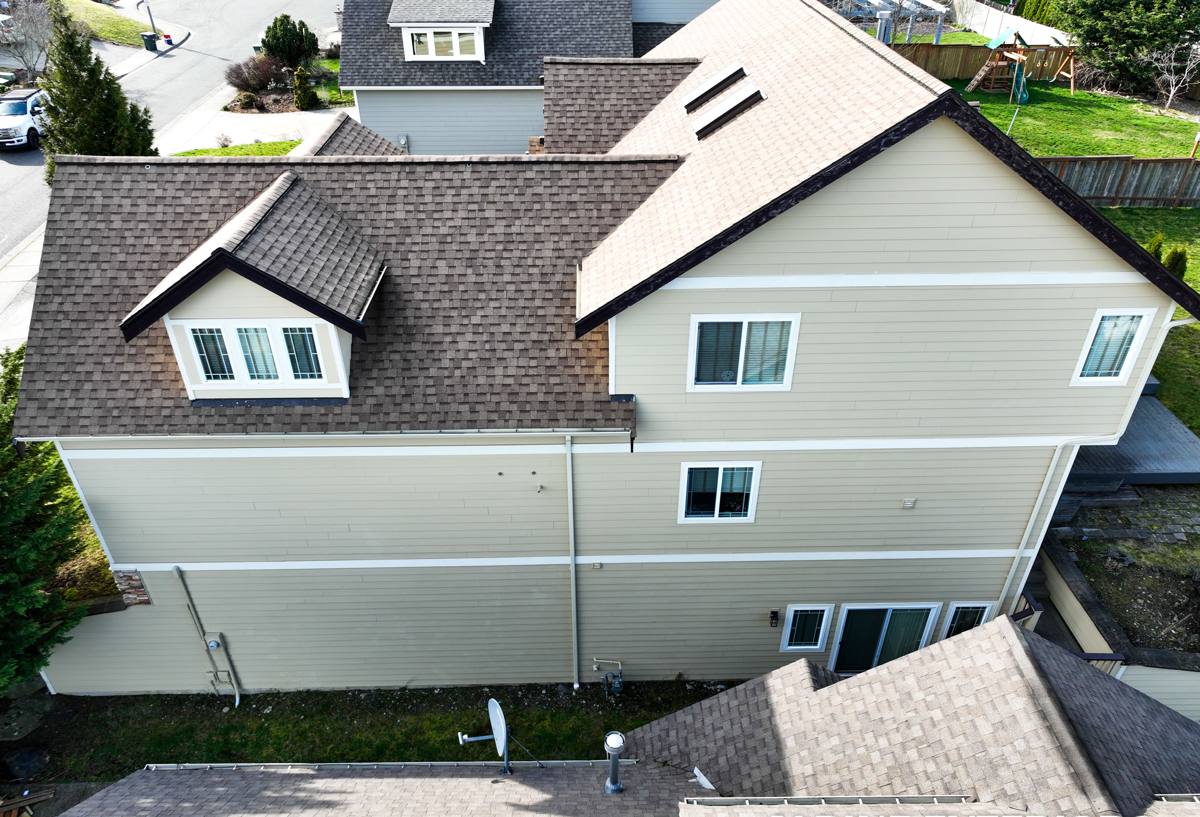
Signs Your Redmond Deck Needs Repair, Not a Full Replacement
Most decks we look at in Redmond don't need to be torn out — they need targeted repair to the parts that actually failed while the rest of the structure is still sound. Common signs it's a repair situation:
- Soft or spongy spots in specific boards, while the framing underneath still feels solid
- Rust streaks bleeding out around nail or screw heads
- A railing or guardrail post that wiggles or feels loose when you lean on it
- The ledger board (where the deck meets the house) showing a gap, staining, or slight separation
- Persistent moss, algae, or green-black staining that makes the surface slick underfoot
- Boards that have cupped, checked, or split but aren't structurally failing
If the framing, posts, and footings are sound, repairing the specific failure points is almost always the more cost-effective path — and it's the right one, as long as the repair addresses why that part failed in the first place.
Common Problems We Find on Redmond Decks
A few failure patterns show up again and again on decks in this area:
- Ledger board rot. Where the deck attaches to the house is the single most common failure point in wet climates. Without proper flashing, rain runs behind the ledger and rots it from the inside, often long before it's visible from the outside.
- Post base decay. Posts set in or near grade, or resting directly on a footing without a raised post base, wick moisture and rot from the bottom up.
- Moss and algae buildup. Shaded, tree-covered lots — common throughout Redmond — keep deck surfaces damp longer, accelerating both surface decay and slip risk.
- Fastener corrosion. Older decks built with standard nails or uncoated screws in pressure-treated lumber corrode fast; the chemicals in modern treated lumber are more corrosive to low-grade metal than older lumber was.
- Loose or undersized guardrails. Settling posts and connections that were never rated for real lateral load are a safety issue we flag on almost every older deck we inspect.
- Rusted or failing joist hangers. Hidden under the deck surface, these are easy to miss until a board starts to sag.
Repair or Replace? How We Help You Decide
Not every deck problem calls for the same solution. Here's roughly how we think through it during an inspection:
| Factor | Repair Usually Makes Sense | Replacement Usually Makes Sense |
|---|---|---|
| Framing & footings | Solid, no widespread rot | Rot has spread through multiple structural members |
| Ledger connection | Isolated rot, flashing can be corrected | Ledger is compromised along most of its length |
| Age of deck | Under 15-20 years, built to reasonable standards | Older deck built before current code requirements |
| Railings | Loose but posts/framing are sound | Undersized or non-compliant throughout |
| Decking surface | A handful of boards affected | Most boards are cupped, split, or rotted |
| Budget goal | Extend usable life at lower cost | Want a fresh layout, upgraded materials, or longer-term investment |
We'll tell you honestly which category your deck falls into. If a repair will genuinely hold up, we'll say so rather than push a rebuild you don't need.
What a Correct Deck Repair Actually Involves
A repair that just replaces a rotted board without fixing why it rotted is a repair that fails again. Doing it right means:
Finding the Moisture Source First
Before any board gets replaced, we trace where water is actually getting in — a flashing gap at the ledger, a post base holding water, poor drainage under the deck, or ventilation that's been blocked over time. Fixing the symptom without fixing the source just buys a few more years before the same repair is needed again.
Matching Structural Standards, Not Just Appearance
Replacement framing members need to match or exceed the span and load rating of what they're replacing. This matters especially on older Redmond decks, which were often built to standards that have since been tightened, particularly around guardrail height and baluster spacing.
Using Hardware Rated for This Climate
Fasteners and connectors need to be rated for contact with modern treated lumber — hot-dip galvanized or stainless steel, not standard coated screws that will corrode within a few wet seasons.
Permits When the Work Is Structural
Repairs involving framing, footings, or guardrail structure typically require a permit through the City of Redmond. We handle that as part of the job rather than leaving it for the homeowner to sort out.
Our Deck Repair Process
1. On-Site Inspection
We get under the deck, not just walk across the top. That means checking ledger flashing, post bases, joist hangers, and footings — the parts that actually determine whether a deck is sound.
2. Written Scope and Estimate
You get a clear, itemized explanation of what's failing, what needs to be repaired versus replaced, and a real cost range before any work starts. No pressure to upsell into a full rebuild if a repair will do the job.
3. The Repair Work
We remove and replace only what's compromised, correct the moisture source that caused the damage, and bring connections and hardware up to current standards as part of the repair — not as a separate line item you have to negotiate for.
4. Final Walkthrough
We walk the deck with you when it's done, point out what was fixed and why, and flag anything worth keeping an eye on going forward.
Materials We Use for Deck Repairs
For framing repairs, we use pressure-treated lumber rated for ground contact where appropriate, sized to match existing structural members. For surface repairs, homeowners are choosing between matching the existing wood species or switching to composite decking on the repaired section — both are reasonable choices, and the right one depends on the rest of the deck and your maintenance preferences.
Our standard on fasteners is simple: hot-dip galvanized or stainless steel connectors and screws on every repair, regardless of what was originally installed. In King County's damp climate, the cost difference between standard and corrosion-rated hardware is small, and the difference in how long the repair lasts is not.
We generally steer away from mixing incompatible metals or reusing old hardware on a repair, even when it looks intact — hidden corrosion at a connector is one of the more common reasons a "repaired" deck fails again within a couple of years.
Keeping Your Redmond Deck in Good Shape Between Repairs
A few habits go a long way toward stretching the time between repairs, especially with the tree cover and moisture common in this area:
- Sweep leaves and debris off the deck regularly, especially in fall — trapped organic matter holds moisture against the wood
- Rinse off moss and algae buildup before it stains or becomes slick, particularly on shaded sections
- Keep gutters and downspouts near the deck clear so water isn't dumping directly onto or under it
- Check railings for looseness once a year — it's the easiest early warning sign of a bigger issue
- Make sure vegetation isn't growing up against the deck framing or blocking airflow underneath
- Reseal or refinish wood decking on the manufacturer's recommended schedule, not just when it looks worn
Why a Crew That Already Works in Redmond Matters
Deck problems in Redmond tend to follow patterns tied to the local building stock and climate — a certain era of construction with underbuilt ledger flashing, tree-shaded lots with chronic moss issues, guardrails built before current code updates. A crew that regularly works this area recognizes those patterns quickly instead of treating every deck as a blank slate, and already knows what the City of Redmond expects for permitted structural work. That familiarity means fewer surprises during the job and a repair that's built for the conditions your deck actually faces, not a generic fix.
If your deck has soft boards, a loose railing, or staining near the house, we're happy to take a look and give you a straightforward, no-pressure estimate on what it would take to fix it right. Use the form below to get started.